
美德积分贷

Search documents
于涛:持续提升民生领域金融服务质量
Xin Lang Cai Jing· 2026-01-25 00:45
Core Viewpoint - Improving the quality of financial services in the livelihood sector is a key task for promoting structural reforms in financial supply and achieving common prosperity, reflecting the political and people-oriented nature of financial work [1] Group 1: Target Groups for Inclusive Finance - The main groups served by inclusive finance include small and micro enterprises, agricultural workers, new urban residents, the elderly, and flexible employment individuals, each facing unique financial challenges [1] - Small and micro enterprises require short-term, small-scale, frequent, and urgent financing, which traditional financial services often fail to cover [1] - Agricultural workers often lack qualified collateral and face long production cycles and significant natural risks [1] - New urban residents have limited credit information and require enhanced comprehensive financial services [1] - The elderly have diverse needs for wealth preservation, medical payments, and property inheritance, while facing challenges such as the digital divide [1] - Flexible employment individuals experience significant income volatility and need adaptable insurance and credit support [1] Group 2: Progress in Inclusive Finance - Since the 18th National Congress of the Communist Party, significant progress has been made in the development of inclusive finance in China, with improvements in service coverage, accessibility, and satisfaction [1] - Local initiatives have successfully integrated inclusive financial services with the production and living scenarios of key groups [1] Group 3: Strategies for Enhancing Financial Services - Establishing an online and offline linked rural financial service system can effectively extend service reach and improve efficiency, as demonstrated by the "Yunong Tong" service points [2] - Utilizing digital technology can assist small and micro enterprises by creating a digital product matrix and optimizing risk control, as seen with the "Dayan System" identifying over 21 million small enterprises [2] - Developing a credit transformation mechanism tailored to local conditions can help improve the rural credit environment and facilitate financial access for farmers [3] Group 4: Future Directions and Challenges - There are challenges in balancing profitability and sustainability in inclusive finance, as well as the need for improved precision and adaptability of financial products and services [3] - Future efforts should focus on enhancing the quality of financial services from mere availability to effectiveness, ensuring that development benefits the people [3] Group 5: Policy Recommendations - Strengthening policy coordination and incentive mechanisms is essential for supporting financially underserved regions and groups [4] - Promoting data sharing and technological empowerment can enhance the development of embedded financial products [4] - Encouraging product innovation and precise management in various consumption scenarios can better meet the needs of flexible employment and small enterprises [5] - Building a comprehensive financial service capability and consumer rights protection system is crucial for safeguarding consumer interests and ensuring financial stability [5]
威海持续深化金融“五篇大文章”实践,润泽经济社会高质量发展
Qi Lu Wan Bao· 2025-11-27 13:11
Group 1 - The People's Bank of China (PBOC) in Weihai is implementing supportive monetary policies to foster high-quality economic development during the 14th Five-Year Plan period [1] - The PBOC has lowered the required reserve ratio and enhanced the use of monetary policy tools to promote reasonable growth in credit volume, with the total balance of loans reaching 6,157.04 billion yuan, an increase of 81.3% compared to the end of 2020 [1] Group 2 - The PBOC is focusing on self-discipline in interest rate management to significantly reduce financing costs, with new corporate loan rates at 3.74%, down 1.14 percentage points from the end of 2020 [2] - The PBOC is promoting the optimization of credit structure through the "Five Major Financial Articles" initiative, establishing a "1+5+N" promotion system, and creating innovative financial products such as Sci-Tech loans and Carbon Credit loans [3] - By the end of the third quarter, loans in sectors like technology, green finance, and digital economy grew by 18.1%, 22.8%, and 14.2% respectively, surpassing the overall loan growth rate [3]
山东重点领域贷款增速超各项贷款7.8个百分点
Sou Hu Cai Jing· 2025-11-27 00:57
Core Insights - Shandong's financial system has effectively utilized financial tools to drive growth in key sectors, achieving a loan balance of 6.7 trillion yuan in technology, green, and inclusive finance, with a year-on-year growth of 16.3%, surpassing the average loan growth rate by 7.8 percentage points [1][3] Financial Policy and Tools - The People's Bank of China has implemented structural monetary policy tools, including nine reductions in the statutory reserve requirement ratio, releasing approximately 460 billion yuan in long-term funds, enhancing credit capacity for financial institutions [3] - The "central bank funds + financial institution matching" leverage model has led to an increase of 12.11 trillion yuan in agricultural loans and 23.165 trillion yuan in small micro-loans since the start of the 14th Five-Year Plan [3] Sector-Specific Financial Support - In the technology innovation sector, the Jinan Innovation Financial Reform Pilot Zone has seen a loan balance of 303.978 billion yuan, a 176.7% increase since its approval, with high-tech industries accounting for 68.68% of industrial output [4] - The green finance system has supported 170.167 billion yuan in financing through green bonds and other innovative products during the 14th Five-Year Plan [4] Rural and Inclusive Finance - Inclusive agricultural loans reached 962.093 billion yuan, doubling since the end of 2020, with a 7.96% increase in loans to major grain-producing counties [5] - The financial sector has introduced products like "Virtue Points Loan" to support specific agricultural products, and small loans have benefited 59,600 impoverished households, amounting to 2.625 billion yuan [5] Overall Financial Growth - As of September 2025, Shandong's total social financing reached 25.6 trillion yuan, and the balance of domestic and foreign currency loans was 16.2 trillion yuan, marking growth of 67.8% and 65.4% respectively since the end of 2020 [5] - The average interest rate for newly issued corporate loans was 3.61%, down 1.06 percentage points from the end of 2020, benefiting small and micro enterprises significantly [5]

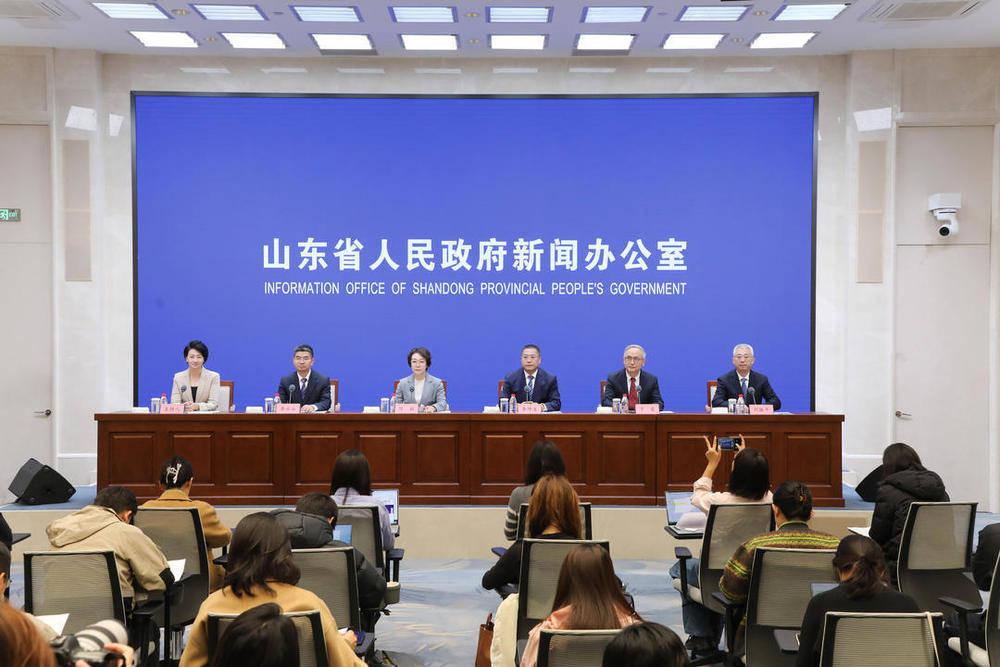
金融工具发力 山东重点领域贷款增速超各项贷款7.8个百分点
Qi Lu Wan Bao· 2025-11-26 15:30
Core Insights - Shandong's financial system aims to lead and support key sectors through targeted financial tools, achieving a loan balance of 6.7 trillion yuan in technology, green, and inclusive finance by September 2025, reflecting a 16.3% year-on-year growth, surpassing the average loan growth rate by 7.8 percentage points [1] Group 1: Financial Policies and Tools - The People's Bank of China has implemented structural monetary policy tools, including nine reductions in the statutory deposit reserve ratio, releasing approximately 460 billion yuan in long-term funds to enhance credit capacity [1] - The "central bank funds + financial institution matching" leverage model has led to an increase of 12.11 trillion yuan in agricultural loans and 23.165 trillion yuan in small micro-loans since the start of the 14th Five-Year Plan [1] Group 2: Insurance and Long-term Funding - The "Insurance Capital into Shandong" initiative has attracted over 580 billion yuan in long-term funds, focusing on major strategic areas and weak links in the economy [2] - The Jinan Science and Technology Innovation Financial Reform Pilot Zone has seen a 176.7% increase in loans to tech enterprises, reaching 303.978 billion yuan [2] Group 3: Green and Inclusive Finance - A "green credit + green bond" system has been established, with 170.167 billion yuan raised through innovative financial products during the 14th Five-Year Plan [3] - Inclusive finance initiatives have provided over 1.95 trillion yuan in support to foreign trade enterprises, benefiting 15,100 individual businesses through various loan programs [3] Group 4: Financial Growth Metrics - By September 2025, Shandong's total social financing reached 25.6 trillion yuan, and the loan balance was 16.2 trillion yuan, marking a growth of 67.8% and 65.4% respectively since the end of 2020 [4] - The average interest rate for newly issued corporate loans was 3.61% in September 2025, down 1.06 percentage points from the end of 2020, resulting in significant savings for borrowers [4]
多元金融工具支撑 山东重点领域金融服务质效显著提升
Zheng Quan Shi Bao Wang· 2025-11-26 10:25
Core Insights - Shandong's financial system aims to lead and support key sectors, with a focus on technology, green finance, and inclusive finance, achieving a loan balance of 6.7 trillion yuan by September 2025, a year-on-year increase of 16.3% [1] - The People's Bank of China has implemented structural monetary policy tools, releasing approximately 460 billion yuan in long-term funds, enhancing credit capacity for financial institutions [1] - Insurance funds have significantly contributed to Shandong's development, attracting over 580 billion yuan in long-term investments into strategic sectors [2] Financial Performance - By September 2025, Shandong's total social financing reached 25.6 trillion yuan, and the balance of domestic and foreign currency loans was 16.2 trillion yuan, marking increases of 67.8% and 65.4% respectively since the end of 2020 [4] - The average interest rate for newly issued corporate loans was 3.61% in September 2025, down 1.06 percentage points from the end of 2020, benefiting small and micro enterprises [4] Sectoral Support - The province has established a "green credit + green bond" system to facilitate industrial transformation, with 170.17 billion yuan raised through innovative financing products during the "14th Five-Year Plan" period [3] - Inclusive finance initiatives have provided over 1.95 trillion yuan in support to foreign trade enterprises, with specific programs benefiting individual businesses and rural revitalization efforts [3] Innovation and Technology - The Jinan Innovation Financial Reform Pilot Zone has seen a 176.7% increase in loans to technology enterprises, with a total loan balance of 303.98 billion yuan [2] - Financial institutions have developed innovative products like "research loans" and "talent loans" to address financing challenges for technology companies [2]
截至9月末,山东“五篇大文章”领域贷款余额6.7万亿元,同比增长16.3%
Qi Lu Wan Bao· 2025-11-18 07:02
Core Insights - The Shandong provincial government is promoting high-quality financial development during the "14th Five-Year Plan" period, focusing on supporting the real economy through various monetary policies [1] Group 1: Financing Scale Growth - The People's Bank of China (PBOC) Shandong branch has lowered the reserve requirement ratio nine times, releasing approximately 460 billion yuan in long-term funds, significantly enhancing the credit capacity of financial institutions [2] - By September 2025, the social financing scale and the balance of loans in Shandong province reached 25.6 trillion yuan and 16.2 trillion yuan, respectively, representing growth of 67.8% and 65.4% compared to the end of 2020, exceeding the targets set in the "14th Five-Year Plan" [2] - The annual growth rates for social financing and loans in Shandong have outpaced the national averages for 77 and 62 consecutive months, respectively, with average annual growth rates of 11.5% and 11.2% during the "14th Five-Year Plan" [2] Group 2: Financing Cost Reduction - During the "14th Five-Year Plan," the PBOC's policy interest rates were reduced by a total of 0.8 percentage points, with Shandong actively guiding financial institutions to pass these reductions onto loan rates [3] - Shandong was a national pilot for transparent enterprise loan costs, which helped to lower financing costs [3] - The average interest rates for newly issued corporate loans and personal housing loans in Shandong were 3.61% and 3.05% by September 2025, down 1.06 and 2.2 percentage points from the end of 2020, respectively, alleviating the interest burden on market participants [3] Group 3: Credit Structure Optimization - The PBOC Shandong branch has enhanced collaboration and policy integration to optimize the credit structure, introducing various financial products like "Research Loans" and "Talent Loans" to address financing challenges for tech enterprises [4] - Initiatives such as "Virtue Points Loans" provide better credit terms for trustworthy farmers, while activities like "Bank Presidents Visiting Enterprises" aim to improve financial services for private enterprises [4] - By September 2025, loans in key sectors accounted for 79.5% of total loans, with a balance of 6.7 trillion yuan in these sectors, reflecting a year-on-year growth of 16.3%, surpassing the overall loan growth rate by 7.8 percentage points [4]
房贷年省6000元利息 山东金融“加减乘”算出民生实惠
Feng Huang Wang Cai Jing· 2025-11-14 00:41
Core Insights - The People's Bank of China (PBOC) Shandong Branch has implemented supportive monetary policies during the 14th Five-Year Plan period, focusing on enhancing financial services for the real economy and promoting high-quality economic development in Shandong [1] Group 1: Financing Growth - The PBOC Shandong Branch has cumulatively lowered the reserve requirement ratio nine times, releasing approximately 460 billion yuan in long-term funds, significantly enhancing the credit capacity of financial institutions [2] - By the end of September 2025, the social financing scale and the balance of loans in Shandong are projected to reach 25.6 trillion yuan and 16.2 trillion yuan, representing growth of 67.8% and 65.4% respectively since the end of 2020, indicating that financial targets for the 14th Five-Year Plan have been achieved ahead of schedule [2] Group 2: Cost Reduction - During the 14th Five-Year Plan, the PBOC's policy interest rates were reduced by a total of 0.8 percentage points, with the Shandong Branch guiding financial institutions to pass these reductions onto loan rates [3] - The average interest rates for newly issued corporate loans and personal housing loans in Shandong by September 2025 are expected to be 3.61% and 3.05%, down by 1.06 and 2.2 percentage points respectively since the end of 2020, effectively reducing the interest burden on market participants [3] Group 3: Structural Optimization - The PBOC Shandong Branch has introduced innovative loan products such as "Research Loans" and "Talent Loans," focusing on technology and prospects rather than collateral, addressing financing challenges for tech enterprises [4] - By the end of September 2025, loans in the "Five Major Areas" are expected to reach 6.7 trillion yuan, with a year-on-year growth of 16.3%, outpacing the overall loan growth by 7.8 percentage points, thereby providing strong financial support for green and high-quality development in Shandong [4]
山东:新增贷款近八成流向金融“五篇大文章”领域
Xin Hua Cai Jing· 2025-11-13 09:28
Core Insights - In the first three quarters of this year, new loans in Shandong's "Five Major Articles" sector accounted for 79.5% of the province's total loans, indicating a strong focus on financing for green, low-carbon, and high-quality development [1][2] - As of the end of September, the loan balance in the "Five Major Articles" sector reached 6.7 trillion yuan, representing a year-on-year growth of 16.3%, which is 7.8 percentage points higher than the overall loan growth rate in the province [1] Financial Products and Services - The People's Bank of China Shandong Branch has enhanced departmental collaboration and policy integration since the 14th Five-Year Plan, leading to the development of innovative financial products such as "Research Loans" and "Talent Loans" to address financing challenges for technology enterprises [1] - The introduction of the "Virtue Points Loan" offers higher credit limits and lower interest rates to trustworthy farmers, promoting financial inclusivity [1] Support for Small and Agricultural Enterprises - Since the beginning of the 14th Five-Year Plan, the balance of re-loans and rediscounts for supporting agriculture and small enterprises has increased by 144.2 billion yuan, which has in turn driven an increase of 1.2111 trillion yuan in agricultural loans and 2.3165 trillion yuan in small micro-enterprise loans [2] - Over 160 billion yuan has been utilized by financial institutions in the province through structural monetary policy tools such as technological innovation and re-loans by the third quarter of 2025 [2]