联名盲盒

Search documents
【调查研究】国货“潮品”:一个IP撬动一整片产业森林
Sou Hu Cai Jing· 2025-12-05 05:20
Core Insights - The article highlights the emergence of "first-release economy" as a significant trend in consumer behavior, particularly among the youth, driven by cultural pride and innovative marketing strategies [1][3][10] Group 1: First-Release Economy - The "first-release economy" is supported by government initiatives aimed at promoting new consumption models and encouraging brands to launch flagship stores and products [1][3] - The popularity of cultural IPs, such as "Nezha: Birth of the Demon Child" and "Black Myth: Wukong," has led to a surge in related merchandise sales, indicating a strong consumer demand for culturally resonant products [3][5][10] Group 2: Youth Engagement and Cultural Connection - Young consumers show a natural affinity for traditional cultural symbols, which enhances their emotional connection to domestic IPs, translating into higher purchase intentions [5][10] - A report indicates that 78.9% of surveyed youth are more likely to buy products that incorporate national cultural elements, showcasing the potential for brands to leverage this trend [5] Group 3: Economic Impact and Job Creation - The rise of national cultural trends has stimulated local economies, as seen in the case of Xixian County, where tourism and related services have flourished due to the popularity of cultural IPs [8][10] - The "Wukong effect" has led to significant job creation in tourism and related sectors, with the number of tour guides increasing from 8 to 31, and new businesses emerging to cater to the influx of visitors [8][10] Group 4: Policy Support and Market Growth - Government policies are encouraging the development of original IPs across various sectors, including animation, esports, and gaming, which is expected to further boost the national cultural market [3][10] - The national cultural market has surpassed 2 trillion yuan and is projected to exceed 3 trillion yuan by 2028, driven by policy incentives and consumer upgrades [8]

叶国富,又要“赌”一把
3 6 Ke· 2025-11-26 07:57
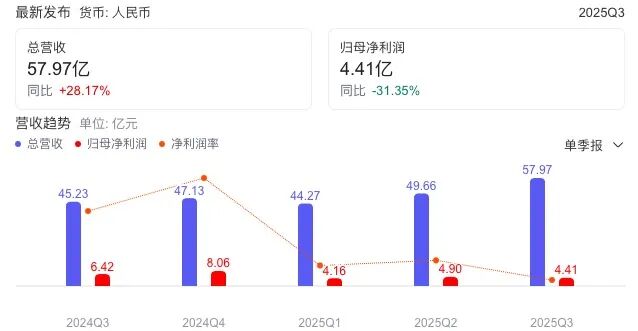
Core Insights - MINISO achieved significant milestones in Q3, surpassing 8,000 stores and recording revenue exceeding 5 billion yuan for the first time, exceeding previous guidance [1][6] - However, the company faced challenges with net profit declining nearly 31.35% year-on-year, marking the largest drop since Q4 of the previous year [1][3] Revenue and Profitability - Q3 revenue reached 5.2215 billion yuan, a year-on-year increase of 22.9%, with the main brand contributing 90.1% of total revenue [6][7] - Despite revenue growth, net profit for the quarter was only 441 million yuan, reflecting a significant decline [1][3] - The adjusted operating profit for Q3 was 1.022 billion yuan, with a profit margin of 17.6%, down from the previous year [10][11] Store Expansion and Strategy - The total number of stores reached 8,138, with a net increase of 718 stores year-on-year [1][6] - The company is implementing a "big store strategy" and plans to upgrade 80% of its stores through a "tenglong huan niao" strategy, which involves closing and reopening stores [3][18] - The MINISO LAND store format has been introduced in major cities, contributing to increased sales [6][22] International Market Performance - Revenue from overseas markets showed strong growth, with Q3 revenue reaching 2.3 billion yuan, a year-on-year increase of 27.7% [7][8] - The U.S. market, in particular, saw revenue growth exceeding 65%, driven by localized operations and strategic store openings [8][9] - The overseas market accounted for 44.3% of total revenue in Q3, indicating a shift towards a more balanced revenue stream between domestic and international markets [7][8] Cost Management and Investment - Sales and distribution expenses increased by 43.5% to 1.4299 billion yuan, reflecting high investment in store expansion, particularly in the U.S. [8][9] - The company is gradually reducing costs, with a notable decrease in the growth rate of sales and distribution expenses from Q1 to Q3 [14][13] - The adjusted operating profit margin is expected to improve as overseas markets achieve localized operations [15][16] IP Strategy and Future Outlook - The company is shifting its focus towards cultural and creative retail, planning to increase the proportion of IP co-branded products from 50% to over 80% [22][23] - The TOP TOY brand has shown significant growth, with Q3 revenue reaching 570 million yuan, a year-on-year increase of 111% [23][27] - The transition to a higher-value IP model poses challenges, particularly for franchisees who must adapt to new operational requirements [29][30]

“四首”经济激发假日消费新活力
Sou Hu Cai Jing· 2025-10-12 02:05
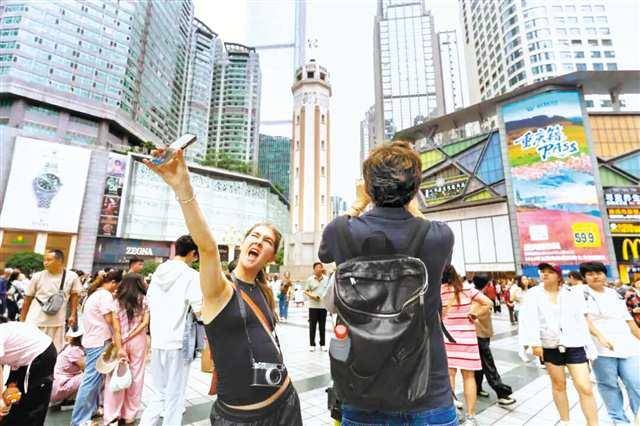
Core Insights - The article highlights the emergence of numerous flagship stores and brands in Chongqing during the recent National Day and Mid-Autumn Festival holiday, indicating a growing trend in consumer engagement and retail expansion [2][3][7]. Group 1: Retail Expansion - Several international and domestic brands have opened their first stores in Chongqing, including KWL, a South Korean fast fashion brand, and various high-end dining establishments, contributing to the city's retail landscape [3][7]. - The "Four Firsts" (首店、首牌、首秀、首发) strategy has led to the establishment of nearly 1,000 flagship stores in Chongqing during the 14th Five-Year Plan period, positioning the city among the top ten cities favored for new store openings [3][6]. Group 2: Consumer Trends - The consumer spending during the holiday period showed significant growth, with service retail sales increasing by 11.35% and commodity retail sales by 4.93% year-on-year [6]. - The shift in consumer demand reflects a transition from basic needs to a focus on quality and experience, indicating a more diverse and personalized consumption trend [7]. Group 3: Economic Development - The development of the "Four Firsts" economy is part of Chongqing's strategy to enhance its status as an international consumption center, which is expected to boost the city's commercial influence [7][8]. - The local government has introduced policies to support the growth of flagship stores, including financial incentives for commercial operators and third-party institutions [8]. Group 4: Innovative Consumer Experiences - The integration of cultural and commercial elements in shopping areas has created unique consumer experiences, such as the "World Tree" installation and various themed districts that combine retail with social and cultural activities [5][7]. - The focus on creating immersive and scene-based consumption spaces is aimed at enhancing the overall shopping experience, which cannot be replicated online [5].