国潮经济

Search documents
入境消费订单增长2.6倍,老外为何选择西安
2 1 Shi Ji Jing Ji Bao Dao· 2026-02-13 10:17
Core Viewpoint - Xi'an has achieved record highs in social retail sales and foreign trade in the past year, with plans for a series of consumption promotion activities leading up to the 2026 Spring Festival [1][2] Group 1: Consumption Market Growth - The growth in Xi'an's consumption market is attributed to the integration of bulk commodity updates and service consumption [2] - Over 900 promotional activities were conducted under the "Xi Yue Gou·Qu Chang An" initiative, introducing 376 new stores and generating over 20 billion yuan in transaction value from consumer exhibitions [2] - The implementation of favorable policies, such as the 240-hour visa-free transit, has led to a rapid increase in inbound consumption [2] Group 2: Trade and Export Growth - In 2025, Xi'an's total import and export value is projected to reach 498.79 billion yuan, marking a historical high with a year-on-year growth of 21.1%, ranking second among sub-provincial cities [2] - Cross-border e-commerce and new business formats saw a 75.1% increase in imports and exports, while high-tech products and "new three samples" exports grew by 26.3% and 31.4% respectively [2] Group 3: Future Business Directions - The focus for Xi'an's business sector in 2026 includes promoting consumption investment and expanding high-level openness, emphasizing policy empowerment and scenario-driven growth [3] - Key initiatives include the development of the "Yue Xiang Chang An" and "Chuhai Chang An" brands, and the establishment of new consumption models and international consumption environments [3][4] - Plans to enhance trade innovation include supporting enterprises in diversifying markets and promoting integrated trade and investment [4]
北交所投资框架工具书:北交所市场大消费投资框架及核心标的的梳理-20260213
Hua Yuan Zheng Quan· 2026-02-13 03:34
Consumption Trends - The emotional economy market in China is expected to exceed 20 trillion yuan in 2024, with a projected CAGR of 14% from 2025 to 2029[3][60]. - The beauty consumption market is projected to reach nearly 370 billion yuan by 2025, with the retail sales of cosmetics in China estimated at 465.3 billion yuan in 2025, reflecting a year-on-year growth of 5.1%[5][51]. - The health food market is anticipated to reach 720.3 billion yuan by 2029, driven by increasing health awareness and aging population[5]. Policy and Market Dynamics - The Chinese government has prioritized boosting consumption as a key task for 2025, with policies supporting consumption upgrades and equipment renewal[5][9]. - Changing consumer behavior emphasizes emotional value, health, and personalized consumption, indicating a shift towards emotional and social fulfillment in purchasing decisions[5][9]. Key Industry Insights - The maternal and infant food market is projected to reach approximately 55.91 billion yuan in 2024, with the number of maternal and infant chain stores increasing from 21,000 in 2019 to 32,000 in 2024[5]. - The pet economy is expected to grow significantly, with the market size reaching 701.3 billion yuan in 2024, reflecting an 18% year-on-year increase[58]. Investment Opportunities - Companies in the North Exchange related to beauty consumption include Jinbo Biological, Bawei Co., and Vicky Technology, which are positioned to benefit from the ongoing growth in the beauty sector[5][52]. - The health food sector includes leading brands like Kangbiter and Yizhi Konjac, which are well-placed to capitalize on the rising demand for health-oriented products[5].
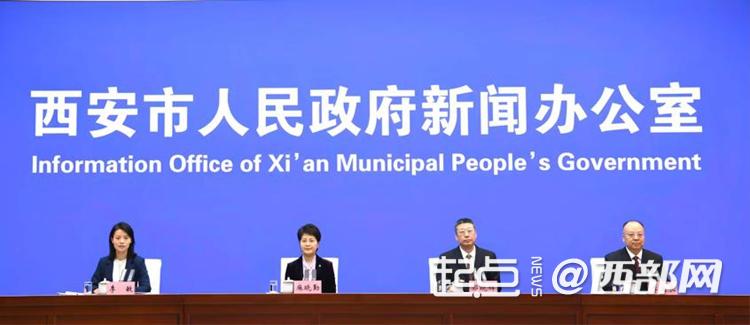
西安将开展130场主题促消费活动 打造全民乐享春节消费盛宴
Xin Lang Cai Jing· 2026-02-12 15:27
Core Viewpoint - Xi'an is set to enhance its consumer market and international trade through a series of initiatives aimed at boosting consumption and foreign trade, with significant historical growth in retail sales and exports projected for 2025 [2][3][6]. Group 1: Consumption and Retail Growth - During the Spring Festival, Xi'an will host the "Shopping in China: Enjoying Chang'an" event, featuring 130 themed consumption activities to promote city-wide engagement [2][6]. - In 2025, Xi'an's total retail sales of consumer goods are expected to reach 572.12 billion yuan, a year-on-year increase of 5.3%, outperforming the national average by 1.6 percentage points [3]. - The city has introduced various consumption promotion activities, including over 900 events and the establishment of 376 new stores, contributing to a total consumption boost of 83.9 billion yuan [2][3]. Group 2: Foreign Trade and Export Performance - Xi'an's total import and export value is projected to reach 498.79 billion yuan in 2025, marking a historical high with a year-on-year growth of 21.1% [3][4]. - Exports are expected to amount to 349.26 billion yuan, reflecting a 25.8% increase, the highest growth rate among sub-provincial cities [3][4]. - The city has seen a 75.1% growth in new business formats like cross-border e-commerce, with significant increases in high-tech and green product exports [3][4]. Group 3: Policy Initiatives and Future Plans - Xi'an's government plans to implement a series of policies to enhance consumer spending, including the promotion of green and smart consumption through vehicle and appliance upgrades [6][7]. - The city aims to establish a comprehensive international consumption environment by expanding tax refund stores and integrating cultural and tourism sectors with commerce [3][6]. - Future initiatives include the "Silk Road Quality Products: Going Global" campaign, focusing on trade and investment integration, and the development of a smart port to facilitate cross-border trade [7].

中部六省加快构建增长新引擎
Jing Ji Wang· 2026-02-10 06:04
Group 1: Economic Growth and Investment - The GDP of the central region is expected to approach 30 trillion yuan by 2025, with Henan leading at a growth rate of 5.6% [1] - The focus for 2026 among central provinces is on "stabilizing growth and expanding domestic demand," leveraging local resources and insights into new consumption trends [1] - Effective investment is crucial for stabilizing economic growth, with provinces exploring investment potential in water conservancy and other sectors [4] Group 2: New Consumption Trends - Central provinces are focusing on "emotional value" and "emotional economy" in their government work reports, indicating a shift in consumer trends [2] - Various provinces are cultivating new consumption growth points, such as the "first launch economy" and "night economy," to enhance consumer vitality [2][3] - Specific initiatives include promoting local business innovations and developing new consumption scenarios in provinces like Henan and Shanxi [2] Group 3: Modern Manufacturing and High-Tech Industries - The central region aims to build a modern industrial system with a focus on new energy, new materials, and optoelectronic information [6] - Provinces like Hubei and Hunan are advancing projects in high-tech sectors, including lithium batteries and new energy systems [6][7] - Jiangxi is enhancing its capabilities in aircraft manufacturing and electric vehicles, while Shanxi is focusing on high-end equipment manufacturing and new materials [7]
布局新消费 促进有效投资 中部六省加快构建增长新引擎
Shang Hai Zheng Quan Bao· 2026-02-09 18:33
Core Insights - The central provinces of China are focusing on "stabilizing growth and expanding domestic demand" as key priorities in their 2026 government work reports, with a projected GDP nearing 30 trillion yuan for 2025 [1][2] - The concept of "emotional value" and "emotional economy" has emerged as a significant trend in consumer behavior, prompting these provinces to innovate in consumption and investment [1][2] Economic Growth and Investment - Henan leads the central provinces with a GDP growth rate of 5.6%, while Hubei, Anhui, and Jiangxi also report growth rates exceeding 5% [1] - The provinces are enhancing their investment in sectors like water conservancy and logistics to strengthen their roles as key hubs in the domestic and international economy [3][5] New Consumption Trends - Provinces are actively cultivating new consumption growth points such as the "first release economy," "exhibition economy," and "silver economy" to meet evolving consumer demands [2] - Specific initiatives include promoting local business innovations and developing diverse consumption scenarios to stimulate economic activity [2] Industrial Development - The central region aims to establish a modern industrial system with a focus on new energy, new materials, and high-tech industries [5][6] - Hubei is working on a world-class integrated storage and computing industry base, while other provinces are advancing projects in electric vehicles, lithium batteries, and aerospace [5][6] Infrastructure and Project Development - Significant infrastructure projects are being prioritized, with Hunan announcing 389 key projects totaling 2 trillion yuan in investment [3] - The provinces are also focusing on enhancing their logistics and transportation networks to facilitate economic growth and connectivity [3][5]
“情绪经济”成地方两会热词
Zheng Quan Ri Bao· 2026-02-03 16:29
Group 1 - The core concept of "emotional economy" is gaining traction as a key driver for consumption, with various local governments incorporating it into their economic strategies to enhance consumer spending and meet emotional needs [1][2] - The shift in consumer decision-making from "cost-performance ratio" to "emotional value" indicates that emotional economy is becoming a vital consideration in purchasing decisions, providing a new growth avenue for traditional industries [1][2] - The development of the emotional economy is expected to invigorate both physical sales and service sectors, enhancing product value through cultural and emotional attributes, and promoting immersive consumer experiences [2] Group 2 - Despite its potential, the emotional economy faces challenges such as product homogenization, inflated value perceptions, lack of standards, and regulatory lag, which need to be addressed for sustainable growth [3] - Collaboration among various stakeholders, including government, enterprises, industry associations, and consumers, is essential to overcome existing barriers and transition the emotional economy from concept to a mature, sustainable industry [3]
“情绪经济”写入江西省政府工作报告 拓展新型消费成亮点
Zhong Guo Xin Wen Wang· 2026-01-27 09:14
Group 1 - The core concept of "emotional economy" is highlighted in Jiangxi Province's government work report, emphasizing the development of new consumption models driven by emotional spending [1] - Jiangxi plans to organize over 4,000 seasonal promotional activities and distribute nearly 200 million RMB in various consumption vouchers by 2025, aiming to enhance consumer engagement [1] - The report indicates a projected increase in domestic tourism, with visitor numbers and total spending expected to grow by 4.8% and 13.8% respectively [1] Group 2 - In 2026, Jiangxi aims to expand new consumption types, including cultivating "emotional consumption" scenarios and developing trendy retail spaces [2] - The government intends to create new growth points in the "Guochao" economy, focusing on enhancing the consumption of historical classic products such as ceramics, traditional Chinese medicine, and tea [2]
北交所新消费产业研究系列(五):情绪为核+消费新生,中国情绪经济有望重塑万亿消费生态
Hua Yuan Zheng Quan· 2026-01-19 14:02
Group 1: Emotional Economy - The emotional economy in China is projected to exceed 20 trillion yuan by 2024, with a significant growth trajectory expected to continue, reaching approximately 45 trillion yuan by 2029 [2][23][26] - Emotional consumption is characterized by a willingness to pay for emotional value, with over 60% of consumers viewing it as an effective way to relieve stress, and nearly half recognizing it as a means to alleviate emotions [8][20][23] - The emotional economy encompasses various sectors, including trendy toys, pets, emotional health, cultural entertainment, stress relief products, and fragrances, indicating a multi-faceted development landscape [2][24] Group 2: Trendy Toy Economy - The trendy toy market is shifting from functional to emotional consumption, with a projected CAGR of 21% from 2025 to 2030 [2][31] - The retail sales of trendy toys in China are expected to grow from 20.7 billion yuan in 2019 to 58.7 billion yuan in 2024, reflecting a compound annual growth rate of 23.2% [2][37] - The growth of the trendy toy industry is driven by increasing emotional consumption, with these products becoming vehicles for personal identity and cultural belonging [2][37] Group 3: Pet Economy - The pet economy in China is anticipated to surpass 1 trillion yuan by 2027, driven by emotional attachment and companionship needs [2][56] - The pet industry is experiencing steady growth, with the market size expected to reach 701.3 billion yuan in 2024, reflecting an 18.3% year-on-year increase [2][64] - Pet food remains the dominant segment, accounting for 52.8% of the pet consumption market in 2024, with a notable increase in the average spending per pet owner expected in the coming years [2][64][68] Group 4: Fragrance Economy - The fragrance market in China is projected to grow at a CAGR of 15% from 2018 to 2024, with the market size expected to reach approximately 32.9 billion yuan by 2025 [2][81][86] - Emotional benefits are prioritized over functional needs in fragrance consumption, with 59.7% of consumers purchasing fragrances to enhance their emotional experience [2][81][92] - The fragrance market is characterized by a blend of online and offline channels, with online sales expected to grow significantly, reflecting a shift in consumer purchasing behavior [2][88]
聚焦历史与生态融合 北京丰台 “十五五” 推十大文旅新项目
Xin Lang Cai Jing· 2026-01-17 02:21
Group 1 - The core focus of the news is the development plans for Fengtai District during the "14th Five-Year Plan" period, which includes ten key projects aimed at enhancing cultural and tourism infrastructure [1][5] - By the third quarter of 2025, Fengtai District aims to achieve tourism consumption of 28.55 billion yuan and receive 18.204 million visitors, representing increases of 103.1% and 107.1% respectively compared to the early stages of the "13th Five-Year Plan" [1] - Fengtai District plans to establish itself as a significant cultural center in Beijing, targeting over 28 million visitors and 45 billion yuan in tourism spending by 2030, along with the creation of one national-level scenic area and over 30 new performance spaces [1] Group 2 - Fengtai District will enhance its cultural identity by revitalizing historical cultural heritage and developing unique cultural IPs such as "Lugou Lion" and "Fengtai Flowers" [2] - The district will improve public services by collaborating with local cultural institutions, enhancing public cultural facilities, and promoting a "15-minute reading circle" to foster a reading culture [2] - Fengtai District aims to stimulate new consumption dynamics in the cultural tourism sector by developing six distinctive economies, including night economy and outdoor economy, to create new consumption hotspots [3]

消费变迁下的直销新机遇:紧扣Z世代、银发族与绿色需求
Sou Hu Cai Jing· 2025-12-19 03:55
Core Insights - The direct selling model is aligning well with changing consumer demands and trends, reshaping the industry's future [1] - The Chinese consumption market is undergoing profound changes, with the national trend economy expected to reach 2.29 trillion yuan in 2024, driven largely by the "Z Generation" [1] - The aging population is projected to contribute significantly to the economy, with the silver economy expected to reach 7 trillion yuan [1] Consumption Trends - The shift in China's consumption structure is moving from quantity to quality, emphasizing emotional value over functional value [4] - Retail sales of consumer goods are expected to grow from 25.9 trillion yuan in 2014 to 48.3 trillion yuan in 2024, an increase of over 80% [4] - Service consumption is growing faster than goods consumption, with health-related spending increasing at an annual rate of 9.8% from 2013 to 2024 [4] Z Generation Consumption - The "Z Generation" (born 1995-2009) comprises about 260 million people, contributing 40% of total consumption, with their spending projected to quadruple to 16 trillion yuan by 2035 [7] - This generation values personalization and seeks recognition through niche consumption, with a significant portion being rational consumers [7] - Direct selling can leverage the rational consumption habits of the Z Generation by providing expert knowledge and personalized products [7] Silver Economy - By the end of 2024, the population aged 60 and above in China is expected to exceed 300 million, with the silver economy projected to reach 19.1 trillion yuan by 2035 [10] - The health consumption patterns of the elderly are evolving, with a notable increase in demand for senior-friendly products, such as fitness equipment and health supplements [10][11] - The shift from passive treatment to proactive prevention in health-related products presents a significant market opportunity [11] Green Consumption - Green consumption is becoming a mainstream trend, with 83% of consumers willing to pay a premium for smart health appliances [14] - Sales of health monitoring devices are expected to grow by 41.6% year-on-year in Q1 2025, reflecting the rising demand for smart consumer products [14] - Direct selling companies are integrating sustainable development into their core strategies, enhancing consumer trust in green products [14] Direct Selling Model Advantages - The direct selling model's personalized service and strong social attributes align well with new consumer demands [18] - Direct sellers can effectively cater to the Z Generation's preference for experiential and personalized products through social media engagement [18] - The model's one-on-one service can meet the specialized health needs of the elderly, positioning direct sellers as trusted health advisors [18] Future Market Outlook - The evolution of three major consumer forces and the adaptability of the direct selling model create a roadmap for future market changes [19] - Direct selling companies that align with consumer trends and provide high-quality offerings can secure advantageous positions in the expanding market [19] - The industry is poised for a resurgence, with the direct selling model's compatibility with new consumption trends indicating a bright future ahead [19]