
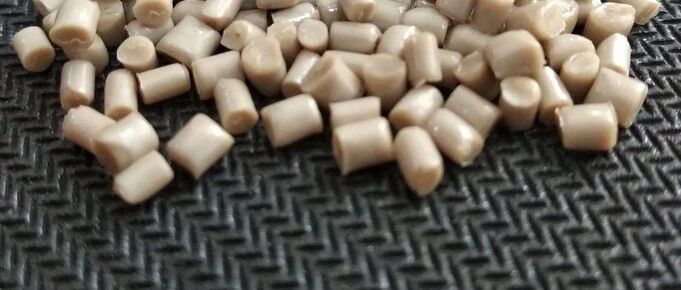
聚苯醚(PPO)

Search documents
再来3万吨!化工新材料大厂纷纷加码,追风AI大赛道
DT新材料· 2026-02-12 16:04
Core Viewpoint - The article discusses the investment by Kangda New Materials in a new project to produce 30,000 tons per year of Polyarylether (PAE), aiming to enhance its position in the high-value segment of the new materials industry [2]. Investment Project Details - The total investment for the PAE project is approximately 645.74 million RMB, with construction costs of 591.94 million RMB, interest during construction of 16.60 million RMB, and working capital of 37.20 million RMB [3]. - The project will be located in Jinpu New District, covering an area of 50,215.14 square meters (about 75.32 acres), with a construction area of 20,338.16 square meters [3]. - The construction period is expected to last 18 months and will include various production facilities for DMP and PAE, with an annual production capacity of 30,000 tons of PAE and 8,050 tons of ortho-cresol as a byproduct [3]. Product and Market Insights - PAE is produced from 2,6-dimethylphenol (DMP) and is a key material for various applications, including solar energy components and automotive parts [4]. - The production methods for PAE include solvent-free, organic solvent, and aqueous media methods, with the homogeneous solution method being the most efficient [4]. - The demand for modified PPO resin is projected to reach 4,926 tons globally by 2025, with major suppliers including SABIC and Mitsubishi Gas [5]. Industry Developments - Nantong Xingchen has recently completed a 50,000 tons/year PPO project and plans to expand to 130,000 tons/year [6]. - Other companies, such as Shandong Xingshun New Materials and Shanghai Jiarong, are also making significant investments in PPO production [8][9]. - Internationally, companies like SABIC and Korean Kolon Industries are expanding their production capacities for modified PPO and related materials to meet the growing demand in data centers and high-performance applications [10][11]. Competitive Landscape - The domestic market for PPO is experiencing structural contradictions, with basic modified PPO production increasing while electronic-grade and functionalized PPO remain in short supply and heavily reliant on imports [13].


低空经济下橡塑企业的机遇及挑战!
DT新材料· 2026-02-06 16:07
Core Viewpoint - The low-altitude economy in China is projected to reach a market size of 3.5 trillion RMB by 2035, with a complete industrial chain covering research, manufacturing, and operations [1] Group 1: Market Growth and Industry Dynamics - By the end of 2024, the number of related enterprises in the low-altitude economy is expected to reach 14,707, representing a year-on-year growth of 19.8%, significantly higher than the average growth rate over the past three years [1] - The low-altitude economy is characterized by both potential and challenges, with ongoing expansion of industry scale and product systems, while facing core issues such as technological innovation and infrastructure development [3] Group 2: Material Applications and Requirements - Plastics and composite materials are becoming strategically valuable for low-altitude vehicles due to their lightweight, high strength, excellent weather resistance, fatigue resistance, and chemical resistance [1] - Key applications of plastics and composites in low-altitude vehicles include load-bearing structures, internal components, battery and thermal management, and specialized parts [1] - The industry commonly uses engineering plastics like PA, PC, POM, and PPO for general structural components, while specialized high-temperature plastics like PPS and PEEK are used for critical areas requiring higher heat resistance [2] Group 3: Core Pain Points in Commercialization - The three core pain points faced by manufacturers in the commercialization of low-altitude vehicles are safety, endurance, and cost reduction [1][2] - Safety concerns include achieving a balance between flame retardancy, low smoke toxicity, fatigue resistance, and impact resistance, especially around battery compartments [2] - Lightweighting is a quantifiable solution for enhancing endurance, where reducing structural weight by 1 kg can significantly improve range, flight time, or payload [2] Group 4: Strategic Directions for Industry Players - Companies in the rubber and plastics industry should transition from being "suppliers" to "solution providers," offering integrated material solutions that address safety, endurance, and cost [3] - Focusing on collaborative innovation in processes with equipment and component manufacturers is essential for developing specialized materials suitable for high-speed production and rapid customization [3] - Proactive involvement in the establishment of industry standards and certifications will be crucial for building long-term competitive advantages as material entry standards for low-altitude vehicles become stricter [3]
聚苯醚(PPO)研究:算力时代的底层基石与高端制造的国产替代先锋(附42页PPT)
材料汇· 2026-01-17 16:02
Core Viewpoint - The article emphasizes the transformative potential of Polyphenylene Oxide (PPO) in various industries, particularly in high-performance applications such as AI servers and electric vehicles, highlighting its transition from a general-purpose material to a strategic specialty material [4][18]. Summary by Sections Introduction - The evolution of material science, particularly engineering plastics, is linked to significant industrial transformations, with PPO being a key player in the information and green energy eras [3]. Chapter 1: Overview of PPO - PPO, known for its high production barriers and stringent polymerization processes, is recognized as one of the five major engineering plastics globally [4]. - Its unique molecular structure provides several physical advantages, including low dielectric loss, excellent thermal stability, and high mechanical strength [7][9][11]. Chapter 2: Industry Chain Analysis - The PPO industry chain is characterized by high technical and capital intensity, spanning from upstream raw materials to specialized downstream applications [20]. - The production process involves synthesizing the core monomer 2,6-Dimethylphenol (DMP), which constitutes 60%-70% of production costs [25]. Chapter 3: Market Analysis - The global PPO market is projected to grow from approximately 22.55 billion yuan in 2023 to nearly 30.68 billion yuan by 2030, with a CAGR of 3.5% [33]. - The demand for PPO is driven by the rise of AI servers and the electrification of vehicles, with significant growth expected in high-frequency communication applications [32][46]. Chapter 4: Technical Analysis - PPO's competitive edge lies in its unique molecular structure, which results in low dielectric loss and high thermal stability, making it ideal for high-performance applications [56]. - The production process, primarily through oxidative coupling, presents significant technical challenges, including the need for precise control of catalysts and reaction conditions [57]. Chapter 5: Application Scenarios - PPO is increasingly utilized in strategic sectors such as AI servers, electric vehicles, and renewable energy, where its properties ensure reliability and performance [16][50]. - The material's low water absorption and high electrical insulation make it particularly suitable for high-voltage applications in electric vehicles and charging infrastructure [51].
聚苯醚(PPO)研究:算力时代的底层基石与高端制造的国产替代先锋(附42页PPT)
材料汇· 2026-01-12 13:52
Core Viewpoint - The article emphasizes the transformative role of Polyphenylene Oxide (PPO) in various industries, particularly in high-performance applications such as AI servers and electric vehicles, highlighting its transition from a general-purpose material to a strategic specialty material [4][18]. Summary by Sections Introduction - The evolution of engineering plastics, particularly PPO, is linked to significant industrial transformations, akin to the role of steel in the industrial revolution [3]. Overview of PPO - PPO, known for its high production barriers and stringent polymerization processes, is recognized as one of the five major engineering plastics globally [4]. - Its unique molecular structure provides several core physical advantages, including low dielectric loss, excellent thermal stability, and high mechanical strength [7][9][11]. Development History - The commercialization of PPO has evolved through various phases, from initial discovery in the 1950s to the current phase of domestic production breakthroughs in China [12][13]. Classification and Forms of PPO - PPO can be categorized into various types, including pure PPO, modified PPO, and functionalized PPO, each with distinct properties and applications [14][15]. Core Application Scenarios - PPO is extensively used in strategic fields such as new energy vehicles, photovoltaic energy, and aerospace, with its most critical value being in AI servers and data centers due to its low signal loss characteristics [16][17]. Industry Chain Analysis - The PPO industry chain is characterized by high technical and capital intensity, with a clear division from upstream raw materials to downstream applications [20][21]. - The production chain includes the synthesis of the core monomer 2,6-Dimethylphenol, followed by polymerization and modification processes [23][25][29]. Market Analysis - The global PPO market is projected to grow from approximately 22.55 billion yuan in 2023 to nearly 30.68 billion yuan by 2030, with a CAGR of 3.5% [33]. - The Chinese PPO market is also expanding, with a forecasted demand of 245,000 tons by 2030, accounting for 22% of the global market [35]. Supply and Demand Dynamics - The supply side of the PPO market is dominated by a few key players, including SABIC and Asahi Kasei, while domestic production in China is rapidly increasing [39][42]. - Demand drivers include the surge in AI computing needs and the electrification of vehicles, with PPO being essential for high-frequency applications [46][50]. Technical Analysis - PPO's competitive edge lies in its unique molecular structure and the complexity of its polymerization process, which presents significant barriers to entry for new competitors [55][56]. - The modification techniques for PPO are crucial for enhancing its processability and functional properties, enabling its application in high-end markets [59].

重新认识一下,藏在生活里的石化行业
Xin Lang Cai Jing· 2026-01-05 03:46
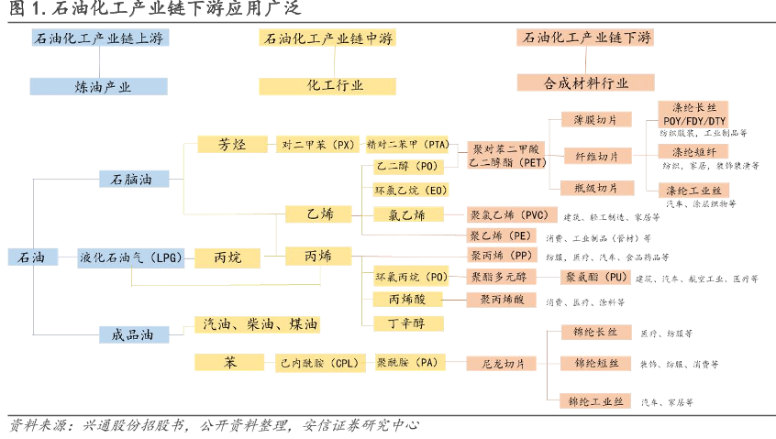
Core Viewpoint - The petrochemical industry is transitioning from a traditional, low-quality production model to a high-quality, innovative, and green development approach, driven by policy guidance and market demand [2][15]. Group 1: Policy Guidance - The industry is moving away from "involution" and towards high-quality development, as indicated by national policies during the 14th Five-Year Plan, which emphasize supply-side structural reforms and balance between supply and demand [3][15]. - Capital expenditure in the basic chemical sector decreased by 9.07% year-on-year in the first three quarters of 2025, with 24 out of 33 sub-industries experiencing a decline [3][15]. - The number of ongoing projects in the basic chemical sector fell by 14.18% year-on-year, indicating a shift in the industry towards improved supply-demand dynamics [3][15]. Group 2: Green Transformation - The industry is redefining its image from "high pollution" to a green and sustainable sector, exemplified by the first domestic carbon footprint accounting for bio-based benzene, which has gained international recognition [7][18]. - A rigorous approach to green development has led to the establishment of a standardized carbon footprint accounting system, enhancing the credibility of green certifications for bio-based chemical products [7][18]. Group 3: Innovation Drive - The petrochemical sector is becoming a key player in technological innovation, focusing on high-end materials and fine chemicals, which are expected to lead global growth despite some slowdown in traditional product segments [8][19]. - The industry is addressing demand gaps in key supply chains, supporting enterprises in core technology breakthroughs, and fostering the development of innovative products [11][20]. - Notable advancements include breaking the import monopoly of core materials for photovoltaic adhesive films and accelerating the domestic production of materials needed for 5G communications [11][20]. Group 4: Future Outlook - The petrochemical industry is evolving into a provider of high-end new materials, a practitioner of green low-carbon initiatives, and a pioneer in technological innovation, moving away from traditional expansion models towards quality enhancement [12][20]. - Investors can capitalize on the industry's upward trend through the Petrochemical ETF (159731) and related funds, which track the petrochemical industry index, highlighting key sectors such as refining and trade, chemical products, and agricultural chemicals [21].
圣泉集团20250627
2025-06-30 01:02
Summary of Shengquan Group Conference Call Company Overview - Shengquan Group reported a revenue exceeding 10 billion yuan in 2024, with a year-on-year growth of 9.87% and a net profit attributable to shareholders of 868 million yuan, also up by 9.9% [2][7] - In Q1 2025, revenue grew by 15% year-on-year, and net profit increased by over 50%, indicating strong profitability with gross and net profit margins reaching new highs post-pandemic [2][7] Key Developments Electronic Materials - Shengquan Group achieved breakthroughs in the electronic materials sector, particularly with its self-developed polyphenylene oxide (PPO) and OP PPE resins, which have been certified by leading domestic companies [2][4] - The company has established an annual production capacity of 1,300 tons for these resins, with expectations for significant volume increase in 2025 [2][4] - The electronic resin products are primarily used in copper-clad laminates and semiconductor packaging, with projected revenues for 2025-2027 of 12.143 billion, 13.698 billion, and 15.535 billion yuan, reflecting year-on-year growth rates of 21.2%, 12.8%, and 13.41% respectively [4][10] Biomass Chemical Products - Shengquan Group focuses on the development of cellulose, hemicellulose, and lignin, with an annual production capacity of 20,000 tons of xylose and 15,000 tons of xylitol, which are profitable products [2][6] - The Daqing project, which has completed technical upgrades, is expected to contribute to profits as its operating rate stabilizes [2][6] Integrated Biomass Utilization - The company has developed the Shengquan method for integrated biomass utilization, efficiently using all components of straw [2][9] - The Daqing straw integration project has been completed and is producing products like large-axis paper and furfural, with ongoing research into biochar and high-purity lignin [2][9] Financial Performance - Shengquan Group's financial performance has been robust, with a gross margin of 24.13% and a net margin of 8.79% in Q1 2025, both marking new highs since the pandemic [7] - The company maintains a low overall debt ratio and sufficient cash flow, supporting business expansion and operations [7] Future Goals - The company aims to double profits and employee income from 2025 to 2027 and has announced an employee stock ownership plan to incentivize staff [2][8] - A targeted issuance of 62.25 million shares at 14.06 yuan per share, subscribed by the controlling shareholder, reflects confidence in future development [2][8] Market Position - Shengquan Group is a leading player in the synthetic resin industry in China, with a production capacity of 650,000 tons of phenolic resin, capturing over 26% of the domestic market [3] - The company benefits from scale and R&D advantages, allowing it to mitigate environmental costs compared to smaller competitors [3] Risks - The report highlights several risks including valuation risk, profit forecast risk, operational risk, financial risk, technological risk, and policy risk, which could impact the company's long-term growth potential [12] Valuation - The company's reasonable valuation range is estimated between 28.8 and 29.74 yuan based on free cash flow and relative valuation methods, with an initial rating of outperforming the market [4][11]