自动驾驶平台

Search documents
从中国到欧洲:小马智行以“资本高效”模式开启自动驾驶商业化全球征程
Guan Cha Zhe Wang· 2026-03-27 04:14
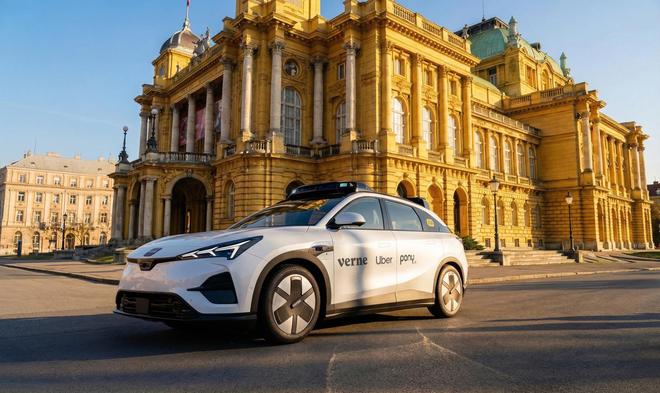
Core Insights - Pony.ai has developed a unique commercialization path of "China validation - global replication" in the autonomous driving industry, marking a shift from mere technology output to a complete, replicable business ecosystem [1][11] Group 1: Transition from Technology Validation to Commercial Viability - Pony.ai's global story begins with achieving a "commercial closure" in the Chinese market, focusing on real-world operations in complex cities like Guangzhou and Shenzhen [2][4] - By the end of 2025 to early 2026, Pony.ai's seventh-generation autonomous vehicles achieved unit economic breakeven in Guangzhou, followed by Shenzhen in March 2026, indicating a shift from a money-burning technology showcase to a self-sustaining business unit [2][4] Group 2: Efficient Global Expansion Model - Pony.ai has created a "capital-efficient" expansion model, contrasting with traditional internationalization that requires high capital investment [5][6] - The model involves providing a validated autonomous driving platform while local partners manage fleet assets, operations, and market access, allowing for a "light asset" and "high leverage" approach [6][7] Group 3: Strategic Choice of Croatia - The selection of Croatia as the first European market is strategic, providing a representative urban environment with complex traffic conditions, which serves as a "pressure testing ground" for the technology [7][8] - Successfully operating in Zagreb will demonstrate the adaptability of Pony.ai's technology and business model across Europe, paving the way for entry into larger markets [7][8] Group 4: Long-term Value Creation Ecosystem - Pony.ai's international expansion signifies a deeper value creation logic, with the potential for significant cost reductions and increased platform valuation as the technology operates effectively in diverse environments [8][10] - The collaboration with European partners not only facilitates market entry but also integrates local supply chains and policy resources, fostering conditions for future product iterations and localized innovations [8][10] Group 5: Opening Up Diverse Commercialization Paths - The current focus on Robotaxi operations is just the beginning; as technology matures, it can be applied to broader fields such as autonomous logistics and urban delivery, creating a multi-layered value creation network [10][11] - Pony.ai's approach illustrates a shift in the industry towards building replicable, scalable, and capital-efficient business models, which is crucial for the large-scale commercialization of autonomous driving [11]

港媒:中国AI应用具有集体主义观念
Huan Qiu Wang Zi Xun· 2026-01-21 22:44
Group 1 - The article discusses how China's approach to artificial intelligence (AI) is reshaping global perceptions and applications, focusing on integrating AI into various societal aspects rather than just developing proprietary models [1] - China aims to make AI a public utility, similar to electricity and broadband, ensuring its affordability and widespread availability across production, services, governance, and welfare [1] - Major Chinese tech companies like Baidu, Tencent, and iFlytek are becoming platform providers for AI services, with a focus on creating a nationwide AI neural network [1] Group 2 - Baidu's autonomous driving platform exemplifies the integration of AI with smart infrastructure, AI mapping, sensors, and cloud collaboration, while Huawei provides comprehensive AI systems for industrial parks and ports [2] - AI tools are also being utilized in rural China, where e-commerce platforms offer farmers AI-driven solutions for crop diagnosis, yield prediction, and pricing [2] - Open-source technology plays a strategic role in China's AI ecosystem, facilitating collaboration among developers, startups, universities, and local governments, aligning with China's emphasis on collective problem-solving and standardization [2] Group 3 - China's AI model is particularly appealing to global south countries, offering affordable alternatives to the financial and institutional barriers posed by Western approaches [3] - Initiatives like the "Digital Silk Road" integrate AI systems with infrastructure such as power grids and 5G networks, promoting a state-led growth model prevalent in Asia, Africa, and the Middle East [3] - The cultural foundation of China's AI path emphasizes collective interests, collaborative governance, and practical problem-solving, potentially reshaping the global technology market and societal perceptions of AI [3]


冰面的破碎:从CES 2026看科技公司接管世界
3 6 Ke· 2026-01-05 10:15
Core Insights - The CES 2026 has expanded significantly, featuring over 30,000 square meters of exhibition space and more than 4,500 exhibitors, indicating a shift from traditional consumer electronics to a broader technological landscape [1] Group 1: Industry Trends - AMD's CEO, Lisa Su, will deliver a keynote focusing on "full-stack AI computing from cloud to edge," highlighting the increasing importance of AI in technology [2] - NVIDIA's CEO, Jensen Huang, will also present at CES, showcasing the latest advancements in AI, emphasizing the competitive landscape in the AI sector [3] - Chinese companies like Geely and Great Wall are making significant strides in the autonomous driving space, indicating a strong presence of international competitors at CES [3] Group 2: Economic Impact - The technology sector is breaking through traditional economic barriers, with companies redefining industries such as automotive, retail, and finance through software and AI innovations [5] - By early 2026, the market dominance of the "Big Seven" tech companies in the U.S. will peak, with NVIDIA, Microsoft, and Apple alone reaching a combined market capitalization of $12 trillion, underscoring their foundational role in the global economy [6] Group 3: Startup Dynamics - The growth logic for startups is changing, with advancements in large models and cloud infrastructure significantly reducing product development and customer acquisition costs, leading to a shift in power dynamics in the capital market [7] - Companies like Manus have rapidly increased their valuations, demonstrating the potential for startups to disrupt traditional investment patterns and attract significant capital [7] Group 4: Wealth Creation - The recent Hurun Rich List for 2025 shows that entrepreneurs in sectors like renewable energy, AI, and biomedicine make up 60% of the top 100, indicating a concentration of wealth in dynamic regions like the Greater Bay Area and Yangtze River Delta [8] Group 5: Cultural Shift - A cultural transition is occurring from "emotional literature" to "rational creation," with younger generations focusing on technology and innovation rather than traditional literary values [9][10] - The dominance of tech giants in wealth and influence is shaping societal aesthetics and values, marking a shift towards a technology-driven cultural paradigm [11] Conclusion - CES 2026 represents not just a consumer electronics exhibition but a celebration of technological leadership, with AI poised to integrate into everyday devices, signaling the onset of a new era defined by tech giants [12][13]




向黄仁勋汇报的英伟达36人
是说芯语· 2025-11-03 11:20
Core Viewpoint - The article discusses the organizational structure and strategic personnel changes at NVIDIA under CEO Jensen Huang, highlighting the importance of hardware and AI in the company's future growth while emphasizing the need for effective communication and management in a rapidly expanding company [2][6][65]. Group 1: Organizational Structure - Jensen Huang has 36 direct reports, divided into seven functional areas: strategy, hardware, software, AI, public relations, networking, and an executive assistant [5][66]. - The hardware segment remains a cornerstone of NVIDIA, with one-third of Huang's direct reports focused on hardware-related businesses, including GPUs and systems [9][10]. - Huang's management style favors a flat organizational structure, allowing for quick decision-making and information flow, which is crucial in the fast-paced tech industry [70][72]. Group 2: Key Personnel - Key figures under Huang include Jonah Alben, Dwight Diercks, and Bill Dally, who have been with the company for decades and play significant roles in GPU architecture, software development, and research [24][31][40]. - New addition Wu Xinzhu, responsible for automotive business strategy, brings extensive experience from Qualcomm and XPeng Motors, indicating NVIDIA's push into the automotive sector [52][56]. - The article notes that Huang's ability to identify and recruit talent is critical for NVIDIA's ongoing success, particularly in emerging markets [61][63]. Group 3: Strategic Focus - AI and advanced technologies are becoming a second pillar of Huang's business strategy, with a focus on unexplored markets [10][11]. - The automotive business is projected to see significant revenue growth, with NVIDIA's automotive revenue expected to nearly double from $281 million to $567 million in the fiscal years 2024 to 2025 [62]. - Huang's emphasis on a systematic external communication mechanism is essential for managing complex relationships with various stakeholders, including investors and government entities [16][18]. Group 4: Company Growth and Challenges - NVIDIA's net profit surged to approximately $29.5 billion in fiscal year 2024, a nearly 600% increase year-over-year, indicating robust business growth [81]. - The company's workforce grew from 29,600 to 36,000 employees within a year, marking a 21.62% increase, which presents challenges in maintaining a flat organizational structure [82]. - The rapid expansion has led to increased information noise and collaboration costs, prompting a potential shift towards a more vertical management structure [88][92].

全球第一车企,集齐中美双版Waymo
3 6 Ke· 2025-04-30 09:44
Core Insights - Toyota has announced a collaboration intention with Waymo, a leader in autonomous driving technology, marking its second significant move in the L4 autonomous vehicle sector within a week [1][3][4] - The partnership is currently defined as a "potential collaboration," indicating that discussions are ongoing and the scope of cooperation may evolve over time [4][6] - Waymo's approach to this partnership is more exploratory, focusing on developing a new autonomous driving platform, while also considering the integration of its technology into private vehicles in the future [6][9] Group 1: Collaboration Details - The collaboration with Waymo is seen as a strategic move for Toyota to enhance its autonomous driving capabilities, aligning with its vision of achieving a zero-traffic-accident society [9][24] - Toyota has a history of investing in autonomous driving technologies, including a $500 million investment in Uber in 2016, which aimed to integrate Uber's autonomous algorithms into Toyota vehicles [9][11] - Following Uber's challenges in the autonomous space, Toyota shifted its focus to other partnerships, including a collaboration with Aurora to develop an L4 autonomous driving platform [11][13] Group 2: Market Context and Strategy - The partnership with Waymo comes at a time when Toyota is also advancing its collaboration with Chinese autonomous driving company Pony.ai, which has shown significant progress in the Robotaxi sector [15][17] - Pony.ai's successful deployment of autonomous vehicles in complex urban environments has positioned it as a key player in the Robotaxi market, which Toyota aims to leverage [17][22] - The establishment of a joint venture with Pony.ai and the recent launch of the seventh-generation Robotaxi model indicate Toyota's commitment to scaling its autonomous vehicle operations [22][30] Group 3: Future Outlook - The collaboration with Waymo is part of Toyota's broader strategy to secure partnerships in both North America and China, reflecting its need to adapt to the rapidly evolving autonomous vehicle landscape [24][26] - The integration of advanced technologies and operational models from both Pony.ai and Waymo is expected to enhance Toyota's competitive edge in the global Robotaxi market [30][31] - As the industry moves towards commercialization, the partnership with Waymo and the ongoing collaboration with Pony.ai are seen as critical steps for Toyota to establish a strong foothold in the autonomous driving sector [26][31]