茶啤酒

Search documents
华润啤酒2025年高端化领跑 “9年战略”期间净利润复合年均增长率达23%
Zheng Quan Ri Bao· 2026-03-24 08:06
Core Viewpoint - In 2025, China Resources Beer is concluding its "14th Five-Year Plan" and the "3+3+3" nine-year strategy, with a focus on high-end beer development and addressing emerging business gaps while maintaining cautious optimism for future growth in revenue and profit despite market challenges [1][2]. Group 1: Financial Performance - In 2025, China Resources Beer achieved revenue of 37.985 billion yuan, an increase of 6.537 billion yuan during the "14th Five-Year Plan" period [1]. - The net profit for 2025 was 3.371 billion yuan, a year-on-year decline of 28.87%, while the net profit excluding non-recurring losses was 5.724 billion yuan, reflecting a year-on-year growth of 19.6% [2]. - The compound annual growth rate (CAGR) for revenue from 2017 to 2025 was 3%, while the net profit CAGR was 23%, indicating a strong performance over the nine-year strategy [2]. Group 2: Business Strategy and Market Position - The company is committed to a high-end strategy, with a focus on the mid-to-high-end beer segment, which now accounts for nearly 25% of total sales, and has seen significant growth in brands like "Heineken" and "Snow" [3]. - The beer business generated revenue of 36.489 billion yuan in 2025, with a gross margin increase of 1.4 percentage points to 42.5% due to cost savings and operational efficiency improvements [3]. - New product launches include Belgian-style white and black beers, as well as tea and fruit beers, aimed at diversifying the product range [3]. Group 3: Online Business Development - The online business of China Resources Beer has seen rapid growth, with a year-on-year increase of over 30% in 2025, supported by strategic partnerships with major online platforms [4]. Group 4: White Wine Business - The white wine segment generated revenue of 1.496 billion yuan in 2025, but faced challenges leading to a goodwill impairment of 2.877 billion yuan [5]. - The company views the white wine business as a long-term growth opportunity, emphasizing the importance of brand stability, pricing strategy, and channel management [5]. - Experts suggest that the company’s strong capital and channel capabilities will enhance its resilience and potential for mergers and acquisitions in the white wine sector [5]. Group 5: Market Reaction - Following the financial report release, the market responded positively, with the stock price increasing by 5.66% to 25.38 HKD per share [6].

湖北宜昌夷陵区新茶饮企业布局消费新场景
Zhong Guo Jing Ji Wang· 2026-01-27 15:02
Group 1 - The core viewpoint of the news is the launch of the Xiaopin Tea Shop in Yichang, Hubei, which is part of a month-long promotional event called "Three Cities Linked New Year Goods Season" aimed at enhancing consumer engagement through a multi-channel approach combining offline experiences and online purchases [1] - Xiaopin Tea Industry is introducing new consumption scenarios by developing new-style tea drinks and a full range of tea products, including tea leaves, tea drinks, tea foods, tea beer, and tea liquor, targeting the growing market of young consumers aged 22-35, who represent over 70% of the new tea drink market [1] - The promotional event is designed to create a differentiated thematic experience based on the cultural customs of different cities, thereby establishing a complementary consumption scene matrix that enhances the brand's presence in key cities in western Hubei [1] Group 2 - Yiling District has a long history of over 1,700 years in tea cultivation, with current tea garden area exceeding 230,000 acres and an annual tea production of nearly 40,000 tons [2] - The region has received several honors, including being recognized as a "National Modern Agricultural Demonstration Zone" and a "Top 100 Tea County in China," highlighting its significance in the tea industry [2]
家族绝对控股、社保历史欠缴…金星啤酒赴港上市的风险清单
Sou Hu Cai Jing· 2026-01-16 08:45
Core Viewpoint - The company has shown significant revenue growth and improved profit margins, but faces serious internal control issues and dependency on a single product line, which raises concerns about sustainability and compliance risks [2][5][10]. Financial Performance - Revenue increased from 356 million RMB in 2022 to 1.11 billion RMB in the first nine months of 2025, with a net profit margin rising from 3.4% in 2023 to 27.5% in 2025 [2]. - Gross margin is projected to rise from 27.3% in 2023 to 37.8% in 2024, while net profit margin is expected to increase from 3.4% to 17.2% in the same period [5]. Internal Control Issues - The company has reported significant shortfalls in social insurance and housing fund contributions, with unpaid amounts of 7.5 million RMB, 7.9 million RMB, and 6.5 million RMB for 2023, 2024, and the first nine months of 2025, respectively [6]. - There are serious financial control vulnerabilities, with 40.5% of dealer payments in 2024 flowing through third-party accounts, raising legal risks related to money laundering [7]. - Approximately 25.7% of the company's building area lacks ownership certificates, and a construction site in Xi'an lacks necessary permits, posing regulatory and operational risks [8]. Product Dependency - The company heavily relies on its "Chinese Craft Beer" category, particularly the tea beer series launched in August 2024, which accounted for 78.1% of revenue in the first nine months of 2025 [10]. - The sustainability of growth is questioned as consumer acceptance of the "tea + beer" combination may not last, and any decline in popularity could severely impact revenue [10]. Market Competition - The company claims to be a leader in the "flavor craft beer" segment, but the Chinese beer market is dominated by the top five companies, which hold over 80% of the market share [16]. - Despite significant price increases and improved margins, the overall interest in the beer sector remains low, with current market valuations limiting growth potential [17]. Ownership Structure - The company's ownership is highly concentrated, with the Zhang family controlling 100% of the equity through direct and indirect means [17]. Conclusion - While the company presents a compelling growth narrative, the underlying compliance issues, product dependency, and competitive landscape necessitate a cautious evaluation of its long-term sustainability and market position [18].

全链数字化赋能 保康茶产业焕新生
Xin Lang Cai Jing· 2025-12-19 11:15
Core Insights - The tea industry in Baokang County is undergoing a digital transformation, integrating modern technologies such as IoT and big data to enhance the entire supply chain from "tea garden" to "tea cup" [1][2] - The implementation of a digital quality control system has significantly improved production efficiency and enabled the development of high-value products like tea beer and tea extracts for international markets [2] Digital Transformation in Tea Industry - Baokang County is leveraging central government support to modernize its tea industry through the use of IoT, big data, and advanced technologies [1] - The county has initiated projects to build new ecological tea gardens and upgrade low-yield tea gardens, incorporating real-time data collection through sensors for better management [1] Quality Control and Traceability - The introduction of advanced tea processing lines has allowed traditional tea-making techniques to be quantified and replicated, enhancing product quality [1] - A digital traceability system using blockchain technology has been established, providing each batch of tea with a unique "digital ID" for transparent tracking throughout its lifecycle [1] Economic Impact and Industry Integration - The use of smart equipment has reduced labor costs by 80% for companies like Yuhuangjian Tea Industry, leading to significant increases in annual output value [2] - The digital transformation has spurred the integration of tourism and tea production, creating a new model for rural development that attracts over 100,000 visitors annually [2] Replicable Model for Other Regions - The successful practices in Baokang demonstrate that high-quality agricultural development can be achieved through systematic digital transformation of the entire industry chain [2]
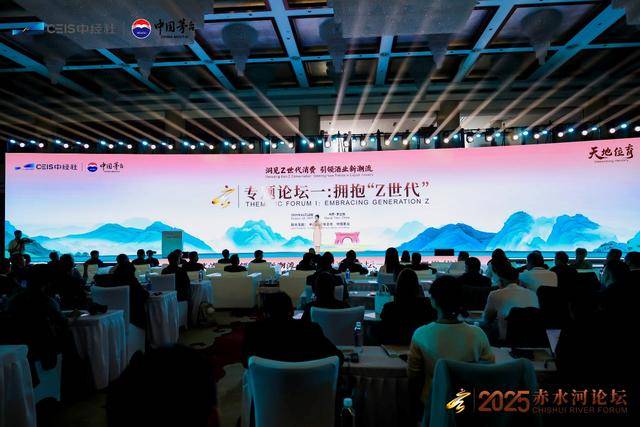
拥抱Z世代 年轻化已成酒业转型“必选项”
Sou Hu Cai Jing· 2025-10-29 04:09
Core Insights - The rise of Generation Z is transforming the consumption landscape, making them a central force in the market, particularly in the liquor industry [1][3] - The Z generation, born between 1995 and 2009, values cultural identity, social connections, and experiences, leading to a shift in consumption patterns [3][6] - Embracing Generation Z is not just a strategic choice but a necessity for the liquor industry to remain competitive [3][6] Industry Trends - The Z generation's consumer preferences are characterized by a focus on health, rational consumption, and a decrease in drinking frequency and quantity [3][4] - Digital technology and innovative consumption scenarios are providing strong support for the youth-oriented transformation of the liquor industry [4][6] - The liquor industry is witnessing a multi-faceted transformation, with companies innovating across product offerings, consumption scenarios, supply, and cultural aspects [6][8] Product Innovation - Product innovation is a core focus for attracting the Z generation, with trends leaning towards lower alcohol content and fruit-flavored beverages [6][8] - Cross-industry collaborations, such as tea and alcohol fusion products, are emerging as new growth points in the market [6][7] Cultural Engagement - Cultural values and storytelling are becoming essential in attracting young consumers, as they seek products with meaningful backgrounds [7][8] - Companies are shifting from traditional marketing to more engaging methods like short videos and social media interactions to resonate with the Z generation [8] Strategic Directions - Long-term commitment to innovation is crucial for companies aiming to capture the young market [8] - The integration of online and offline experiences, along with personalized services, is vital for appealing to the Z generation [8]