
虚拟仿真实验室

Search documents
深圳政协委员为深圳改革开放、高质量发展建言献策
Zhong Guo Fa Zhan Wang· 2026-02-10 08:36
Group 1: AI and Digital Economy - Shenzhen's digital economy core industry added value is expected to exceed 1 trillion yuan in 2024, accounting for 10% of the city's GDP, showing steady year-on-year growth [1] - The demand for composite digital talents is experiencing explosive growth due to the expansion of digital industry clusters such as artificial intelligence, big data, and industrial internet [1] - The current digital education transformation in higher education faces challenges, including uneven infrastructure, insufficient curriculum integration with digital strategies, and weak collaboration with leading digital economy enterprises [2] Group 2: Park Development and Urban Innovation - Shenzhen has built 1,350 parks, creating a high-density public space network that can serve as a low-cost, high-traffic platform for enterprises, especially startups [3] - There is a noticeable gap between the functional supply of parks and the large market demand, indicating the need for a more innovative approach to park utilization [3] - Suggestions include implementing a thematic renovation project and exploring market-oriented operations to enhance the parks' roles in economic development [3] Group 3: Semiconductor and Integrated Circuit Industry - The semiconductor and integrated circuit industry is identified as a strategic and foundational sector for economic development, with Shenzhen aiming to build a world-class innovation hub [4] - Pingshan District has formed a relatively complete industrial chain in the semiconductor sector, with chip manufacturing capacity exceeding 50% of the city's total [4] - Recommendations include supporting the establishment of a semiconductor and integrated circuit industry cluster in Pingshan and advancing packaging projects to enhance competitiveness [4]
加快推进教师队伍数字化转型
Xin Hua Ri Bao· 2026-01-16 03:12
Group 1 - The core viewpoint of the article emphasizes that digital technology is a key driver for the transformation and development of higher education, with teachers' digital literacy being crucial for high-quality educational development [1] Group 2 - The construction of a digital campus is essential for supporting teachers' transformation, which includes enhancing digital infrastructure, improving network coverage, and creating intelligent interactive teaching spaces [2] - The establishment of a private cloud for unified resource management and efficient computing power supply is necessary for data center development [3] Group 3 - A new teacher training model is proposed to enhance digital literacy, focusing on developing human-machine collaboration skills through a structured training system [4] - A tiered development path for teachers is outlined, emphasizing skill mastery for novice teachers and encouraging advanced teachers to lead in digital resource sharing and academic exchanges [5] Group 4 - A robust institutional support system is critical for enhancing teachers' digital literacy, combining rigid policies with flexible cultural elements to create a supportive environment for teacher development [7] - The promotion of a collaborative and mutually supportive atmosphere among teachers is encouraged, leveraging the strengths of experienced teachers to guide younger ones in digital tool usage [8]
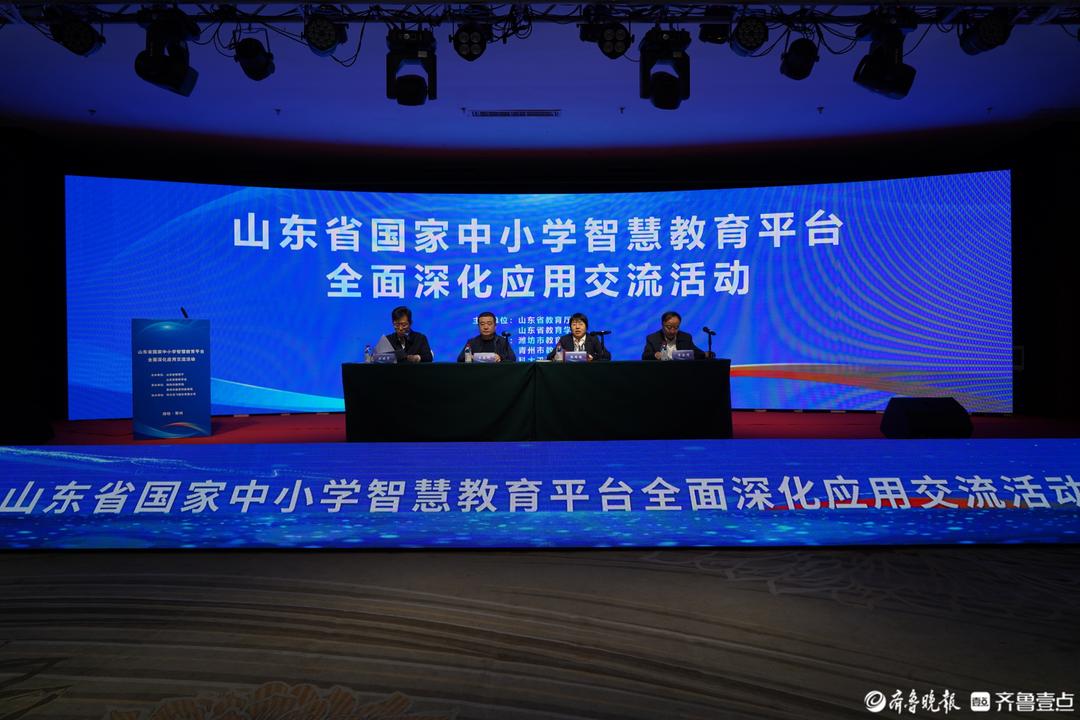
山东省国家中小学智慧教育平台全面深化应用交流活动在青州举办
Qi Lu Wan Bao· 2026-01-10 07:52
Core Insights - The event held in Qingzhou, Shandong Province, focused on the deep application of the National Primary and Secondary School Smart Education Platform, promoting digital education and sharing practical experiences [1][2][13] Group 1: Event Overview - The two-day event featured a combination of on-site observation and centralized exchanges, aimed at sharing practical experiences and building a platform for mutual learning in smart education [2] - Key figures from the Shandong Provincial Education Department and local governments attended, emphasizing the importance of digital education in driving high-quality educational development [1][2] Group 2: Practical Applications - Participants experienced the innovative applications of the National Smart Education Platform at four observation points, showcasing how the platform enhances educational practices in county-level education [4] - Qingzhou Nanhua School utilized the platform to create a "1+3+N" curriculum framework, integrating cross-disciplinary learning and project-based research [4] - Qingzhou Hongyuan School developed an AI+ educational system, facilitating cross-school exploration on real-world issues, demonstrating a new classroom model centered on student learning and thinking [6] Group 3: Teaching Innovations - Qingzhou Middle School implemented a "Four Preparations and Three Research" collective lesson preparation model, transforming teaching and research structures [9] - The school used the platform to enhance chemistry lessons, creating a complete teaching chain that includes pre-class preparation, in-class exploration, and post-class consolidation [9] - The Qingzhou Artificial Intelligence Learning Experience Center showcased a dual-track educational ecosystem, combining online authoritative courses with immersive offline practices [11] Group 4: Future Directions - The event reinforced a consensus on the development of digital education in Shandong, promoting replicable and scalable application experiences [13] - The province plans to continue deepening the application of the National Smart Education Platform, fostering resource sharing and collaborative research to support balanced educational development [13]

破解中小学AI教育“五无”:科企入校成效显著,西部教材、教师缺口明显
Xin Lang Cai Jing· 2025-12-20 08:46
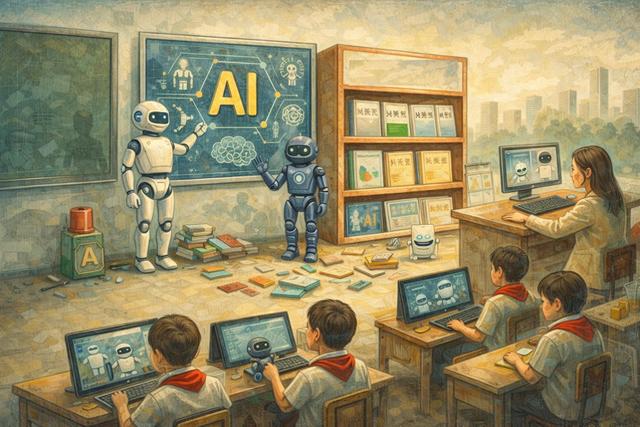
Core Insights - The implementation of AI education in primary and secondary schools is set to officially begin in certain provinces by September 2025, driven by various policies and guidelines from the Ministry of Education [3][6] - There is a significant disparity in the understanding and application of AI among teachers in less developed regions compared to more developed areas, highlighting a need for improved training and resources [4][5] Group 1: Current State of AI Education - As of now, many teachers in less developed regions have limited exposure to AI tools, with only about 30% having used AI in their work, indicating a gap in familiarity and application [3][4] - In Shanghai, over 6,000 teachers have utilized AI for lesson preparation, and more than 15,000 have incorporated AI tools into their teaching, showcasing a more advanced integration of AI in education [3] Group 2: Challenges in AI Education Implementation - The "Five Nos" concerns raised by experts include the lack of fixed class hours, standardized textbooks, professional teachers, smart devices, and evaluation standards, which hinder the effective rollout of AI education [2][4] - Many existing AI educational materials are outdated or overly focused on promoting specific technology products, lacking the necessary breadth and depth for comprehensive education [5][6] Group 3: Role of Technology Companies - Technology companies are increasingly recognized for their role in providing comprehensive AI education solutions, with firms like iFlytek and DJI leading initiatives in various provinces [4][5] - These companies are leveraging cloud technology to create virtual labs, making AI education more accessible to schools with limited resources [4] Group 4: Future Directions - There is a growing demand for national standardized textbooks and more training opportunities for teachers to enhance the quality of AI education [5][6] - Concerns have been raised about the potential commercialization of AI education, with some regions focusing excessively on competitions and certifications, which may detract from the core educational objectives [6]
多举措挖掘虚拟现实技术在高等教育中的潜力
Xin Hua Ri Bao· 2025-08-13 22:54
Group 1 - The core viewpoint emphasizes the integration of virtual reality technology into higher education to enhance teaching and practical skills training [1][2][4] - The demand for high-quality skilled talent is increasing, necessitating a transformation in educational models through the collaboration of higher education institutions and relevant stakeholders [2][3] - A structured approach is needed for the development of virtual reality applications in education, including short-term, mid-term, and long-term planning [3][4] Group 2 - The establishment of a comprehensive teaching system is crucial for improving talent cultivation quality, which includes enhancing resource sharing and collaboration among institutions [4][5] - Virtual reality technology can enrich teaching content by providing interactive and immersive learning experiences, thereby improving students' understanding of complex concepts [4][7] - The use of virtual reality in practical courses allows for safe simulations of hazardous experiments, enhancing students' hands-on experience without the associated risks [7][8]