
蚕桑

Search documents
推动农耕文明和现代文明有机融合交相辉映
Xin Lang Cai Jing· 2026-02-04 22:38
Core Viewpoint - The integration of traditional agricultural civilization and modern urban culture in Chengdu Plain is highlighted, showcasing the region's rich agricultural heritage and its evolution into a modern economic hub [1][10]. Agricultural Development - Chengdu Plain's agricultural practices are characterized by a highly developed irrigation system and a focus on rice cultivation, with the Dujiangyan irrigation system being a key historical achievement [2][4]. - The agricultural landscape has evolved over centuries, with significant changes during the Ming and Qing dynasties, including the introduction of high-yield crops and a two-crop system that enhanced land productivity [3]. Cultural Heritage - The "Linpan" settlement pattern, a unique agricultural community structure, reflects the integration of natural conditions and agricultural needs, forming a semi-natural, semi-artificial ecosystem [6][8]. - Linpan culture has historical roots dating back to the Qing Dynasty, evolving through the influence of immigration and local agricultural practices [7][8]. Modernization and Challenges - Since the establishment of the People's Republic of China, agricultural modernization has progressed, with mechanization and the introduction of high-yield varieties contributing to increased food production [4][10]. - The rapid urbanization and industrialization in Chengdu pose challenges to traditional agricultural landscapes, leading to the disappearance of some Linpan settlements [10]. Cultural Preservation Efforts - Recent initiatives by the Sichuan provincial and Chengdu municipal governments focus on the preservation and promotion of agricultural cultural heritage as part of rural revitalization and cultural confidence [11][12]. - Educational programs incorporating agricultural culture into school curricula aim to foster respect for land and agricultural labor among students [13]. Economic Significance - Chengdu Plain is a vital economic area, contributing significantly to the province's GDP and housing a majority of its population and high-tech industries [10].
常态化帮扶,新阶段怎么干(新年谈“新”·五位干部群众谈常态化帮扶)
Ren Min Ri Bao· 2026-01-08 22:53
Core Viewpoint - The central rural work conference emphasizes the establishment of a normalized mechanism to prevent poverty and ensure continuous support for underdeveloped areas, aiming to consolidate and expand the achievements of poverty alleviation efforts during the 14th Five-Year Plan period [1] Group 1: Mechanism and Strategy - The first year of normalized assistance will begin in 2026, focusing on preventing large-scale poverty and ensuring effective support for vulnerable households [1] - A monitoring and assistance mechanism has been established in Wu Bu County, which includes regular checks, precise monitoring, and differentiated support to identify and assist at-risk households [2][3] - The strategy includes enhancing development capabilities through effective assistance and ensuring a robust social security system to prevent large-scale poverty [3] Group 2: Employment and Industry Development - Emphasis on industry and employment as key areas for development, with plans to enhance local agricultural products and create job opportunities through various initiatives [3][4] - Specific plans include promoting local specialties such as green pears and hand-made noodles, and utilizing labor cooperation and employment assistance projects [3][4] Group 3: Community and Individual Success Stories - Individual success stories highlight the effectiveness of assistance policies, such as the case of Li Guozhi, who improved his family's living conditions through hard work and support from poverty alleviation funds [5][6] - The community's approach includes a detailed management service model to address the needs of relocated populations, ensuring timely assistance and employment opportunities [8][9] Group 4: Cultural and Tourism Development - The development of cultural tourism in Huanghu Village has led to significant increases in visitor numbers and local employment, showcasing the potential of integrating culture with economic development [10][11] - Plans to enhance local tourism infrastructure and promote agricultural products through branding efforts are underway, aiming to increase the economic stability of the community [11][12]
“搬得出”“能致富” 四川会东答好移民“安居乐业”时代考卷
Zhong Guo Jing Ji Wang· 2025-12-24 13:55
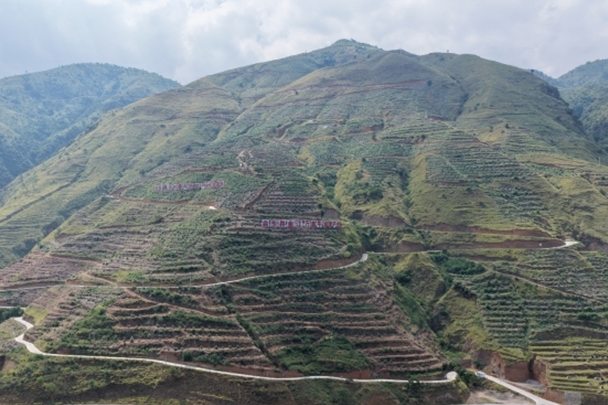
Core Viewpoint - The article emphasizes the importance of high-quality resettlement work for the communities affected by large hydropower projects, focusing on ensuring that displaced populations can move out, settle down, and achieve prosperity through targeted support and development initiatives [1]. Group 1: Resettlement and Support Policies - The county has implemented national policies for the post-support of large reservoir migrants, establishing a comprehensive support system to ensure the successful resettlement and economic integration of displaced communities [1][2]. - A work team has been formed to focus on key areas such as industrial development and improving living standards, aiming to transition from mere housing to sustainable livelihoods for the migrants [1][8]. Group 2: Development of Supporting Industries - The county is leveraging its climatic advantages to develop distinctive supporting industries tailored for the migrant population, which are crucial for their economic prosperity [2][4]. - The establishment of the Jinjiang Avocado Industrial Park has created over 15,000 job opportunities annually and is expected to generate over 200 million yuan in additional income for the local community [4][5]. Group 3: Infrastructure Development - Infrastructure improvements are being prioritized to support the resettlement process, including water, electricity, and road enhancements, which are essential for the migrants' daily lives and economic activities [9][10]. - Specific projects, such as the construction of irrigation stations and road upgrades, have directly benefited thousands of residents, enhancing their productivity and quality of life [9][11]. Group 4: Skills Training and Empowerment - The county has initiated ongoing training programs to equip migrants with necessary skills for new industries, focusing on practical agricultural techniques and fostering self-sufficiency [12][14]. - Over 100 training sessions have been conducted, benefiting more than 5,000 individuals and cultivating over 200 local leaders in various agricultural sectors [12][15]. Group 5: Ecotourism and Cultural Integration - The county is exploring new pathways for development by integrating supporting industries with ecotourism, capitalizing on the natural beauty and fishing resources of the region [5][6]. - The establishment of Jinjiang Fishing Village has attracted significant tourist traffic, providing additional income streams for local residents and enhancing the community's economic resilience [6][8]. Group 6: Future Goals and Vision - The county aims to continue its efforts in ensuring that displaced populations can thrive economically, with a focus on transforming the hydropower resettlement area into a model for rural revitalization characterized by prosperous industries, affluent residents, and a beautiful environment [16].

福建、江西、重庆深化集体林权制度改革——林海“淘金” 绿富同兴
Jing Ji Ri Bao· 2025-12-18 22:09
Core Viewpoint - The reform of the collective forest rights system is a significant practice for improving the basic management system in rural areas, playing an important role in promoting high-quality forestry development and invigorating rural revitalization [1] Group 1: Reform Initiatives - The State Council issued a plan to deepen the collective forest rights system reform, supporting Fujian, Jiangxi, and Chongqing to build pilot areas for this reform [1] - Fujian Province is implementing a "three-multiple" reform pilot focusing on "multiple benefits, multiple operations, and multiple services" to enhance the collective forest rights system [2] - Jiangxi has initiated a pilot for early extension of collective forest land contracts, signing contracts for 873.74 million mu, which is 74.4% of the area eligible for extension [3] Group 2: Economic Impact - The total output value of the forestry industry in Fujian reached 812.1 billion yuan, growing by 6.1% [3] - In Jiangxi, the total forestry output value exceeded 713 billion yuan, with per capita disposable income for forest farmers reaching 3,031 yuan, a year-on-year increase of 5.6% [7] - In Chongqing's Qianjiang District, the average output value per mu of forest land reached 2,490 yuan, with per capita disposable income from forestry for farmers at 1,700 yuan [4] Group 3: Financial Innovations - Jiangxi has developed green financial products such as forestry economic revenue rights pledge loans, with a total of 393.72 billion yuan in forestry rights mortgage loans issued [5][6] - Qianjiang District has established a "Qianjiang Forestry Branch" to enhance green financial products, effectively addressing funding issues for forestry development [6] Group 4: Industry Linkages - Fujian has established high-standard demonstration bases for under-forest economy, generating 1.26 billion yuan in output value and involving 12,000 forest farmers [7] - Jiangxi's Fuzhou City has created 683 modern forestry industrial bases, leading to the establishment of 10 characteristic industrial clusters [7] - Chongqing's Chengkou County has actively promoted the orderly transfer of forest land management rights, revitalizing over 800,000 mu of collective forest land [8]
科技赋能专业镇建设!省农科院专家赴化州那务镇开展技术对接
Nan Fang Nong Cun Bao· 2025-12-09 05:34
Core Viewpoint - The article discusses the efforts of the Guangdong Provincial Academy of Agricultural Sciences to support the development of Nawu Town as an innovative professional town, focusing on the silk and Huajuhong industries through technology integration and training [7][10][12]. Group 1: Industry Development - Nawu Town has been recognized as one of the first innovative professional towns in Guangdong Province, emphasizing the development of unique agricultural sectors such as silk and Huajuhong [7][8]. - The Provincial Academy of Agricultural Sciences is acting as a technological support unit, leveraging its expertise to enhance the local agricultural industry [7][8][12]. Group 2: Technical Support and Training - A team of experts from the Provincial Academy conducted a technical exchange with local leaders to understand the current status and challenges of the silk and Huajuhong industries [10][11]. - A specialized training session was held, focusing on standardized cultivation techniques for Huajuhong, attracting over 70 participants, including agricultural technicians and local farmers [14][17]. - The training emphasized the importance of standardized practices in ensuring product quality and enhancing the competitiveness of the Huajuhong industry [19][20]. Group 3: Future Prospects - The article highlights the market potential of Huajuhong as a distinctive agricultural product from Huazhou, indicating a promising future for the industry [19][20]. - The integration of technology and standardized cultivation methods is seen as crucial for the sustainable development and upgrading of the local agricultural sectors [12][19].
