
石斛

Search documents
“兰”不住的心动!缤纷兰花邀您共赏
Xin Lang Cai Jing· 2026-02-19 09:41
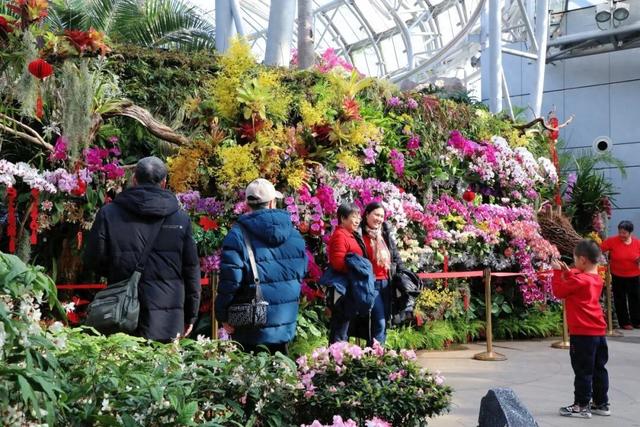
Core Viewpoint - The National Botanical Garden is hosting the fourth Orchid Exhibition during the Spring Festival, showcasing a variety of orchids that blend the festive spirit with their beauty, creating a unique spring scenery [1]. Group 1: Exhibition Highlights - The exhibition features a premium orchid display area, gathering numerous rare orchid species that attract visitors with their unique shapes and vibrant colors, offering a stunning visual feast [3]. - Orchids related to the Year of the Horse are also on display, including the Horse Orchid and the Butterfly Orchid [6]. Group 2: Featured Orchid Species - The Stanhopea genus, known for its complex and fragrant flowers resembling a horse-drawn carriage, is highlighted, with the largest species, the Tiger-striped Stanhopea, having flowers that can reach 18 cm in diameter and emit a chocolate scent [8]. - The Phalaenopsis equestris, a native species with a completed genome sequencing published in a renowned journal, serves as a foundation for further research and breeding efforts in orchids [16]. Group 3: New and Unique Varieties - The exhibition also includes new and unique miniature orchids, such as Pleurothallis Walnut Valley and various colorful and fragrant Dendrobium hybrids [19][41]. - The event features a range of Dendrobium species, including the Dendrobium Ice Beauty and Dendrobium 'Pink Mood', showcasing the diversity and beauty of these orchids [49][54]. Group 4: Special Activities - The National Botanical Garden is also hosting the "2026 New Spring Wonderful Night" event from the first to the seventh day of the Lunar New Year, offering night tours and educational activities about plants [54]. - The event includes interactive activities where participants can explore the greenhouse, collect stamps, and win exclusive rewards [56].

云南两会热议:中医药“厚家底”如何转化为“强动能”
Zhong Guo Xin Wen Wang· 2026-01-30 06:07
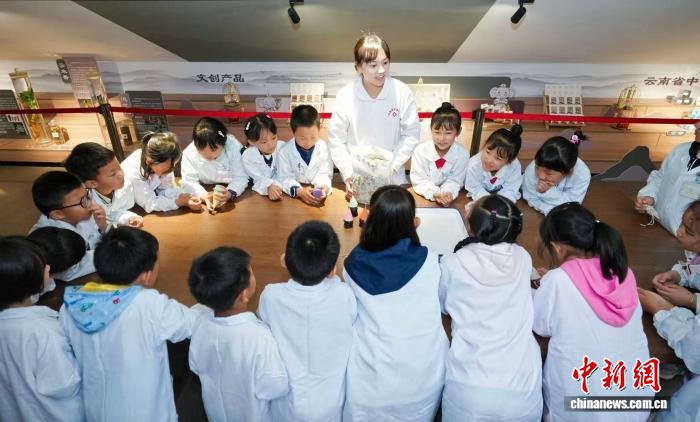
Core Viewpoint - The development of the traditional Chinese medicine (TCM) industry in Yunnan is being discussed during the provincial two sessions, focusing on transforming its rich resources into strong economic momentum [1][6]. Group 1: Industry Resources and Current Status - Yunnan is a major province for Chinese medicinal materials, possessing 8,875 out of approximately 18,800 medicinal biological resources in China [1]. - The area dedicated to TCM cultivation in Yunnan reaches 10.72 million acres, maintaining the top position in the country for six consecutive years [1]. - The production of key medicinal materials like Sanqi and Dendrobium accounts for over 90% of the national output, with the comprehensive output value of TCM exceeding 180 billion yuan [1]. Group 2: Challenges and Recommendations - The processing conversion rate of TCM in Yunnan is only 29%, indicating a significant gap between raw material production and value-added processing [1]. - Suggestions from committee members include promoting the "Linxia Sanqi" model to utilize forest land for cultivation, thereby enhancing the quality of medicinal materials [2]. - The establishment of a collaborative conversion mechanism between medical institutions, research institutes, and enterprises is recommended to bring clinically validated formulations to market [2]. Group 3: Industry Development Strategies - A collective proposal suggests systematic efforts in breeding, standardization, deep processing, and research support to develop TCM into a pillar industry following tobacco [3]. - The integration of TCM with cultural tourism and health care is emphasized, with proposals to create TCM health tourism demonstration bases leveraging Yunnan's climatic and ecological advantages [3]. - Initiatives to enhance consumer engagement through cultural festivals and health experience activities are proposed to promote TCM as a lifestyle choice [5]. Group 4: Policy Alignment - The Yunnan provincial government has outlined plans in its 2026 work report to extend the TCM industry chain, cultivate major TCM varieties, and enrich the cultural and health tourism aspects of TCM [5]. - Yunnan Baiyao has established the world's first "lighthouse factory" in the field of TCM health products, reflecting the alignment of industry development with government policy [5].
年宵花市以“马”为媒新意浓
Xin Lang Cai Jing· 2026-01-10 22:40
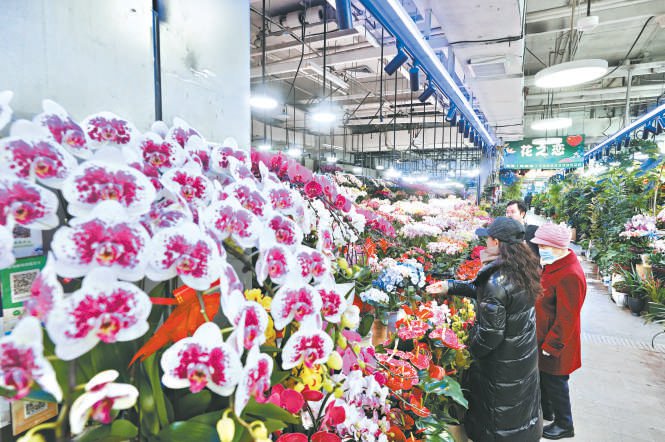
Group 1 - The market for New Year flowers is experiencing a surge in demand, with unique flower varieties gaining popularity and the ability to rebloom becoming a significant selling point [2][3] - The orchid variety, particularly the slipper orchid, has become a highlight in flower markets, with prices dropping significantly over the past decade, leading to increased consumer interest [2][4] - Family-oriented shopping for flowers has become a trend, with consumers prioritizing cost-effectiveness and the potential for flowers to bloom again next year [3][4] Group 2 - The butterfly orchid remains a top seller in the New Year flower market, with new color variations attracting younger consumers [4] - Supermarkets are increasingly incorporating flower sales, making it convenient for consumers to purchase flowers alongside groceries, with sales of orchid varieties increasing by over 30% [5] - New retail formats, such as small flower shops in subway stations, are emerging to meet consumer demand for easy access to flowers, significantly lowering the barriers to purchase [5]
新年将至,云南省委书记前往边境慰问
Xin Lang Cai Jing· 2025-12-27 15:37
Group 1 - The core message emphasizes the importance of border control and the development of characteristic industries in Yunnan, as highlighted by the provincial party secretary Wang Ning during his visit to the Dehong Dai and Jingpo Autonomous Prefecture [1][3] - Wang Ning stressed the need for enhanced border management capabilities and the importance of combating cross-border crimes, while also advocating for the welfare of border personnel and the prosperity of border communities [3][5] - The provincial government aims to leverage local climate and biological resources to strengthen and expand industries such as Dendrobium and coffee, with a focus on innovation and market development [5][8] Group 2 - The "园中园" (Park-in-Park) construction in the Ruili border industrial park has seen the addition of 186 new enterprises this year, indicating a positive trend in industrial growth [7][8] - Wang Ning encouraged local enterprises to seize opportunities from the cooperation between Shanghai and Yunnan's key industrial parks, promoting cluster development and sustainable growth [8] - The provincial government is committed to achieving the goals set out in the 14th Five-Year Plan, focusing on economic growth and improving social governance in border areas [8]

云南省委书记王宁看望慰问守边干部群众
Xin Lang Cai Jing· 2025-12-27 11:29
Group 1 - Wang Ning visited the Dehong Dai and Jingpo Autonomous Prefecture to emphasize the importance of border control and the development of unique industries, aiming to enhance the advantages of border openness [1][3] - The border defense personnel were recognized for their contributions, with a focus on improving border management capabilities and combating cross-border crimes [3] - The provincial government is encouraged to support border personnel and address their urgent needs, promoting the prosperity of border communities [3] Group 2 - Wang Ning inspected the Dahu Biological Company in Mangshi, discussing the cultivation and processing of Dendrobium, and urged the company to explore new products and markets [5] - The Dehong Tropical Agricultural Research Institute houses the largest coffee germplasm resource nursery in China, with Wang advocating for innovation in research and development to support the coffee industry [5] - The Ruili Border Industry Park has seen the addition of 186 new enterprises this year, with Wang encouraging the integration of resources for sustainable development [7][8]

中年补品,困于千亿礼盒:谁在把“仙草”搬上Z世代的早餐桌?
新消费智库· 2025-12-26 13:04
Core Viewpoint - The article discusses the disconnect between traditional Chinese health supplements, like Dendrobium, and modern young consumers, highlighting the need for brands to adapt their products and communication strategies to meet the demands of this demographic [2][4][19]. Market Overview - The market for Dendrobium is projected to reach 40 billion, with significant investments from local governments and advancements in agricultural technology [2]. - There is a notable gap in brand recognition among young consumers, who are familiar with the category but struggle to identify specific brands [4][19]. Consumer Insights - The primary consumer group for health supplements has shifted from older generations to young professionals and mothers, who prioritize convenience, tangible benefits, and enjoyable experiences in their health routines [6][12]. - Young consumers prefer products that are easy to use, with clear, quantifiable benefits rather than abstract concepts [9][10]. Pain Points in the Market - The market faces five major pain points: 1. Lack of brand recognition and trust, with consumers often unsure about product quality based solely on origin [13]. 2. Ambiguous efficacy claims that are difficult for consumers to perceive [14]. 3. Communication barriers between brands and consumers, with brands using technical jargon that young consumers do not understand [15]. 4. Product forms that require extensive preparation, which do not align with the fast-paced lifestyles of young consumers [16]. 5. High prices that cater more to gift-giving rather than everyday consumption [17][18]. Brand Innovations - Three brands—Hua Mama, Xiao Xian Dun, and Guan Zhan—are highlighted for their innovative approaches to addressing these pain points: - **Hua Mama** focuses on convenience by transforming Dendrobium into a quick-dissolving powder, making it easy to incorporate into daily routines [24][25]. - **Xiao Xian Dun** creates a new category with fresh-cooked bird's nest products and a subscription model, emphasizing a luxurious experience [27]. - **Guan Zhan** invests in technology to improve product quality and transparency, ensuring traceability from source to consumer [28]. Strategic Recommendations - The article suggests that brands need to shift from selling raw materials to offering comprehensive health solutions and lifestyle experiences [42]. - Future strategies should include building trust through transparent data, using scientific evidence to validate efficacy, and creating emotional connections with consumers through thoughtful design and service [39][41]. Conclusion - The evolution of Dendrobium and similar products requires a fundamental shift in how they are perceived and marketed, moving from niche health products to mainstream lifestyle choices [45][46].

福建、江西、重庆深化集体林权制度改革——林海“淘金” 绿富同兴
Jing Ji Ri Bao· 2025-12-18 22:09
Core Viewpoint - The reform of the collective forest rights system is a significant practice for improving the basic management system in rural areas, playing an important role in promoting high-quality forestry development and invigorating rural revitalization [1] Group 1: Reform Initiatives - The State Council issued a plan to deepen the collective forest rights system reform, supporting Fujian, Jiangxi, and Chongqing to build pilot areas for this reform [1] - Fujian Province is implementing a "three-multiple" reform pilot focusing on "multiple benefits, multiple operations, and multiple services" to enhance the collective forest rights system [2] - Jiangxi has initiated a pilot for early extension of collective forest land contracts, signing contracts for 873.74 million mu, which is 74.4% of the area eligible for extension [3] Group 2: Economic Impact - The total output value of the forestry industry in Fujian reached 812.1 billion yuan, growing by 6.1% [3] - In Jiangxi, the total forestry output value exceeded 713 billion yuan, with per capita disposable income for forest farmers reaching 3,031 yuan, a year-on-year increase of 5.6% [7] - In Chongqing's Qianjiang District, the average output value per mu of forest land reached 2,490 yuan, with per capita disposable income from forestry for farmers at 1,700 yuan [4] Group 3: Financial Innovations - Jiangxi has developed green financial products such as forestry economic revenue rights pledge loans, with a total of 393.72 billion yuan in forestry rights mortgage loans issued [5][6] - Qianjiang District has established a "Qianjiang Forestry Branch" to enhance green financial products, effectively addressing funding issues for forestry development [6] Group 4: Industry Linkages - Fujian has established high-standard demonstration bases for under-forest economy, generating 1.26 billion yuan in output value and involving 12,000 forest farmers [7] - Jiangxi's Fuzhou City has created 683 modern forestry industrial bases, leading to the establishment of 10 characteristic industrial clusters [7] - Chongqing's Chengkou County has actively promoted the orderly transfer of forest land management rights, revitalizing over 800,000 mu of collective forest land [8]
云南龙陵:“牛棚村咖”铺就乡村创业路
Zhong Guo Xin Wen Wang· 2025-12-09 13:39
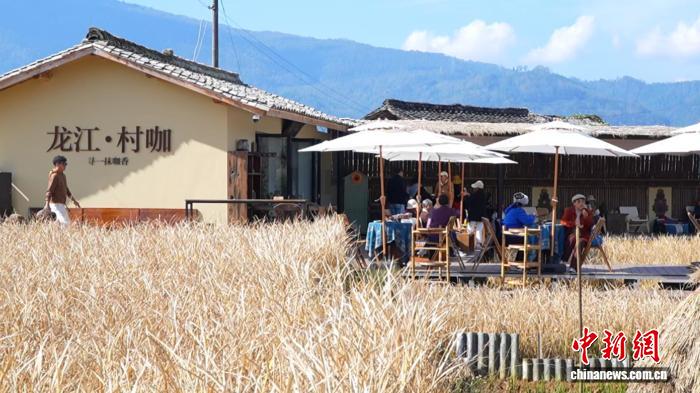
Core Viewpoint - The article highlights the entrepreneurial journey of Yang Meng, who transformed a traditional cow shed into a popular coffee shop in Longjing Township, Yunnan, leveraging local agricultural resources and tourism potential to create a thriving business [1][3]. Group 1: Entrepreneurial Development - Yang Meng, a local from Longjing, returned home after years of work and decided to open a coffee shop in a renovated cow shed, inspired by the increasing tourist influx during the rice flower fish festival [3][5]. - The coffee shop opened during the National Day holiday in 2023 and quickly became a popular spot, generating over 50,000 yuan in revenue within the first month [3][5]. - Yang Meng's initial excitement was tempered by the realization that the business model was too reliant on seasonal tourism, prompting her to seek ways to diversify and sustain customer interest [5][6]. Group 2: Business Expansion and Community Impact - By 2025, Yang Meng plans to expand the coffee shop's space and offerings, including a product display area for local specialties, aiming to attract visitors year-round [5][6]. - The Longjing area has seen a significant boost in tourism, with 386,000 visitors and over 54 million yuan in revenue during the rice flower fish festival in 2025 [5][6]. - Local agricultural products, such as "red fine soft rice" and "rice flower fish," gained recognition, contributing to the region's agricultural modernization and tourism development [5][6].

普洱新漉咖啡有限公司成立 注册资本60万人民币
Sou Hu Cai Jing· 2025-12-05 07:21
Company Overview - Recently, a new company named Pu'er Xinlu Coffee Co., Ltd. was established with a registered capital of 600,000 RMB [1] - The legal representative of the company is Li Xiang [1] Business Scope - The company is involved in various licensed projects, including road cargo transportation (excluding hazardous goods) [1] - General business activities include: - Primary processing of edible agricultural products - Acquisition of primary agricultural products - Production, sales, processing, transportation, storage, and other related services of agricultural products - Retail of edible agricultural products - Supply chain management services - Cultivation of coffee beans, nuts, Dendrobium, and tea [1] - Packaging services for transportation of goods - Internet sales of food (limited to pre-packaged food) - Import and export of food - Sales of agricultural by-products [1]
顶尖专家学者齐聚肇庆,共商南药食养产业发展新路径
Nan Fang Nong Cun Bao· 2025-11-20 14:02
Core Insights - The conference focused on the development of the southern medicine and food nurturing industry, emphasizing high-quality growth through technology and ecological practices [3][5][8] Group 1: Technology Empowerment - Experts highlighted the need for technological innovation to overcome challenges in the cinnamon industry, including value chain fragmentation and strict EU standards [13][14][18] - Four innovation pathways were proposed for cinnamon: genetic innovation, low-temperature oil extraction, controlled release technology, and comprehensive utilization of raw materials [19][20][22] - The development of the agarwood industry was discussed, with breakthroughs in cultivation reducing the yield time from 8-10 years to 3 years, enhancing both profitability and product quality [25][27][30] Group 2: Resource Development - The potential of the medicinal plant Baji Tian was explored, with emphasis on its historical use and modern pharmacological benefits, including anti-osteoporosis and immune regulation [38][46][48] - The integration of food and medicinal uses of orchid species was discussed, highlighting their dual value and the need for industry-oriented research to enhance competitiveness [52][56][60] Group 3: Ecological Practices - The concept of "returning to nature" for medicinal materials was introduced, advocating for organic cultivation methods that improve quality without chemical inputs [66][68][72] - The "rubber and medicine" co-cultivation model was presented, demonstrating a 40% increase in land utilization while reducing chemical fertilizer and pesticide use [78][81][84] Group 4: Industry Integration - The integration of tropical agriculture with health tourism was emphasized as a means to create a sustainable value chain that encompasses production, ecology, and lifestyle [90][92][99] - The case of Cai Zhi Lin was shared as a model for integrating medicine, healthcare, and nutrition, showcasing a comprehensive approach to the southern medicine industry [100][103][106]
