
蟹黄酱

Search documents
从“一只蟹”到“一条百亿元级产业链”:水乡蟹农的共富密码
Zheng Quan Ri Bao· 2026-02-24 15:46
Core Viewpoint - Jiangsu Province's Xinghua City has developed its hairy crab industry into a modern pillar industry with an annual output value exceeding 100 billion yuan, leveraging ecological advantages and a full-chain layout to promote high-quality development and rural revitalization [1][8]. Industry Overview - Xinghua City is recognized as the "first county for hairy crab farming in the country," with a total aquatic product output of 328,600 tons as of the end of 2024, maintaining its position as the top inland fishery county in Jiangsu for 35 consecutive years [5]. - The area dedicated to hairy crab farming has reached 630,000 mu, with a production volume of 67,000 tons and a market value of 5.1 billion yuan, leading among county-level cities nationwide [5]. Farming Techniques - The local farming model, known as "one crab and two shrimp," combines crab and shrimp farming to enhance quality and reduce risks, resulting in a full industry chain value of over 100 billion yuan [2][5]. - The ecological farming practices have improved the quality of hairy crabs, with a fat content rate of 60%-70% and a significant reduction in limb loss rates [3]. Economic Impact - The average net income for farmers ranges from 9,000 to 24,000 yuan per household annually, with the farming area in Lujia Ba Village expanding to 3,640 mu and benefiting 117 crab farmers [4]. - The integration of modern technology, such as automated seed selection and intelligent water quality monitoring, has significantly increased farming efficiency [3]. Market and Distribution - Xinghua has established 13 large trading markets, including the Anfeng National Crab Market, and a comprehensive cold chain logistics and e-commerce service system, facilitating efficient distribution across the country [5][6]. - The daily trading volume during peak seasons exceeds 1 million kilograms, with a focus on high-value processing of smaller and damaged crabs into premium products [6]. Financial Support - Financial institutions have introduced specialized loan products like "Xingnong Industry Loan" and "Crab Farmer Loan" to support the crab farming industry, facilitating equipment upgrades and ecological farm construction [7]. - The local government has implemented a risk protection system through innovative insurance products, enhancing the financial security of the crab farming sector [7]. Future Outlook - Xinghua aims to continue extending, supplementing, and strengthening its industry chain, positioning the hairy crab as a sustainable driver for rural revitalization and shared prosperity [8].
党建“链”动蟹产业 红韵赋能兴乡村
Xin Lang Cai Jing· 2026-02-07 20:47
Core Viewpoint - The development of the Yangcheng Lake hairy crab industry in Shajiabang Town, Suzhou, is significantly driven by the integration of party leadership and industry, showcasing a successful model of "党建+产业链" that enhances productivity and brand recognition [1][2]. Group 1: Industry Development - Shajiabang Town is the largest production area for "Yangcheng Lake hairy crab," with over 30,000 acres of farming area and an annual output of approximately 3,000 tons, employing thousands of workers [1]. - The town's party committee has innovated a "党建+产业链" development model, promoting the transformation of the hairy crab industry towards intensification, scale, and branding [1][2]. Group 2: Organizational Structure - The establishment of over 20 party organizations within the hairy crab industry chain has created a new framework where the party leads, enterprises participate, and the community benefits [2]. - A "chain-based party building" work system has been developed, including the deployment of 15 party building instructors and the formation of a "party member technical think tank" [2]. Group 3: Technological Advancement - The town has linked with research institutions to establish experimental bases, leading to the recognition of three seedling bases as provincial-level特色优势中心 [3]. - The implementation of a "company + base + farmer" model has improved the farming practices of over 500 crab farmers, resulting in an average income increase of over 1,000 yuan per mu [3]. Group 4: Brand and Market Expansion - The town has invested over 100 million yuan in deep processing of crab products, developing five new products and establishing a "three-level" sales system that includes online and offline channels [4]. - The establishment of a brand specialty store for Yangcheng Lake hairy crab has achieved a 100% membership rate among farmers, significantly enhancing brand value [4]. Group 5: Integration with Tourism - The integration of the hairy crab industry with red culture and rural tourism has led to the creation of a comprehensive development area, attracting over 34,000 visitors and generating more than 40 new jobs by 2025 [5]. Group 6: Talent Development - The organization has conducted over 20 training sessions covering more than 1,200 participants to foster innovation and entrepreneurship among new agricultural entities [6]. - Various events, including crab food festivals and agricultural competitions, have been organized to promote a virtuous cycle of industry growth, tourism prosperity, and community wealth [6].
守好农民“钱袋子”(群众身边不正之风和腐败问题集中整治)
Ren Min Ri Bao· 2025-12-18 22:17
Core Viewpoint - The articles highlight the improvements in the efficiency and transparency of agricultural subsidy distribution in Jiangsu Province, driven by regulatory reforms and technological advancements. Group 1: Agricultural Subsidy Distribution - Jiangsu Province has implemented a new regulation requiring local authorities to process farmers' online subsidy applications within two working days, significantly speeding up the approval process [1] - The case of a farmer receiving a 26,000 yuan subsidy within a month of submitting his application illustrates the enhanced efficiency of the subsidy system [1] - The central government has focused on addressing issues related to the management of agricultural funds, including delays and misappropriations, leading to the establishment of 331 improved systems [1] Group 2: Quality of Agricultural Infrastructure - The construction quality of agricultural infrastructure, such as machine tillage roads, has been scrutinized, revealing issues like inadequate foundation work and shortcuts taken by contractors [2] - The local government has initiated corrective measures to enhance oversight and ensure that construction meets specified standards, including increasing concrete thickness to 18 centimeters [3] - The involvement of local disciplinary inspection teams has led to the identification of corrupt practices among officials and contractors, promoting accountability [2][3] Group 3: Project Evaluation and Funding - The evaluation process for agricultural projects has become more rigorous, with oversight from disciplinary bodies to prevent favoritism and ensure fair distribution of funds [4][5] - A specific case highlights a farmer receiving over 1.6 million yuan in subsidies after a thorough review process, enabling him to enhance his production capabilities [5] - The introduction of a digital platform for project management has streamlined the application and approval process, reducing the time required for verification [6] Group 4: Technological Integration - The "Crop Cloud" platform has been developed to utilize satellite imagery and AI for accurate assessment of farmland, significantly reducing errors in subsidy applications [6] - This technology has improved the accuracy of subsidy distribution, with a reported 95% accuracy rate in identifying eligible farmland [6] - The platform is expected to save over 9.5 million yuan in fiscal funds by reducing ineligible subsidy claims [7]
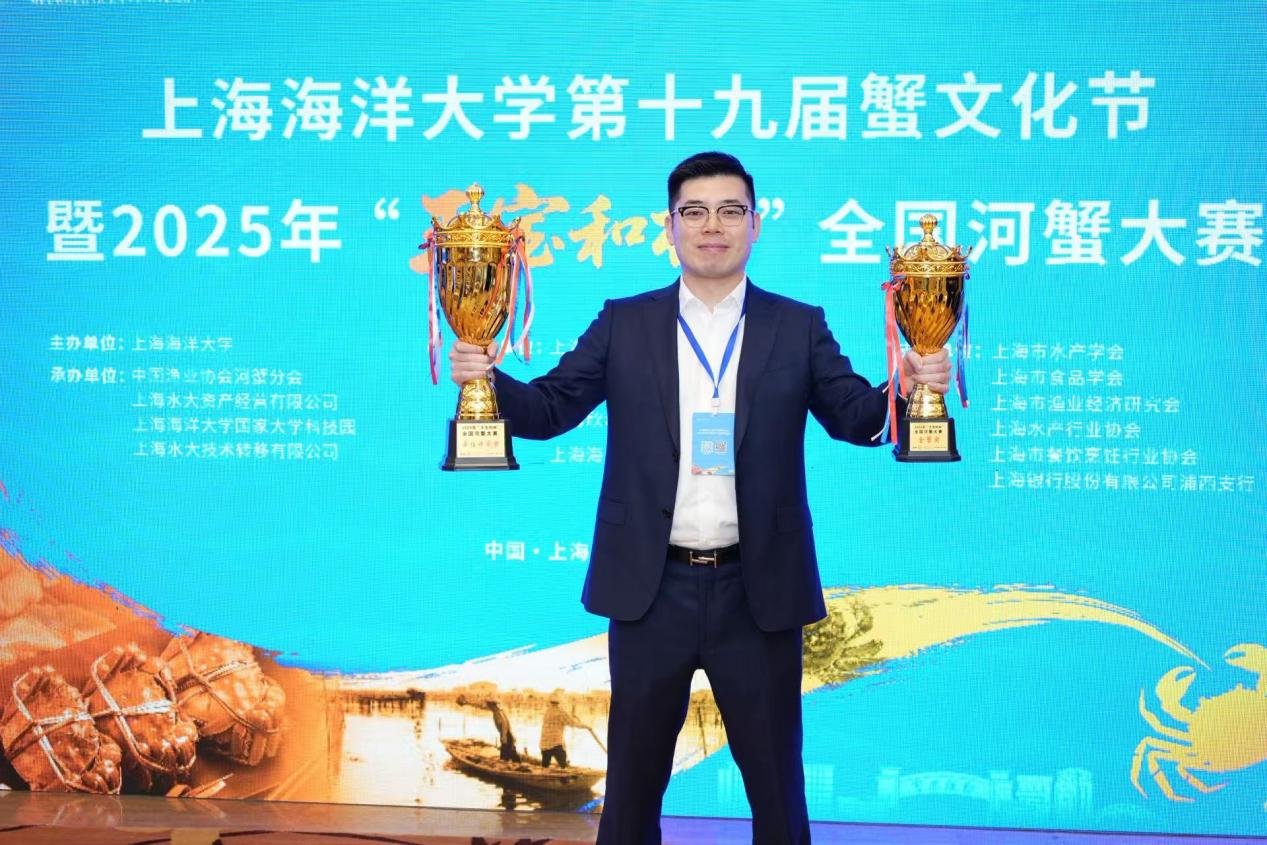
七年蝉联,蟹太太勇夺第十九届蟹文化节金蟹奖
Guo Ji Jin Rong Bao· 2025-11-20 02:02
Core Insights - The article highlights the achievements of the company "Crab Madam," which has won the "Golden Crab Award" and "Best Taste Award" at the 19th Crab Culture Festival, marking seven consecutive years of excellence in the industry [1][4]. Group 1: Brand Development - Since its establishment in 2018, Crab Madam has focused on the development strategy centered around "quality crabs," rapidly growing from a newcomer to a leading brand in the industry within seven years [4]. - The brand's early collaboration with celebrity Huang Xiaoming significantly enhanced its visibility, leading to recognition as the "top online sales of hairy crabs" in 2024 according to research by Shanghai Shangpu Consulting Group [4]. Group 2: Quality Standards - Crab Madam has established a rigorous standard system that exceeds industry norms to ensure the sustainability and reliability of crab quality, addressing a common pain point in the fresh food sector [6]. - The company employs a comprehensive selection process, including multiple screenings to eliminate subpar crabs, and has developed a 16-character quality standard that emphasizes key attributes such as "green back, white belly, golden claws" [6]. Group 3: Supply Chain and Logistics - The company has invested in a 2,000 square meter temperature-controlled crab storage facility and implemented automated sorting technology, partnering with SF Express to create an efficient cold chain logistics network [6]. - This logistics system enables nationwide delivery within 48 hours and maintains a low mortality rate of crabs at 1%-2%, significantly better than the industry average [6]. Group 4: Business Expansion - Recognizing the seasonal nature of hairy crabs, Crab Madam is expanding its business model by opening crab yellow noodle restaurants and plans to establish 300 locations nationwide over the next decade [9]. - The company is also industrializing the production of crab-derived products, allowing consumers to enjoy crab flavors year-round, thus transforming seasonal products into year-round offerings [9]. Group 5: Consumer Trust - In response to rising consumer demands for food safety and quality, Crab Madam has partnered with China People's Insurance (PICC) to insure every crab sold, providing consumers with tangible guarantees [10]. - The company offers comprehensive after-sales policies, including compensation for dead or empty crabs, further enhancing consumer confidence [10]. Group 6: Industry Leadership - Amidst increasing regulatory scrutiny and competition, Crab Madam views these challenges as opportunities to reinforce its commitment to quality and optimize every aspect of its product and service [12]. - The company aims to redefine the consumer experience of hairy crabs by creating a closed-loop quality consumption model that integrates online and offline channels [12].

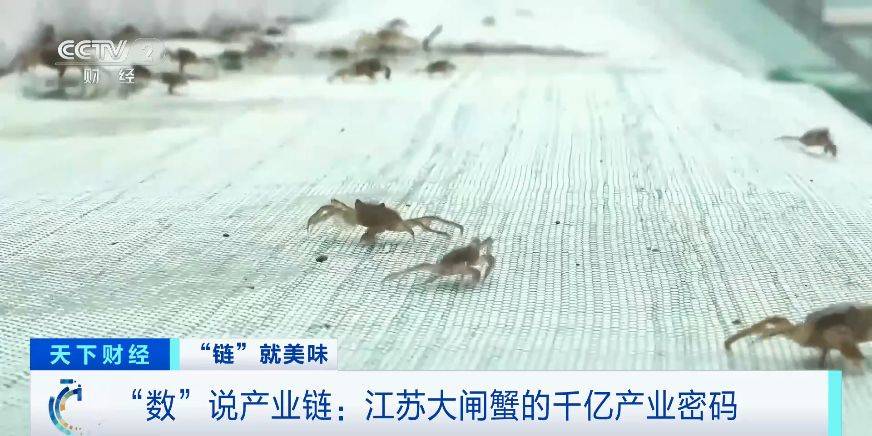
近40万吨年产量!“数”说江苏大闸蟹的千亿产业密码
Sou Hu Cai Jing· 2025-10-02 10:17
Core Insights - The Mid-Autumn Festival marks the peak season for the harvest and sale of hairy crabs, revealing significant market dynamics and industry chain insights [1] Industry Overview - Jiangsu province is the core area for hairy crab farming in China, with a cultivation area of 3.5 million acres and an annual production of nearly 400,000 tons, accounting for half of the national output [3] Market Trends - In September, the shipment volume of hairy crabs from Jiangsu increased by 70% month-on-month, with a remarkable growth of over 600% in sales during the week of September 23-28 [5] - Automated sorting lines in smart logistics bases can handle an average of 400,000 orders daily, and the enhancement of cold chain logistics has expanded the market reach, allowing for next-day delivery of live hairy crabs to major cities nationwide [5] Value Addition - Nearly 1,000 processing enterprises in Jiangsu have introduced over 40 deep-processed products such as drunken crabs and crab roe, significantly increasing the value of hairy crabs [7] - The total scale of the national hairy crab industry is estimated to reach 82.4 billion yuan by 2025, with deep-processed products contributing 20.6 billion yuan, accounting for 25% of the total [7] Economic Impact - The hairy crab industry has stimulated the integration of primary, secondary, and tertiary industries, boosting local sectors such as culture, tourism, dining, and retail, with the brand value of Yangcheng Lake hairy crabs reaching 28.265 billion yuan [9]
山东东营抢占海洋经济发展新高地
Zhong Guo Chan Ye Jing Ji Xin Xi Wang· 2025-07-03 00:32
Group 1: Core Insights - The conference in Dongying, Shandong Province, emphasized the importance of developing a high-quality marine economy and outlined four key tasks to accelerate the construction of a marine strong city [1][2] - The marine economy is projected to see significant growth, with the national marine GDP expected to exceed 10 trillion yuan in 2024, and Shandong's marine GDP reaching 1.81 trillion yuan, reflecting a year-on-year growth of 5.9% [2][3] - Dongying aims to enhance its ecological protection efforts while developing its marine economy, with successful initiatives like the creation of the Yellow River Estuary National Park [2][3] Group 2: Marine Economy Development - Major infrastructure projects, including a 10,000-ton channel and multiple large-scale terminals, are being developed to support Dongying's goal of becoming a deep-water port [3][4] - The marine chemical industry in Dongying has established a complete industrial chain, contributing to a marine GDP of over 120 billion yuan in 2024, with a growth rate of 7.1%, the highest in Shandong Province [3][4] - The conference highlighted the need to focus on ecological sustainability, traditional industry upgrades, and the development of new growth points in the marine economy [4][5] Group 3: Focus on Marine Food Industry - Dongying has a strong foundation for marine food industry development, with significant achievements in aquaculture, processing, and brand building [5][6] - The Yellow River Estuary crab has become a flagship product, with an annual production of 7,000 tons and a market value of 1 billion yuan, alongside other successful seafood products [5][6] - Innovative aquaculture practices, such as smart farming and water recycling technologies, are being implemented to enhance productivity and sustainability in the marine food sector [6][7] Group 4: Future Directions - Dongying plans to increase support for the marine food industry, focusing on integrating the entire supply chain and enhancing brand recognition [7] - The city aims to leverage technology to drive the marine food sector towards intelligence, sustainability, and high-end development, contributing to the overall marine economy [7]