
西甜瓜

Search documents
海南冬季瓜菜西甜瓜·圣女果推介会在乐东举办
Hai Nan Ri Bao· 2025-11-25 01:37
Core Insights - The event "Hainan Winter Melon and Vegetable Promotion Conference" focused on the high-quality development of Hainan's winter melon and vegetable industry, particularly promoting the branding and internationalization of products like sweet melons and cherry tomatoes [1][2] Group 1: Industry Overview - Hainan is a significant production area for winter melons and vegetables in China, with a stable planting area of approximately 3 million acres [1] - For the 2024-2025 production season, the planting area for sweet melons is expected to exceed 500,000 acres, while cherry tomatoes will reach 50,000 acres, with products being sold in over 10 countries and regions, including Southeast Asia and Russia [1] Group 2: Event Highlights - The promotion conference included variety displays, field observations, and production-sales negotiations, creating an efficient platform for connecting planting and sales [2] - Industry experts analyzed market trends and development bottlenecks for sweet melons and cherry tomatoes during the event [2] Group 3: Future Development Plans - The government of Ledong County is accelerating the construction of a port industrial park, focusing on cold chain logistics and deep processing for sweet melons and cherry tomatoes, aiming to transition from "primary products" to "high-value-added goods" [2] - The county plans to expand the scale of high-quality sweet melon production areas and enhance the proportion of premium sweet melon cultivation [2]
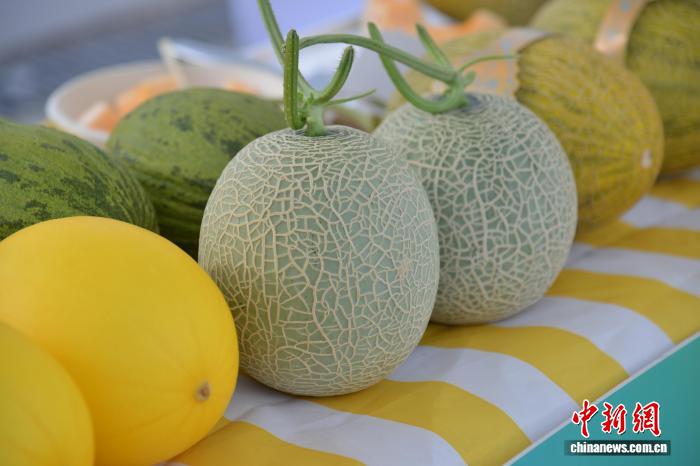
海南成全国最大冬季甜瓜供应基地 产值破百亿
Zhong Guo Xin Wen Wang· 2025-11-17 16:56
Core Insights - Hainan has become the largest winter melon supply base in China, with the value of the western melon industry exceeding 10 billion yuan, driving nearly 20 billion yuan in related upstream and downstream industries, making it the second-largest tropical fruit industry in Hainan [1][5] Group 1: Industry Development - The planting area for winter melons in Hainan remains stable at around 3 million mu, with western melons and cherry tomatoes becoming the "star products" due to their unique taste and market competitiveness [1][3] - For the 2024-2025 production season, the planting area for western melons is expected to exceed 500,000 mu, while cherry tomatoes will reach 50,000 mu, with products sold in 170 major cities across China and over 10 countries and regions including Southeast Asia and Russia [3][5] Group 2: Future Strategies - Recommendations for the future development of the western melon industry include continuous innovation in varieties, establishing a standardized production technology system, and implementing green pest control techniques to reduce pesticide use [3] - The local government plans to expand the scale of high-quality production areas for western melons and increase the proportion of premium melons, aiming to achieve a total output value of 30 billion yuan for winter melons in Hainan [5]

三亚首批冬季瓜菜开摘 明年1月将大规模上市
Zhong Guo Xin Wen Wang· 2025-11-07 13:46
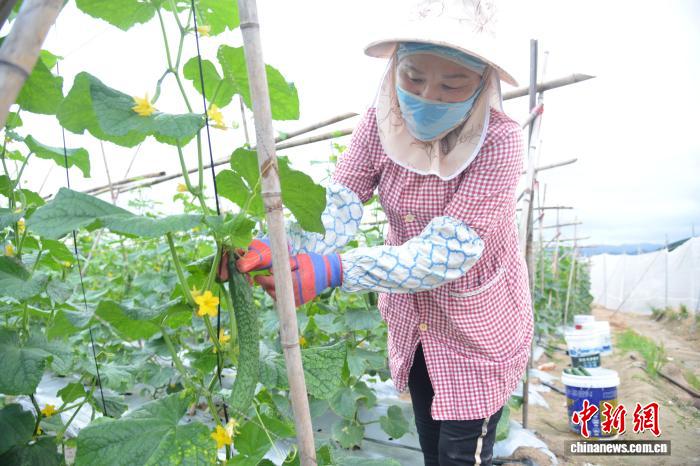
Core Insights - The winter vegetable harvest in Sanya, Hainan, has begun, with significant production expected to support the market before the Spring Festival [1][3] - Sanya's winter vegetable planting area is projected to reach 166,100 acres, with an expected yield of over 340,000 tons [3][5] Group 1: Production and Harvesting - Farmers in Sanya are currently harvesting cucumbers, with individual farmers like Li Junning expecting to collect two to three thousand pounds in a single day [1][5] - The largest area for winter vegetable cultivation in Sanya is located in the Yazhou District, where 30,000 acres have been prepared for planting, involving approximately 4,300 households [3][5] - The peak harvest period for Sanya's vegetables will see products shipped nationwide, with cucumbers and other vegetables expected to be available in large quantities starting January next year [5][7] Group 2: Agricultural Strategy and Crop Management - The Hainan Provincial Department of Agriculture has proposed adjustments to winter vegetable planting, focusing on stabilizing melon production, increasing bean varieties, and reducing pepper cultivation [5][7] - Sanya is implementing advanced agricultural techniques, such as the "insect net+" green pest control technology for cowpeas, and promoting the "netted cowpea" brand [5][7] - The introduction of high-yield, disease-resistant varieties through the "South Breeding" program has resulted in significant yield increases, with cowpea varieties yielding over 4,000 pounds more per acre compared to traditional varieties [7] Group 3: Research and Development - Sanya is leveraging its favorable climate and research partnerships with institutions like the Chinese Academy of Tropical Agricultural Sciences to introduce and test new vegetable varieties [7] - The establishment of a healthy seedling production base aims to support local vegetable production, with plans to produce at least 10 million seedlings annually through intensive factory-style cultivation [7]
科技扎根田野间 多地探索农业高质量发展新路径
Zhong Guo Chan Ye Jing Ji Xin Xi Wang· 2025-08-28 23:34
Group 1 - Various regions are exploring new paths for high-quality agricultural development by leveraging resource endowments and technological advantages [1] - The collaboration between universities, enterprises, and farmers is fostering an organic dry farming ecological cycle, enhancing agricultural waste treatment and resource utilization [2] - The establishment of a 6,000-acre high-quality sweet melon demonstration base in Hainan has generated over 12 million yuan in output value, showcasing successful agricultural transformation [3] Group 2 - The adoption of smart agriculture technologies, such as drones for pesticide spraying, is transforming traditional farming practices and enhancing rural revitalization [4] - The development of the yellow mushroom industry in Inner Mongolia is creating job opportunities and contributing to rural revitalization through sustainable farming practices [5] - Innovative approaches in saline-alkali land management, including the introduction of salt-resistant rice varieties, are significantly improving agricultural yields and farmer incomes [6] Group 3 - The focus on edible mushroom cultivation in Yunnan is leading to the establishment of a robust industry that enhances local economic development and food supply chains [7] - The collective efforts in exploring new agricultural development paths are yielding fruitful results, addressing traditional agricultural challenges, and invigorating rural economies [8]
新华视点|科技扎根田野间 多地探索农业高质量发展新路径
Xin Hua She· 2025-08-26 13:24
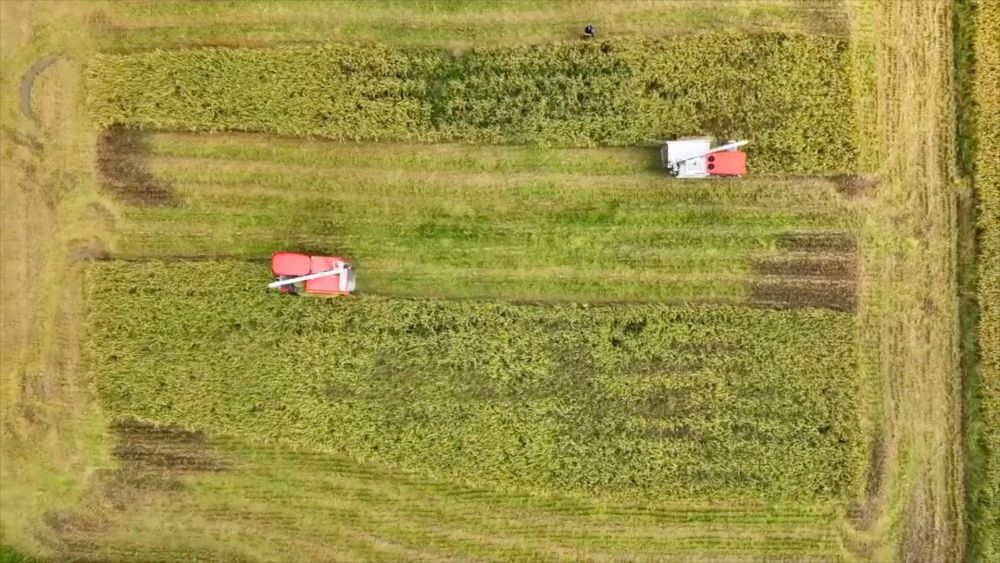
Core Viewpoint - Various regions are exploring new paths for high-quality agricultural development by leveraging resource endowments and technological advantages, promoting the transformation of agricultural production towards ecological, intelligent, and industrialized models [1]. Group 1: Collaborative Models - The Shanxi Agricultural University has established a collaborative model involving "universities + enterprises + farmers" to develop an organic dry farming ecological cycle agricultural production model, focusing on the harmless treatment and resource utilization of agricultural waste [3]. - The Shanxi Agricultural University aims to lead the development of organic dry farming and premium agriculture in the region, creating a green model for sustainable agricultural practices [5]. Group 2: Innovative Agricultural Practices - In Hainan, the "new farmers" have established a 6,000-acre high-quality sweet melon demonstration base, generating over 12 million yuan in output value, showcasing the successful application of research results in tropical agriculture [7]. - The transformation of seeds developed through southern breeding not only changes the landscape of local industries but also supports farmers' dreams of increased production and income [9]. Group 3: Smart Agriculture - In Inner Mongolia, the use of drones for pesticide spraying in high-standard farmland represents a shift from traditional farming methods to data-driven agricultural practices, enhancing productivity [11][13]. - The development of the yellow mushroom industry in Inner Mongolia has provided employment opportunities for local villagers, contributing to rural revitalization through traditional manual farming methods [14][16]. Group 4: Overcoming Environmental Challenges - In Fujian Province, the introduction of salt-tolerant rice varieties and mechanized planting has significantly improved crop survival rates and yields in previously saline-alkaline areas, demonstrating effective agricultural transformation [19][21]. Group 5: Industry Development - In Yunnan Province, the focus on edible mushroom cultivation has led to the establishment of processing enterprises, enhancing the value-added products and supporting local economic growth [23][25]. - The exploration of new paths for high-quality agricultural development across various regions has yielded fruitful results, addressing traditional agricultural challenges and invigorating rural economies through technological empowerment and industrial innovation [27].
山西广灵县西甜瓜进京推介,生态种植新技术助力产业升级
Bei Ke Cai Jing· 2025-08-13 06:58
Core Viewpoint - The introduction of the BLOF ecological planting technology by Baiguoyuan is expected to significantly enhance the quality and sustainability of the Xitian melon industry in Guangling County, leading to increased farmer income and the development of related industries [1][3]. Group 1: Industry Development - Guangling County has optimal conditions for Xitian melon cultivation, including an average of nearly 2800 hours of sunlight per year and a soil selenium content 1.8 times the national standard [3]. - The traditional Xitian melon industry faced challenges due to extensive "nomadic" farming practices, leading to soil degradation and pest issues when the same land was used for more than two consecutive years [3]. - The establishment of a large-scale year-round planting base using BLOF technology aims to improve the soil ecosystem and enable sustainable cultivation of Xitian melons [3]. Group 2: Economic Impact - The Xitian melon industry has already facilitated the development of nearly 100,000 acres of agricultural bases and has helped over 5,000 households achieve stable income growth [3][4]. - The BLOF technology has been successfully implemented in other key fruit production areas such as Ningxia, Jiangsu, and Yunnan, promoting a model of government-business cooperation for rural revitalization [4]. - The introduction of BLOF technology in Ningxia is projected to increase local farmers' income by 500 to 1,000 yuan per acre, demonstrating a sustainable model for ecological assistance to farmers [4]. Group 3: Future Prospects - The "Guangling model" of government and market collaboration is expected to be replicated across various core production areas for Xitian melons nationwide [4]. - Baiguoyuan's founder emphasized the importance of focusing on all key elements of the industry chain to achieve synergistic development [4].
