圣女果

Search documents
新规落地带证上市更安心!从化全力保障春节农产品安全
Nan Fang Nong Cun Bao· 2026-02-28 02:01
Core Viewpoint - The article emphasizes the implementation of strict regulations in Conghua District, Guangzhou, to ensure the safety and quality of agricultural products during the peak consumption period of the Spring Festival, highlighting the introduction of a new certification system for agricultural products [2][18]. Group 1: Regulatory Actions - Conghua District has initiated a comprehensive quality safety supervision action for agricultural products ahead of the Spring Festival, focusing on rigorous standards and strict monitoring to safeguard consumer interests [3][4]. - The district's agricultural and rural departments have organized a "net-style" inspection to identify potential risks, particularly for ready-to-eat products like strawberries and cherry tomatoes, ensuring compliance with safety regulations [9][10]. Group 2: Quality Assurance Measures - As of mid-February 2026, Conghua has completed approximately 4,000 quality safety tests for agricultural products, achieving a sampling pass rate of 99.82%, with no quality safety incidents reported this year [12][13]. - The new regulation, effective from February 1, 2026, mandates that six categories of agricultural products will have a "certificate of compliance," which includes essential information such as product name, origin, and compliance commitments [19][24]. Group 3: Certification Process - The "certificate of compliance" will allow for full traceability, with producers required to commit to not using banned pesticides and ensuring that pesticide residues remain below safety thresholds [25][26]. - The certification process has been digitized, enabling farmers to obtain certificates conveniently through a government service app, enhancing efficiency in compliance [28][30]. Group 4: Stakeholder Responsibilities - Producers, including agricultural enterprises and cooperatives, must properly issue compliance certificates and maintain accurate production records [38][39]. - Buyers of agricultural products are required to verify compliance certificates and retain them for future sales, ensuring accountability in the supply chain [42][43]. - Consumers are encouraged to check for compliance certificates when purchasing agricultural products, as these indicate adherence to safety standards and regulatory oversight [45]. Group 5: Future Enforcement - Conghua District plans to intensify inspection and enforcement efforts against non-compliance with the new certification requirements, aiming to maintain high standards from production to market [46][47].



广东台山番茄迎丰收 农文旅融合绘就致富新画卷
Zhong Guo Xin Wen Wang· 2026-02-15 13:12
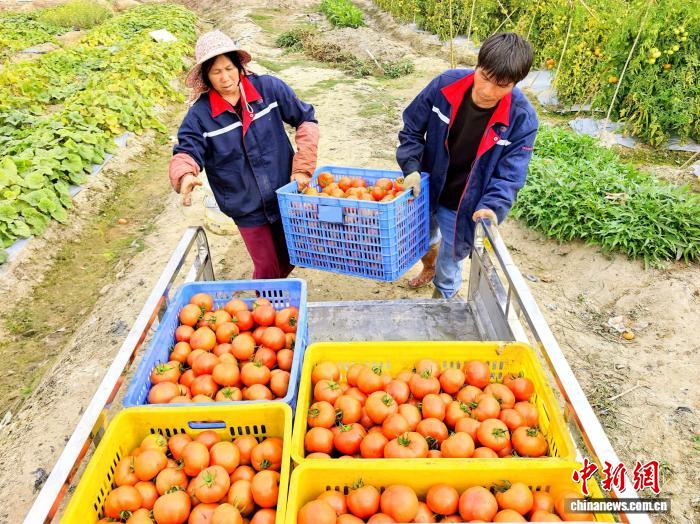
Core Viewpoint - The tomato farming industry in Taishan, Guangdong, is experiencing a significant harvest and economic growth, driven by the integration of agriculture, culture, and tourism, leading to increased income for local farmers [1][4]. Group 1: Economic Performance - Farmers in Taishan are reporting high yields, with one grower harvesting over 3,500 kilograms of tomatoes in a single day, and prices reaching up to 10 yuan per kilogram earlier in the season [1]. - The average yield for small tomatoes is projected to be between 2,000 to 2,500 kilograms per acre, with current market prices ranging from 13 to 16 yuan per kilogram [6]. Group 2: Agricultural Practices - Farmers are increasingly using grafted seedlings and implementing proper field management to enhance tomato production, with a typical growing cycle of about 90 days to reach peak harvest [3][4]. - The cultivation of tomatoes is strategically timed between rice harvests, allowing farmers to maximize land use and income [1]. Group 3: Market Trends - The local tomato market is expanding, with products being sold in major cities such as Zhuhai, Guangzhou, and even reaching markets in Beijing, Shanghai, and Nanjing [6]. - There is a shift from merely selling tomatoes to offering experiential farming activities, which is attracting more visitors and enhancing the local economy [6].
新春走基层丨“农科城”杨凌:农业“新标尺”标注新春新希望
Xin Hua She· 2026-02-14 05:13
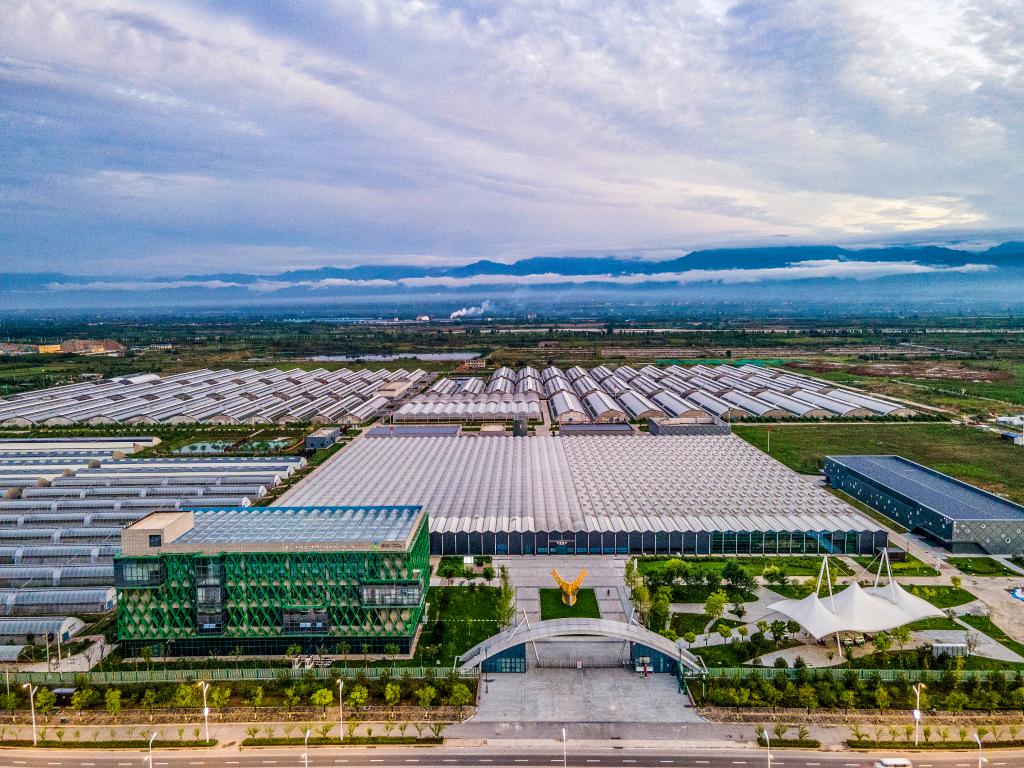
Group 1 - The core concept of the article highlights the transformation of agriculture in Yangling, Shaanxi, through advanced agricultural technology, emphasizing precision and efficiency in farming practices [1][8] - Yangling's agricultural technology is redefining sales practices, with companies like Weilon Agricultural Technology Co., Ltd. selling seeds by the number of grains instead of weight, allowing for precise planting [3] - The company boasts a 92% germination rate for its seeds, alleviating farmers' concerns about over-planting or under-planting, thus promoting precision sowing [3] Group 2 - The use of IoT technology in greenhouses allows for year-round harvesting, with a single plant yielding up to 39 harvests, and each square meter producing 15 to 20 kilograms of cherry tomatoes, generating approximately 400 yuan in revenue per square meter [5][6] - The transition from traditional irrigation methods to smart drip irrigation has significantly improved fertilizer utilization from 10% to 85%, making agriculture more sustainable and environmentally friendly [6] - Modern information technologies such as IoT and big data are enhancing field management, enabling farmers to monitor and optimize crop growth remotely [8] Group 3 - Yangling serves as China's first national-level agricultural high-tech industrial demonstration zone, tasked with modernizing agriculture in arid and semi-arid regions [8] - The new agricultural standards being established in Yangling not only focus on crop yield but also on increasing efficiency, farmer income, and revitalizing rural areas [8]

定西:春节鲜蔬供应有保障
Xin Lang Cai Jing· 2026-02-13 10:06
Core Insights - The article highlights that the supply of fresh vegetables in Dingxi is stable and sufficient for the Spring Festival, with a daily supply of 300 tons [1] Group 1: Production - The total area for facility vegetable cultivation in Dingxi is 42,000 acres, yielding approximately 45,000 tons [1] - Various types of vegetables are being harvested, including leeks, peppers, tomatoes, cucumbers, and cherry tomatoes from different counties [1] Group 2: Supply Chain Measures - Agricultural departments are implementing multiple measures to ensure market supply, including technical guidance, integrated water and fertilizer management, and pest control [1] - A multi-faceted production and sales system is established, connecting direct supply from production areas to supermarkets and community delivery [1] Group 3: Economic Benefits - The article mentions the use of a cooperative model to enhance farmers' income through land leasing, labor income, and profit-sharing [1]
餐桌上那份新鲜从何而来?
Xin Lang Cai Jing· 2026-02-10 01:34
Core Viewpoint - The article highlights the advancements in China's agricultural practices and logistics that enable the continuous supply of fresh produce throughout the year, even in winter, showcasing the effectiveness of modern farming techniques and cold chain logistics [8][10][14]. Group 1: Agricultural Practices - China's agricultural output for grains, meat, peanuts, tea, fruits, and seafood ranks first in the world, with continuous optimization of agricultural structures and the development of modern facility agriculture [8]. - The use of scientific methods in fruit cultivation, such as the promotion of advanced techniques like dwarfing and green cultivation, has significantly improved the quality and yield of fruits like the "Yaba Gan" citrus, with expected yields reaching 4,500 pounds per acre [10][11]. - The cultivation of strawberries has been extended from December to May, allowing for a longer growing period and sweeter fruit due to greater temperature variation [11][12]. Group 2: Logistics and Supply Chain - The logistics system in China has become increasingly sophisticated, incorporating cold chain transportation and green channels to ensure rapid delivery of fresh produce from farms to consumers [8][14]. - The development of cold storage facilities has enhanced the preservation of fruits and vegetables, allowing for better quality and freshness during transportation [13]. - The integration of online sales channels with offline distribution has enabled farmers to reach broader markets, including regions like Hunan, Hubei, Shandong, and Hebei [10]. Group 3: Market Dynamics - The Beijing Xinfadi market showcases a variety of fresh fruits from around the world, emphasizing the importance of controlling quality from source to logistics [14][15]. - Modern logistics improvements have reduced transportation times for imported fruits, such as cherries from Chile, which can now be shipped directly in 23 days [15]. - The use of technology in ripening processes, such as the gas adjustment method for bananas, has significantly reduced the time required for uniform ripening from 10 days to 3 days [15]. Group 4: Retail Innovations - Supermarkets like JD's Seven Fresh utilize a differentiated preservation system to ensure that fresh produce is delivered to consumers in optimal condition, with a focus on direct sourcing and rapid transportation [19][20]. - The implementation of strict temperature and humidity monitoring in storage and display areas helps maintain the quality of fresh products [20]. - The use of advanced packaging techniques, such as dry ice and aluminum foil bags, ensures that perishable items remain fresh during delivery, adapting to seasonal temperature variations [20].
餐桌上那份新鲜从何而来?(外国网友“趣”问中国)
Ren Min Ri Bao Hai Wai Ban· 2026-02-09 22:48
Core Viewpoint - The article highlights the advancements in China's agricultural practices and logistics that enable the delivery of fresh produce year-round, showcasing the integration of modern technology and efficient supply chains to meet consumer demand for freshness [6][12]. Group 1: Agricultural Practices - China's agricultural output for grains, meat, peanuts, tea, fruits, and seafood ranks first globally, with continuous optimization of agricultural structures and the development of modern facility agriculture [6]. - In Sichuan's Yibin City, the quality of citrus fruits, such as Yaba Gan, has significantly improved due to scientific cultivation methods, with expected yields reaching 4,500 pounds per acre [8]. - The "小时候" strawberry farm utilizes advanced techniques like mist cultivation, allowing for higher yields and earlier market availability compared to traditional methods [10][11]. Group 2: Logistics and Supply Chain - The logistics system in China has evolved with cold chain transportation and green channels, ensuring that fresh produce reaches consumers quickly [6]. - The New Fa Di market in Beijing showcases a variety of imported fruits, with a focus on maintaining quality through controlled logistics from source to delivery [12][13]. - The integration of both cold and warm chain logistics is essential for preserving the quality of tropical fruits during transportation [15]. Group 3: Retail and Consumer Experience - Supermarkets like JD's Seven Fresh employ differentiated preservation systems to ensure freshness, with direct sourcing and rapid delivery processes [16][18]. - Advanced storage management and smart hardware enhance the preservation of fresh products, with strict monitoring of temperature and humidity [19][20]. - Seven Fresh's delivery service adapts to weather conditions to maintain product quality, ensuring timely and fresh delivery to consumers [21][22].
【新春走基层】大棚里结出“幸福果”
Xin Lang Cai Jing· 2026-02-08 00:57
Core Viewpoint - The article highlights the positive impact of agricultural development in the form of greenhouse vegetable production on local women's employment and family stability in Jishishan County, Gansu Province, showcasing how government support aids in post-disaster recovery and economic improvement. Group 1: Employment and Economic Impact - The establishment of over 150 greenhouses and steel frame sheds in the vegetable industry park has created job opportunities for local women, allowing them to work close to home while managing household responsibilities [1] - Women like Ye Axiaya can earn around 3000 yuan per month from greenhouse work, which significantly contributes to family income and provides a stable work schedule that allows for childcare [7] Group 2: Government Support and Recovery - Following a devastating earthquake, government initiatives provided financial assistance, including a 75,000 yuan subsidy and a 50,000 yuan low-interest loan for rebuilding homes, which alleviated financial burdens for families like Ye Axiaya's [3] - The local government's active involvement in disaster recovery and support for housing reconstruction has been crucial in helping families regain stability and improve their living conditions [2][4] Group 3: Family and Education - Ye Axiaya's children are performing well academically, with her eldest son receiving scholarships, indicating a focus on education as a pathway to a better future [10] - The family's improved financial situation and Ye Axiaya's employment have contributed to a more stable and hopeful environment for the children's growth and education [11]
解馋不伤身 春节零食囤货指南来啦
Bei Jing Qing Nian Bao· 2026-02-02 22:46
Core Insights - The article emphasizes the importance of choosing healthy snacks that can complement meals and provide essential nutrients without excessive additives. It categorizes various types of healthy snacks and provides recommendations for portion sizes. Group 1: Fruit Snacks - Strawberries are low in sugar (7.1g/100g) and high in vitamin C, suggesting a serving of 5 to 8 berries [1] - Grapefruit is rich in vitamin C and should be consumed in moderation (1 to 2 segments, approx. 100g) due to potential interactions with certain medications [1] - Kiwi is low in sugar and high in vitamin C and fiber, recommended at 1 fruit per serving [1] - Cherries contain 10.2g of sugar per 100g and are suggested at around 15 cherries [2] - Apples have 52 kcal/100g and are recommended at 1 apple per day [2] - Blueberries are beneficial for chronic disease prevention, with a serving suggestion of 20 berries [2] - Snow lotus fruit has only 3g of sugar per 100g, recommended at 30 to 50g [2] - Frozen persimmons have a high sugar concentration and should be consumed cautiously [2] Group 2: Nut and Seed Snacks - Almonds are rich in protein and healthy fats, recommended at 8 to 10 nuts per serving [3] - Walnuts are high in calories (646 kcal/100g) but beneficial for brain health, suggested at 2 to 3 nuts [3] - Hazelnuts provide essential minerals and are recommended at 5 to 10 nuts per serving [3] - Pistachios are beneficial for heart health, with a serving suggestion of 10 to 20g [4] - Peanuts are high in protein and should be consumed raw, recommended at 15 to 18 nuts [4] Group 3: Dairy Products - Unsweetened yogurt is high in protein and beneficial for gut health, recommended at 1 box (up to 300ml) [5] - Whole milk provides calcium and protein, suggested at 1 cup (approx. 250ml) [5] - Cheese is nutrient-dense, suitable for lactose-intolerant individuals, recommended at 20 to 30g [5] Group 4: Fresh Vegetables - Cucumbers are low in calories (16 kcal/100g) and recommended at 1 cucumber [6] - Tomatoes are rich in vitamin C and low in calories (15 kcal/100g), suggested at 1 tomato [6] - Cherry tomatoes are high in antioxidants, recommended at 15 to 20 pieces [6] Group 5: Legumes and Grains - Dried tofu is high in protein (19.6g/100g) and should be consumed in moderation (30 to 50g) [7] - Chickpeas are low in GI (33) and high in protein (21.2g/100g), recommended at 20 to 30 pieces [7] - Soda crackers are suitable for diabetics but should be consumed in moderation due to high calories [8] - Whole grain bread is better for blood sugar control, recommended at 1 slice [8] Group 6: Eggs and Meat - Boiled eggs are economical and nutritious, recommended at 1 egg per day [10] - Quail eggs can replace chicken eggs in equivalent weight [11] - Beef jerky is high in protein and should be homemade to control salt and sugar, recommended at 3 to 4 slices [12] - Sugar-free chicken jerky is suitable for post-workout protein intake, recommended at 30 to 50g [12] - Sliced beef chips are high in protein, recommended at 30 to 50g [13] Group 7: Snack Control - Moderation is key for snacks with moderate nutritional value, recommended no more than 2 to 3 times a week [14] - Snacks with low nutritional value should be limited to once a week to avoid health issues [14]
中国借助科技创新赋能农业发展
Xin Hua She· 2026-01-20 13:52
Group 1 - The core viewpoint of the articles emphasizes the role of technological innovation in empowering agricultural development in China, particularly in Gansu Province, where smart greenhouse projects are thriving despite the winter season [2][3][4] - Gansu Province has rapidly developed facility agriculture, achieving "four seasons of freshness and year-round stable supply" through the implementation of smart agricultural technologies [3][4] - The establishment of 14 intensive smart seedling bases and 1,265 standardized greenhouses equipped with IoT devices has enabled precise control of water, light, and nutrients, enhancing the growth of fruits and vegetables [3][4] Group 2 - The "super factory" for roses in Linxia Hui Autonomous Prefecture showcases the integration of advanced technologies, producing over 72 million fresh-cut roses annually, with plans for significant exports by 2025 [3][4] - The shift from traditional agriculture to smart agriculture is highlighted by the use of digital and intelligent systems for real-time monitoring and management of crops and livestock across various regions in China [4][6] - Gansu Agricultural Group is leading the modernization of agriculture by adopting new technologies and establishing smart agriculture demonstration zones, significantly improving farming efficiency [4][6] Group 3 - The development of new cold-resistant oilseed rape varieties in Gansu is a practical example of enhancing agricultural productivity and combating desertification [6][7] - The implementation of 104 key technologies and 62 intelligent equipment breakthroughs during the 14th Five-Year Plan period reflects China's commitment to advancing smart agriculture [6][7] - The transition from "experience-based management" to "technology-driven farming" is effectively empowering agricultural industry development [7]
寻味冬日 烟火正暖
Xin Lang Cai Jing· 2026-01-19 19:14
Core Insights - The article highlights the transformation of cold winter resources into vibrant tourism experiences in the Xinjiang Production and Construction Corps, attracting numerous visitors through immersive activities and local culinary offerings [7][9]. Group 1: Tourism and Experience - The winter tourism in the region is characterized by a blend of ice and snow activities that create a lively consumer atmosphere, showcasing the integration of cultural and tourism experiences [7]. - Visitors can engage in winter strawberry picking and other agricultural activities, enhancing their connection with nature and providing a unique aspect to their travel experience [10]. Group 2: Culinary Offerings - The article emphasizes the rich culinary traditions of the region, featuring hearty winter dishes such as slow-cooked lamb and unique local snacks that reflect the area's cultural heritage [8][9]. - Specific dishes mentioned include the alkaline noodle dish from the New Lake Farm and the slow-cooked lamb from the 223rd Regiment, which are highlighted for their warmth and nutritional value during winter [8]. Group 3: Accommodation - The article describes various unique accommodations, including the Snow Lodge and luxury eco-resorts, which offer visitors a cozy retreat amidst the winter landscape [12][13]. - The integration of wellness features, such as hot springs in some lodgings, enhances the overall experience, providing relaxation and comfort to guests [14].