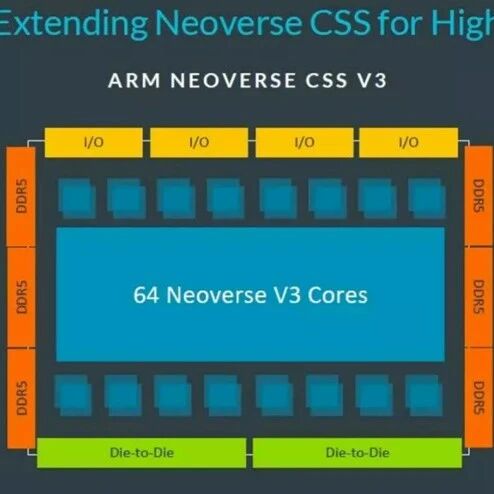
计算子系统(CSS)

Search documents
Arm这款芯片,瞄准万亿AI市场
半导体行业观察· 2026-03-26 00:36
Core Viewpoint - Arm is shifting its strategy to self-develop CPUs for various applications, including data centers and edge devices, in response to market demands for complete CPU solutions rather than just design IP [1][2][3] Group 1: Arm's Market Position and Strategy - SoftBank has held a significant stake in Arm since 2016, currently owning about 90% of the shares, and is positioning Arm to capitalize on the generative AI chip market [1] - Arm's recent IPO in September 2023 saw its market capitalization reach $164.3 billion following the launch of its AGI general-purpose AI processor, which led to a 15% increase in stock price [1] - The company aims to achieve $15 billion in revenue from AGI CPU products by 2031, indicating a substantial growth target in the AI sector [6] Group 2: Development of AGI CPUs - Arm's decision to develop its own CPUs was influenced by client demands, particularly from major tech companies like Meta and OpenAI, who prefer complete CPU products over design services [3][4] - The first AGI CPU sample has entered the sampling phase and is expected to be mass-produced in the latter half of the year for clients including Meta and OpenAI [4] - The AGI CPU-1 is based on the Armv9.2 architecture, featuring up to 136 cores and utilizing TSMC's 3nm process technology, with a thermal design power of only 300 watts [9][14] Group 3: Market Demand and Future Projections - The demand for CPUs in AI data centers is projected to increase significantly, with estimates suggesting a need for 100 to 150 gigawatts of new AI data center capacity, translating to a requirement of approximately 100 million to 150 million CPUs [5][6] - Arm's strategy includes not only serving existing clients but also attracting new customers who may not have in-house chip design capabilities, thereby expanding its market reach [20] - The overall potential market for CPUs used in AI systems is expected to reach $100 billion by 2030, highlighting the lucrative opportunities in this sector [6] Group 4: Competitive Landscape - Arm's AGI CPUs are designed to compete with existing x86 architectures, focusing on performance, scalability, energy efficiency, and cost-effectiveness [8][18] - The AGI CPU's performance metrics indicate a significant advantage over x86 solutions, particularly in terms of performance per watt, which is crucial for data center operations [17][18] - Arm's future product roadmap suggests ongoing innovation and iteration of its AGI CPUs to maintain competitive advantages in the rapidly evolving semiconductor market [20]

Arm第二财季营收激增34%,AI需求推动股价走高
3 6 Ke· 2025-11-06 02:33
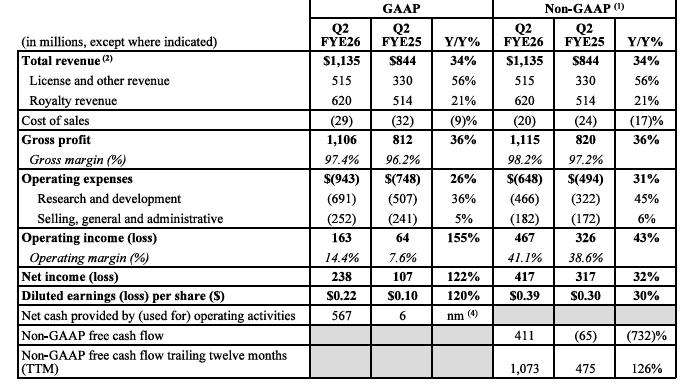
Core Insights - Arm reported a record revenue of $1.135 billion for Q2 FY2025, marking a 34% year-over-year increase, and has surpassed $1 billion in revenue for three consecutive quarters [1][2][6] - The company's royalty revenue reached $620 million, up 21% year-over-year, driven by the adoption of Armv9 architecture and increased chip usage in data centers [1][2][6] - Arm's total contract value grew by 28% to $1.6 billion, indicating strong demand for standardized licenses and other revenue streams [3] Financial Performance - Gross profit for Q2 FY2025 was $1.106 billion, with a gross margin of 97.4%, reflecting a 36% increase from the previous year [2][3] - Operating income rose to $163 million, with an operating margin of 14.4%, up from 7.6% year-over-year [3][4] - Net income reached $238 million, with diluted earnings per share of $0.22, a significant increase from $0.10 in the same quarter last year [3][5] Expenses and Cash Flow - Operating expenses totaled $943 million, a 26% increase year-over-year, with R&D expenses rising by 36% to $691 million [4][5] - Operating cash flow was $567 million, indicating strong cash generation capabilities [5] - As of the end of Q2 FY2025, Arm held $3.258 billion in cash and cash equivalents [5] Market Position and Strategy - Arm's architecture is gaining traction in data centers, with expectations that its share of CPU deployments among top cloud service providers will approach 50% by 2025 [7] - The company is transitioning from a traditional licensing model to direct chip design, which may create new competitive dynamics with long-term clients like Nvidia and Amazon [8] - Arm's CEO highlighted the growing demand for AI computing power as a key driver for the company's optimistic outlook [7] Future Guidance - For Q3 FY2025, Arm expects revenue of approximately $1.225 billion, exceeding analyst expectations [6][8] - Non-GAAP operating expenses are projected to be around $720 million, with diluted earnings per share guidance of $0.41 [6]
赛道Hyper | Arm加入自研芯片战团
Hua Er Jie Jian Wen· 2025-08-01 11:45
Core Viewpoint - Arm's announcement of lower-than-expected revenue forecasts for the upcoming fiscal quarter and its plan to invest profits into developing its own chips marks a significant shift in its business model from licensing to direct chip production [1][9][12] Group 1: Financial Performance - Arm expects Q2 revenue to be between $1.01 billion and $1.11 billion, aligning with market expectations of $1.06 billion, but forecasts adjusted earnings per share between $0.29 and $0.37, with the midpoint below the market average of $0.36 [1] - The company's traditional licensing model has been highly successful, with Arm's architecture present in 99% of smartphones globally [5][6] Group 2: Business Model Transition - Arm has historically operated as a knowledge property supplier, licensing chip designs to semiconductor manufacturers rather than producing chips directly [3][4] - The licensing model includes various types of authorizations, with upfront fees ranging from $1 million to $10 million, and royalties typically between 1% to 2% of chip sales, with higher rates for new architectures [4] - The shift to self-developed chips indicates a major change in Arm's strategy, potentially transforming its relationships with existing clients into competitive dynamics [9][10] Group 3: Market Context and Challenges - Arm's core market, the smartphone sector, is experiencing stagnation, with IDC projecting only a 1% growth in global smartphone shipments for Q2 2025 [7] - The competitive landscape in the data center market is intense, with established players like Intel and NVIDIA dominating, making it challenging for Arm to gain market share solely through licensing [8] - Arm's move to develop its own chips could enhance its competitiveness and allow for better integration of its technologies, potentially reshaping the industry landscape [11][12] Group 4: Future Implications - If successful in chip development, Arm could disrupt the current market dynamics, particularly in the data center sector, and expand its presence in emerging fields like IoT [11][12] - The transition from a licensing model to direct chip production may require Arm to reassess its partnerships and find new ways to maintain relationships with existing clients while attracting new ones [11]

反转,Arm承认下场自研芯片
3 6 Ke· 2025-08-01 07:28
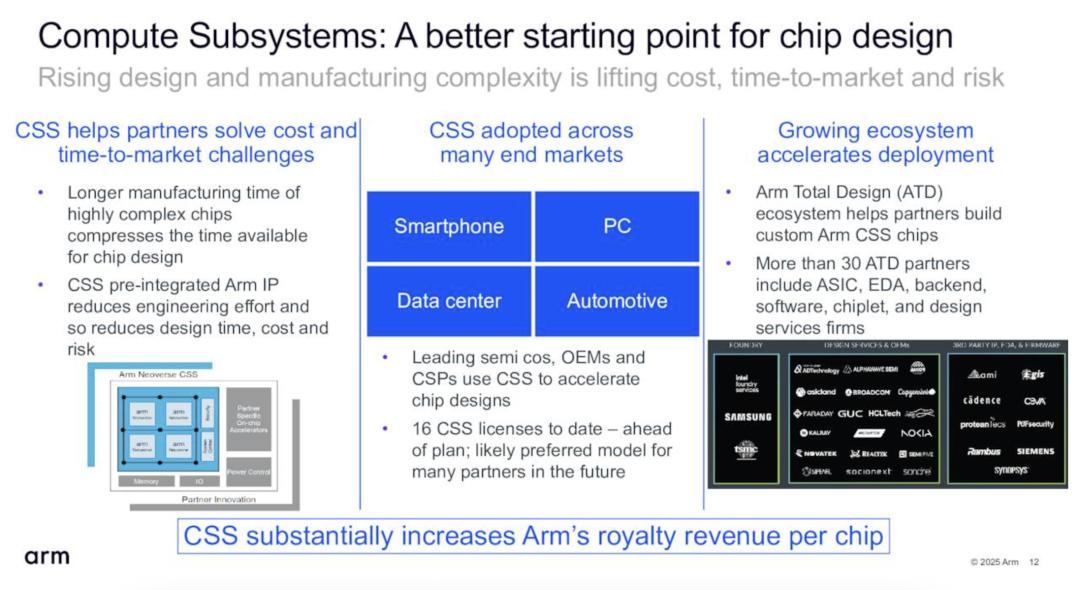
Core Insights - Arm has announced its strategic shift towards developing its own chips, moving away from its traditional model of licensing chip design blueprints to other companies [1][2][10] - The first self-developed chips are expected to be launched as early as summer 2023, with TSMC as the foundry partner and Meta potentially being one of the first customers [3][10] Group 1: Strategic Shift - Arm's CEO René Haas confirmed the company's decision to invest more in developing physical chips, which are seen as a tangible representation of their existing Compute Subsystem (CSS) products [2][3] - The move to self-developed chips is a response to the growing demand for high-performance chips in the data center market, which is projected to be a trillion-dollar industry [10][11] Group 2: Financial Performance - Arm's Q1 revenue was reported at $1.05 billion, slightly below market expectations of $1.06 billion, with adjusted earnings per share at $0.35, in line with expectations [3] - For Q2, Arm forecasts adjusted earnings per share between $0.29 and $0.37, with revenue expectations of $1.01 billion to $1.11 billion, aligning with market predictions [3] Group 3: Key Developments - Arm's collaboration with SoftBank on the "Stargate" project aims to support a broader AI vision, leveraging Arm's technology as the core CPU for various applications [4][5] - The company has seen a 40% year-over-year increase in enterprises running AI workloads on Arm Neoverse data center chips, with a 14-fold increase since 2021 [5] - Arm's CSS platform has signed 16 licenses with 10 companies, more than doubling from the previous year, indicating strong demand for its technology [6] Group 4: Chiplet Development - Arm is actively developing Chiplets, which allow for modular design and independent scaling of compute or memory, supported by over 70 partners [9] - The Chiplet architecture is seen as a way to diversify product offerings without requiring significant investment in single-chip SoC designs [9] Group 5: Market Impact - The introduction of self-developed chips may disrupt Arm's long-standing relationships with existing clients, as it transitions from a partner to a competitor [10] - This strategic move is viewed as a necessary step for Arm to achieve higher profit margins compared to its licensing model, especially in the booming AI-driven data center market [10][11]
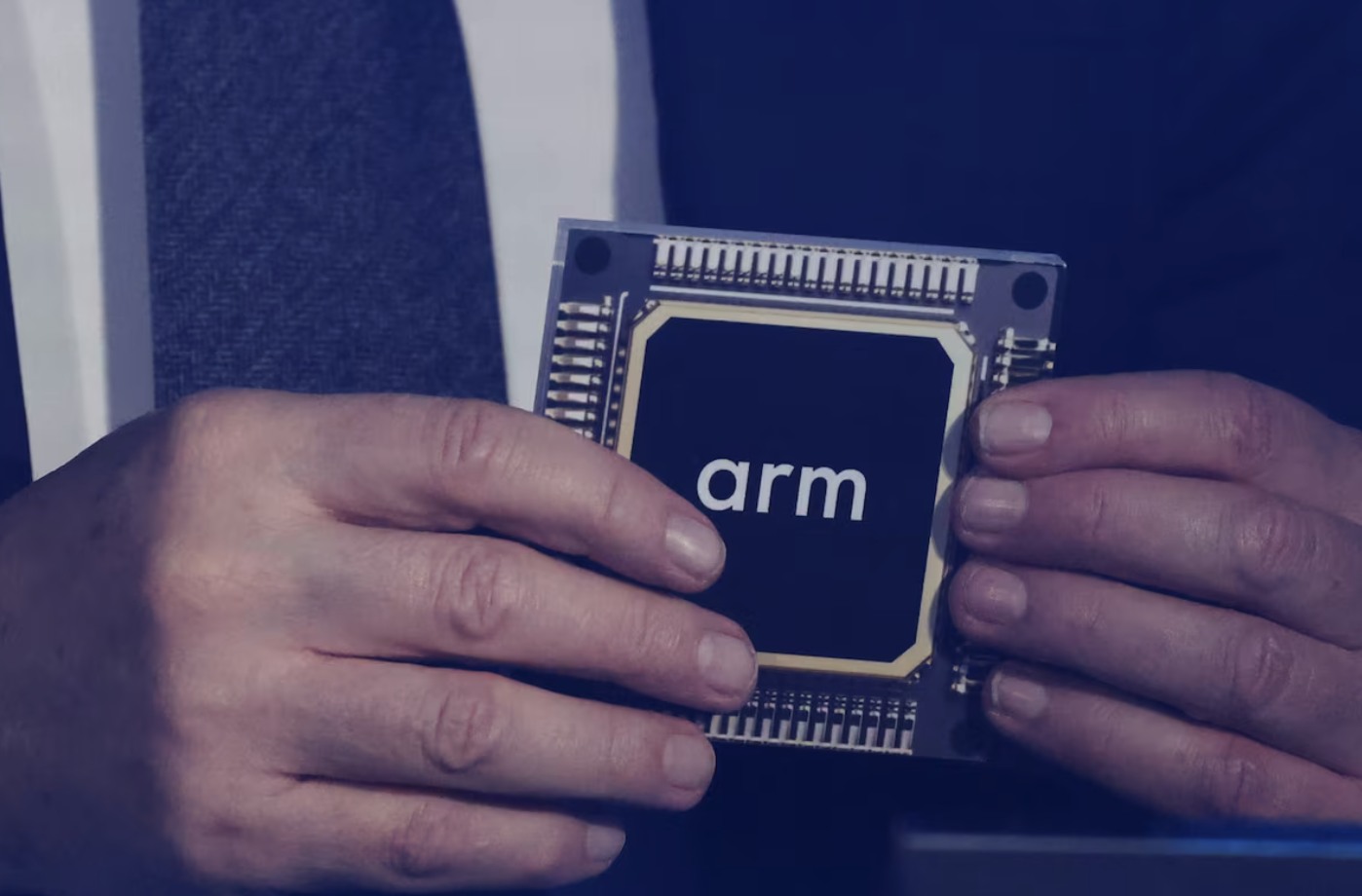
Arm宣布正在自研芯片!
国芯网· 2025-07-31 11:30
Core Viewpoint - Arm is shifting its strategy from a traditional IP licensing model to developing its own physical chip products, indicating a significant transformation in its business approach [1] Group 1: Strategic Shift - Arm's CEO Rene Haas announced an increase in investment to develop proprietary chip products, moving beyond mere design to directly constructing products such as chips and potential solutions [1] - The new strategy involves Arm actively recruiting talent, including experts from its existing customers, which suggests competition for chip orders with some current clients [1] Group 2: Product Development - Arm plans to launch its first self-developed chip, a CPU aimed at the data center market, as early as this summer, with production outsourced to specialized foundries like TSMC [1] - Major companies such as Meta are expected to be among the first customers for Arm's upcoming CPU [1]
与英伟达竞争?芯片授权公司ARM要自研芯片
Feng Huang Wang· 2025-07-31 07:24
Group 1 - ARM is shifting its business model by investing in the development of its own chips, moving away from solely licensing chip design architectures to other companies [2] - The company's quarterly outlook did not meet investor expectations, leading to an approximately 8% drop in stock price during after-hours trading [2] - ARM's CEO, Rene Haas, indicated that the new chips will represent a physical embodiment of the existing product "Compute Subsystem" (CSS) [2] Group 2 - ARM is actively recruiting talent from its clients to build the necessary team for manufacturing small chips and other finished products, indicating competition for projects with clients [3] - The CEO did not disclose when the new strategy would translate into profits or provide specific details about potential new products, but emphasized a focus on various forms including physical chips, circuit boards, or systems [3]

ARM(纪要):关税对公司没有直接影响
海豚投研· 2025-05-08 15:28
Core Insights - ARM reported a total revenue of $1.241 billion for Q4 FY25, exceeding consensus estimates by 0.78% and marking a significant year-over-year growth of 33.7% [1] - The company achieved record annual revenue exceeding $4 billion and royalty revenue surpassing $2 billion, both historical highs [2] - Non-GAAP operating income reached a new high of $655 million, with Non-GAAP EPS at $0.55, at the upper end of the guidance range [3] Revenue Performance - Q4 FY25 total revenue was $1.241 billion, with a year-over-year increase of 33.7% [1] - Royalty revenue for Q4 FY25 grew 18% year-over-year to a record $607 million, driven by the launch of flagship smartphones utilizing Armv9 and custom chip solutions [2] - License revenue also saw significant growth, increasing over 50% year-over-year to a record $634 million, primarily due to demand for Armv9 technology and AI applications [2] Profitability Metrics - Gross profit for Q4 FY25 was $1.213 billion, with a gross margin of 97.7%, reflecting a 0.5 percentage point increase from the previous quarter [1] - Operating income for Q4 FY25 was $410 million, showing a dramatic year-over-year increase of 1763.6% [1] Annualized Contract Value (ACV) and Remaining Performance Obligations (RPO) - ACV for Q4 FY25 grew 15% year-over-year, surpassing the company's long-term expectations of mid-single-digit growth [4] - RPO decreased quarter-over-quarter as ARM recognized revenue from previously signed licensing agreements [5] Operating Expenses and Guidance - Non-GAAP operating expenses for Q4 FY25 were $566 million, reduced due to the deferral of some expenses to Q1 FY26 [6] - For Q1 FY26, ARM expects revenue between $1 billion and $1.1 billion, with a year-over-year growth of 12% at the midpoint [6] Market Dynamics and Strategic Developments - ARM's strong performance is attributed to the increasing demand for energy-efficient AI computing from cloud to edge [7] - The company anticipates that up to 50% of new server chips from major cloud service providers will be based on ARM architecture [7] - ARM's custom chip solutions are gaining traction, with significant partnerships and product launches enhancing its market position [8][9] Tax and Tariff Implications - ARM expects limited direct impact from tariffs on its royalty and license revenues, with potential indirect effects on demand yet to be fully assessed [11]