
语言处理单元(LPU)

Search documents
AI产业重心转向“推理” 芯片巨头面临对手“合围” 英伟达“万亿预期”能否打动市场
Huan Qiu Wang Zi Xun· 2026-03-18 02:22
Core Insights - Nvidia remains at the center of the AI competition as it seeks to solidify its dominance amid increasing competition and a shift towards AI inference technology [1][4] - The company has ambitious revenue projections, expecting its latest AI processors to generate $1 trillion in sales by 2027 [3] Group 1: Product Developments - Nvidia unveiled a new CPU and an AI system based on Groq's technology to enhance AI response times, marking a significant advancement in AI inference infrastructure [2] - The new architecture features a Language Processing Unit (LPU) designed to accelerate the inference process of large language models, showcasing a notable performance leap over previous GPU architectures [2] Group 2: Market Dynamics - Despite holding approximately 90% of the market share, Nvidia faces increasing competition as companies like Meta accelerate their in-house chip development to reduce reliance on Nvidia's expensive GPUs [4][6] - The shift from AI model training to inference has led to a growing interest in more cost-effective and efficient inference hardware, with competitors like Amazon and Microsoft launching alternative AI chips [5][6] Group 3: Financial Performance - Nvidia's stock rose by 1.2% following optimistic revenue forecasts, although it has seen a cumulative decline of 3.4% year-to-date prior to the GTC conference [3] Group 4: Geopolitical Challenges - Nvidia faces significant geopolitical challenges, particularly from U.S. trade restrictions affecting sales to China, which could accelerate the development of local competitors like Huawei and Cambricon [6]

英伟达股价沉寂数月,今夜开幕的GTC能否力挽狂澜?
Hua Er Jie Jian Wen· 2026-03-16 10:00
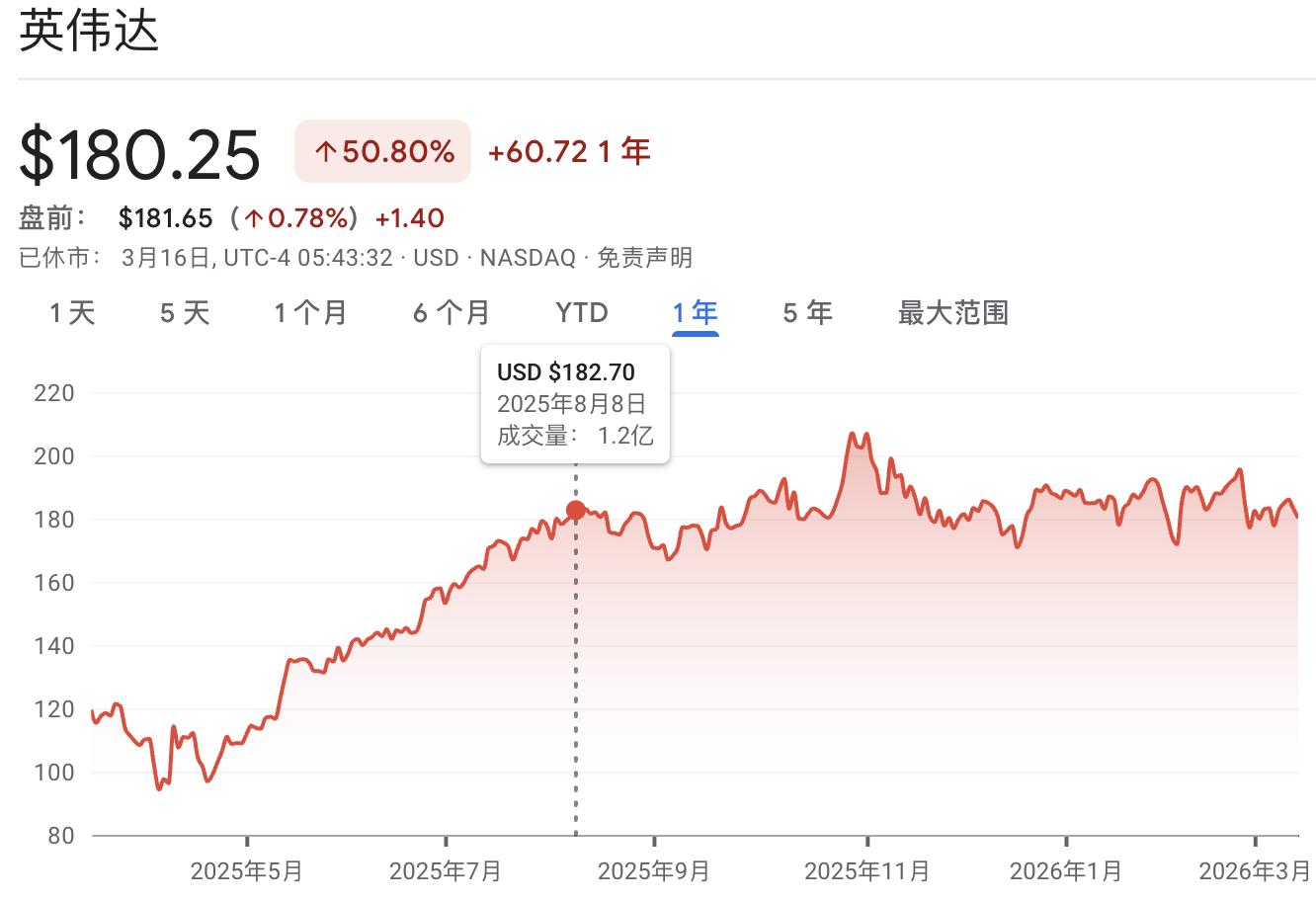
Core Viewpoint - Nvidia is at a critical juncture with most analysts optimistic about its fundamentals, yet the stock price has performed flat this year, leading to ongoing market concerns. The annual GTC conference provides an opportunity to reignite investor confidence [1] Group 1: Market Sentiment and Stock Performance - Despite a ten-year cumulative increase of 22,000%, Nvidia's stock has stagnated this year, raising doubts among investors about its ability to sustain growth [2] - Nvidia is currently trading at 17 times the expected earnings for the next fiscal year, which is below the overall valuation level of the S&P 500 index. Approximately 93% of the 70 analysts covering Nvidia have a buy rating, with an average target price of around $267 [2] - Free cash flow is expected to grow by 85% this fiscal year, reaching over $178 billion, which would set a historical record for global corporate free cash flow [2] Group 2: GTC Conference Highlights - The GTC conference is expected to showcase Nvidia's strategic shift from training to inference in AI, along with adjustments in its supply chain. There may be announcements regarding the integration of Groq technology to enter the AI inference market [3][4] - Nvidia is anticipated to present a new product lineup, including a language processing unit (LPU) rack system and a new generation of high-speed switches, potentially in collaboration with Intel on a custom x86 processor [3] Group 3: Capital Expenditure Trends - Nvidia's performance heavily relies on continued investment in AI infrastructure by major cloud providers like Amazon and Microsoft. Amazon's capital expenditure is projected to rise significantly, with an expected increase to $190 billion this year, primarily directed towards AI infrastructure [5] - Barclays forecasts that overall capital expenditure in the AI sector will peak at approximately $1 trillion by 2028, with market expectations for cloud providers' capital spending in 2028 underestimated by about $300 billion [5] Group 4: Divergent Views on GTC Impact - There is a divide on Wall Street regarding whether the GTC conference will lead to a substantial breakthrough in stock price. Concerns about the sustainability of capital expenditure from large cloud providers and geopolitical uncertainties are seen as core reasons for Nvidia's ongoing valuation pressure [6] - While UBS acknowledges Nvidia's strong fundamentals, it expresses skepticism about the potential for a "change in investment logic" that could trigger a significant stock price surge from the conference [6]

英伟达200亿美元锁定Groq核心团队,加速布局实时AI推理时代核心基础设施
Huan Qiu Wang Zi Xun· 2025-12-27 05:12
Group 1 - Nvidia has entered a strategic technology integration agreement with AI chip startup Groq, agreeing to pay approximately $20 billion in cash for technology licensing and to hire Groq's core engineering team [1] - This move is seen as a precise positioning by Nvidia during a critical turning point in AI development, as the revenue from inference workloads is projected to surpass that from training workloads for the first time by 2025, accounting for 52.3% of global AI workloads [3] - The "inference inflection" is driving a surge in demand for dedicated AI processors that offer low latency, high energy efficiency, and deterministic responses, with Groq's language processing unit (LPU) being one of the lowest latency and highest token generation rate commercial chips currently available [3]
黄仁勋200亿美元带走「TPU核心班底」
36氪· 2025-12-25 06:44
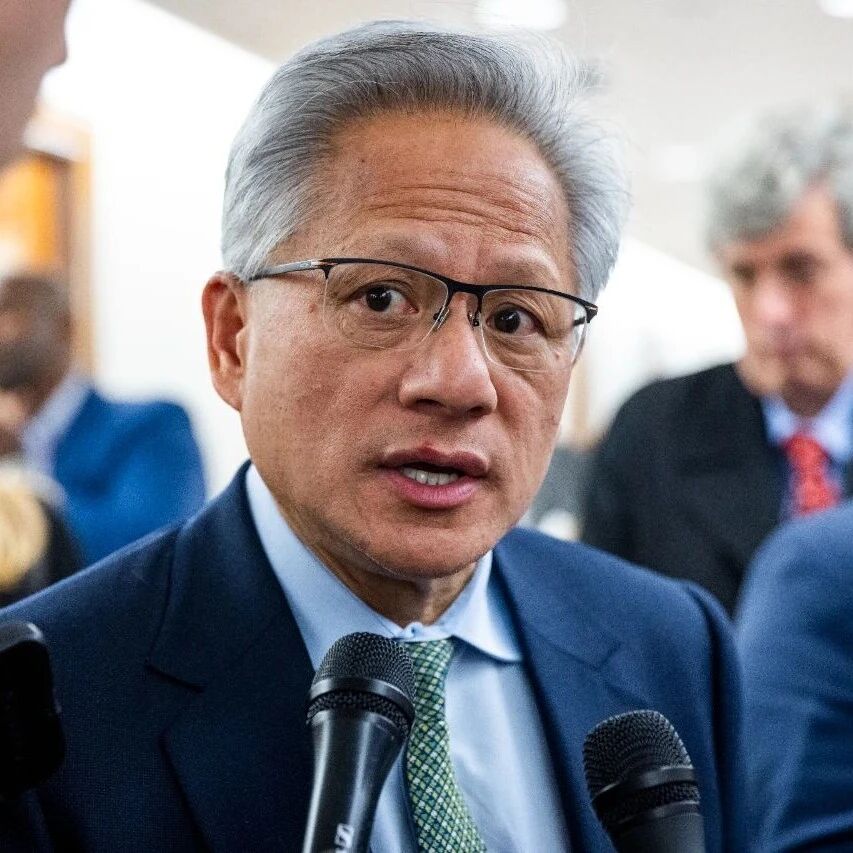
Core Viewpoint - Nvidia's strategic move to acquire technology and talent from Groq, a startup specializing in AI inference, highlights its focus on enhancing capabilities in the AI inference market, particularly as workloads shift from model training to inference [28][29]. Group 1: Acquisition Details - Nvidia announced a $20 billion cash deal with Groq, marking its largest transaction to date, surpassing the $7 billion acquisition of Mellanox in 2019 [5]. - Shortly after the announcement, both Nvidia and Groq clarified that the deal is not an acquisition but a non-exclusive technology licensing agreement, allowing Nvidia to integrate Groq's products into its future offerings [8][9]. - The deal includes the transfer of Groq's core team, including its CEO and president, to Nvidia, while Groq will continue to operate independently under its CFO [16][18]. Group 2: Strategic Intent - Nvidia's CEO Jensen Huang indicated that the integration of Groq's low-latency processors into Nvidia's AI infrastructure aims to support a broader range of AI inference and real-time workloads [28]. - Groq's technology is noted for its efficiency, claiming to run large models ten times faster than traditional methods while consuming only one-tenth of the energy [28]. - The acquisition of Groq's talent, particularly its founder who was a key developer of Google's TPU, positions Nvidia to better compete against its rivals in the AI chip market [29][30]. Group 3: Financial Context - As of October 2025, Nvidia holds $60.6 billion in cash and short-term investments, a significant increase from $13.3 billion at the beginning of 2023, providing ample resources for further acquisitions [32]. - Nvidia has also made investments in other AI-related companies, including Crusoe and Cohere, and plans to invest up to $100 billion in OpenAI [33][34]. Group 4: Industry Trends - The trend of "acqui-hire" is becoming prevalent among tech giants, allowing them to acquire talent and technology while avoiding regulatory hurdles associated with traditional mergers [19]. - Other companies, such as Intel, are also pursuing acquisitions in the AI chip space, indicating a competitive landscape where major players are actively seeking to absorb potential disruptors [36].
黄仁勋200亿美元带走「TPU核心班底」
创业邦· 2025-12-25 03:08
Core Viewpoint - Nvidia announced a record $20 billion cash deal with AI chip startup Groq, marking its largest transaction ever, surpassing the $7 billion acquisition of Mellanox in 2019 [2][4] Group 1: Transaction Details - Shortly after the announcement, both Nvidia and Groq clarified that the deal is not an acquisition but a non-exclusive technology licensing agreement [4][5] - The agreement allows Nvidia to integrate Groq's products into its future offerings while Groq continues to operate independently [7][8] - Groq's core team, including CEO Jonathan Ross and President Sunny Madra, will join Nvidia to advance the application of the licensed technology [7][12] Group 2: Strategic Intent - Nvidia's CEO Jensen Huang indicated that the strategic intent behind the deal is to integrate Groq's low-latency processors into Nvidia's AI infrastructure, targeting the AI inference market [12][14] - Groq specializes in high-performance AI accelerator chips, with its technology reportedly running large models ten times faster than traditional solutions while consuming only one-tenth of the energy [12][14] Group 3: Market Context - The transaction reflects a trend in Silicon Valley known as "acqui-hire," where companies acquire talent and technology without triggering antitrust issues [6][8] - Other tech giants have engaged in similar transactions, indicating a competitive landscape where major players are absorbing potential disruptors [8][22] - Nvidia's financial position is strong, with $60.6 billion in cash and short-term investments, enabling it to pursue significant acquisitions and investments in the AI sector [16]

英伟达挑战者,估值490亿
Hu Xiu· 2025-10-07 10:34
Core Insights - Nvidia has secured a contract with OpenAI worth up to $100 billion, while AI chip startup Groq has announced a $750 million funding round, raising its valuation to $6.9 billion [1] - The global AI chip market is experiencing rapid growth, projected to increase from $23.19 billion in 2023 to $117.5 billion by 2029, with a compound annual growth rate of 31.05% [1] - Groq focuses on inference-optimized chips, aiming to challenge Nvidia's dominance in the AI chip market [2][5] Company Overview - Groq was founded in 2016 by former Google engineers, including Jonathan Ross, who was involved in the design of Google's TPU chips [3] - The company is known for its Language Processing Units (LPU), which are designed specifically for inference tasks, contrasting with traditional GPUs [4] - Groq's business model includes providing cloud services and local hardware clusters, allowing developers to run popular AI models at lower costs [5][6] Funding and Valuation - Groq has raised over $3 billion in total funding, with significant investments from firms like BlackRock and Deutsche Telekom Capital [7][9] - The company has seen a rapid increase in user adoption, supporting over 2 million developers' AI applications, up from 350,000 a year prior [9] Competitive Landscape - Groq's LPU chips are designed for high throughput and low latency, making them suitable for interactive AI applications [11] - Despite Groq's advantages, Nvidia maintains a strong ecosystem with its CUDA platform, which poses a challenge for Groq to build its own developer community [11][12] - Other competitors, such as Cerebras, are also emerging in the market, focusing on large model training, but Nvidia still holds an 80% market share in the AI cloud training sector [12][13]
AI推理芯片公司Groq完成7.5亿美元融资
Zheng Quan Shi Bao Wang· 2025-09-18 11:23
Core Insights - Groq, an AI chip startup, has completed a $750 million funding round, doubling its valuation to $6.9 billion in just over a year [1][2] - The funding round was led by Disruptive, with significant participation from BlackRock, Neuberger Berman, and Deutsche Telekom Capital Partners, among others [1] - Groq plans to use the funds to expand its data center capacity, including the establishment of a new data center in the Asia-Pacific region [1][2] Company Overview - Groq specializes in the development of AI inference chips, particularly focusing on language processing units (LPU) [1] - The company was founded in 2016 by Jonathan Ross, a former member of Google's Tensor Processing Unit core team [1] - Groq's technology optimizes energy efficiency and cost control through a software-defined hardware architecture [1] Market Context - The global AI chip market is experiencing explosive growth, with projections estimating it will reach $72 billion by 2025, reflecting a compound annual growth rate of over 30% [2] - While NVIDIA dominates the training chip market, the inference chip market is emerging as a new battleground, presenting opportunities for innovative companies like Groq [2] - Several large tech companies and cloud service providers are currently testing and deploying Groq's technology for high-timeliness applications such as customer service chatbots and personalized recommendations [2] Production Capacity - Groq has recently increased its production capacity by over 10% to meet customer demand, which is currently fully utilized [3]
英伟达挑战者Groq融资在即,估值60亿美元
3 6 Ke· 2025-07-31 01:22
Core Insights - Groq, a US-based AI chip startup, is initiating a new funding round aiming to raise $600 million, with a valuation nearing $6 billion, marking one of the fastest valuation growths in Silicon Valley's AI chip sector [1] - Founded in 2016 by Jonathan Ross, a member of Google's Tensor Processing Unit core team, Groq focuses on developing Language Processing Units (LPU) designed specifically for AI inference tasks, challenging Nvidia's dominance in real-time data processing [1] - Groq's LPU architecture achieves significant cost efficiency, with inference costs reported to be only one-tenth of Nvidia's GPUs and an energy efficiency improvement of up to 300% [1] Funding and Market Response - Since its inception, Groq has raised a total of $1.6 billion, attracting investments from major financial institutions such as BlackRock and KDDI, indicating strong confidence in the AI inference chip market [2] - The entry of BlackRock in the previous funding round in November 2024 highlights mainstream capital's belief in the potential of AI inference chips [2] Commercialization and Strategic Partnerships - Groq's commercialization efforts are accelerating, with a strategic partnership established with Meta in April to provide inference acceleration for its Llama4 model, aimed at reducing cloud computing costs [3] - In May, Groq secured an exclusive partnership with Bell Canada to deploy AI-driven network optimization systems, targeting the substantial demand in the telecom AI market [3] Competitive Landscape and Challenges - Groq employs a "dual-track breakthrough" strategy to navigate patent barriers from traditional chip manufacturers like Qualcomm and AMD, while also binding its supply chain closely with North American companies to mitigate geopolitical risks [3] - The next-generation chips will utilize TSMC's 3nm process, with fully controllable core IP, enhancing Groq's competitive edge [3] - Despite its advancements, Groq faces significant competition from Nvidia, which is introducing lower-cost training chips into the inference market, as well as increased efforts from AMD and Intel [4]