
贵南高铁

Search documents
行稳致远开新局丨万桥飞架赛事燃,开放“黔”路何以出圈?
Yang Guang Wang· 2026-01-29 02:05
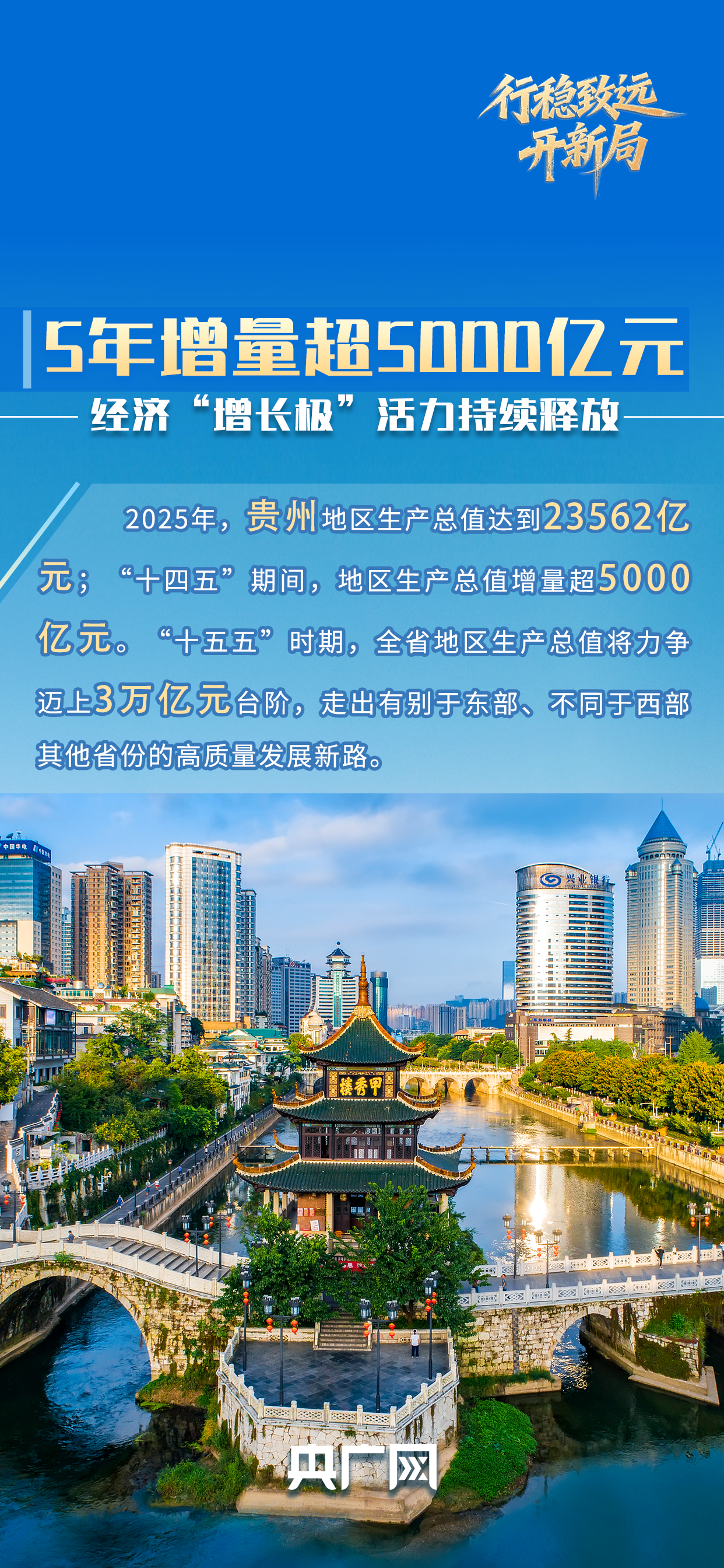
Core Insights - The article emphasizes the significant progress made in Guizhou's infrastructure and economic development, particularly through the construction of bridges and railways, which are pivotal for the region's connectivity and growth [4][5][10]. Infrastructure Development - The completion of the Huajiang Grand Canyon Bridge has drastically reduced travel time between two regions from over two hours to just two minutes, showcasing Guizhou's engineering capabilities [4]. - Guizhou has built over 30,000 bridges in the past five years, with a total length exceeding 5,400 kilometers, addressing the challenges posed by its mountainous terrain [4][6]. - The Guinan High-Speed Railway has significantly improved travel efficiency, reducing the journey from Guiyang to Libo from four hours to one hour, leading to a 335.21% increase in tourist numbers during the New Year holiday [9][10]. Economic Growth - Guizhou's GDP surpassed 2 trillion yuan in 2022, with projections to reach 2.3562 trillion yuan by 2025, indicating a growth of over 500 billion yuan in five years [5]. - The region's economic vitality is further enhanced by the integration of tourism and local industries, driven by improved transportation infrastructure [6][10]. Cultural and Sports Integration - The "Village Super League" has become a significant cultural phenomenon, promoting grassroots football and tourism, with over 2,000 matches held in 2025, enhancing community engagement [12][15]. - The integration of sports events with tourism has created a positive feedback loop, attracting visitors and boosting local economies [15]. Digital and Technological Advancements - Guizhou is establishing itself as a key player in the national "East Data West Calculation" strategy, with a computing power capacity exceeding 160 Eflops, aimed at enhancing various sectors including agriculture and healthcare [18][21]. - The province is focusing on developing a robust digital economy, with plans to increase computing power to over 190 Eflops by 2026 and to foster over 150 cloud ecosystem enterprises [21][22]. Future Development Goals - Guizhou aims to achieve a GDP of 3 trillion yuan and a per capita GDP exceeding 80,000 yuan by 2026, with a focus on improving urban and rural living conditions and infrastructure [22].

西部第二个,市市通高铁对贵州有何意义?
Sou Hu Cai Jing· 2025-12-01 06:25
Core Viewpoint - The opening of the Panxing High-speed Railway marks a significant advancement for Guizhou, making it the 12th province in China to achieve "city-to-city high-speed rail" connectivity, enhancing regional tourism and economic development [2][4][5]. Summary by Sections High-speed Railway Development - The Panxing High-speed Railway, which opened on November 28, spans 99 kilometers with a design speed of 250 km/h, connecting Liupanshui and Xingyi, significantly reducing travel time between these cities to just 2 hours [2]. - With the addition of the Panxing line, Guizhou's total high-speed rail mileage reaches 1,906 kilometers, positioning it among the top provinces in Western China [9]. Tourism Impact - The new railway line connects rich tourism resources in both Liupanshui and Xingyi, promoting diverse tourism opportunities and enhancing visitor retention and spending [3][11]. - The local tourism bureau has introduced incentives, such as free entry to certain scenic spots for travelers arriving by high-speed train, to attract more visitors [3]. Economic and Regional Development - Guizhou's geographical position as a southwestern transportation hub, combined with national policies supporting infrastructure development, has facilitated its rapid high-speed rail expansion [6][8]. - The high-speed rail network is expected to transform Guizhou from a transportation periphery into a regional hub, attracting investment and fostering industrial growth [12]. Operational Considerations - The economic viability of high-speed rail in Guizhou is under scrutiny, with discussions on how to optimize operations to cover construction and maintenance costs while maximizing benefits [8][12]. - Experts suggest that Guizhou should align high-speed rail development with local economic growth, ensuring a sustainable cycle of construction, operation, and profitability [13].
铁路成网筑牢高质量发展底气
Jing Ji Ri Bao· 2025-11-29 01:55
Core Points - The opening of the Pan-Xing High-Speed Railway marks Guizhou as the first province in Southwest China to achieve full high-speed rail coverage in its central cities [1][2] - The railway significantly reduces travel time from Xingyi to Guiyang to 1 hour and 56 minutes, enhancing local connectivity and economic development [2][3] - The railway integrates with existing transport networks, facilitating seamless connections between various modes of transportation [3][7] Transportation Impact - The Pan-Xing High-Speed Railway completes a critical link in the comprehensive transportation system of Qiannan Prefecture, promoting multi-modal transport development [3] - The railway will operate 7 pairs of trains daily in its initial phase, catering to passenger demand and enhancing regional mobility [2][3] Economic and Tourism Development - The railway is expected to boost tourism by connecting high-quality tourist resources in western Guizhou, facilitating the integration of transportation and tourism [4][5] - Qiannan Prefecture plans to host 92 cultural activities and 52 sports events by the end of January to attract tourists and enhance cultural tourism [5] - Local businesses, including accommodations and dining, are preparing to support increased tourist traffic resulting from the railway's opening [4][6] Future Prospects - The railway's construction reflects Guizhou's ambition to build a rapid transportation network, overcoming geographical challenges and enhancing regional connectivity [7][8] - Guizhou's high-speed rail network is expanding, with plans for additional lines to further integrate the province into national transport frameworks [8]
从第一条铁路到市市通高铁 看贵州铁路建设的山地传奇
Yang Shi Xin Wen Ke Hu Duan· 2025-11-28 07:16
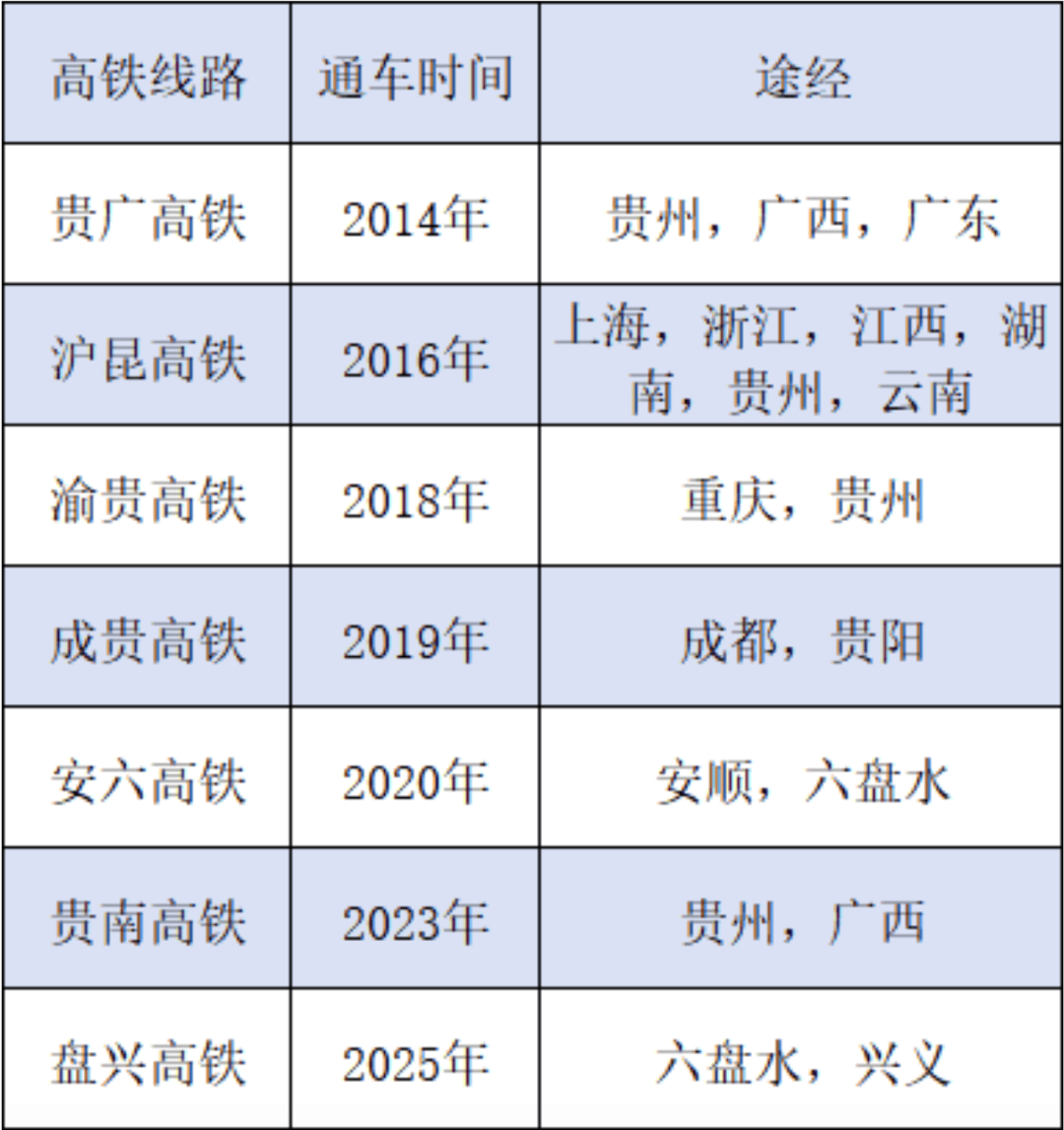
Core Viewpoint - The opening of the Panzhou-Xingyi high-speed railway marks the completion of a high-speed rail network connecting nine major cities in Guizhou, enhancing the province's integration into broader economic and tourism landscapes [1][2] Group 1: High-Speed Rail Development - The Guizhou high-speed rail network connects major tourism and economic resources, facilitating faster access to the Guangdong-Hong Kong-Macau Greater Bay Area [1] - The first high-speed rail line from Guiyang to Guangzhou opened in December 2014, marking Guizhou's entry into the high-speed rail era [1] - The completion of the Hukun high-speed railway in December 2016 established a rapid connection between Guizhou and the Yangtze River Delta [1] - The opening of the Yuxi-Guizhou railway in January 2018 highlighted the region's historical significance and tourism potential [1] - The Chengdu-Guizhou high-speed railway opened in December 2019, linking Guizhou to the Chengdu-Chongqing economic circle [1] - The Gui-Nan high-speed railway, which opened in August 2023, is Guizhou's first line with a speed of 350 km/h, enhancing connectivity to Southeast Asia [1] Group 2: Economic Impact - The completion of the Panzhou-Xingyi high-speed railway fills the last gap in high-speed rail connectivity among Guizhou's nine central cities, reshaping the regional economic landscape [2] - Over the past 11 years, the development of high-speed rail has transformed Guizhou from a "southwest hinterland" into an open frontier [2]
钢铁巨龙越山联海筑通途
Jing Ji Ri Bao· 2025-10-29 22:02
Core Insights - The Guinan High-Speed Railway has significantly boosted local tourism and economic development, exemplified by the record daily visitor count of 77,500 at the Xiaoqikong Scenic Area during the National Day and Mid-Autumn Festival holiday [1] - The railway is a crucial part of China's high-speed rail network, facilitating regional development and connectivity between Guizhou and Guangxi provinces [1][6] Infrastructure Development - The Guinan High-Speed Railway features a complex construction process, with over 90% of the route consisting of bridges and tunnels, including the 17-kilometer-long No. 1 tunnel that traverses challenging geological conditions [2] - Innovative construction techniques were employed to minimize ecological impact, such as using large-span segmental assembly beams and reducing the number of bridge piers [3] Economic Impact - The railway has transformed travel times, reducing the journey from Guiyang to Libo from 4 hours to just 1 hour, thus integrating Libo into a two-hour travel radius from major cities [4] - The proportion of long-distance visitors to Libo has increased from 18% to 42% since the railway's opening, with notable growth in tourists from the Guangdong-Hong Kong-Macau Greater Bay Area and other regions [5] Regional Collaboration - The Guinan High-Speed Railway serves as a catalyst for regional cooperation between Guizhou and Guangxi, promoting joint tourism initiatives and economic projects [7] - Local governments are working together to enhance tourism routes and create cross-regional industrial parks, fostering deeper economic integration [8] Strategic Importance - The railway optimizes the transportation network in Southwest China, connecting various high-speed rail lines and enhancing accessibility to the Beibu Gulf region [8] - The Guinan High-Speed Railway is positioned as a new engine for high-quality development in the Guizhou-Guangxi region, facilitating resource movement and economic growth [8]