
贵州刺梨

Search documents
快评|“贵”客蓉城寻年味:山货如何“麻辣”入川?
Nan Fang Nong Cun Bao· 2026-02-07 04:03
Core Viewpoint - The article discusses the successful promotion of Guizhou agricultural products in Chengdu, highlighting the cultural significance and market potential of these products in the context of regional cooperation and consumer engagement [3][4][44]. Group 1: Event Overview - The promotional event titled "Taste Specialties and Seek New Year Flavor: Guizhou Products Enter Sichuan" was held successfully, serving as both a trade activity and a cultural dialogue [3][4]. - The event aimed to connect rural and urban areas, blending traditional and modern elements through the promotion of Guizhou's agricultural products [5][12]. Group 2: Market Potential - With over 1.4 billion people in China, there is a significant demand for agricultural products, indicating a large market potential [6]. - Chengdu, as a major consumption hub in Southwest China, offers a substantial agricultural market advantage for Guizhou products [7][8]. Group 3: Marketing Strategy - The marketing approach emphasized emotional and cultural resonance rather than just product quality, enhancing the appeal of Guizhou products [21][22]. - The event showcased Guizhou products in the context of traditional Chinese New Year celebrations, transforming them into carriers of cultural stories and emotional connections [12][20]. Group 4: Collaborative Efforts - The promotion was not just about individual brands but presented a unified image of Guizhou products, creating a strong brand aggregation effect [30][32]. - The event facilitated deep discussions with local distributors, restaurants, and e-commerce platforms, embedding Guizhou products into a broader distribution network [37][40]. Group 5: Future Implications - The event's significance extends beyond immediate sales, planting seeds for brand recognition, channel cooperation, and cultural exchange [36][39]. - It represents a model for regional cooperation and development, showcasing how agricultural products can thrive through strategic marketing and collaboration [44][45].


制定“标准”壮大产业
Xin Lang Cai Jing· 2026-01-25 22:24
Core Viewpoint - The establishment of national standards for fermented sour soup and health food ingredient prickly pear in Guizhou is a significant step towards accelerating the development of these industries, filling a gap in national-level standards [1] Industry Development - Standards serve as a "lifeline" for products, providing a clear baseline for quality and ensuring stability and safety, which helps to transform local specialties into national benchmarks [1] - The lack of unified national standards has hindered the ability of Guizhou's sour soup and prickly pear industries to expand beyond regional markets [1] Market Recognition - The initiation of these national standards is expected to enhance the branding of "Guizhou sour soup" and "Guizhou prickly pear," allowing these products to gain recognition in national and global markets [1] Industry Statistics - Guizhou accounts for over 90% of the national planting area, processing capacity, and product variety for prickly pear, while the sour soup industry has developed a comprehensive industrial chain covering raw material planting, deep processing, and cultural tourism integration [1] Replicable Development Model - The standardization efforts for sour soup and prickly pear are anticipated to not only strengthen these industries but also provide replicable and promotable development experiences for other specialty industries in Guizhou, turning unique resources into "wealth-generating industries" and regional economic "growth engines" [1]
谁在取代车厘子?
吴晓波频道· 2026-01-14 00:29
Core Viewpoint - The price of cherries has significantly decreased this winter, making them less appealing as a luxury fruit and more of a common consumer item, influenced by increased supply and changing consumer preferences [3][4][30]. Group 1: Price Trends and Market Dynamics - This winter, the price of cherries has dropped by over 20% compared to the previous year, with some distributors reporting the lowest prices in a decade [3][7]. - The price of cherries has become less prominent compared to other fruits, with online prices showing discounts of up to 20% compared to offline prices [3][8]. - The increase in supply is attributed to an early harvest and improved logistics, with the shipping time from Chile to China reduced to as little as 23 days [8][30]. Group 2: Supply Chain and Import Factors - Chile has expanded its cherry cultivation area from approximately 7,600 hectares in 2004 to over 76,000 hectares in 2024, leading to a significant increase in export volume [7]. - Despite a forecasted decrease in export volume to 550,000 tons this year, the rapid influx of cherries into the Chinese market has created oversupply [7][8]. - The implementation of "cherry fast lanes" and reduced shipping costs have further facilitated the import process, lowering costs by over 60% compared to air freight [8][30]. Group 3: Changing Consumer Preferences - The perception of cherries has shifted from a luxury item to a common fruit, with consumers now having a wider variety of choices, including tropical fruits and unique varieties [12][21]. - Negative media coverage regarding health concerns associated with cherries has also impacted consumer demand, leading to a decline in high-grade cherry purchases for gifting [9][11]. - The demand for fruit that is visually appealing and suitable for gifting has evolved, with innovative packaging and presentation becoming more important [18][21]. Group 4: Future Outlook and Industry Adaptation - The cherry industry is exploring new markets and strategies to adapt to changing consumer preferences and increased competition, including promoting alliance agreements and staggered shipments [30][31]. - The logistics improvements that benefited the cherry market may also support the import of other fruits, indicating a potential shift in the competitive landscape [31].

美丽贵州建设步步高 “十五五”接续奋斗再出发
Zhong Guo Huan Jing Bao· 2025-12-31 00:56
Group 1 - The core viewpoint emphasizes the commitment of Guizhou Province to balance development and ecological protection, aiming to transform ecological advantages into developmental strengths during the "14th Five-Year Plan" period [1] - Guizhou has implemented a comprehensive pollution prevention and ecological restoration strategy, enhancing environmental monitoring and establishing a robust ecological protection framework [2][7] - The province has achieved significant improvements in environmental quality, with over 98% of air quality days rated as good and 100% compliance in major water sources [12][29] Group 2 - Guizhou's ecological initiatives have led to the establishment of national-level ecological civilization demonstration zones, showcasing successful practices in ecological protection and economic development [14][15] - The province has adopted innovative institutional reforms to enhance ecological governance, including the implementation of ecological compensation mechanisms and environmental damage liability systems [11][10] - Guizhou's green economy now accounts for 48.8% of its overall economy, reflecting the successful integration of ecological protection with economic growth [25] Group 3 - The "Three Water Coordination" strategy has been pivotal in restoring the ecological health of the Chishui River, a key tributary of the Yangtze River, through collaborative governance with neighboring provinces [27][28] - Legal frameworks have been established to regulate activities affecting the Chishui River, ensuring sustainable development and ecological protection [28] - Continuous monitoring has resulted in stable water quality improvements, with over 98% of surface water monitoring points meeting quality standards [29]


小集市汇聚大能量,“广聚帮扶力 晟启振兴路”消费帮扶主题市集热闹开市
Nan Fang Nong Cun Bao· 2025-12-19 12:03
Core Viewpoint - The article highlights the launch of a consumption assistance themed market titled "Gathering Support, Initiating the Road to Revitalization," aimed at promoting local agricultural products and enhancing consumer engagement through interactive experiences [8][9][36]. Group 1: Event Overview - The market featured a variety of local specialties from regions supported by Guangdong, including Guizhou's prickly pear, Yunnan's colorful peanuts, and seafood from Zhuhai and Shantou [6][7]. - The event was organized by the Guangdong Regional Cooperation Consumption Assistance Product Trading Center, Guangdong Guangsheng Holding Group, and Southern Rural News, focusing on a multi-dimensional approach of "exhibition + interaction + experience + communication" [9][10]. Group 2: Product Offerings - The market showcased nearly 30 businesses and hundreds of quality assistance products, including snacks, nuts, and soup ingredients, which were well-received by local office workers [31][32]. - Featured products included health-oriented items like the "Chenpi Xingyou Teng" series, which combines traditional ingredients for a unique taste, and "Guangdong Sanbao," which offers various herbal products [18][20][23]. Group 3: Consumer Engagement - Interactive elements included a "send blessings" blind box lottery for purchases over 68 yuan, enhancing the shopping experience with surprise gifts and practical household items [26][28]. - The event aimed to create a warm atmosphere of support while allowing consumers to experience quality products directly from the source [28][30]. Group 4: Organizational Support and Future Plans - Guangsheng Holding Group has been actively implementing support measures to convert its resource and industrial advantages into actions that promote coordinated urban-rural development [36][37]. - The Guangdong Regional Cooperation Consumption Assistance Product Trading Center plans to organize more online and offline promotional activities leading up to the New Year and Spring Festival to sustain the momentum of consumption assistance [40][41].
“媒体+”赋能“头雁”,黔川农品加速“入粤进湾出海”
Nan Fang Nong Cun Bao· 2025-11-06 05:31
Core Viewpoint - The training program aims to empower agricultural leaders from Guizhou and Sichuan provinces by leveraging the "Media+" model to enhance brand value and activate new industrial dynamics in the Guangdong-Hong Kong-Macao Greater Bay Area [10][12][30]. Group 1 - The training session, part of the "Head Goose" project, gathered 180 rural industry leaders from Guizhou and Sichuan to learn from the Greater Bay Area [3][4][29]. - Customized courses were designed to improve management capabilities and brand marketing, with practical visits to Shenzhen, Guangzhou, and Zhuhai [5][6][7]. - The "Media+" model is highlighted as a strategic lever for reconstructing value in the agricultural supply chain, focusing on emotional narratives and cultural symbols [30][12][31]. Group 2 - The "Media+" strategy has shown significant results since its implementation in 2025, with the "Media+ Year Fish Economy" model driving the entire industry chain's output value to exceed 20 billion [16][22]. - The collaboration between Zhuhai and Zunyi has led to the creation of a "Media+ Supply Chain" alliance, enhancing the tea industry's upgrade and transforming traditional tea raw materials into consumer brands [24][25]. - The new tea beverage industry cluster in Zunyi is projected to reach a total output value of 718 million in 2024, with ambitions to hit 1 billion in 2025 [26][27]. Group 3 - The training emphasized the importance of emotional value in agricultural products, encouraging a shift from functional consumption to emotional consumption [39][40][32]. - Participants shared insights on how to utilize successful models and new media strategies to build vibrant regional brands [44][45]. - The course revealed that cultural attributes are core competitive advantages, with emotional connections becoming essential in the current market landscape [42][43]. Group 4 - The "Head Goose" project is a key initiative for promoting rural revitalization and agricultural modernization, significantly impacting agricultural upgrades and farmers' income [56][57]. - Future activities will focus on sustaining the empowerment mechanism, aiming to connect high-quality agricultural products from Guizhou and Sichuan with the Greater Bay Area supply chain [62][63]. - The program encourages participants to broaden their perspectives and innovate their approaches by learning from the Greater Bay Area's experiences [60][61].
东方甄选亮相第十四届中国知识产权年会,宣布将推广更多优质地标农产品
Jing Ji Wang· 2025-09-15 09:29
Core Insights - Oriental Selection participated in the 14th China Intellectual Property Annual Conference, highlighting its efforts in promoting and selling geographical indication products to support rural revitalization and agricultural modernization [1][3] Group 1: Product Offerings - Oriental Selection has launched over 800 self-operated products, with more than half being agricultural products, including several geographical indication products such as Guizhou prickly pear, Luochuan apple, and Lipu taro [3] - The self-operated prickly pear juice has become a hot-selling product, achieving significant sales growth with over 19.3 million bottles sold to date, driven by the rising health consumption trend and product reputation [3] Group 2: E-commerce Strategy - The company leverages e-commerce platforms to overcome regional limitations, enhance brand recognition, and address the challenge of selling products nationwide [3] - Through a strict quality control system, traceability, and immersive e-commerce experiences, Oriental Selection ensures product quality and allows consumers to appreciate the uniqueness of geographical indication products [3] Group 3: Future Plans - Oriental Selection aims to strengthen collaboration with local governments and industry associations to explore new pathways for e-commerce to support the development of geographical indication products, ultimately increasing farmers' income and providing consumers with more quality products [3]

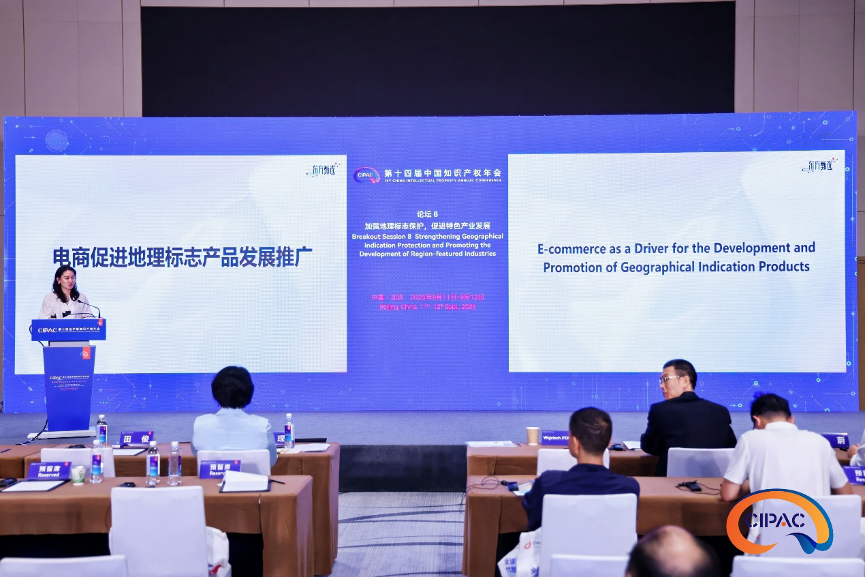
东方甄选亮相第十四届中国知识产权年会 宣布将推广更多优质地标农产品
Cai Jing Wang· 2025-09-15 07:00
Core Insights - Dongfang Zhenxuan participated in the 14th China Intellectual Property Annual Conference, highlighting its efforts in promoting and selling geographical indication products to support rural revitalization and agricultural modernization [1][4] Group 1: Product Offerings - Dongfang Zhenxuan has launched nearly 800 self-operated products, with over half being agricultural products, including several geographical indication products such as Guizhou prickly pear, Luochuan apple, and Lipu taro [3] - The self-operated prickly pear juice has become a hot-selling product, with cumulative sales exceeding 19.3 million bottles, driven by the growing health consumption trend and positive product reputation [3] Group 2: E-commerce Strategy - The company emphasizes that e-commerce platforms effectively help geographical indication products overcome regional limitations, enhance brand recognition, and address the challenge of selling nationwide [3] - Dongfang Zhenxuan ensures product quality through a strict quality control system, traceability system, and immersive content e-commerce model, providing consumers with a unique shopping experience [3] Group 3: Future Plans - The company plans to strengthen cooperation with local governments and industry associations to explore new pathways for e-commerce to support the development of geographical indication products, aiming to increase farmers' income and provide consumers with more quality products [4]
贵品出山·风行云间:贵州农业品牌推介暨招商洽谈会举行
Nan Fang Nong Cun Bao· 2025-08-31 03:30
Core Viewpoint - The event "Guizhou Agricultural Brand Promotion and Investment Negotiation Conference" was held in Shanghai, focusing on the branding development of Guizhou's specialty agricultural products [1][4]. Group 1: Event Overview - The conference gathered experts, scholars, and representatives from various sectors including finance, catering, and e-commerce to discuss the branding of Guizhou's agricultural products [2][3]. - A photo exhibition showcasing the changes in Guizhou's agriculture over the past five years was also part of the event, highlighting rural revitalization and advantageous industries [8][9]. Group 2: Agricultural Development Focus - Guizhou has concentrated on three key industries: beef cattle, tea, and chili, along with five advantageous industries including medicinal materials and edible fungi [10][11]. - The number of premium agricultural brands in Guizhou has increased from 3 to 10 since the release of the "Guizhou Agricultural Brand Catalog" in 2023 [13]. Group 3: Stakeholder Insights - Guizhou's agricultural authorities expressed the desire to leverage the expertise of attendees to clarify branding development and enhance consumer awareness in Shanghai's quality-focused market [15][18]. - Shanghai's government representatives noted the high demand and quality expectations for agricultural products, emphasizing the potential for collaboration between Shanghai and Guizhou [21][22]. Group 4: Investment and Collaboration Opportunities - The Guizhou Agricultural Development Group presented five key products for investment promotion, seeking collaboration in technology, capital, and brand development [26][27]. - Experts from various institutions discussed strategies for promoting Guizhou's high-quality agricultural products to broader markets, particularly in the Yangtze River Delta region [31][34].
各地加速培育地方特色食品产业——发扬饮食文化 打通增值链条
Xin Hua Wang· 2025-08-12 05:49
Core Viewpoint - The development of traditional advantage food regions and local specialty food industries in China is crucial for the growth of the food industry, driven by policies that promote the cultivation of unique food products, leading to increased farmer income and high-quality industry development [1]. Group 1: Development of Specialty Food Industries - Various regions have identified key specialty food industries for prioritized development, considering local food industry foundations, growth potential, cultural heritage, and dietary habits, resulting in a "hundred flowers blooming" development pattern [2]. - The Liuzhou snail rice noodle industry has grown into a significant industry, achieving over 75.96 billion yuan in sales revenue in 2024, with a year-on-year growth of 13.4% [2]. - The Guizhou prickly pear industry has also become a billion-yuan industry, with over 2 million mu of planting area and an annual comprehensive output value exceeding 10 billion yuan [2]. Group 2: Modernization of Traditional Industries - Regions are moving beyond traditional development thinking to extend industrial chains and cultivate modern industrial clusters, exemplified by Liuzhou's focus on a full industrial chain approach for its snail rice noodle industry [4]. - Guizhou is promoting the prickly pear industry through unified branding, efficacy research, and standardization across planting, production, and research [4]. Group 3: Research and Development Initiatives - Guizhou has collaborated with various universities to complete 44 research projects on prickly pear, focusing on its efficacy, deep processing, and quality control [5]. Group 4: Comprehensive Industrial Chains - Shanxi's Qinzhou yellow millet has established a comprehensive green development system covering planting, processing, storage, logistics, sales, and services, with over 30,000 farmers involved and an annual production exceeding 30,000 tons [3][6]. - The county has invested 67.31 million yuan in the past three years to support key agricultural enterprises and promote new agricultural technologies [6]. Group 5: Brand Development and Market Expansion - Liuzhou is leveraging the brand influence of snail rice noodles to enhance cultural tourism and aims to transform it into a global "internet celebrity food" [7]. - Guizhou is enhancing the public brand of "Guizhou prickly pear" and expanding its market presence through online and offline strategies, collaborating with major e-commerce platforms [7]. - Shanxi is focusing on brand building for Qinzhou yellow millet through geographical indication protection and organic certification, with online sales accounting for 30% of total sales [8].