跨里海国际运输走廊

Search documents
中哈签署800亿美元运输协议,选择绕开俄罗斯,真实考量是什么
Sou Hu Cai Jing· 2025-09-26 17:50
Core Viewpoint - The signing of an $80 billion cooperation agreement between China and Kazakhstan for the International Transport Corridor across the Caspian Sea marks the largest single investment in infrastructure in Central Asia, positioning Kazakhstan as a logistics hub while bypassing Russia [1][3][5]. Group 1: Investment and Infrastructure Development - The $80 billion investment will focus on railway upgrades, port expansions, and digital customs systems, addressing key logistics pain points [4][11]. - The Akhtau port will be expanded from accommodating 3 to 10 large cargo ships, tripling its throughput capacity [7]. - The new transport corridor will reduce shipping time from China to Europe from approximately 25 days to 16-18 days, saving significant transportation costs [9][15]. Group 2: Strategic Shift and Geopolitical Context - Kazakhstan is transitioning from a passive "toll collector" to an active "logistics service provider," reflecting a significant shift in its economic strategy [11][25]. - The decision to bypass Russia is driven by concerns over efficiency and geopolitical risks, as traditional routes have faced disruptions due to war risks and sanctions [12][15]. - Kazakhstan's diplomatic approach maintains neutrality towards Russia while fostering strong ties with China, enhancing its strategic autonomy [17][19]. Group 3: Economic and Trade Implications - The cooperation model involves China providing funding and technology while Kazakhstan offers land and labor, creating a mutually beneficial partnership without political strings attached [21][23]. - Kazakhstan's trade with China is projected to reach $43.8 billion by 2024, indicating rapid growth in bilateral trade [19]. - The corridor is expected to facilitate a significant increase in cargo volume, from 4.5 million tons to 10 million tons within five years [9][19]. Group 4: Broader Impact and Future Prospects - The corridor is reshaping the economic geography of Eurasia, providing Europe with diversified supply chain options and reducing reliance on single routes [34][36]. - The project aligns with China's Belt and Road Initiative, demonstrating a successful model of pragmatic cooperation that benefits all parties involved [36][38]. - The Asian Development Bank predicts that cargo volume through the corridor could reach 32 million tons by 2030, generating over $100 billion in value [40].


上合组织天津峰会|友谊之路
Xin Hua She· 2025-08-29 09:32
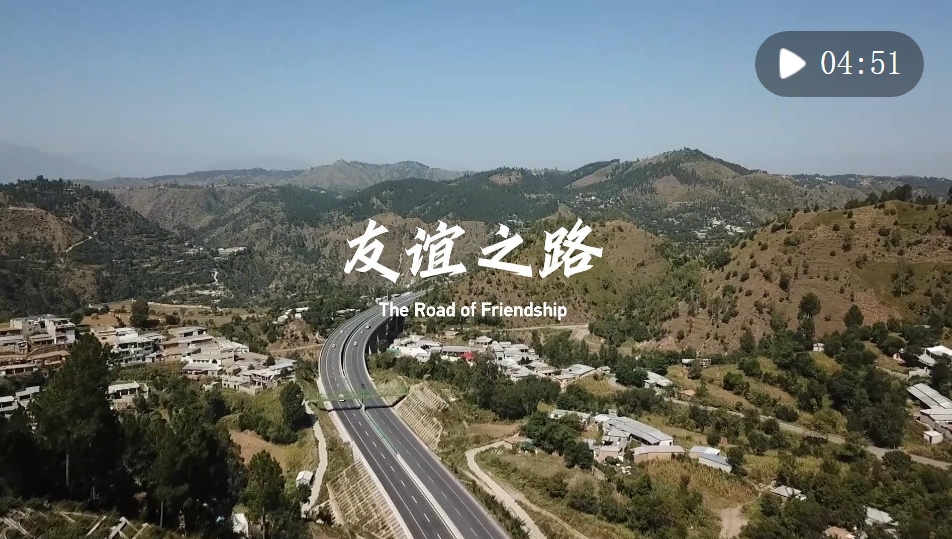
Core Viewpoint - The article highlights the historical and ongoing significance of the China-Pakistan Friendship Road, emphasizing its role in the development of the China-Pakistan Economic Corridor and regional connectivity through various infrastructure projects [2] Group 1: Historical Context - The China-Pakistan Friendship Road, built in the 1960s and 1970s, symbolizes the cooperative spirit between the two nations, transforming challenging terrains into accessible routes [2] - The Karakoram Highway is positioned as a crucial node in the Belt and Road Initiative, marking the evolution of the China-Pakistan Economic Corridor from its inception to its current advanced stage [2] Group 2: Current Developments - The article mentions various infrastructure projects, including the China-Central Asia Gas Pipeline, the China-Kyrgyzstan-Uzbekistan Railway, and the China-Europe Railway Express, which are part of broader regional connectivity efforts [2] - The collaboration with Shanghai Cooperation Organization partners is highlighted as a means to promote regional development and benefit local populations through enhanced connectivity [2] Group 3: Future Prospects - The narrative suggests that the path of friendship between China and Pakistan is expanding, indicating a positive outlook for future cooperation and infrastructure development [2]
交通部:中欧班列线路不断丰富,绿色低碳转型取得重要成果
Di Yi Cai Jing· 2025-06-19 06:10
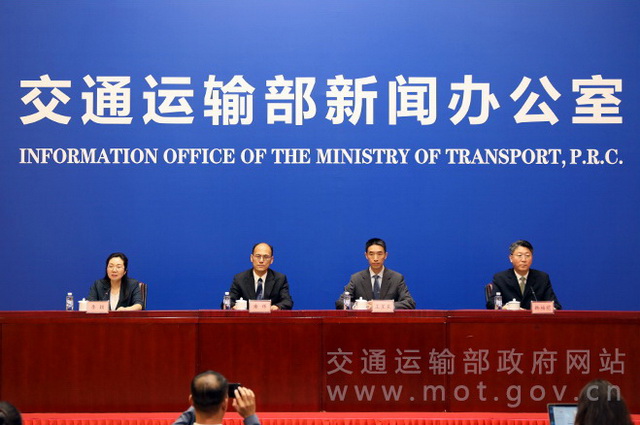
Core Viewpoint - The Shanghai Cooperation Organization (SCO) has made significant progress in international road transport cooperation among member states, focusing on green and low-carbon transportation transformation, which will provide targeted solutions for countries with different national conditions [1][2]. Group 1: Achievements and Initiatives - Since its establishment, the SCO has deepened international road transport cooperation, promoting green and low-carbon transformation in transportation [1]. - The number of China-Europe Railway Express trains passing through SCO countries is set to reach 19,000 in 2024, representing a year-on-year increase of 10.7% [1]. - Key infrastructure projects such as the China-Kyrgyzstan-Uzbekistan railway and the completion of the Sino-Russian Tongjiang railway bridge and Heihe highway bridge have been highlighted as important developments [1][2]. Group 2: Upcoming Events and Discussions - The 12th meeting of the SCO Transport Ministers will take place from June 30 to July 2 in Tianjin, focusing on promoting international road transport facilitation and developing efficient transport corridors [2]. - The global sustainable transport summit will discuss three main topics: the framework for global sustainable transport development, the global sustainable transport development report, and best practice cases [2]. Group 3: Best Practices and Innovations - The China International Sustainable Transport Innovation and Knowledge Center has collected 22 representative best practice cases in sustainable transport, including projects from both developed and developing countries [5][6]. - These best practices encompass various fields such as infrastructure connectivity, digitalization, green development, and public transport services, showcasing innovative and replicable policies and technologies [5][6]. Group 4: Regional Development and Connectivity - Tianjin is positioned as a key node in the China-Mongolia-Russia Economic Corridor and the "Belt and Road" initiative, enhancing its role in domestic and international dual circulation [6]. - The Tianjin Port has opened 147 container shipping routes, aiming to become the best outlet for Central Asia, while the Tianjin Binhai International Airport is undergoing expansion to improve connectivity [6].