
车网互动(V2G)

Search documents
关于开展2026年度科技成果鉴定工作的通知
机器人圈· 2026-01-16 09:10
Core Viewpoint - The article outlines the organization of the 2026 annual technology achievement appraisal work by the China Electromechanical Integration Technology Application Association, emphasizing the importance of enhancing technological innovation capabilities and the integration of technology and industry [1]. Group 1: Purpose and Principles - The purpose is to enhance the technological innovation strength and level of the industry, accelerating the integration of technological and industrial innovation [2]. - The appraisal work will adhere to principles of independence, fairness, justice, and openness [2]. Group 2: Scope of Appraisal - The appraisal includes new products, processes, methods, materials, equipment, software, designs, technology integration, and applied basic research in fields such as industrial automation, robotics, and intelligent manufacturing [3]. Group 3: Specific Fields of Technology - **High-end Equipment Manufacturing**: Core components of humanoid robots, industrial mother machines, high-end CNC systems, and technologies related to rail transit equipment and new energy equipment [4]. - **Next-Generation Information Technology**: Technologies integrating industrial models, edge computing, AI with manufacturing processes, and data security governance [5]. - **New Energy and Intelligent Vehicles**: Technologies related to solid-state batteries, vehicle-to-grid interactions, and lightweight materials for electric vehicles [6]. - **New Materials and Green Low-Carbon Technologies**: High-performance functional materials, energy-saving technologies, and renewable energy utilization [7]. - **Future Industry Frontiers**: Technologies in brain-computer interfaces, quantum computing, and synthetic biology [8]. - **Traditional Industry Upgrades**: Digital twins, smart production line adaptations, and optimization of key processes [9]. Group 4: Appraisal Conditions - The technology achievements must comply with national laws, industry policies, and be technically mature with innovative characteristics [10][11]. - Achievements should demonstrate leading or advanced performance indicators in their respective fields and have good applicability and promotion prospects [11]. Group 5: Support Policies - Achievements passing appraisal will be included in a project database for quality technology achievements, prioritized for recommendations to government departments for policy support [13]. - Support for participation in national and provincial technology awards and assistance in securing funding for technology transformation [13][14]. - Establishment of platforms for industry-academia-research collaboration and connections with financing institutions [14]. Group 6: Application Process - Projects that meet the appraisal scope can submit written applications to the association, which will conduct formal and technical reviews [15]. Group 7: Material Requirements - Applicants must fill out the technology achievement appraisal application form and submit it in both paper and electronic formats [16]. Group 8: Timeline Requirements - Appraisal materials must be submitted 30 working days prior to the intended appraisal date [17].


从小切口透视大行业 ——2025年汽车供应链变革“风暴眼”
Zhong Guo Qi Che Bao Wang· 2026-01-06 02:18
Core Insights - The automotive industry's core competitiveness is shifting from traditional mechanical performance to smart technology, safety, and integration with energy networks [3] - Eight key component areas have emerged as focal points for change in the automotive supply chain by 2025 [3] Group 1: AI and Smart Technology - AI large models, including VLA and VLM, are reshaping the perception, decision-making, and interaction systems in smart vehicles [4] - Companies like Li Auto and XPeng are actively developing and deploying VLA-based autonomous driving systems, with plans for mass production by 2026 [4] - The competition in AI models is intensifying, with a focus on the underlying support systems like computing power and data [4] Group 2: Vehicle-to-Grid (V2G) Interaction - V2G is becoming a hot topic as electric vehicles can act as distributed energy storage units within new energy systems [5] - Government policies are driving the adoption of V2G, with pilot projects and plans to expand the scope of V2G applications by 2027 [5][6] - Companies like GAC Group are implementing V2G functionalities in their models and developing charging infrastructure to support this transition [6] Group 3: Battery Safety Standards - The new national standard for electric vehicle batteries, effective July 2026, emphasizes safety by requiring batteries to be "non-flammable and non-explosive" [7] - The updated standards will compel battery manufacturers to innovate in materials, design, and production processes to meet stricter safety requirements [7] - Leading battery companies like BYD are already adapting to these new standards, which will enhance safety and consumer trust in electric vehicles [7] Group 4: Door Handle Innovations - Electric hidden door handles are becoming a focal point due to safety concerns arising from their failure in collision scenarios [8][9] - New regulations are being proposed to ensure that all door handles, including electronic ones, have a mechanical release function for emergency situations [9] Group 5: Solid-State Batteries - Solid-state batteries are gaining traction due to their advantages in energy density and safety, with several companies planning to launch new products or production lines [10] - The development of solid-state batteries is seen as a key competitive factor for companies in the next generation of electric vehicles [10][11] Group 6: Human-Car-Home Ecosystem - The "Human-Car-Home" ecosystem is emerging, integrating automotive, home, and personal devices into a cohesive smart system [12] - Companies like Haier and Midea are collaborating with automotive brands to create interconnected systems that enhance user experience [12][13] Group 7: Humanoid Robots - The automotive industry is increasingly intersecting with humanoid robotics, with companies exploring the integration of robotic technology into manufacturing processes [14][15] - The demand for precision and adaptability in manufacturing is driving the development of humanoid robots tailored for automotive applications [14] Group 8: Zero-Gravity Seats - Zero-gravity seats are becoming a key feature in mid to high-end vehicles, enhancing passenger comfort and experience [16] - The lack of standardized regulations for these seats poses challenges, particularly regarding safety during vehicle operation and collisions [16]

车网互动“广州样本”:超大城市能源转型有了新解法 有车主月入2000 新能源车变“赚钱工具”
Xin Hua Cai Jing· 2025-12-01 09:04
Core Insights - The article highlights the emerging trend of Vehicle-to-Grid (V2G) technology in Guangzhou, where electric vehicle owners can earn money by charging their cars at night with low-cost electricity and selling it back to the grid during the day, with potential earnings exceeding 200 yuan per day [1][4][16]. Group 1: V2G Implementation and Benefits - Guangzhou has become a pilot city for V2G applications, leading to the creation of the first personal V2G settlement statement in the country and the establishment of the largest V2G microgrid [1][4]. - The V2G model allows electric vehicle owners to transform their cars into "mobile power banks," alleviating grid pressure during peak hours while promoting a collaborative ecosystem among the automotive and energy sectors [1][16]. - As of now, over 9,000 electric vehicles in Guangzhou are regularly participating in V2G, with a cumulative discharge volume exceeding 600,000 kilowatt-hours, equivalent to the electricity consumption of 1,000 households for six months [6][9]. Group 2: Economic Incentives and Mechanisms - The economic model for V2G includes a combination of on-grid electricity pricing, construction subsidies, discharge volume subsidies, and virtual power plant policies, with discharge subsidies typically around 3 yuan per kilowatt-hour [9][10]. - Electric vehicle owners can benefit significantly from the price difference between low-cost night charging (as low as 0.3 yuan per kilowatt-hour) and daytime discharge rates (up to 3 yuan per kilowatt-hour), leading to daily earnings of 80 to 200 yuan [9][10]. - The government has allocated up to 30 million yuan annually for three consecutive years to support V2G pilot projects, demonstrating a commitment to fostering this innovative energy model [10][18]. Group 3: Collaborative Efforts and Future Prospects - Southern Power Grid has effectively collaborated with local governments to address key challenges in V2G implementation, ensuring that there are sufficient vehicles available for discharge, user confidence in battery longevity, and reliable income from the grid [10][11]. - The integration of V2G technology is seen as a transformative step for the electric vehicle industry, shifting from merely producing vehicles to providing comprehensive energy solutions [17][18]. - The successful implementation of V2G in Guangzhou serves as a replicable model for other large cities, potentially accelerating the transition to a new energy system and enhancing the role of electric vehicles as energy assets [16][18].

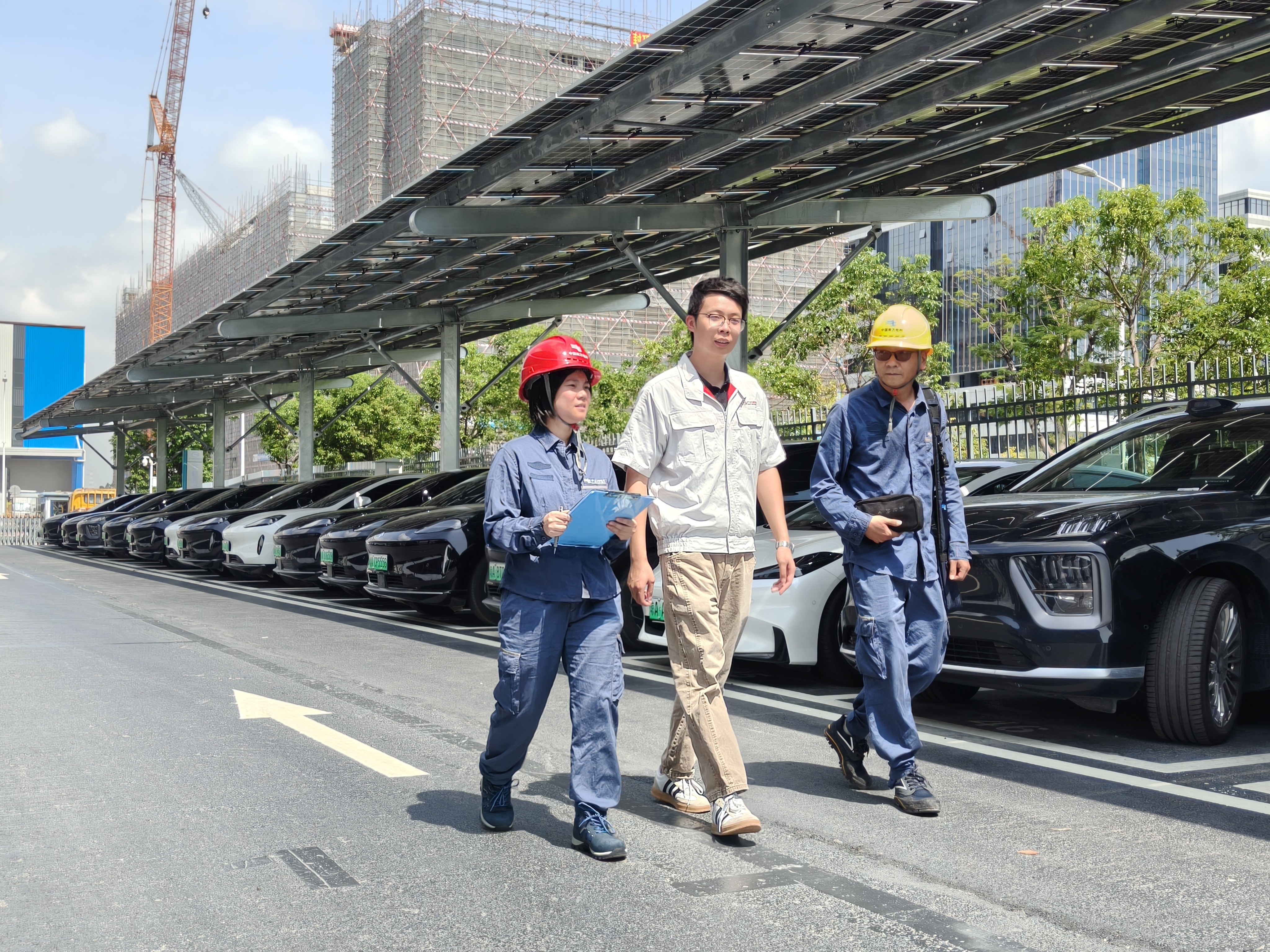
推动车网互动成为应对负电价有效选项
Zhong Guo Dian Li Bao· 2025-09-19 07:29
Core Viewpoint - Shandong has become the first province in China to implement market-oriented pricing for renewable energy, marking a significant step in the national reform of renewable energy pricing [1][4] Group 1: Market Reform and Pricing Mechanism - The recent announcement of the 2025 renewable energy pricing results in Shandong signifies the formal implementation of the 136 document, which aims to introduce market competition into the pricing of renewable energy [1] - Shandong's reform includes a clear distinction between existing renewable projects, which will follow national pricing limits, and new projects that will adopt market-based bidding rules [1][2] - The shift from fixed pricing to market-based pricing means that renewable energy companies must adapt to a more volatile market environment, where they may face negative pricing scenarios [1][3] Group 2: Negative Pricing Phenomenon - Shandong has experienced instances of negative pricing, particularly during periods of high renewable output and low demand, leading to situations where energy producers may have to pay to sell their electricity [3][4] - The occurrence of negative pricing is not unique to Shandong; it is seen in mature electricity markets globally and reflects the challenges posed by the integration of renewable energy into traditional power systems [4] Group 3: Vehicle-to-Grid (V2G) Integration - The rapid growth of electric vehicles (EVs) in Shandong is creating opportunities for vehicle-to-grid (V2G) technology, which allows EVs to act as mobile energy storage units that can help balance supply and demand [5][6] - Shandong plans to establish multiple V2G demonstration projects and charging stations to facilitate the integration of EVs into the energy grid, promoting efficient energy consumption [6][10] - The V2G model is seen as a crucial component for enhancing grid flexibility and enabling better utilization of renewable energy resources [5][12] Group 4: Challenges and Future Directions - Despite the potential of V2G, challenges remain in terms of standardization, business model development, and user engagement, which need to be addressed for widespread adoption [8][9] - The current pricing mechanisms for V2G participation are not sufficiently attractive, limiting the economic incentives for EV owners to engage in energy trading [9][11] - Ongoing reforms in Shandong aim to create a more favorable environment for V2G, including differentiated pricing strategies and clearer compensation mechanisms for energy contributions from EVs [10][12]