产业创新融合

Search documents
习近平总书记关切事·两会看落实|经济大省勇挑大梁
Xin Hua She· 2026-02-25 12:15
Core Viewpoint - Economic provinces in China are taking on significant responsibilities in driving national development, focusing on high-quality growth and innovation integration [1][2][8]. Group 1: Economic Contributions - By 2025, provinces like Guangdong, Jiangsu, and Shandong will contribute over 60% of the national GDP while occupying nearly 20% of the country's area [1]. - The economic output of the Yangtze River Delta region exceeded 34.6 trillion yuan, accounting for nearly a quarter of the national economy [9]. Group 2: Innovation and Technology - Jiangsu has established joint innovation centers with hundreds of leading enterprises, successfully addressing nearly 100 technical needs in the past year [2]. - Economic provinces are achieving double-digit growth in high-tech manufacturing, with advancements in AI and brain-computer interface technologies [3]. Group 3: Reforms and Openings - Guangdong has streamlined business registration processes, reducing the time to obtain a business license to as little as one day [4][5]. - The province has implemented comprehensive reforms to optimize enterprise-related approval services, achieving the fastest processing times in the country for 891 provincial matters [5]. Group 4: National Strategic Implementation - Ningbo Zhoushan Port has become a key hub for international trade, enhancing its cargo throughput to over 1.4 billion tons, maintaining its position as the world's busiest port for 17 consecutive years [7]. - Economic provinces are actively participating in national strategies like the Belt and Road Initiative, enhancing their roles as critical nodes in regional development [7][9]. Group 5: Social Welfare and Common Prosperity - By 2025, Henan's per capita disposable income growth rate is expected to exceed the national average, contributing to rural revitalization and common prosperity [10]. - Economic provinces are demonstrating significant progress in reducing income disparities between urban and rural residents, with many achieving higher than average disposable incomes [11].
习近平总书记关切事·两会看落实丨经济大省勇挑大梁
Xin Hua Wang· 2026-02-25 12:12
Core Viewpoint - Economic provinces are taking on significant responsibilities in driving national development, focusing on high-quality growth and innovation integration [3][5][6]. Group 1: Economic Contributions - In 2025, major economic provinces like Guangdong, Jiangsu, and Shandong contribute over 60% of the national GDP while occupying nearly 20% of the country's area [3]. - Jiangsu's regional innovation capacity ranks second nationally, with its manufacturing quality development index maintaining the top position [5]. - By 2025, the high-tech manufacturing value added in provinces like Jiangsu, Zhejiang, and Sichuan is expected to achieve double-digit growth [7]. Group 2: Innovation and Technology - Jiangsu is actively building innovation consortia and has successfully addressed nearly 100 technical demands through collaboration with leading enterprises [4]. - Guangdong is enhancing its international technology innovation center and has established a top-ranking innovation cluster among global peers [7]. - Various provinces are achieving breakthroughs in technology, such as the launch of the world's first mass-produced 9 MWh energy storage system in Fujian [7]. Group 3: Reform and Openness - Guangdong has streamlined business registration processes, reducing the time to obtain a business license to as little as one day [8][11]. - Economic provinces are leading in deepening reforms and expanding high-level openness, with Guangdong and Jiangsu being at the forefront of these initiatives [11][12]. - By 2025, the top ten economic provinces are expected to account for over 75% of the national import and export total, reinforcing their role as the backbone of national foreign trade [12]. Group 4: National Development Strategies - Economic provinces are positioned as key nodes in regional development strategies, actively contributing to national initiatives like the Belt and Road [15][18]. - The Ningbo-Zhoushan Port has enhanced its capabilities, becoming a crucial hub for international trade with over 14 billion tons of cargo throughput in 2025 [15][16]. Group 5: Common Prosperity - Economic provinces are demonstrating leadership in promoting common prosperity, with initiatives in rural areas leading to increased employment and income [19][20]. - In 2025, provinces like Zhejiang and Guangdong are expected to have per capita disposable income above the national average, contributing to narrowing income disparities [21].

关于开展2026年度科技成果鉴定工作的通知
机器人圈· 2026-01-16 09:10
Core Viewpoint - The article outlines the organization of the 2026 annual technology achievement appraisal work by the China Electromechanical Integration Technology Application Association, emphasizing the importance of enhancing technological innovation capabilities and the integration of technology and industry [1]. Group 1: Purpose and Principles - The purpose is to enhance the technological innovation strength and level of the industry, accelerating the integration of technological and industrial innovation [2]. - The appraisal work will adhere to principles of independence, fairness, justice, and openness [2]. Group 2: Scope of Appraisal - The appraisal includes new products, processes, methods, materials, equipment, software, designs, technology integration, and applied basic research in fields such as industrial automation, robotics, and intelligent manufacturing [3]. Group 3: Specific Fields of Technology - **High-end Equipment Manufacturing**: Core components of humanoid robots, industrial mother machines, high-end CNC systems, and technologies related to rail transit equipment and new energy equipment [4]. - **Next-Generation Information Technology**: Technologies integrating industrial models, edge computing, AI with manufacturing processes, and data security governance [5]. - **New Energy and Intelligent Vehicles**: Technologies related to solid-state batteries, vehicle-to-grid interactions, and lightweight materials for electric vehicles [6]. - **New Materials and Green Low-Carbon Technologies**: High-performance functional materials, energy-saving technologies, and renewable energy utilization [7]. - **Future Industry Frontiers**: Technologies in brain-computer interfaces, quantum computing, and synthetic biology [8]. - **Traditional Industry Upgrades**: Digital twins, smart production line adaptations, and optimization of key processes [9]. Group 4: Appraisal Conditions - The technology achievements must comply with national laws, industry policies, and be technically mature with innovative characteristics [10][11]. - Achievements should demonstrate leading or advanced performance indicators in their respective fields and have good applicability and promotion prospects [11]. Group 5: Support Policies - Achievements passing appraisal will be included in a project database for quality technology achievements, prioritized for recommendations to government departments for policy support [13]. - Support for participation in national and provincial technology awards and assistance in securing funding for technology transformation [13][14]. - Establishment of platforms for industry-academia-research collaboration and connections with financing institutions [14]. Group 6: Application Process - Projects that meet the appraisal scope can submit written applications to the association, which will conduct formal and technical reviews [15]. Group 7: Material Requirements - Applicants must fill out the technology achievement appraisal application form and submit it in both paper and electronic formats [16]. Group 8: Timeline Requirements - Appraisal materials must be submitted 30 working days prior to the intended appraisal date [17].

“十五五”时期国家电网投资预计达4万亿,公用事业ETF(560190)含电比例86%
Xin Lang Cai Jing· 2026-01-16 01:57
Core Viewpoint - The State Grid Corporation of China is expected to invest 4 trillion yuan in fixed assets during the "14th Five-Year Plan" period, marking a historical high and a 40% increase compared to the previous period, focusing on green energy transition and innovation integration [1][2] Group 1: Investment Overview - The total fixed asset investment is projected to exceed expectations, with a capital expenditure budget of over 720 billion yuan for 2026, significantly higher than the 2025 level [2] - The investment aims to expand effective investment and drive high-quality development of the industrial chain [2] Group 2: Main Network Logic - The construction of ultra-high voltage (UHV) infrastructure will accelerate, prioritizing main network development over distribution networks to address bottlenecks in renewable energy transmission [3] - The goal is to enhance cross-regional and cross-provincial transmission capacity by over 30%, with a significant increase in flexible interconnection capabilities [3] - New UHV lines will extensively adopt flexible direct current technology to manage the volatility of renewable energy generation [3] Group 3: Distribution Network Logic - Investment in distribution networks will shift from merely ensuring supply to focusing on smart upgrades and collaboration between main and distribution networks [4] - The aim is to meet the demand for 35 million charging facilities, requiring advanced technical capabilities for product development [4] Group 4: Competitive Landscape and Global Expansion - The industry competition is optimizing, with the State Grid aiming to control construction costs, improve operational efficiency, and enhance investment quality [5] - New policies are expected in 2026 to curb low-price competition, leading to a recovery in bidding prices and higher entry barriers for suppliers [5] - The aging North American grid and increased energy consumption are causing a supply-demand imbalance in global transformers, benefiting capable Chinese companies with overseas high-margin orders [5] - The industry logic has shifted to a dual-driven model of "domestic high-quality competition and overseas price and volume increase" [5] Group 5: Market Performance - As of January 16, 2026, the CSI All Share Utilities Index rose by 0.51%, with notable increases in stocks such as South Network Energy and Solar Energy [5] - The Public Utilities ETF closely tracks the CSI All Share Utilities Index, reflecting the overall performance of representative and investable companies in the sector [5][6] Group 6: Major Holdings - As of December 31, 2025, the top ten weighted stocks in the CSI All Share Utilities Index accounted for 54.53% of the index, including major players like Yangtze Power and China Nuclear Power [6]
上海再夺“中国区域科创”第一,多项关键指标显优势
第一财经· 2026-01-13 15:18
Core Viewpoint - The article highlights the significant advancements in Shanghai's scientific research and innovation capabilities, showcasing the city's leadership in technology and research output, as well as the successful integration of scientific innovation with industrial development [3][4][5]. Group 1: Research and Innovation Achievements - In 2025, Shanghai scientists published 181 papers in top journals, accounting for 30.6% of the national total, with a 14.6% increase from 2024 [5]. - The city's fiscal spending on science and technology has seen an average annual growth of over 20% from 2022 to 2025, with a total increase of 85% in basic research investment [5]. - Shanghai's score in the "China Regional Science and Technology Innovation Evaluation Report 2025" was 91.38, ranking first in the country, reflecting a 2.18-point increase year-on-year [5][12]. Group 2: Key Performance Indicators - Shanghai's technology activity output score was 99.82, maintaining the top position nationally, with significant growth in technology international income, which increased by 8.94% [13]. - The number of scientific papers per ten thousand people was 15.12, and the number of high-value invention patents per ten thousand people was 50.93, both ranking second nationally [13]. - The innovation human resources score was 100, also ranking first, with a notable increase in the number of individuals with higher education and R&D personnel [13]. Group 3: Integration of Technology and Industry - Shanghai is focusing on enhancing its technology innovation capabilities and leading high-end industries, particularly in integrated circuits, biomedicine, and artificial intelligence, with a projected industry scale of 1.8 trillion yuan by 2024 [15]. - The city has implemented reforms allowing universities to transfer ownership rights of research outcomes to research teams, significantly increasing technology contract amounts, which reached 576.40 billion yuan in 2025 [17]. - The report indicates a substantial improvement in high-tech industry efficiency, with Shanghai ranking third nationally in this regard, reflecting a 132.6% increase in technology contract amounts compared to the previous year [17].
周红波李忠军会见长三角、粤港澳大湾区上市企业投资考察团
Nan Jing Ri Bao· 2025-12-20 01:58
Core Viewpoint - The meeting between Nanjing city leaders and the investment delegation from the Yangtze River Delta and Guangdong-Hong Kong-Macau Greater Bay Area emphasizes the importance of integrating technological and industrial innovation to drive economic development in Nanjing [1][2]. Group 1: Economic Development and Innovation - Nanjing is focusing on building a modern industrial system supported by advanced manufacturing and modern services, aligning with national economic strategies [1]. - The city aims to enhance its industrial ecosystem by fostering collaboration on innovation and investment, particularly in areas such as industrial upgrading, technological innovation, green transformation, and market expansion [1]. Group 2: Business Environment and Opportunities - Participating entrepreneurs highlighted Nanjing's rich educational resources, strong innovation capabilities, favorable business environment, and broad development prospects, indicating a commitment to deepen practical cooperation [2]. - The city government is dedicated to creating a top-tier business environment characterized by market-oriented, legal, and international standards, offering optimal policies and services to support investment [1].
权威解读丨从11月份数据看中国经济增长点
Xin Hua Wang· 2025-12-17 01:32
Economic Overview - In November, the national economy showed overall stability with a steady development trend, as indicated by the National Bureau of Statistics [1][9] - The industrial production maintained stable growth, with the industrial added value above designated size increasing by 4.8% year-on-year and 0.44% month-on-month in November [1] Industrial Performance - The industrial production in November was generally stable, with most sectors experiencing growth, particularly in equipment manufacturing and high-tech manufacturing, indicating a continuous upgrade of the industrial economy [2] - From January to November, the industrial added value above designated size grew by 6.0% year-on-year [1] Investment and Consumption - From January to November, the total retail sales of consumer goods increased by 4.0% year-on-year, with service retail sales growing by 5.4%, accelerating by 0.1 percentage points compared to the previous ten months [4] - Fixed asset investment (excluding rural households) reached 444,035 billion yuan, a year-on-year decrease of 2.6%, while manufacturing investment grew by 1.9% [4] Policy Impact and Future Outlook - The effects of policy measures have been evident, with significant growth in equipment investment and a stable increase in industrial investment, particularly in high-end, intelligent, and green development [7] - The "14th Five-Year Plan" emphasizes technological self-reliance and high-quality development, guiding future macroeconomic policies to focus more on technological innovation [11]

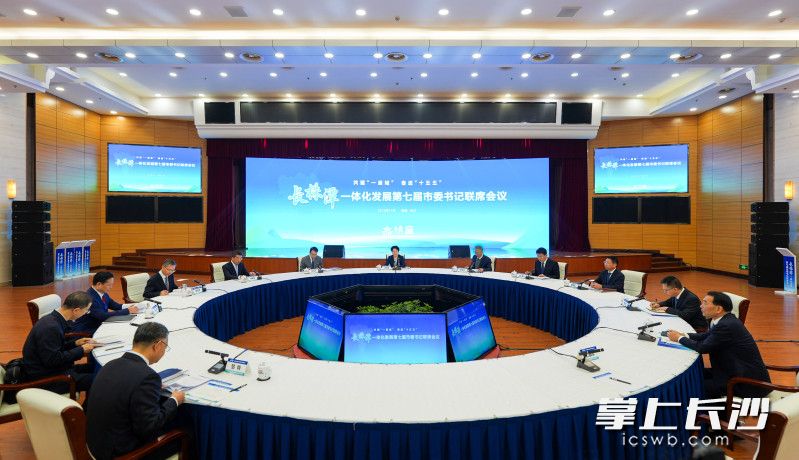
长株潭一体化发展第七届市委书记联席会议在长沙举行
Chang Sha Wan Bao· 2025-12-11 03:19
Core Viewpoint - The meeting focused on promoting the integrated development of Changsha, Zhuzhou, and Xiangtan, emphasizing the importance of collaboration to achieve greater results in the context of the "14th Five-Year Plan" and the upcoming "15th Five-Year Plan" [1][7]. Group 1: Meeting Overview - The seventh joint meeting of the municipal party secretaries for the integrated development of Changsha, Zhuzhou, and Xiangtan was held in Changsha on December 10 [4]. - Key officials from the three cities, including the mayors and party secretaries, attended the meeting to discuss development strategies and sign cooperation agreements [2][3]. Group 2: Development Plans and Strategies - The meeting reported on the progress of the "14th Five-Year Plan" and discussed the overall considerations for the integrated development of the three cities [3]. - The "2026 Action Plan for Integrated Development" was signed, along with a series of cooperation agreements to enhance collaboration [6]. Group 3: Key Statements from Officials - Wu Guiying emphasized the need for Changsha to work with neighboring cities to implement national policies for urban integration and to achieve high-quality development, aiming to create a significant growth pole in the region [7]. - Cao Huiquan highlighted the importance of collaboration in branding, industrial innovation, infrastructure integration, and ecological cooperation to enhance the region's logistics advantages [8]. - Hu Hebo proposed leveraging the Xiangjiang Science City to drive technology and industry innovation, while also focusing on infrastructure connectivity and social service integration [8]. - Liu Luo from Pingxiang expressed the city's commitment to participating in the integrated development and contributing to regional economic optimization [9].
2026年经济政策有望维持宽松基调,更加强调质效并重丨第一财经首席经济学家调研
Di Yi Cai Jing· 2025-12-08 09:08
Economic Confidence Index - The "Economic Confidence Index" for December 2025 is reported at 50, slightly lower than the previous month, indicating a weak recovery in the economy [6][8]. Inflation Predictions - Economists predict the Consumer Price Index (CPI) for November 2025 to be 0.72%, up from 0.2% in the previous month, while the Producer Price Index (PPI) is expected to be -2.05% [9][10]. Retail Sales Growth - The forecast for the year-on-year growth of social retail sales in November is 3.09%, slightly higher than the previous month's 2.9%, driven by the "Double 11" shopping festival and a recovery in the dining sector [10][11]. Industrial Value Added - The predicted year-on-year growth rate for industrial value added in November is 5.0%, an increase from the previous month's 4.9% [11]. Fixed Asset Investment - The forecast for the year-on-year growth rate of fixed asset investment in November is -2.1%, lower than the previous month's -1.7%, indicating continued pressure from the real estate market [12][14]. Real Estate Investment - The predicted year-on-year growth rate for real estate development investment in November is -15.1%, reflecting ongoing challenges in the sector [14]. Trade Surplus - China's trade surplus for November is reported at $111.68 billion, with exports growing by 5.9% and imports by 1.9%, aligning with economists' expectations [15]. New Loans - Economists forecast new loans for November to rebound to 679.1 billion yuan, significantly higher than the previous month's 220 billion yuan [16]. Total Social Financing - The predicted total social financing for November is 2.32 trillion yuan, an increase from the previous month's 0.81 trillion yuan [17]. M2 Growth Rate - The forecast for the year-on-year growth rate of M2 in November is 8.29%, slightly above the previous month's 8.2% [18]. Monetary Policy Outlook - Economists expect the possibility of adjustments to the Loan Prime Rate (LPR) and reserve requirement ratios to be low in the near term, with a continued focus on maintaining liquidity in the market [20]. Exchange Rate Predictions - The predicted exchange rate for the Chinese yuan against the US dollar at the end of 2025 is 7.07, with expectations of a potential adjustment to 6.98 by mid-2026 [21]. Foreign Exchange Reserves - As of the end of November, China's foreign exchange reserves are reported at $33,464 billion, reflecting a slight increase from the previous month [22][23].
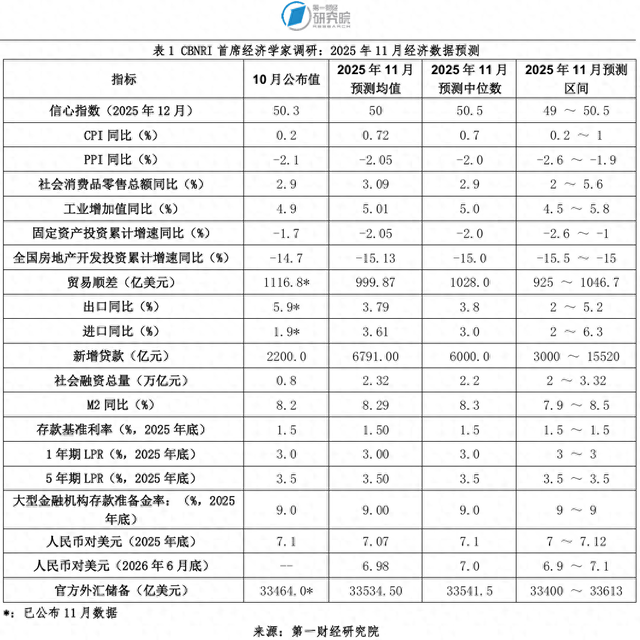
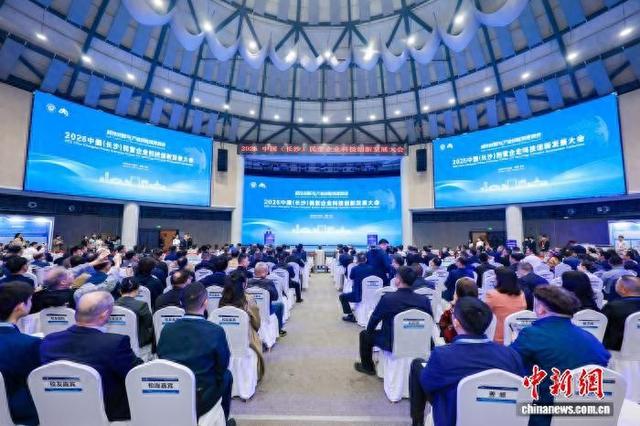
2025中国(长沙)民营企业科技创新发展大会在长沙开幕
Zhong Guo Xin Wen Wang· 2025-11-02 13:22
Core Insights - The 2025 China (Changsha) Private Enterprise Technology Innovation Development Conference aims to promote technological innovation in private enterprises and empower high-quality economic and social development [1] Group 1: Conference Highlights - Notable speakers include Nobel Prize winner Michael Levitt, foreign academician Liu Hongfei, and Wang Qizhou, co-founder and R&D director of Yushu Technology, discussing the synergy between technology and industry [2] - Liu Hongfei emphasizes that technological innovation is the only way for private enterprises to lead in high-end fields, highlighting his company's achievements in high-end optical instruments [2] Group 2: Policy and Economic Development - Hunan province has implemented a series of supportive policies to promote technological innovation and industrial upgrading, leading to significant development in the private economy [2] - Private enterprises such as SANY Heavy Industry, Aier Eye Hospital, and Lens Technology have become industry benchmarks, showcasing the capabilities of local entrepreneurs [2] Group 3: Innovation Platforms and Projects - Four cutting-edge innovation platforms were announced, focusing on technology research and development in fields like new energy, new materials, and low-altitude economy [3] - A series of projects were signed, including collaborations in AI, lithium carbonate extraction, and community AI research, aimed at enhancing the integration of technological and industrial innovation [3]