轻食产品

Search documents
快乐为民新型无人便利店实力品牌可加盟,创富好选择
Jin Tou Wang· 2025-11-21 00:01
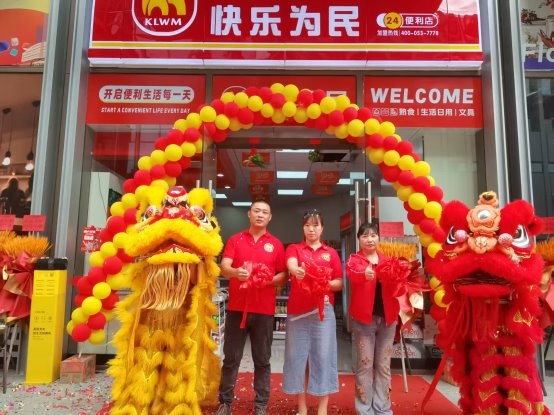
Group 1 - The core viewpoint is that "Happy for the People" is a strong franchise brand in the new unmanned convenience store sector, offering a comprehensive support system for entrepreneurs [1][4] - The brand boasts a diverse product range including light meals, self-service coffee, imported goods, maternal and infant products, fashion goods, daily health care, and beauty products, catering to one-stop shopping needs [3] - The pricing strategy is competitive, providing high cost-performance products that attract a stable customer flow and revenue base [3] Group 2 - The business model is innovative, combining online and offline sales channels to enhance revenue streams and significantly improve cash register capabilities [3] - The stores operate 24/7, allowing consumers to access services at any time, which strengthens market competitiveness [3] - Currently, the franchise is open for new partners, requiring a minimum investment of 100,000 yuan for franchise fees, rent, and product procurement, along with a minimum store size of 50 square meters [4] Group 3 - The company provides comprehensive support for franchisees, including unified product supply, location assistance, and analysis of local consumer habits and competition [4] - The brand stands out in a crowded convenience store market due to its comprehensive strength, diverse products, innovative model, and robust support system [4]

【干货】轻食产业链全景梳理及区域热力地图
Qian Zhan Wang· 2025-10-22 07:38
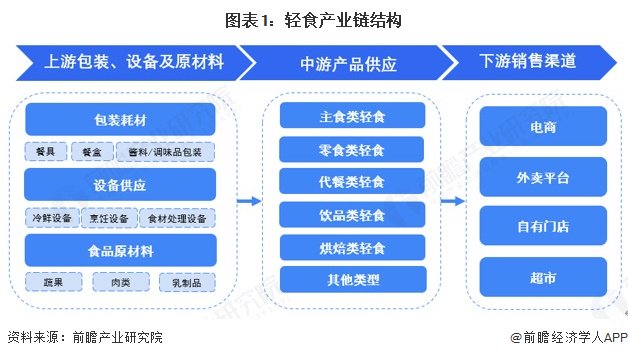
Core Insights - The light food industry is characterized by a well-defined supply chain, with upstream suppliers focusing on packaging, equipment, and raw materials, while the midstream includes various light food products, and downstream sales channels encompass e-commerce, delivery platforms, and physical stores [1][2]. Industry Overview - The upstream of the light food industry includes suppliers such as 富岭股份, 南王科技, 海容冷链, and others, providing packaging, equipment, and raw materials [2]. - The midstream features key players like 奈雪的茶, 三只松鼠, and 良品铺子, which supply a range of light food products [2]. - The industry is concentrated in economically developed regions of China, where consumer markets are active and the supply chain is well-supported [4]. Company Performance - In 2024, 奈雪的茶 is expected to have significant sales of light food products with a strong cost-performance ratio, while 三只松鼠's sub-brand is seeing impressive single product sales [7]. - 康比特's sports nutrition packages are performing well in terms of sales and repurchase rates, and 西麦食品 leads in market share for instant oatmeal on Douyin [7]. Recent Developments - In 2025, 奈雪的茶 launched the "No Sugar Natural Nutrition+" initiative, introducing new light food products and establishing over 30 "奈雪 Green" light food stores in major cities [9]. - 三只松鼠 introduced a low-fat, high-protein meal replacement snack, while 良品铺子 launched a non-fried, reduced-fat crispy biscuit [9]. - 百合股份 targeted women with new product lines, and KEEP initiated collaborations to promote a "food and exercise" approach [9].



新华视点丨“瘦身经济”暗藏隐患 减肥市场乱象调查
Xin Hua Wang· 2025-09-17 05:29
Group 1 - The year is designated as "Weight Management Year," with policies and advocacy from relevant departments prompting many individuals to attempt weight loss [1] - There is a rise in illegal weight loss products marketed with concepts like "painless weight loss" and "rapid slimming," leading to legal actions against sellers of such products [3] - The market for weight management and slimming economy is expanding rapidly, but it reveals issues such as weak legal awareness among some merchants and a lack of regulation on e-commerce platforms [8] Group 2 - Some so-called "imported weight loss drugs" have been found to contain banned substances and even drugs, posing serious health risks to users [2] - Various "slimming gadgets" are emerging in the market, with some institutions exploiting body anxiety and exaggerating claims to deceive consumers [5] - Experts suggest that consumers should respond scientifically to body anxiety and engage in weight management correctly [10]

影视公司上半年盈利不只靠《哪吒》
Bei Jing Shang Bao· 2025-09-01 16:31
Core Insights - The film industry has shown significant profitability in the first half of the year, with major companies like Wanda Film and Light Media reporting substantial net profit increases of 372.55% and 371.55% respectively [1][3] - The growth in profits is attributed not only to blockbuster films but also to optimized non-ticket business operations, cost control, and improved operational efficiency [1][5] - The competition in the film industry has evolved from content-based competition to a focus on comprehensive operational capabilities, with companies that can integrate industry chains and innovate business models expected to have a competitive edge in the future [9] Group 1: Box Office Performance - The total box office revenue for the first half of the year reached 29.231 billion yuan, with 641 million moviegoers, marking year-on-year increases of 22.91% and 16.89% respectively [3] - Domestic films accounted for 91.2% of the box office, with the film "Nezha: Birth of the Demon Child" contributing over 15.4 billion yuan, representing a significant portion of the total box office [3] - Wanda Film reported a domestic box office of 4.21 billion yuan, a year-on-year increase of 19.2%, with 82.39 million attendees, up 9.6% [3] Group 2: Business Optimization - Companies are enhancing their business models by optimizing consumption scenarios, improving sales conversion rates, and expanding external channels [6] - Wanda Film has upgraded its sales strategies through social media and live streaming, while also focusing on self-developed products and eliminating underperforming items [6] - Golden Screen Cinemas reported a 48% increase in sales of new beverage products and a 178% increase in light food sales, indicating a successful expansion of their product line [6][8] Group 3: Cost Control - Cost control measures have been crucial for maintaining profitability, with Golden Screen Cinemas reporting reductions in various operational costs, including travel and marketing expenses [8] - The company has optimized energy usage and maintenance costs, leading to a 5.82% decrease in overall operating costs [8] - The focus on innovative business models, such as "Cinema+" and "Space+", aims to enhance operational efficiency and revenue generation [8] Group 4: Future Outlook - The market is expected to experience a slowdown post-summer, but the upcoming National Day holiday may drive new growth [8] - Major companies like Wanda Film and Light Media are likely to maintain strong performance through participation in key projects, while less competitive firms may continue to face challenges [8][9]






轻食产业崛起!我国体重管理市场背后的轻食企业已超1.4万家
Sou Hu Cai Jing· 2025-04-23 10:56
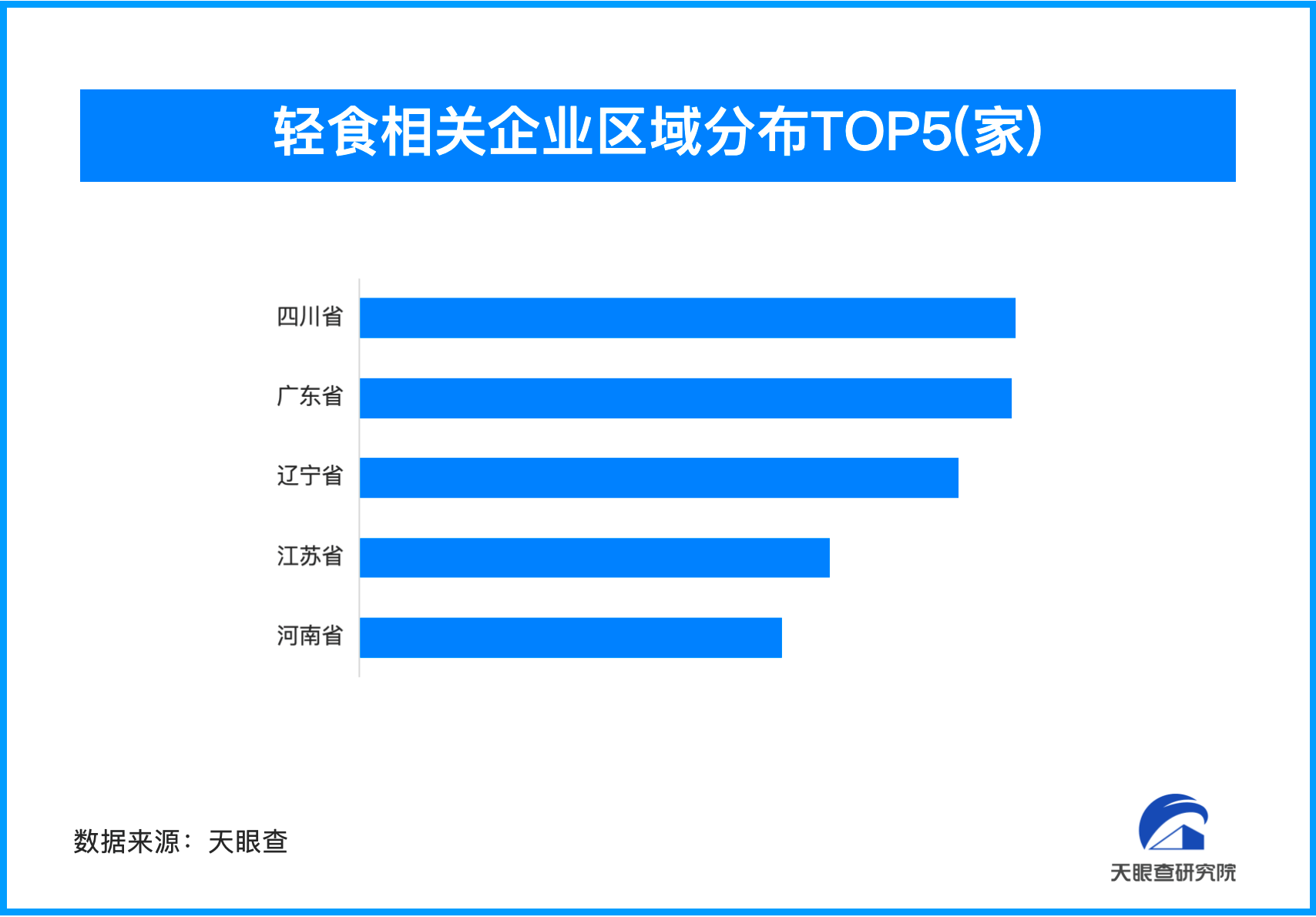
Group 1 - The light food industry is experiencing unprecedented growth opportunities due to the government's promotion of healthy lifestyles, with significant demand for low-calorie, low-sugar, and high-fiber products, especially among younger consumers [1] - The online platform has become an essential sales channel for light food products, with consumers appreciating the convenience and variety available, which has accelerated industry growth and provided new market expansion opportunities for related companies [1] - As of now, there are over 14,000 light food-related enterprises in China, with 59.33% established in the last five years, indicating sustained interest in the sector, with over 4,000 new registrations in 2024 and more than 1,000 in 2025 [1] Group 2 - The distribution of light food enterprises shows a diverse regional characteristic, with Sichuan leading with over 2,800 companies, followed by Guangdong with over 2,700, and other provinces like Liaoning, Jiangsu, and Henan also having more than 1,800 companies, indicating a strong market demand and favorable development environment [2] Group 3 - Despite rapid growth, the light food industry faces certain risks, with over 40 companies involved in judicial cases, accounting for 0.14% of the total number of enterprises, highlighting the need for risk management and prevention [5]