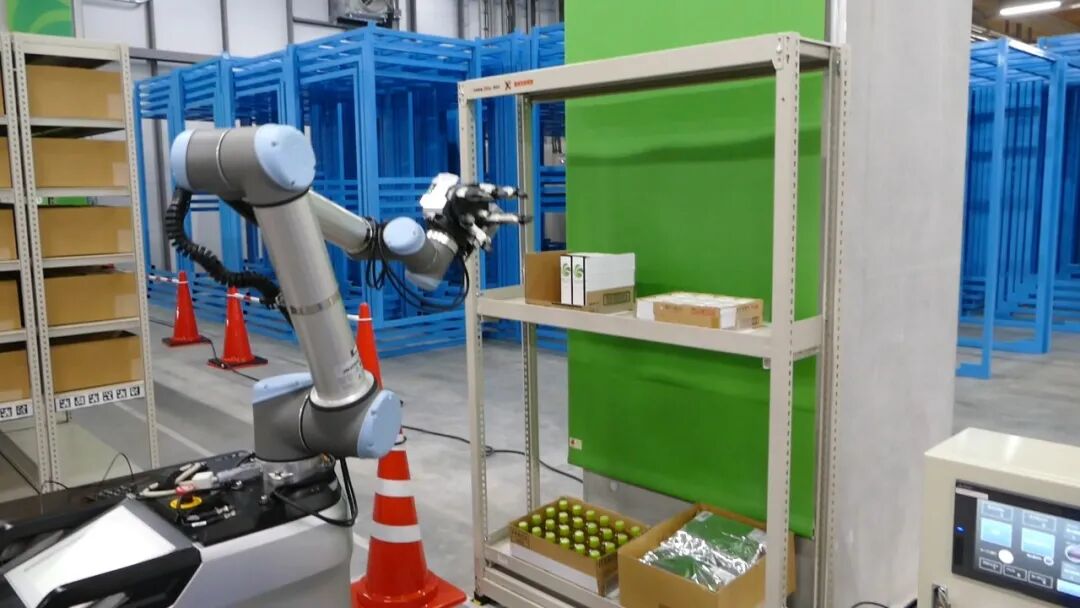
输送分拣机器人(CSR)

Search documents
上市首日涨超109%!清华夫妇造出百亿机器人IPO,顺丰赚近14亿
机器人大讲堂· 2026-03-25 09:15
Core Viewpoint - The article discusses the successful IPO of Kales Technology (凯乐士科技), highlighting its position as the first "full-stack intelligent in-warehouse logistics robot" company listed on the Hong Kong Stock Exchange, and its innovative technology that sets it apart in a competitive market [1][3]. Group 1: Company Overview - Kales Technology was listed on March 24, with an initial pricing of HKD 16.66 per share, opening at HKD 32, reflecting a significant increase of approximately 92.17% on the first day [3]. - The company achieved a market capitalization that briefly surpassed HKD 130 billion, with its founders, Gu Chunguang and Yang Yan, both holding prestigious academic backgrounds from Tsinghua University and further studies at MIT and Cornell University [3][4]. - Kales has developed a comprehensive "hardware + software" full-stack technology system, focusing on reshaping supply chain operations through advanced robotics [4]. Group 2: Product Lines and Technology - Kales Technology's core product lines include Multi-directional Shuttle Robots (MSR), Autonomous Mobile Robots (AMR), and Conveying Sorting Robots (CSR), which together cover essential logistics functions such as storage, sorting, and transportation [5][8]. - The MSR can enhance warehouse space utilization from 30%-40% to over 70% and reduce labor costs by 40%, demonstrating its efficiency in high-demand scenarios [7]. - The AMR is highly adaptable, requiring no major site modifications, and includes innovations like the VNA AMR and the globally unique VFR series for narrow aisle operations, capturing a 19.3% market share in its segment [7][8]. - Kales' CSR combines conveyor systems with sorting robots, achieving high throughput and continuous operation, capable of processing thousands of items per hour [8]. Group 3: Market Applications - Kales Technology's products are utilized across various industries, including new energy, pharmaceuticals, automotive, and textiles, with notable clients such as CATL, BYD, and OPPO [10]. - The company has developed specialized solutions for industries with stringent requirements, such as a fireproof stacker for lithium battery production and an automated material handling system for the semiconductor sector [10]. Group 4: Founders' Background - The success of Kales is attributed to its founders, Gu Chunguang and Yang Yan, who possess a blend of top-tier academic credentials and extensive industry experience [11][14]. - Gu's previous role at a private enterprise allowed him to gain practical insights into logistics challenges, which he later applied to Kales' development [13][14]. - The couple's complementary skills in industry insight and engineering have been pivotal in establishing a solid foundation for the company [14]. Group 5: Strategic Partnerships and Growth - Kales' relationship with SF Express began in late 2016, where SF's need for efficient storage solutions aligned with Kales' technology, leading to significant collaboration [15][16]. - SF Express not only invested approximately HKD 1.66 billion but also provided a testing ground for Kales' technology, facilitating rapid development and adaptation to real-world logistics challenges [16]. - Despite facing losses from 2022 to 2024, Kales has shown a trend of narrowing losses, with a significant reduction in adjusted net losses projected for the coming years [18][19]. Group 6: Future Outlook - Kales plans to allocate approximately 45% of its IPO proceeds to R&D, 25% to capacity expansion, and 20% to international market development, indicating a strategic focus on growth and innovation [19]. - The global smart logistics robot market is expected to approach one trillion by 2030, presenting significant opportunities, although competition is intensifying [19].

嘉兴开年第三个IPO!清华系企业家夫妻联手造物流机器人,早期投资人回报超200倍
创业邦· 2026-03-24 03:13
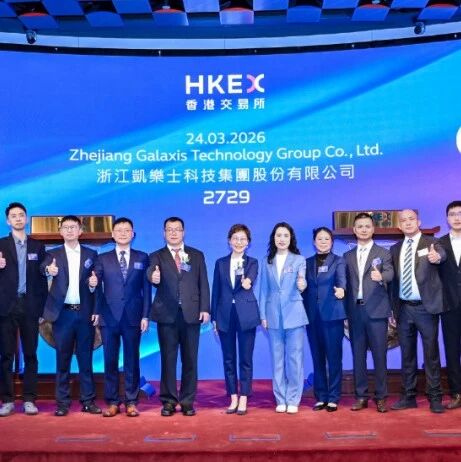
Core Viewpoint - Zhejiang Kailesi Technology Group Co., Ltd. (Kailesi) has officially listed on the Hong Kong Stock Exchange, becoming the first stock in the "full-stack intelligent on-site logistics robot" sector, raising approximately HKD 613 million with a market capitalization of around HKD 138 billion at the opening [2][3]. Company Overview - Kailesi is now the fifth largest comprehensive intelligent on-site logistics solution provider in China, holding a market share of 1.6%. It ranks first in the ultra-narrow aisle autonomous mobile robot (VNA AMR) segment with a shipment market share of 19.3% [3]. - The company reported a revenue of CNY 721 million for 2024, a year-on-year increase of 30.8%, and achieved CNY 552 million in revenue in the first nine months of 2025, reflecting a growth of 60.3% [3][28]. - Kailesi has completed 1,530 projects and serves 779 clients across 28 industries, including new energy, automotive, pharmaceuticals, and e-commerce, with operations in 16 countries and regions globally [3][24]. Founders and Shareholding - Founded in 2014 by Gu Chunguang and Yang Yan, both Tsinghua University graduates, Kailesi is controlled by the founders and their concerted actions, holding approximately 27.26% of the voting rights [3][10]. - Major external shareholders include SF Holding (12.89%), CICC Capital (9.28%), and China Merchants Group (7.23%) [4][5]. Investment Returns - The investment returns for major shareholders at the opening market cap of HKD 138 billion are significant, with SF Holding achieving a return multiple of 9.43 times [5][4]. Use of IPO Proceeds - Kailesi plans to allocate approximately 45% of the IPO proceeds for R&D, 25% for capacity expansion, 20% for market expansion, and the remaining 10% for working capital [6]. Product and Technology - Kailesi's product line includes four-way shuttle robots (MSR), autonomous mobile robots (AMR), and sorting robots, supported by a full-stack software system [19]. - The four-way shuttle technology enhances warehouse space utilization by over 50% and reduces energy consumption by 30% compared to traditional systems [21]. - The company has developed a unique VFR series robot for ultra-narrow aisles, improving storage density by 30% [21]. Market Expansion - Initially focusing on the pharmaceutical sector, Kailesi has expanded into e-commerce, automotive, and more recently, the new energy and semiconductor industries [23]. - The company has begun its international expansion, starting with a project in Russia in collaboration with SF Holding, and is now targeting markets in Southeast Asia, Japan, Korea, the Middle East, Europe, and North America [24][27]. Financial Performance - Kailesi's revenue for 2024 reached CNY 721 million, with a notable increase in revenue from the restaurant industry in 2025 [28]. - The company has seen a reduction in losses, with adjusted net losses decreasing from CNY 464 million to CNY 138 million in the first nine months of 2025 [29]. Industry Context - The logistics robot sector in China is experiencing rapid growth, with an expected market size of CNY 4.137 trillion by 2030, maintaining a compound annual growth rate of over 15% from 2025 to 2030 [31]. - The competitive landscape includes nearly 400 companies, with a shift from hardware competition to ecosystem building and service-oriented solutions [35].

增长不增收,物流机器人陷规模与利润悖论?
3 6 Ke· 2026-01-15 11:16
Core Insights - The rapid development of artificial intelligence (AI) is transforming various industries, with logistics being one of the fastest to adopt AI technologies [1] - Intelligent in-house logistics robots are revolutionizing warehouse operations and are seen as a key driver of change in the logistics system [1] Industry Overview - Intelligent in-house logistics robots are defined as automated devices used in warehouses, sorting centers, and factories, integrating advanced technologies such as navigation, motion control, and AI [2] - The global market for intelligent in-house logistics robots is projected to reach RMB 344.1 billion by 2030, with a compound annual growth rate (CAGR) of 19.5% from 2024 to 2030 [4] - The Chinese market is expected to grow from RMB 13.9 billion in 2020 to RMB 44 billion in 2024, capturing 37.2% of the global market [4] Financial Challenges - Despite the promising market growth, companies in this sector face significant profitability challenges, with only about 5% of firms truly making a profit [5] - Companies like Kales and Xizhi Jia illustrate the financial difficulties, with Kales reporting revenues of RMB 657 million, RMB 551 million, and RMB 721 million from 2022 to 2024, alongside adjusted net losses [6][10] - Xizhi Jia, the first publicly listed AMR warehouse robot company, anticipates revenue growth of 27-32% in the first half of 2025, but still faces substantial losses [8] Market Dynamics - The intelligent in-house logistics robot market is characterized by a fragmented landscape, with the top five companies holding only 12.6% of the market share [12] - The competition is intense, with around 100 players in the market, leading to a focus on sales and project delivery rather than sustainable business models [15] - The industry is still in an early expansion phase, with companies often engaging in price competition, which compresses profit margins and affects long-term investment in core technologies [16] Strategic Considerations - Companies face a strategic dilemma between focusing on high-margin standardized products or investing in faster-growing but more challenging system integration markets [17] - The current market structure creates a disconnect between profitability and market demand, complicating the operational landscape for firms [17] - Despite the challenges, the ongoing technological advancements and market demand present significant growth opportunities for innovative companies [18]

嘉兴南湖又将冲出一个IPO!清华博士夫妻造物流机器人,年入7亿
创业邦· 2026-01-10 03:05
Core Viewpoint - Zhejiang Kailesi Technology Group Co., Ltd. (Kailesi) is preparing for its IPO on the Hong Kong Stock Exchange, aiming to become the first stock in the field of all-stack intelligent in-house logistics robots in Hong Kong [3]. Company Overview - Founded in 2014 by Gu Chunguang and Yang Yan, both Tsinghua University graduates, Kailesi has become the fifth largest comprehensive intelligent in-house logistics solution provider in China, with a market share of 1.6% [4]. - The company leads the market in the ultra-narrow aisle autonomous mobile robot (VNA AMR) segment with a shipment market share of 19.3% [4]. Financial Performance - Kailesi's revenue for 2024 is projected to reach 721 million RMB, a year-on-year increase of 30.8%, while the revenue for the first nine months of 2025 has already reached 552 million RMB, reflecting a growth of 60.3% [5]. - As of the end of 2024, the company has completed 1,530 projects and served 779 clients across 28 industries, including new energy, automotive, pharmaceuticals, and e-commerce, with operations in 16 countries and regions [5]. Investment and Shareholding - The company has completed multiple rounds of financing totaling over 800 million RMB, with a valuation of 3.5 billion RMB after the E round in 2022 [6]. - Founders Gu Chunguang and Yang Yan hold approximately 40.3% of the shares, while major shareholders include SF Holding (14.1%) and CICC Capital (10.15%) [6]. Product and Technology - Kailesi's core philosophy is "scene-oriented, technology-based," and it offers a product line that includes four-way shuttle robots (MSR), autonomous mobile robots (AMR), and sorting robots, along with a full-stack software system [22]. - The four-way shuttle technology enhances warehouse space utilization by over 50% and reduces energy consumption by 30% compared to traditional systems [24]. Market Expansion - Kailesi has expanded its market presence from pharmaceuticals to e-commerce, automotive, and now into higher barrier and faster-growing sectors like new energy and semiconductors [28]. - The company has initiated its international expansion with projects in Russia and plans to target Southeast Asia, Japan, South Korea, the Middle East, Europe, and North America [29]. Competitive Landscape - The logistics robot sector in China is experiencing rapid growth, with an expected market size of 413.7 billion RMB by 2030, attracting nearly 400 competitors [36]. - Key competitors include companies like Geek+, Hikvision Robotics, and FastGo Intelligent, with a shift in focus from hardware competition to ecosystem building [40].




凯乐士赴港IPO:三年多累亏超7亿元、负债率连飙至160%,第一大客户项目因地缘冲突延迟验收
Zhong Guo Neng Yuan Wang· 2026-01-04 09:37
Core Viewpoint - Zhejiang Kailesi Technology Group has submitted an application to list on the Hong Kong Stock Exchange, aiming to raise funds amid ongoing losses due to rapid expansion and significant R&D investments [1][2]. Company Overview - Established in 2016 and headquartered in Jiaxing, Zhejiang, Kailesi specializes in multi-directional shuttle cars (MSR), autonomous mobile robots (AMR), and conveyor sorting robots (CSR), serving 29 industries including automotive, new energy, 3C electronics, pharmaceuticals, and e-commerce [1]. - According to Frost & Sullivan, Kailesi ranks fifth in China's integrated intelligent in-warehouse logistics robot market with a market share of 1.6%, and leads the narrow aisle AMR segment with a 19.3% shipment market share [1]. Financial Performance - Revenue for the years 2022 to 2024 and the first three quarters of 2025 was reported as follows: 657 million, 551 million, 721 million, and 552 million yuan respectively [1]. - Net losses during the same periods were 210 million, 242 million, 178 million, and 134 million yuan, totaling approximately 760 million yuan over three years and nine months [1][2]. - Adjusted net losses (non-IFRS) decreased from 117 million yuan in 2022 to 50.5 million yuan in 2024, further reducing to 13.76 million yuan in the first three quarters of 2025, indicating a trend of narrowing losses [2]. Debt and Liquidity - Kailesi's net debt at the end of each reporting period was 645 million, 894 million, 1.066 billion, and 1.196 billion yuan, with total liabilities increasing from 2.577 billion to 3.121 billion yuan [2]. - The asset-liability ratios were reported as 133.4%, 141.57%, 153.12%, and 162.13%, indicating a consistent trend of exceeding 100% over the last three years [2]. Operational Challenges - The company acknowledges liquidity risks and has implemented measures such as accelerating receivables collection and optimizing inventory turnover, but cannot guarantee future liquidity stability [3]. - Operating cash flows remained negative throughout the reporting periods, with outflows of 94.3 million, 97 million, 10.8 million, and 35.3 million yuan [3]. Market Competition - The domestic intelligent in-warehouse logistics robot market has over 50 AMR suppliers, with increasing competition potentially leading to price declines and reduced profit margins [3]. - Kailesi faces uncertainty regarding technology routes, particularly with emerging automated storage systems that may reduce demand for integrated robotic systems [3]. Customer Concentration - The top five customers contributed 48.0%, 49.7%, 34.3%, and 27.4% of revenue from 2022 to 2025, with the largest customer accounting for 14.7%, 14.0%, 10.8%, and 6.0% respectively [4]. - The company cannot guarantee ongoing business relationships with existing customers, which poses risks to cash flow and financial stability [4]. Supply Chain and Quality Control - Since 2022, raw material costs have consistently accounted for over 80% of sales costs, with potential supply disruptions impacting strategic implementation [4]. - Kailesi cannot ensure effective quality control, which may lead to product defects and reputational damage [4]. Future Outlook - The company anticipates continued net losses and negative operating cash flows in 2025 due to significant investments in R&D, market expansion, and new product development [5].
给项目又给钱,顺丰“喂”出一个物流IPO
3 6 Ke· 2025-07-04 00:13
Core Insights - Zhejiang Kales Technology Group Co., Ltd. has submitted an application for listing on the Hong Kong Stock Exchange, following the trend set by other logistics robot companies [1] - The funds raised will primarily be used to advance the company's core robot product lines, enhance underlying technology and software capabilities, expand production capacity, and execute global market expansion strategies [1] Financial Performance - Kales reported revenues of approximately RMB 7.21 billion in the last fiscal year, with a notable increase in revenue from 2022 to 2024 [2][3] - The company achieved revenues of approximately RMB 6.57 billion, RMB 5.51 billion, and RMB 7.21 billion for the years 2022, 2023, and 2024 respectively, with corresponding gross profits of RMB 1.03 billion, RMB 916.67 million, and RMB 1.14 billion [3] - The net loss narrowed from RMB 2.10 billion in 2022 and RMB 2.42 billion in 2023 to RMB 1.78 billion in 2024, with adjusted net losses decreasing from RMB 1.17 billion and RMB 1.23 billion to RMB 505 million in the same period [3] Product and Service Offerings - Kales specializes in logistics robots, offering a comprehensive range of products including Multi-directional Shuttle Robots (MSR), Autonomous Mobile Robots (AMR), and Conveying Sorting Robots (CSR) [2] - The company has a total of 21 billion RMB in contracts awaiting delivery as of December 31, 2024, and has expanded its after-sales service projects from 390 to 515 between 2022 and 2024 [2] Market Expansion - Kales is strategically expanding its global footprint, with a diverse customer base across 12 countries and regions by the end of 2024 [3] - Revenue contributions from markets outside mainland China increased from RMB 77.185 million in 2022 to RMB 105 million in 2024 [3] Shareholder Structure - Major shareholders include the founder and CEO Gu Chunguang, who has a background in mechanical engineering and supply chain management, along with significant investments from institutions like CICC Capital and SF Express [4][5] - SF Express not only holds an 8.46% stake in Kales but is also a customer, having received intelligent logistics robot solutions from the company [6]
凯乐士科技递表港交所
Jing Ji Guan Cha Bao· 2025-06-26 03:48
Group 1 - Company Kales Technology has submitted an application for listing on the Hong Kong Stock Exchange, with Guotai Junan International and CITIC Securities as joint sponsors [1] - Kales Technology specializes in integrated intelligent in-house logistics robots, aiming to redefine supply chain operations through advanced embodied intelligent robot technology [1] - The company offers three core product lines: Multi-directional Shuttle Robots (MSR), Autonomous Mobile Robots (AMR), and Conveying Sorting Robots (CSR), covering essential functions in in-house logistics [1] Group 2 - As of December 31, 2024, Kales Technology has served 779 clients across 28 industries, with over 1,500 projects and a total contract value of RMB 2.1 billion pending delivery [2] - Financially, Kales Technology reported revenues of approximately RMB 657 million, RMB 551 million, and RMB 721 million for the fiscal years 2022, 2023, and 2024 respectively, with gross profits of RMB 103 million, RMB 91.67 million, and RMB 114 million for the same periods [2] - Despite expanding its customer base and improving operational efficiency, Kales Technology recorded net losses of RMB 209.6 million, RMB 241.6 million, and RMB 178.1 million for the fiscal years ending December 31, 2022, 2023, and 2024 respectively [2]