
运动休闲服饰

Search documents
中国女装出海新十年
3 6 Ke· 2025-10-31 05:23
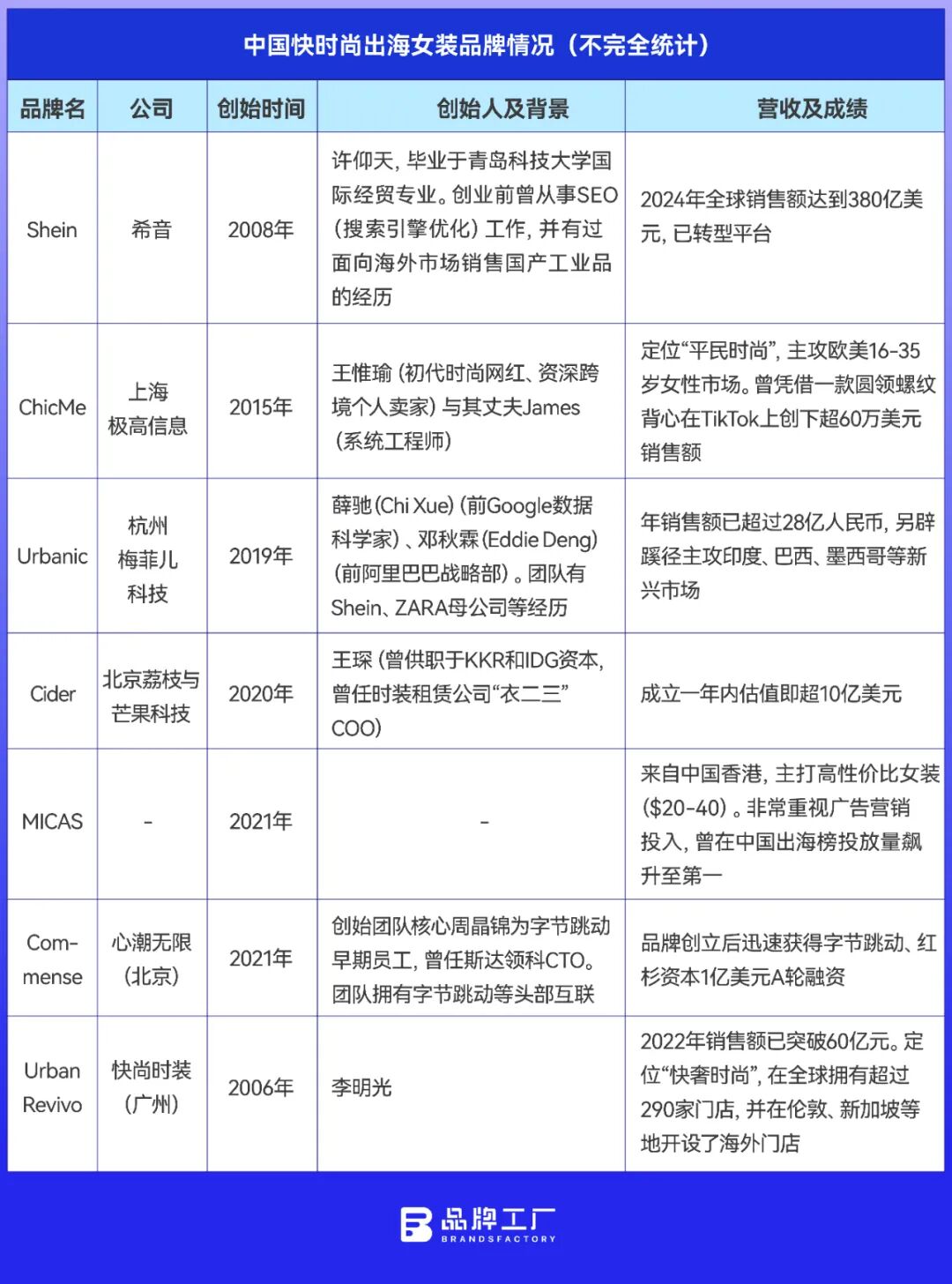
Core Insights - Chinese fashion brands are increasingly establishing themselves on the global retail stage, moving from a manufacturing identity to a brand identity, with Urban Revivo (UR) leading the charge by opening flagship stores in major cities like London and New York [1][24] - A new wave of Chinese women's fashion brands, including Shein, Cider, and Urbanic, is emerging, characterized by a deep understanding of consumer preferences, cultural contexts, and social media dynamics [2][24] - The competition among these brands is not solely based on price but also on cultural representation, design, and identity recognition [1][24] Brand Overview - **Shein**: Founded in 2008, projected to reach $38 billion in global sales by 2024, targeting the 16-35 age group in the Western market [4] - **Cider**: Established in 2020, valued at over $1 billion within a year, focuses on high-cost performance women's fashion [6][8] - **Urban Revivo (UR)**: Founded in 2006, with over 400 global stores, plans to open 200 more in the next five years, emphasizing "affordable luxury" and Eastern design aesthetics [8][25] - **Urbanic**: Launched in 2019, rapidly growing in India and Latin America, focusing on middle-class women aged 20-44 [6][8] - **MICAS**: A newer brand with a focus on high-end design, targeting women aged 25-35 with a price range of $20-80 [7] - **Commense**: Founded in 2021, targeting educated professional women with a minimalist style, priced between $30-120 [7] Market Trends - The new generation of fast fashion brands is not just replicating existing models but is innovating by adapting to local cultures and consumer behaviors [2][24] - Brands are increasingly focusing on niche markets, such as plus-size clothing, activewear, and culturally specific aesthetics, to fill gaps in the market [11][12][16] - The rise of brands like BloomChic and Shapellx highlights the growing demand for body inclusivity and comfort in women's fashion [12][13] Cultural and Design Focus - The shift from a survival-based approach to a brand identity approach signifies a deeper cultural awareness among Chinese brands [24][26] - Brands are leveraging social media and data analytics to drive product development and marketing strategies, significantly reducing the time from design to market [6][8] - The emergence of brands like MO&Co. and ICICLE reflects a trend towards high-end, designer-inspired fashion that resonates with global consumers [17][25] Conclusion - The globalization of Chinese women's fashion brands marks a significant evolution in the industry, moving towards a more culturally aware and design-driven approach [24][26] - This new phase of international expansion is characterized by a blend of local insights and global aspirations, indicating a promising future for Chinese fashion on the world stage [23][25]

第六届山东体育用品博览会圆满闭幕
Qi Lu Wan Bao· 2025-08-24 21:34
Group 1 - The sixth Shandong Sports Goods Expo successfully concluded, featuring an exhibition area of 36,000 square meters and 1,508 standard booths, attracting 476 sports enterprises and over 1,200 brands [1] - The event drew 36,700 visitors from 125 cities across 34 provinces, boosting related industries such as dining, accommodation, transportation, cultural tourism, and shopping [1] - The expo showcased six major exhibition areas, including smart fitness equipment, outdoor sports gear, smart sports venue facilities, educational sports equipment, ball sports and leisure apparel, and a comprehensive "Sports+" area, covering the entire sports industry chain [1] Group 2 - Accompanying activities included the second council meeting of the Shandong Sports Industry Association, a sports standardization seminar, and a public service training class for national fitness, facilitating policy release, resource matching, consumption promotion, and achievement recognition [2] - The expo emphasized the "Sports+" integration development concept, promoting deep integration with commerce, culture, sports, and tourism, aiming to create a comprehensive sports industry ecosystem [2]
今年以来,南京江北新区引入各类品牌首店52家
Nan Jing Ri Bao· 2025-07-03 23:52
Core Insights - The introduction of 52 new brand flagship stores in Nanjing Jiangbei New Area this year highlights the growth of the "first store economy" [1][4] - The first store economy is seen as a new engine for consumption, attracting young and active consumers through innovative products and experiences [2][3] Group 1: First Store Economy - Nanjing Jiangbei New Area has attracted 52 flagship stores this year, including 2 national first stores, 7 provincial first stores, and 13 municipal first stores across various sectors such as retail, dining, and culture [1] - The opening of the first store of Luxihe River, which combines traditional Chinese pastries with Western desserts and beverages, exemplifies the innovative retail experience that appeals to consumers [1][2] - The first store economy is characterized by its scarcity, innovation, and leadership, making it a popular choice for young consumers seeking new experiences [2][3] Group 2: Market Dynamics - The successful opening of the "Learning Pang Donglai" store by Yonghui Supermarket in Jiangbei has led to an 83% increase in customer traffic compared to before its renovation, demonstrating the strong attraction of first stores [3] - The Yonghui store's strategy of targeting young families and professionals aligns with the consumer demographics of the Jiangbei area, enhancing its appeal [3] - The establishment of first stores in Jiangbei reflects the area's economic vitality, consumer potential, and favorable business environment, making it an attractive location for brands [3][4] Group 3: Strategic Initiatives - The "Action Plan for Accelerating the Construction of a Youth Development City" was introduced to promote the establishment of first stores and trendy brands in Jiangbei [4] - The Jiangbei Investment Promotion and Business Bureau aims to enhance the quality of various business districts through strategic initiatives focused on optimizing business formats, promoting consumption, and improving services [5]
