
进口木材

Search documents
“迅猛增长”“进口+产业”“零突破”,活力涌动!从关键词里解码区域外贸亮点
Yang Shi Wang· 2026-01-26 08:49
Group 1 - The core viewpoint of the article highlights the significant growth in China's foreign trade in 2025, with the Yangtze River Delta region emerging as a key contributor, accounting for nearly 40% of the national export value at 10.84 trillion yuan [1] - The Yangtze River Delta's total import and export value reached 17.02 trillion yuan in 2025, marking a year-on-year increase of 6.3% and enhancing its share of China's foreign trade to 37.4% [17] - Zhejiang's focus on the new energy vehicle (NEV) sector is evident, with a production line yielding an average of 42 NEVs per hour and a monthly output exceeding 20,000 units [3] Group 2 - The NEV company in Zhejiang reported that 65% of its core components are self-developed, leading to a projected annual delivery of nearly 600,000 new vehicles in 2025, representing a 103% year-on-year growth [5] - The logistics model has evolved to accommodate the rising export demand, with the introduction of roll-on/roll-off shipping significantly improving loading efficiency and space utilization [8][11] - The export of NEVs from Zhejiang is expected to exceed 200,000 units in 2025, with electric vehicles making up over 60% of this total, reflecting a robust growth trajectory [14] Group 3 - The Yellow River Basin's import and export value reached a historic high of 6.49 trillion yuan in 2025, accounting for 14.3% of the national total, showcasing significant improvements in scale, structure, and efficiency [19] - The Yellow River Basin's trade performance has been bolstered by the development of unique industrial clusters that enhance export growth, with a notable increase in trade with countries along the Belt and Road Initiative [28] - The western region of China achieved a record import and export value of 4.4 trillion yuan in 2025, reflecting an 8.7% increase from 2024 and a rising share of 9.7% of the national total [29] Group 4 - The import of timber at the Rizhao Port in Shandong reached over 10 million cubic meters in 2025, accounting for one-third of the national total, with a focus on retaining and processing these resources locally [24] - The timber industry in Rizhao has developed a comprehensive supply chain that enhances processing depth and product value, contributing to a significant annual processing output of 15 billion yuan and creating over 20,000 jobs [27] - The export of live fish from Guizhou reached 1,281.6 tons in 2025, with a total value of 42.1 million yuan, marking a year-on-year growth of 192.7% [37]


关税冲击美国建材和电影行业 美消费者埋单
Jing Ji Guan Cha Wang· 2025-10-02 03:54
Core Viewpoint - The new round of tariffs imposed by the U.S. government, effective from October 1, will impact various products, leading to increased costs for American consumers [1] Group 1: Tariff Details - The tariffs will affect imported products such as lumber, cabinets, and pharmaceuticals [1] - President Trump has threatened to impose a 100% tariff on all films produced outside the U.S. [1] Group 2: Industry Impact - Industry professionals indicate that the tariffs will have a significant negative impact on multiple sectors in the U.S. [1] - The additional costs from tariffs will ultimately be borne by American consumers [1]
美药物关税10月1日生效 被指扰乱供应链
Yang Shi Xin Wen Ke Hu Duan· 2025-10-02 00:59
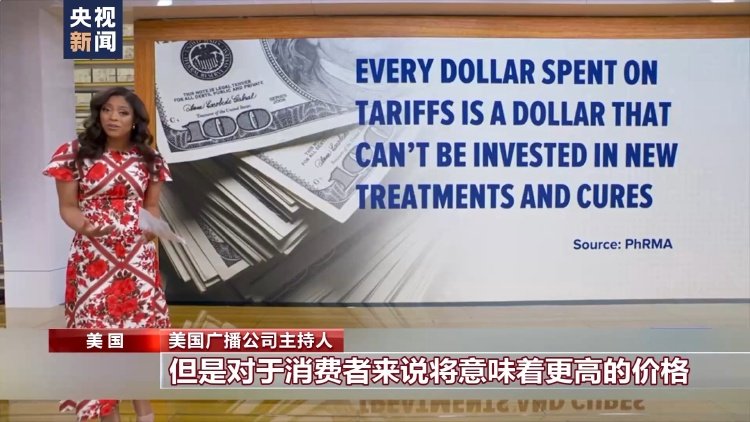
Group 1 - The new round of tariffs imposed by the U.S. government will take effect on October 1, affecting products such as imported wood, cabinets, and pharmaceuticals, raising concerns about rising prices among American consumers and disrupting global supply chains [1] - The tariffs on all branded or patented drugs could reach as high as 100%, which industry experts warn will hinder drug research and increase drug prices [1][3] - Pharmaceutical companies, such as Eli Lilly, express difficulty in making significant investment decisions due to the rapidly changing tariff policies [5] Group 2 - The imposition of tariffs on imported drugs has drawn strong reactions from other countries, with Australia and Germany criticizing the U.S. for unfair and unreasonable practices that could severely impact international supply chains and increase drug production costs [7] - Additional tariffs include a 10% tax on imported softwood lumber and a 25% tax on kitchen cabinets, set to take effect on October 14 [9]
【环球财经】特朗普关税战再升级 进口木材、橱柜等遭冲击
Xin Hua Cai Jing· 2025-09-30 13:41
Core Points - The Trump administration has officially implemented a new round of tariffs on imported wood and related products, with rates ranging from 10% to 25%, and potential increases up to 50% by 2026, aimed at supporting U.S. industries and national security [1][2][3] Tariff Details - Tariffs on softwood will be set at 10%, while certain upholstered furniture will face a 25% tariff, increasing to 30% in 2026. Cabinets and sinks will also incur a 25% tariff, rising to 50% in 2026 [2] - The tariffs are based on findings from a Department of Commerce investigation that indicated imported wood products could harm national security due to over-reliance on foreign supplies [3] Industry Reactions - The American Kitchen Cabinet Alliance supports the tariffs, advocating for even higher rates to counter foreign subsidies and dumping practices, emphasizing the importance of the cabinet industry for U.S. jobs [4] - Conversely, the home retail sector expresses concerns over rising material costs due to the tariffs [4] Pharmaceutical Industry Response - The Pharmaceutical Research and Manufacturers of America (PhRMA) announced plans for $500 billion in new infrastructure investments, projected to generate $1.2 trillion in economic output and create over 100,000 jobs [5] - Concerns exist regarding potential price increases for patients, depending on how many pharmaceutical companies receive tariff exemptions [5] Film Industry Concerns - The film industry faces challenges in defining tariff targets and methods, with experts warning that tariffs will likely increase costs, which will be passed on to consumers [6] - Historical trends suggest that tariffs generally lead to higher consumer prices, impacting overall spending in the economy [6] Broader Economic Implications - The Federal Reserve has expressed caution regarding interest rate cuts due to inflationary pressures from rising goods prices linked to tariffs [6] - There are concerns that excessive protectionist measures could provoke retaliatory actions from trade partners, leading to supply chain disruptions and market volatility [7]