第六代高带宽内存(HBM4)

Search documents
疯狂的存储芯片,史无前例
半导体行业观察· 2026-03-19 01:32
Core Viewpoint - The article discusses the unprecedented growth in the memory chip industry driven by AI demand, highlighting the significant revenue increases for major companies like Samsung and Micron Technology, while also addressing potential supply shortages and market dynamics [2][3][11]. Group 1: Samsung's Position and Strategy - Samsung's co-CEO, Chey Tae-won, indicated that the investment growth in AI data centers is leading the memory industry into an "unprecedented super cycle" [2]. - The demand for AI is rapidly increasing, driving customer needs for high-bandwidth memory (HBM), solid-state drives (SSD), and other server chips, resulting in explosive order growth [2]. - Samsung is negotiating to shift memory supply contracts from seasonal or annual agreements to multi-year contracts to enhance predictability and stability in supply [2]. Group 2: Micron Technology's Performance - Micron Technology reported record revenue of $23.86 billion for Q2 of fiscal year 2026, a 2.96 times increase year-over-year, significantly exceeding market expectations [3][4]. - The company's operating income reached $16.135 billion, an 810% increase from the previous year, with an operating margin rising from 22.0% to 67.6% [3]. - Micron expects next quarter revenue to be around $33.5 billion, with adjusted earnings per share projected at $19.15, surpassing market forecasts [4]. Group 3: Industry Challenges and Future Outlook - SK Hynix's CEO warned that the global memory chip shortage could persist for several years, with structural supply constraints likely extending into the next decade [6]. - The shortage is attributed to limited wafer production capacity, which may take four to five years to address [6]. - The article notes that the competition for HBM is intensifying, driven by AI needs, which may exacerbate shortages in traditional DRAM memory chips used in smartphones and PCs [7]. Group 4: Market Dynamics and Investment Trends - The memory market is experiencing a significant transformation, with the value projected to rise from $48 billion in 2005 to over $210 billion by 2025, driven by AI [11]. - Major players like Samsung, SK Hynix, and Micron are investing over $20 billion annually in expansion efforts to capture AI-driven demand [11]. - Taiwanese manufacturers are seizing opportunities in traditional products as the giants focus on high-priced HBM, with companies like ADATA and Phison innovating to meet market needs [12]. Group 5: Competitive Landscape and Future Risks - The article highlights a shift towards rational competition in the memory industry, moving away from destructive price wars [13]. - Analysts caution that traditional memory markets remain cyclical, and any return of large-scale production could lead to rapid price corrections [13]. - The sustainability of high investments in AI infrastructure translating into actual revenue remains a critical concern for the industry [13].


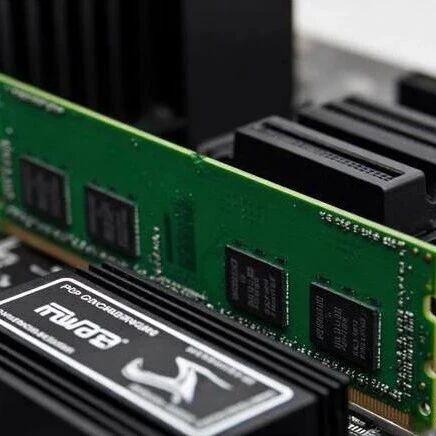
SK海力士将参加英伟达年度技术大会,展示其AI芯片领先地位
Xin Lang Cai Jing· 2026-03-16 23:43
Core Insights - SK Hynix will participate in NVIDIA's GTC 2026 conference in California, focusing on its leadership in AI memory chips [1][2] - The company will showcase its sixth-generation high bandwidth memory (HBM4) and its applications in NVIDIA's AI platform [1][2] - SK Hynix aims to reduce data bottlenecks and enhance AI training and inference performance on NVIDIA's platform [1][2] - The chairman of SK Group and the CEO of SK Hynix plan to meet with representatives from major companies, including NVIDIA, to explore business collaborations [1][2] - The company emphasizes that memory has become a core element in determining the architecture and performance of AI infrastructure [1][2] - SK Hynix intends to leverage its expertise in memory across the entire AI field, from data centers to edge applications, to shape the future of AI in collaboration with global partners [1][2]
全球大公司要闻 | 胡润富豪榜中国重回第一,OpenAI发布GPT-5.4
Wind万得· 2026-03-06 00:46
Key Points - The 2026 Hurun Global Rich List reveals that the number of billion-dollar entrepreneurs worldwide has surpassed 4,000 for the first time, reaching a record 4,020, an increase of 578 from last year. China leads with 1,110 billion-dollar entrepreneurs, surpassing the U.S. at 1,000, with a net increase of 287 [2] - Elon Musk retains his title as the world's richest person for the fifth time in six years, with a wealth of 5.5 trillion RMB, marking an 89% increase. ByteDance founder Zhang Yiming becomes the richest in China with a wealth of 550 billion RMB, a 32% increase [2] - Seven major companies, including Microsoft, Google, OpenAI, Amazon, Meta, xAI, and Oracle, signed a commitment at the White House to address the growing power demands of data centers and take responsibility for AI safety and sustainable development [2] - U.S. officials are drafting regulations to restrict the global shipment of AI chips without U.S. approval, expanding current controls to cover all countries, requiring companies to apply for licenses to export AI accelerators produced by firms like NVIDIA and AMD [2] China Region Company News - JD Group reported a full-year revenue of 1.31 trillion RMB for 2025, a 13% year-on-year increase, with Q4 revenue of 352.3 billion RMB, up 1.5%, and a net loss of 2.7 billion RMB [3] - Alibaba refuted rumors regarding the collective departure of the core team of its Qianwen model and confirmed that the team remains stable, with all products and services operating normally [3] - Bilibili achieved a turnaround with a net profit of 1.19 billion RMB for 2025, with a total net revenue of 30.35 billion RMB, a 13% year-on-year increase [5] - China Tobacco Hong Kong reported a 14.82% year-on-year increase in shareholder profit to 980 million HKD, with total revenue of 14.579 billion HKD, up 11.51% [5] Americas Region Company News - OpenAI launched GPT-5.4, introducing a "Thinking" mode and optimizing workflows for complex tasks, with plans for an IPO potentially in Q4 of this year [8] - Google announced a strategic blueprint focusing on quantum computing, robotics, and AI-driven drug development as core growth engines [8] - Meta is allowing AI competitors to access WhatsApp to avoid EU investigations and is expanding its internal AI chip development [8] - NVIDIA faces potential global export controls on AI chips, requiring approval for all countries, and has ceased funding for Anthropic [9] Asia-Pacific Region Company News - SK Hynix showcased its sixth-generation high-bandwidth memory (HBM4) and LPDDR6 products at the 2026 World Mobile Communications Conference, enhancing its AI capabilities [12] - BYD launched its second-generation blade battery, achieving rapid charging times, and announced plans to build 20,000 fast-charging stations by the end of 2026 [6] - Toyota's GAC Toyota Platinum 7 is now available for pre-sale, featuring Huawei's HarmonyOS and Momenta's smart driving technology [12] Europe and Oceania Region Company News - ASML is advancing next-generation EUV equipment development, aiming for a 90% utilization rate by the end of 2026 [15] - BMW will debut its new i3 sedan on March 18, featuring a new design language and a battery supporting ultra-fast charging [16] - Volkswagen announced the first vehicle off the production line for its ID. ERA 9X model, marking the implementation of its "Joint Venture 2.0" strategy [16]

事关HBM4,美光否认
半导体芯闻· 2026-02-12 10:37
Core Viewpoint - Micron has officially launched the shipment of its sixth-generation High Bandwidth Memory (HBM4), breaking the expectation that Samsung and SK Hynix would dominate the supply chain for NVIDIA's upcoming AI accelerator, "Vela Rubin" [1]. Group 1: Micron's HBM4 Production and Market Position - Micron's CFO, Mark Murphy, announced that the company has entered the mass production phase of HBM4 and has begun shipping to customers [1]. - Murphy addressed recent rumors regarding HBM4's exit from the market, stating that the shipment volume is expanding smoothly and is ahead of the previously mentioned timeline by one quarter [1]. - The production capacity for HBM is steadily increasing as planned, with Micron's HBM capacity for 2026 already sold out, and the yield for HBM4 meeting expectations, providing speeds over 11Gbps [1]. Group 2: Competitive Landscape - Prior opinions suggested that Micron's HBM4 could not meet NVIDIA's requirement of over 11Gbps, placing it at a disadvantage against Samsung and SK Hynix in the supply competition [1]. - SemiAnalysis projected that SK Hynix and Samsung would capture 70% and 30% of the supply chain for NVIDIA's Vela Rubin, respectively [2].
台积电新建四个封装厂
半导体行业观察· 2026-01-20 02:02
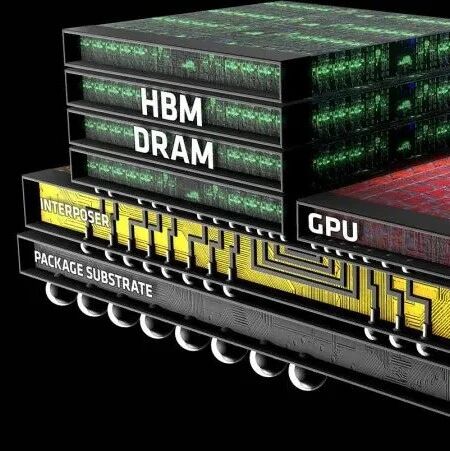
Core Viewpoint - TSMC plans to build four advanced packaging (AP) factories to address capacity shortages and maintain its competitive edge in the semiconductor industry, particularly in advanced packaging technologies like CoWoS [1][4][11] Group 1: TSMC's Expansion Plans - TSMC will announce the expansion of four advanced packaging factories in Tainan, including locations in Chiayi Science Park and Southern Science Park [1] - The company aims to start mass production at its AP factory 1 in the Ziyi Technology Park in the first half of this year [1] - TSMC's expansion is a response to concerns about its potential transformation into "American TSMC" due to recent factory expansions in the U.S. [1] Group 2: Industry Trends and Challenges - The global tech industry is facing intense competition for advanced packaging technology, particularly TSMC's CoWoS, which is critical for connecting high-performance chips with ultra-fast memory [4][9] - By 2026, the bottleneck in AI GPU supply will shift from chip shortages to the complex assembly processes required for advanced packaging [4][9] - The transition from wafer-level packaging (WLP) to fan-out panel-level packaging (FOPLP) is expected to increase processing capacity significantly [11] Group 3: Strategic Implications - NVIDIA has secured nearly 60% of TSMC's CoWoS capacity for 2026, influencing competitors like AMD and Broadcom to vie for the remaining capacity [7] - The advanced packaging secondary market is rapidly maturing, with companies like Intel positioning their packaging technologies as alternatives to TSMC [8] - The industry's reliance on TSMC for advanced packaging creates vulnerabilities, as geopolitical stability in the Taiwan Strait remains a critical factor for the global AI economy [8][12] Group 4: Future Outlook - The industry's focus is shifting towards the physical realities of AI hardware, with advanced packaging becoming a crucial factor in the growth of AI capabilities [9][10] - Upcoming challenges include the transition to glass substrates for improved interconnect density and thermal management, which could disrupt TSMC's current dominance [11] - The success of HBM4 chip yields and the ramp-up of TSMC's AP7 capacity will be closely monitored, as delays could impact the release of next-generation AI models [12]

美股异动 | 存储概念股集体大涨 希捷科技(STX.US)涨逾9%
智通财经网· 2025-11-05 15:05
Core Viewpoint - The U.S. storage sector stocks experienced a significant surge, driven by SK Hynix's successful negotiations with NVIDIA regarding the pricing of the sixth-generation high bandwidth memory (HBM4), which increased by over 50% to approximately $560 per unit [1] Group 1: Stock Performance - Major storage stocks such as Seagate Technology (STX.US) and SanDisk (SNDK.US) rose by over 9%, while Micron Technology (MU.US) increased by nearly 8%, and Western Digital (WDC.US) saw a rise of over 5% [1] Group 2: SK Hynix's Market Position - SK Hynix has strengthened its dominant position in the high-end storage chip market by successfully negotiating a price increase for HBM4, which is expected to lead to a record operating profit of over 70 trillion Korean Won next year [1] Group 3: Pricing Dynamics - Initially, NVIDIA resisted the significant price hike due to potential competition from Samsung and Micron, but ultimately agreed to the price set by SK Hynix at approximately $560 per unit [1] - A SK Hynix executive indicated that advancements in technology and increased input costs justified the substantial price increase for HBM4 [1]


报道:SK海力士与英伟达谈判后宣布HBM4较前代产品提价超50%
Hua Er Jie Jian Wen· 2025-11-05 11:43
Core Viewpoint - SK Hynix has confirmed its position as the leading supplier in the HBM market, with a price increase of over 50% for its sixth-generation high bandwidth memory (HBM4) compared to the previous generation (HBM3E) [1] Group 1: Company Developments - SK Hynix successfully completed negotiations with Nvidia for HBM4 supply for next year, paving the way for record-breaking performance [1] - The company delivered the world's first 12-layer stacked HBM4 samples to Nvidia in March, and began initial shipments in June after receiving positive evaluations [1] - Ongoing price negotiations for HBM4 required for Nvidia's next-generation AI chip "Rubin," set to be released in the second half of next year [1]
三星代工发力,HBM4弯道超车海力士?
半导体芯闻· 2025-10-20 10:40
Core Insights - Samsung Electronics is preparing for final quality testing of NVIDIA's sixth-generation High Bandwidth Memory (HBM4), with its foundry division ramping up production of the logic chips that serve as the "brain" of HBM [1][2] - The logic chips for HBM4 will utilize advanced process technology, with Samsung's foundry achieving over 90% yield for 4nm process logic chips, indicating readiness for mass production [2][3] - The transition to HBM4 marks a significant shift in performance requirements, with the introduction of customized HBM expected to begin with HBM4E, necessitating tailored circuit designs based on customer needs [3][4] Summary by Sections HBM4 Production and Testing - Samsung's foundry division is fully supporting the production of logic chips for HBM4, aligning with the storage division's increased HBM4 output [1] - The foundry is increasing the wafer input for logic chips and aims to maximize yield to establish a stable production system [1] Logic Chip Technology and Yield - The logic chips for HBM4 are critical components that connect stacked DRAM with GPUs in AI semiconductors, providing power supply and data signal control [2] - The yield for 4nm process logic chips has surpassed 90%, meaning that more than 9 out of 10 chips produced are qualified, demonstrating a stable technology for large-scale production [2][3] Industry Trends and Future Outlook - The semiconductor industry is witnessing a shift towards advanced process technologies, with Samsung's 4nm process entering a mature stage and achieving an overall yield exceeding 80% [3] - The upcoming HBM4E is expected to usher in a "customized HBM" era, where HBM development will be optimized based on specific AI semiconductor applications [3][4] - The importance of foundry process technology is anticipated to increase in the next generation of HBM products, as Samsung aims to address previous product shortcomings [4]