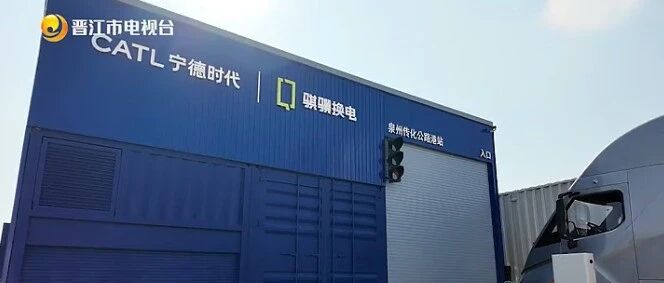
重卡换电站

Search documents
宁德时代泉州第二个项目落户晋江
鑫椤储能· 2026-03-24 01:42
Core Viewpoint - The article highlights the development of a battery swapping station by CATL in Jinjiang, which is expected to be operational by April 2026, enhancing the efficiency of electric heavy-duty trucks in the region [1][3]. Group 1: Project Overview - The CATL battery swapping station project utilizes existing parking space at the Quanzhou Transfar Highway Port and is set to begin construction by the end of 2025, with a projected completion date in April 2026 [3]. - Once operational, the station will support nearly 200 electric heavy-duty trucks daily, with a single battery swap taking only 5 minutes, allowing for a range of 400 kilometers post-swap [5]. Group 2: Infrastructure and Logistics - The Quanzhou Transfar Highway Port covers an area of 260 acres with a total building area of 86,500 square meters, hosting over 200 logistics companies and handling approximately 36,000 tons of goods daily, making it a crucial logistics hub in the region [7]. Group 3: Strategic Partnerships and Developments - On February 2, 2023, the Quanzhou municipal government signed a cooperation agreement with CATL to establish a new energy battery production base, focusing on R&D and manufacturing, which aims to enhance the local new energy industry ecosystem [9]. - The project will leverage advanced green manufacturing technologies to create a smart, zero-carbon modern factory, promoting high-quality development in the new energy sector [9]. Group 4: Future Projects and Investments - The Quanzhou Chip Valley New Energy Industrial Park is set to undergo significant development, with a total construction area of approximately 1,741,519 square meters and an estimated investment of 950 million yuan [11]. - The CATL project in Quanzhou is expected to drive the expansion of traditional industries into new sectors such as electronic information, low-altitude economy, and robotics, accelerating the signing and implementation of new projects [14].


康迪科技与宁德时代旗下时代骐骥达成战略合作
Bei Jing Shang Bao· 2026-01-29 14:14
Core Viewpoint - Kandi Technologies Group announced a three-year strategic cooperation agreement between its wholly-owned subsidiary, Zhonghuan Electric (Zhejiang) Technology Co., Ltd., and Times Kijiji Green Energy Technology (Shenzhen) Co., Ltd. to focus on the mass production of heavy-duty electric vehicle battery swap stations [1] Group 1 - The partnership will involve comprehensive collaboration across the entire supply chain, including production, delivery, commissioning, and after-sales maintenance [1] - The collaboration aims to promote the large-scale development of the new energy vehicle charging market [1]

康迪科技与宁德时代换电公司达成三年战略合作
Cai Jing Wang· 2026-01-29 09:00
Group 1 - Kandi Technologies has entered into a three-year strategic partnership with CATL's battery swapping company to jointly promote the mass production of heavy-duty truck battery swapping stations [1] - The collaboration will involve Kandi's wholly-owned subsidiary, Zhonghuan Electric (Zhejiang) Technology Co., Ltd., working closely with CATL's subsidiary, Times Qiji Green Energy Technology (Shenzhen) Co., Ltd., covering the entire supply chain from production and delivery to operational debugging and after-sales maintenance [1] - CATL has proposed the "Ten Thousand Stations Plan," aiming to establish a standardized battery swapping service network across the country, with plans to build 900 battery swapping stations for heavy-duty truck chassis solutions by 2026 [1]

康迪科技与宁德时代旗下换电公司达成战略协议
Di Yi Cai Jing· 2026-01-29 08:09
Core Viewpoint - Kandi Technologies (KNDI.US) has entered into a three-year strategic partnership with CATL's battery swapping company to jointly promote the mass production of heavy-duty truck battery swapping stations [1] Group 1: Partnership Details - Kandi's wholly-owned subsidiary, Zhonghuan Electric (Zhejiang) Technology Co., Ltd., will collaborate closely with CATL's subsidiary, Times Kijiji Green Energy Technology (Shenzhen) Co., Ltd. [1] - The cooperation will cover the entire supply chain, including production manufacturing, delivery, debugging operations, and after-sales maintenance [1] Group 2: Strategic Plans - CATL has proposed the "Ten Thousand Station Plan," which aims to establish a standardized battery swapping service network across the country [1] - The heavy-duty truck battery swapping solution is planned to have 900 battery swapping stations completed by 2026 [1]
高速路域光伏装机量全国第一!山东实施创新赋能工程打造一流技术装备
Qi Lu Wan Bao· 2025-12-23 03:30
Core Viewpoint - Shandong Province is actively developing the "Smooth Travel in Qilu" highway network, focusing on smart highway construction, low-carbon transformation, and key technology research and application [1][3]. Group 1: Smart Highway Construction - The province is advancing smart highway initiatives by issuing the "Smart Highway Construction Guidelines" and establishing demonstration projects for all-weather travel, full-section perception, and whole-process control, with a total of 600 kilometers of smart highways constructed [3][4]. - Notable projects include the first upgraded smart highway segment of the Beijing-Taipei Expressway and the first zero-carbon smart highway segment of the Jinan-Qingdao Middle Line [3]. Group 2: Low-Carbon Green Transformation - Shandong has completed several national-first demonstration projects, including the zero-carbon highway on the Jinan-Heze Expressway, and is promoting distributed photovoltaic power generation facilities, achieving an installed capacity of over 833 megawatts, ranking first in the country [3][4]. - The province has established 10 fast-charging stations for heavy trucks and has achieved 100% coverage of charging facilities in highway service areas, with charging parking spaces accounting for over 12% [3]. Group 3: Key Technology Research and Application - The province is constructing the first "six-to-twelve lane" expansion project on the Beijing-Taipei Expressway, transitioning from traditional infrastructure to smart infrastructure [4]. - Innovations include the use of intelligent unmanned pavement laying, "black light factories," smart beam yards, and intelligent construction equipment for tunnels, along with the establishment of a cloud control platform for integrated project management [4].
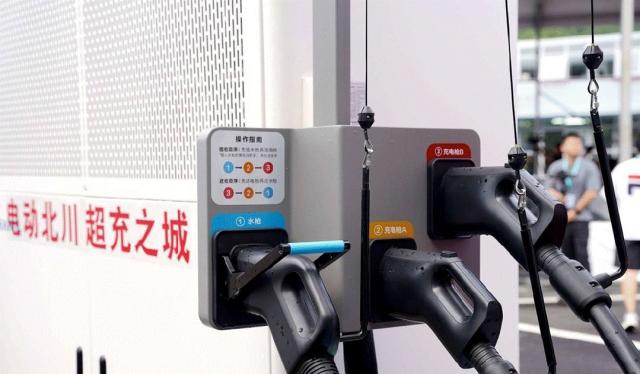
超充VS换电,到底谁将打赢新能源重卡的终局之战?
3 6 Ke· 2025-09-19 05:49
Core Insights - The fastest-growing segment in the new energy market this year is heavy-duty trucks, with cumulative sales reaching 113,600 units from January to August 2025, a year-on-year increase of 191% [1] - The penetration rate of new energy heavy-duty trucks has rapidly climbed to 26.07% by June 2025, nearing the critical 30% threshold [1] Market Dynamics - Continuous technological advancements have led to a relatively high maturity level for new energy heavy-duty trucks, making them more viable [2] - Strong policy support, including national and local subsidies, as well as mandatory usage policies in some areas, has significantly boosted the popularity of new energy heavy-duty trucks [3] Economic Benefits - The economic advantages of new energy heavy-duty trucks are becoming increasingly apparent, with a 49-ton electric truck consuming 150 kWh per 100 km, resulting in energy costs of only 180 RMB, which is 37% cheaper than diesel trucks of the same weight [4] - The price of new energy heavy-duty trucks has dropped from 700,000-800,000 RMB to around 400,000 RMB, making them comparable to fuel trucks priced at approximately 350,000-450,000 RMB [4] Competitive Landscape - The market is divided into two main camps: the battery swap camp, including companies like CATL and Qiyuan, and the fast-charging camp, represented by Huawei and XWANDA [5] - The competition between battery swapping and fast charging is not just about speed but involves a deeper financial and scenario-based logic [7] Cost Competition - Heavy-duty trucks are primarily evaluated based on their input-output ratio, differing from passenger vehicles [9] - Battery swapping allows for a "separation of vehicle and battery" model, significantly lowering initial investment costs, but incurs high operational costs due to the expensive infrastructure [10][12] - Fast charging stations have lower construction costs (around 2 million RMB) and offer cheaper refueling options, attracting more drivers [14] Scenario-Based Competition - Battery swapping is more suitable for high-frequency, closed-loop scenarios like ports and mines, while fast charging is better for open, price-sensitive environments like urban freight transport [16][24] - For example, a battery swapping station brand has invested heavily in a coal transport route, benefiting from concentrated demand and supportive local policies [20] Ecological Considerations - Both systems require a comprehensive ecological framework to support their operations, with fast charging needing high-standard batteries and posing significant impacts on the power grid [25][26] - The competition is balanced, with neither system achieving a decisive advantage across cost, scenarios, and ecological factors [27] - Future success in the new energy heavy-duty truck market will depend on a holistic approach considering pricing, grid impact, and user needs [28]