
量子密钥发送芯片

Search documents
【东吴周视点】节前震荡蓄力,节后行情可期(第342期)
Xin Lang Cai Jing· 2026-02-14 01:48
Market Overview - The market indices experienced narrow fluctuations this week, with trading volumes dropping below 2 trillion yuan on Wednesday and Friday. AI safety, film industry, and computing power leasing sectors led the gains, while traditional consumer sectors like liquor showed weakness. The Shanghai Composite Index rose by 0.41%, the ChiNext Index increased by 1.22%, and the CSI 300 Index gained 0.36% [3]. Policy Developments - On February 12, the National Development and Reform Commission, the Financial Regulatory Bureau, and the Civil Aviation Administration of China released implementation opinions to promote the high-quality development of low-altitude insurance. By 2027, a mandatory insurance system for unmanned aerial vehicles is expected to be established, with a comprehensive policy framework for low-altitude insurance by 2030. This sector is seen as a significant investment opportunity, with projections of a trillion-yuan market emerging [6][6]. - The Peking University Institute of Modern Optics announced the successful development of a high-performance quantum key distribution chip and an optical microcavity frequency comb light source chip. This development supports the establishment of a large-scale quantum key distribution network, which is expected to drive growth in the global Ethernet optical module market due to strong demand from AI infrastructure [6][6]. Technical Analysis - The Shanghai Composite Index has been fluctuating within the 4050-4150 point range but fell below the 4100 point support level on Friday. The MACD indicator shows increasing bearish momentum, suggesting a potential test of the lower support at 4050 points in the near term [7]. Market Outlook - The market is expected to maintain a cautious stance with structural rotation of hotspots as investors await post-holiday liquidity and risk appetite recovery. The upcoming events, including the annual lending surge and the Two Sessions, are anticipated to support a gradual structural bull market. The historical data indicates a high probability of positive performance for the A-share market around the Spring Festival, with a notable 80% chance of gains in the five days before and after the holiday [11][12]. - The market is characterized by strong index resilience and stock differentiation, with funds gradually positioning for post-holiday expectations. High expectation companies are gaining recognition from investors, and the structural recovery is expected to continue [13]. Sector Performance - The robotics sector is highlighted, with Tesla's third-generation humanoid robot set to launch in Q1 2026, aiming for a production target of one million units annually. This sector has shown significant stock price increases, with notable gains among various companies [15][16].


全球首个!我国科研人员取得重大进展
中国能源报· 2026-02-13 06:36
Core Viewpoint - The article highlights the successful construction of the world's first large-scale quantum key distribution network based on integrated optical quantum chips, named "Weiming Quantum Chip Network," by a research team from Peking University. This achievement marks a significant step towards practical and scalable quantum communication [1][2]. Group 1: Quantum Key Distribution Chips - The research team developed two core chips essential for the quantum communication system: one is a server-side optical microcavity frequency comb light source chip that generates ultra-low noise coherent light, providing a unified frequency reference for user communication synchronization [1]. - The second chip is a user-side quantum key sending chip that integrates all critical functions such as laser, modulator, and key encoding/decoding, achieving full functionality in a single unit [1]. Group 2: Weiming Quantum Chip Network - The "Weiming Quantum Chip Network" addresses previous challenges in quantum communication networks, such as limited users, short distances, and complex equipment. It supports simultaneous communication for 20 chip users, with a communication distance of up to 370 kilometers between any two users [2]. - The network breaks the technical limitations of non-relay communication, achieving a networking capability of 3,700 kilometers, thus making a significant breakthrough in multi-user, long-distance quantum communication [2]. - The optical quantum chips developed by the team exhibit high uniformity and yield in wafer-level fabrication, indicating potential for low-cost mass production, which is crucial for building large-scale quantum communication networks [2].

全球首个 我国科研人员构建大规模量子通信芯片网络
Huan Qiu Wang Zi Xun· 2026-02-13 01:05
Core Insights - The development of integrated optical quantum chips is crucial for achieving large-scale quantum communication, with the successful creation of the "Unnamed Quantum Chip Network" marking a significant milestone in this field [1][2] Group 1: Technology Development - A research team from Peking University has developed two core chips essential for quantum key distribution (QKD), enabling the first large-scale quantum key distribution network based on integrated optical quantum chips [1] - The first chip is an optical microcavity frequency comb source chip that produces ultra-low noise coherent light, providing a unified frequency reference for network synchronization [1] - The second chip is a quantum key sending chip that integrates all key functions such as laser, modulator, and key encoding/decoding, achieving full functionality in one unit [1] Group 2: Network Capabilities - The "Unnamed Quantum Chip Network" can support 20 chip users for simultaneous communication, with a maximum communication distance of 370 kilometers between any two users [2] - The network breaks the technical limitations of non-relay communication, achieving a networking capability of 3,700 kilometers, thus facilitating multi-user and long-distance quantum communication [2] - This advancement represents a critical step towards the practical and scalable application of quantum communication technologies, with performance metrics reaching international leading levels [2] Group 3: Production and Future Research - The quantum chips exhibit high uniformity and yield in wafer-level fabrication, indicating potential for low-cost mass production, which is vital for building large-scale quantum communication networks [2] - The reviewers of the journal "Nature" recognized this as a significant breakthrough in the field of quantum chips and networks, highlighting its substantial scalability [2] - The research team aims to further integrate quantum communication chip networks with quantum computing chips, laying the groundwork for a practical quantum information technology system [2]
我科研人员构建全球首个大规模量子通信芯片网络
Ke Ji Ri Bao· 2026-02-13 00:46
Core Insights - The development of integrated optical quantum chips is crucial for achieving large-scale quantum communication [1][2] - The research team has successfully built the world's first large-scale quantum key distribution network based on integrated optical quantum chips, named "Weiming Quantum Chip Network" [1][2] Group 1: Technology Development - The team has created two core chips: one for the server side that generates ultra-low noise coherent light sources, and another for the user side that integrates all key functions for quantum key distribution [1] - The dual-field quantum key distribution (TF-QKD) offers measurement-device-independent security and long-distance transmission capabilities, with successful point-to-point key distribution over kilometers of optical fiber [1] Group 2: Network Capabilities - The "Weiming Quantum Chip Network" can support 20 chip users for simultaneous communication, with a maximum communication distance of 370 kilometers between any two users, breaking previous technical limitations [2] - The network's total networking capability reaches 3700 kilometers, marking a significant advancement towards practical and scalable quantum communication [2] Group 3: Production and Impact - The optical quantum chips exhibit high uniformity and yield in wafer-level fabrication, indicating potential for low-cost mass production, which is critical for building large-scale quantum communication networks [2] - The achievement is recognized as a major breakthrough in the field of quantum chips and networks, with significant implications for the future of quantum communication [2]
600亿龙头,直线涨停,超87万手封单
Zhong Guo Zheng Quan Bao· 2026-02-12 08:38
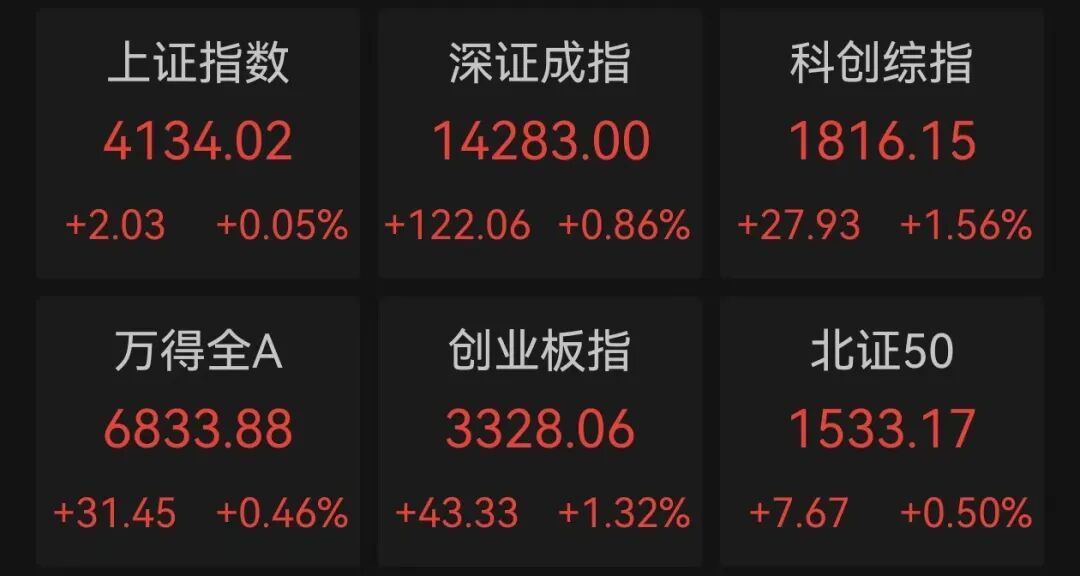
Market Performance - The A-share market showed a strong rebound on February 12, with the Shanghai Composite Index rising by 0.05%, the Shenzhen Component Index increasing by 0.86%, the ChiNext Index up by 1.32%, and the Sci-Tech Innovation Board Index gaining 1.56% [1] - The total market turnover exceeded 2.16 trillion yuan, an increase of 159.7 billion yuan compared to the previous trading day [1] Sector Performance - Sectors such as other power equipment, small metals, semiconductors, power grid equipment, and communication equipment saw significant gains, while sectors like film and television, tourism and hotels, retail, and liquor underwent adjustments [3] - The AI concept continued to gain traction, with Liou Co., Ltd. hitting the daily limit, closing with a total market value of 61.488 billion yuan and a net inflow of 3.268 billion yuan, ranking first in A-shares [3] AI Sector Developments - MSCI announced the inclusion of 37 new stocks in the China Index, including Liou Co., Ltd., which has been actively investing in the AI sector since early 2023 [5] - Liou Digital, a subsidiary of Liou Co., Ltd., launched its self-developed AIGC ecosystem platform "LEO AIAD" and is promoting AI capabilities across various industries, including automotive, 3C digital, beauty, education, and tourism [5] - Recent positive developments in the AI field include the launch of ByteDance's Seedance 2.0 video generation model and the release of the new flagship model GLM-5 by Zhiyu [6] Quantum Technology Advancements - A breakthrough research paper published by a team from Peking University in the journal "Nature" details the development of a large-scale quantum communication network based on integrated photonic chips [10] - The research team created a fully integrated high-performance quantum key distribution network, capable of supporting 20 chip users with a communication distance of 370 kilometers, achieving international leadership in both user scale and network capability [10][11] - The study confirmed the advantages of indium phosphide and silicon nitride materials in the manufacturing of optical quantum chips, indicating potential for low-cost, large-scale production [11] - CICC believes that quantum computing is at the forefront of a new technological revolution and industrial transformation, presenting significant investment opportunities [11]
北大团队Nature发文:建成全球首个大规模集成光量子通信芯片网络
Feng Huang Wang· 2026-02-12 05:16
Core Insights - A significant technological advancement in quantum communication has been achieved by a collaborative team from Peking University's School of Physics and School of Electronics, resulting in the development of a fully integrated quantum key distribution (QKD) network named "Weiming Quantum Network" [1] Group 1: Technological Achievements - The research team successfully created an integrated quantum key sending chip and an optical microcavity frequency comb light source chip, enabling the world's first large-scale QKD network based on integrated optical quantum chips [1] - The network demonstrated parallel communication among 20 chip user nodes, achieving a communication distance of 370 kilometers, thus breaking the distance limit of direct transmission without relays [1] - The system reached a "networking capability" of 3700 kilometers, calculated as the product of the number of client nodes and communication distance, validating the feasibility of large-scale, long-distance quantum secure communication through integrated photonic technology [1] Group 2: Hardware Architecture - The research utilized a hybrid material system of indium phosphide (InP) and silicon nitride (SiN) for hardware architecture, with a central server node deploying a silicon nitride optical microcavity frequency comb as a seed light source [2] - The system produced a coherent dark pulse frequency comb with an ultra-low noise linewidth of only 40 Hz, replacing traditional complex desktop laser systems [2] - The user end incorporated 20 fully integrated indium phosphide quantum chips, achieving a device yield of 97.5% and maintaining high consistency under wafer-level manufacturing processes [2] Group 3: Protocol and Performance - The research employed a twin-field quantum key distribution (TF-QKD) protocol combined with wavelength division multiplexing technology, effectively addressing signal interference and phase tracking challenges in multi-user networks [2] - Experimental results indicated that the system could maintain low error rates even over long-distance fiber transmission of 370 kilometers, with a data rate surpassing the theoretical limits of linearity [2] - This technological approach offers a new chip-level solution for reducing the cost of quantum communication devices and enhancing network scalability [2]
北京大学科研团队实现首个大规模量子通信芯片网络
Xin Lang Cai Jing· 2026-02-12 05:06
Core Insights - The research team from Peking University's School of Physics has published a groundbreaking study on large-scale quantum communication networks using integrated photonics in the journal "Nature" [1] Group 1: Research Achievements - The team developed a fully integrated high-performance quantum key sending chip and an optical microcavity frequency comb light source chip [1] - They constructed the world's first large-scale quantum key distribution network based on integrated photonic chips, named "Weiming Quantum Network" [1] - The quantum network supports parallel communication for 20 chip users, with a communication distance of 370 kilometers, breaking the relay limit [1] Group 2: Technical Advancements - The network's capability, defined as the number of client users multiplied by communication distance, reaches 3,700 kilometers, achieving international leadership in both user scale and networking capability [1] - The research validated the superiority of indium phosphide and silicon nitride material systems in the manufacturing of optical quantum chips, demonstrating high yield, performance, and scalability for wafer-level processing [1] - This breakthrough lays a solid chip-level foundation for the future construction of practical quantum secure communication networks that can cover longer distances and accommodate more users [1]