量子芯片

Search documents
全球首个 我国科研人员构建大规模量子通信芯片网络
Huan Qiu Wang Zi Xun· 2026-02-13 01:05
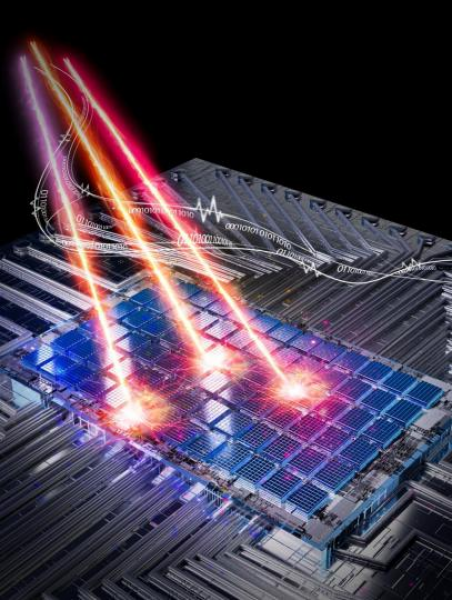
Core Insights - The development of integrated optical quantum chips is crucial for achieving large-scale quantum communication, with the successful creation of the "Unnamed Quantum Chip Network" marking a significant milestone in this field [1][2] Group 1: Technology Development - A research team from Peking University has developed two core chips essential for quantum key distribution (QKD), enabling the first large-scale quantum key distribution network based on integrated optical quantum chips [1] - The first chip is an optical microcavity frequency comb source chip that produces ultra-low noise coherent light, providing a unified frequency reference for network synchronization [1] - The second chip is a quantum key sending chip that integrates all key functions such as laser, modulator, and key encoding/decoding, achieving full functionality in one unit [1] Group 2: Network Capabilities - The "Unnamed Quantum Chip Network" can support 20 chip users for simultaneous communication, with a maximum communication distance of 370 kilometers between any two users [2] - The network breaks the technical limitations of non-relay communication, achieving a networking capability of 3,700 kilometers, thus facilitating multi-user and long-distance quantum communication [2] - This advancement represents a critical step towards the practical and scalable application of quantum communication technologies, with performance metrics reaching international leading levels [2] Group 3: Production and Future Research - The quantum chips exhibit high uniformity and yield in wafer-level fabrication, indicating potential for low-cost mass production, which is vital for building large-scale quantum communication networks [2] - The reviewers of the journal "Nature" recognized this as a significant breakthrough in the field of quantum chips and networks, highlighting its substantial scalability [2] - The research team aims to further integrate quantum communication chip networks with quantum computing chips, laying the groundwork for a practical quantum information technology system [2]
我国科学家成功构建量子密钥分发芯片网络
Jing Ji Guan Cha Wang· 2026-02-11 17:09
Core Viewpoint - Significant breakthroughs in quantum chip and quantum network technology have been achieved, with the construction of the world's first large-scale quantum key distribution network based on integrated optical quantum chips by Chinese scientists [1] Group 1: Quantum Network Development - The newly developed quantum network supports parallel communication for 20 chip users [1] - The network's capability extends up to 3700 kilometers, showcasing international leadership in both user scale and networking capacity [1]
【中国新闻网】中国团队最新研究离理解和控制量子世界更近一步
Zhong Guo Xin Wen Wang· 2026-01-30 06:08
Group 1 - The research team from the Institute of Physics, Chinese Academy of Sciences, in collaboration with Peking University, conducted experiments on a superconducting chip with 78 qubits, discovering a counterintuitive prethermalization platform and controllable patterns, showcasing the unique advantages of quantum chips in simulating complex systems [3][4] - The experiment demonstrated that quantum computers can predict complex evolutions, similar to the capabilities of fictional superintelligent entities in science fiction, indicating progress towards understanding and controlling the highly complex quantum world [3] - The findings were published in the international academic journal "Nature," marking a significant milestone in the field of quantum simulation [3] Group 2 - This experiment represents the first international systematic study of tunable prethermalization in a quantum simulator, expanding research directions for artificially driven quantum system control, and can be integrated with hot topics like time crystals and many-body localization [4] - The research provides new technical insights for large-scale quantum simulations, facilitating mutual promotion and development between quantum and classical systems [4] - The team plans to develop superconducting quantum chips with over 100 qubits in the future, aiming to explore more complex quantum system issues and demonstrate "verifiable practical quantum advantages" [4]

龙芯中科:公司暂无量子芯片的相关规划
Zheng Quan Ri Bao Wang· 2026-01-13 13:42
Core Viewpoint - Longxin Zhongke has no current plans for quantum chips, which are primarily used in specific fields, unlike general processors that have a wide range of applications [1] Group 1 - Longxin Zhongke responded to investor inquiries on January 13, indicating that quantum chips are not part of their current strategy [1]

精雕“中国芯”,攀登科技高峰
Ren Min Wang· 2026-01-05 22:44
Core Insights - The "Benyuan Wukong" superconducting quantum computer has completed over 700,000 computing tasks globally, indicating that China's quantum computing capabilities have reached a usable stage [1] - The team has developed the first domestic specialized laser annealing equipment and non-destructive probe instruments for quantum chip production, emphasizing the importance of mastering core technologies independently [1] - The breakthroughs in medium-scale manufacturing capabilities and the completion of numerous quantum computing tasks lay a solid foundation for stronger "Chinese computing power" [1] Group 1 - The "Benyuan Wukong" quantum computer's chip research team has made significant advancements in quantum chip production, showcasing the progress in China's quantum computing sector [1] - The team is focused on enhancing the integration of control circuits and chips, aiming for further technological advancements in the coming year [1] - The commitment to independent research and development from design to manufacturing is crucial for achieving breakthroughs in quantum technology [1]
量子计算“晶体管时刻”来了!量子芯片正在模块化
Sou Hu Cai Jing· 2026-01-01 09:10
Core Insights - Quantum computing is rapidly evolving, with significant technological advancements and large-scale investments, making it a global competition to develop the first full-scale quantum computer [1][2] - The focus is shifting from merely increasing the number of physical qubits to enhancing the quality of logical qubits and developing modular scalable architectures [2][11] Quantum Chip Development - Quantum chips, or Quantum Processing Units (QPUs), utilize quantum mechanics principles for information processing, offering exponential speedup in handling complex datasets compared to classical supercomputers [4][5] - Recent advancements include Google's "Quantum Echo" algorithm, which operates 13,000 times faster than the fastest supercomputer, showcasing the potential of quantum chips [5] - The transition from physical qubits to logical qubits is crucial, with fidelity being a key parameter for enhancing computational power [8][10] Innovations in Quantum Chip Technology - Oxford Ionics is integrating efficient qubit technology with silicon chip technology for large-scale production, while SQC has developed a chip with 99.99% fidelity, setting a new record [9][10] - The modular quantum architecture is emerging as a solution to scale quantum computers, allowing for the assembly of smaller, high-performance quantum chip modules [12][13] Competitive Landscape - Major players like Google and IBM are prioritizing the construction of logical qubits over merely increasing qubit numbers, with Google’s Willow chip designed to reduce errors during scaling [18] - Microsoft is pursuing a more radical "topological quantum" approach with its Majorana 1 hardware, aiming for fault tolerance at the physical level [18][20] - China's advancements in photonic quantum chips position it as a competitive player in the global quantum computing landscape, with capabilities reportedly 1000 times greater than existing designs [20] Future Directions - The breakthroughs in quantum chip technology are reshaping the foundational logic of computing, emphasizing the need for scalable designs and standardized interfaces for widespread adoption [21] - The industry is at a critical juncture where the ability to replicate designs and establish trusted control protocols will determine future success [21]

国盾量子:应勇暂代董事长 进军量子芯片EDA软件领域
Ju Chao Zi Xun· 2025-12-21 01:06
Group 1 - The company is experiencing a leadership change following the passing of Chairman Lv Pin, with Director Ying Yong appointed as the interim chairman to ensure continuity in decision-making [2][3] - The company announced an investment of 8.7 million yuan in the development of quantum chip design software (Q-EDA), marking its entry into a critical area considered essential for quantum chip manufacturing [1][3][4] Group 2 - EDA (Electronic Design Automation) software is crucial for traditional integrated circuit design, and Q-EDA software is vital for the design and manufacturing of quantum processors (QPU), facilitating automation, performance optimization, and rapid iteration [4] - The company emphasizes the necessity for China to develop its own Q-EDA software to leverage large-scale production of quantum chips, aligning with its existing business in quantum information across communication, computing, and measurement [4]


研判2025!中国电子束光刻系统行业产业链、市场规模及重点企业分析:技术突破与挑战并存,展望高质量发展未来[图]
Chan Ye Xin Xi Wang· 2025-11-11 01:16
Core Insights - The Chinese electron beam lithography (EBL) system industry is transitioning from "catching up" to "keeping pace" with international standards, achieving breakthroughs in technology such as 0.6 nm resolution and a production capacity of 60 wafers per hour, nearing global advanced levels [1][7][11] - The market size of the Chinese EBL system industry is projected to reach approximately 294 million yuan in 2024, representing a year-on-year growth of 59.78% [1][8] - Despite advancements, the industry faces challenges such as insufficient domestic production of EUV photoresists (less than 1%) and technical hurdles in processes below 2 nm [1][5][14] Industry Overview - EBL systems utilize high-energy electron beams for nanoscale structure fabrication, offering advantages like ultra-high resolution (less than 10 nm) and flexibility without masks, widely applied in semiconductor manufacturing and quantum device preparation [2][3] - The upstream supply chain includes materials like high-purity quartz glass and photoresists, while the downstream applications focus on semiconductor manufacturing and research [3][4] Market Size - The Chinese EBL system market is expected to grow significantly, with a forecasted market size of 294 million yuan in 2024, marking a 59.78% increase from the previous year [1][8] - The domestic demand for semiconductor chips continues to rise, driven by emerging technologies such as 5G and AI, which further supports the growth of the EBL system market [7][12] Key Companies and Institutions - Notable advancements have been made by companies like Zeyou Technology and Zhejiang University, with the "Xizhi" EBL machine achieving 0.6 nm precision and 8 nm linewidth technology, marking significant progress in domestic capabilities [8][11][9] - Zeyou Technology's EBL system has achieved over 95% localization rate and is being applied in various high-tech fields, breaking the monopoly of foreign companies [9][10] Industry Development Trends 1. **Technological Breakthroughs**: The focus will be on achieving resolutions below 0.6 nm and enhancing multi-beam parallel technology, with the aim of increasing production capacity to 120 wafers per hour [11][12] 2. **Expanding Market Demand**: The demand for high-precision chips in sectors like quantum computing and advanced packaging is expected to surge, driven by government support and industry collaboration [12][14] 3. **Complete Supply Chain Development**: The industry aims to achieve self-sufficiency across the entire supply chain, enhancing the localization of critical materials and addressing challenges in EUV photoresist production [14]


德美化工(002054) - 002054德美化工投资者关系管理信息20250919
2025-09-19 10:16
Group 1: Investment in Quantum Computing - The company holds a 0.97% stake in Benyuan Quantum through the Foshan Desheng Tianlin Equity Investment Partnership [2][3][4] - The investment in Benyuan Quantum was made during the A-round in 2021, reflecting an early strategic positioning in the quantum computing sector [3][4] - The company is open to future investments in the quantum computing industry and its applications [3][4] Group 2: Financial Performance - The company's revenue has decreased this year due to a strategic shift in product structure, focusing on reducing low-margin product sales [3][4] - There is a question regarding the company's ability to meet its revenue and profit targets for the year, with ongoing adjustments to operational loads to improve overall performance [4] Group 3: Employee Stock Ownership Plan - Details regarding the employee stock ownership plan's unlocking arrangements can be found in the draft published on September 2, 2025 [3][4] Group 4: Other Investments - The company has invested 1.82% in Guangzhou Yuanshang Biotechnology Co., Ltd. through the same investment partnership [4] - The company is exploring potential future investments in the biomedicine and beauty sectors [4] Group 5: Disclosure of Information - The investor relations activity did not involve any undisclosed significant information [4]

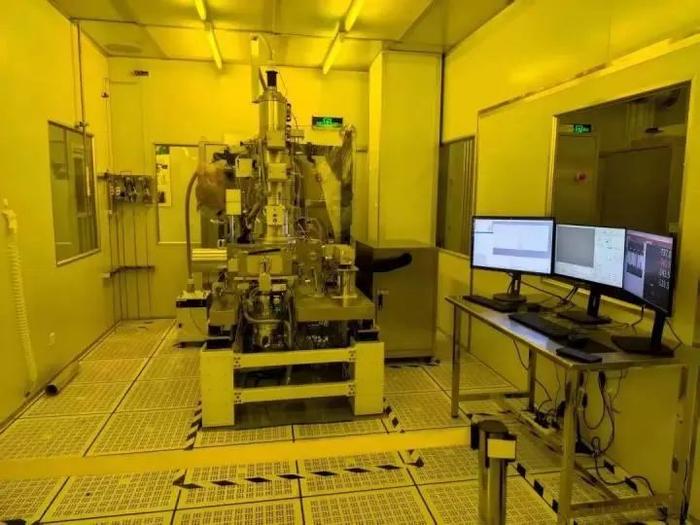
绕开EUV卡脖子,中国首台电子束光刻机诞生,精度0.6nm!
Xin Lang Cai Jing· 2025-08-15 08:23
Core Insights - The emergence of China's first commercial electron beam lithography machine marks a significant advancement in quantum chip research, allowing for greater independence from foreign technology [1][4] - The new technology enables precise circuit patterning without the need for complex optical lenses or masks, showcasing Chinese innovation in the semiconductor industry [1][4] - China's ability to produce chips at 0.6 nanometers demonstrates its competitive edge over foreign counterparts, who are still focused on 1 nanometer technology [3] Group 1: Electron Beam Lithography Machine - The introduction of the "Xizhi" electron beam lithography machine allows for flexible and precise arrangement of quantum bits, overcoming previous limitations imposed by foreign equipment [4] - This technology is positioned as a new path for China, diverging from traditional methods and focusing on quantum and new material chips [4] - The machine's development reflects the dedication and effort of numerous researchers in China, emphasizing the country's capability to achieve top-tier technology [4] Group 2: Huawei's Chip Technology - Huawei's chip stitching technology allows multiple chips to work together, significantly enhancing data processing speeds and addressing performance limitations [3] - The technology enables the combination of lower-process chips to outperform leading foreign chips, such as those from NVIDIA, demonstrating China's innovative approach to chip performance [3] - This advancement challenges the perception of foreign dominance in high-end chip performance and showcases China's growing capabilities in the semiconductor sector [3]