
光量子芯片

Search documents
上海交大教授三年磨一“线”,跑出量子计算独角兽
创业邦· 2026-03-10 03:47
Core Viewpoint - The article discusses the advancements and strategic decisions made by Turing Quantum, a company focused on photonic chips and quantum computing, highlighting its unique approach to chip manufacturing and the competitive landscape in the quantum computing industry [3][5][7]. Group 1: Company Overview - Turing Quantum was founded by Jin Xianmin, who emphasized the importance of having in-house chip manufacturing capabilities to accelerate research and development cycles [5][6][15]. - The company has successfully established a pilot production line for photonic chips in Wuxi, which began operations in September 2024, significantly reducing the chip iteration cycle from over 10 months to just 2-3 weeks [6][25][32]. Group 2: Competitive Landscape - Turing Quantum's approach mirrors the early vertical integration model seen in traditional semiconductor companies like Intel, aiming to control both design and manufacturing processes to enhance competitiveness [7][24]. - The company is positioned alongside international competitors, such as PsiQuantum, which has also recognized the value of in-house manufacturing capabilities, as evidenced by its acquisition of a wafer foundry for $1.8 billion [35] [6]. Group 3: Financial Developments - Turing Quantum has attracted significant investment, with its valuation exceeding 7 billion yuan after multiple funding rounds, including a recent A++ and B round totaling several hundred million yuan [5][28][20]. - The company has successfully navigated a challenging funding environment, maintaining focus on R&D and achieving substantial progress despite a "capital winter" in 2023 and 2024 [20][24]. Group 4: Technological Innovations - The use of thin-film lithium niobate as the core material for photonic chips has been a key decision, which has started to gain recognition as a superior choice for quantum applications [22][23]. - Turing Quantum's manufacturing process is designed to be compatible with existing semiconductor fabrication techniques, allowing for faster development and production of photonic chips [32].

我科研人员构建全球首个大规模量子通信芯片网络
Ke Ji Ri Bao· 2026-02-13 00:46
Core Insights - The development of integrated optical quantum chips is crucial for achieving large-scale quantum communication [1][2] - The research team has successfully built the world's first large-scale quantum key distribution network based on integrated optical quantum chips, named "Weiming Quantum Chip Network" [1][2] Group 1: Technology Development - The team has created two core chips: one for the server side that generates ultra-low noise coherent light sources, and another for the user side that integrates all key functions for quantum key distribution [1] - The dual-field quantum key distribution (TF-QKD) offers measurement-device-independent security and long-distance transmission capabilities, with successful point-to-point key distribution over kilometers of optical fiber [1] Group 2: Network Capabilities - The "Weiming Quantum Chip Network" can support 20 chip users for simultaneous communication, with a maximum communication distance of 370 kilometers between any two users, breaking previous technical limitations [2] - The network's total networking capability reaches 3700 kilometers, marking a significant advancement towards practical and scalable quantum communication [2] Group 3: Production and Impact - The optical quantum chips exhibit high uniformity and yield in wafer-level fabrication, indicating potential for low-cost mass production, which is critical for building large-scale quantum communication networks [2] - The achievement is recognized as a major breakthrough in the field of quantum chips and networks, with significant implications for the future of quantum communication [2]
鸣鸣很忙登陆港交所,股价大涨73%,最新市值885.75亿港元;阶跃星辰完成过50亿人民币B+轮融资丨全球投融资周报01.24-01.30
创业邦· 2026-02-01 01:24
Core Insights - The article provides an overview of the latest trends in investment and financing activities in the domestic market, highlighting key sectors and significant funding events [5]. Group 1: Investment Overview - This week, there were 48 disclosed financing events in the domestic primary market, a decrease of 39 events compared to the previous week. The total disclosed financing amount reached 8.209 billion RMB, with an average financing amount of 328 million RMB [7]. - The most active sectors in terms of financing events were artificial intelligence (15 events), intelligent manufacturing (10 events), and materials (6 events) [9]. Group 2: Sector Highlights - In the artificial intelligence sector, the total financing amount was approximately 6.309 billion RMB, with the AI model technology developer "Jieyue Xingchen" securing a B round financing of over 5 billion RMB [9][10]. - The intelligent manufacturing sector saw a total disclosed financing of 590 million RMB, with "Turing Quantum," a developer of optical quantum chips and computers, receiving several hundred million RMB in B round financing [10]. Group 3: Regional Distribution - The majority of disclosed financing events were concentrated in Guangdong (16 events), Shanghai (11 events), and Beijing (7 events) [14]. - In Guangdong, 3 events disclosed a total financing of 320 million RMB, while in Shanghai, 6 events disclosed a total of 6.16 billion RMB [17]. Group 4: Financing Stages - The distribution of financing stages showed 38 early-stage events, 9 growth-stage events, and 1 late-stage event [18]. Group 5: Major Financing Events - Significant financing events included "Jieyue Xingchen" with over 5 billion RMB in B+ round financing, "Changting Technology" with 500 million RMB in B round financing, and "Turing Quantum" with several hundred million RMB in B round financing [21]. Group 6: IPO Activity - This week, 5 companies were monitored for IPOs, with the highest market capitalization being "Mingming Hen Mang" at 88.575 billion HKD. Four of these companies had previously received VC/PE or CVC investments [36][37]. Group 7: M&A Activity - There were 9 disclosed completed M&A events this week, a decrease of 5 events compared to the previous week. Notably, "Keboda" acquired 60% of "Keboda Intelligent" for 345 million RMB [40][41].

去年GDP增长5.1%左右,无锡明确今年抢抓人工智能机遇
2 1 Shi Ji Jing Ji Bao Dao· 2026-01-22 09:32
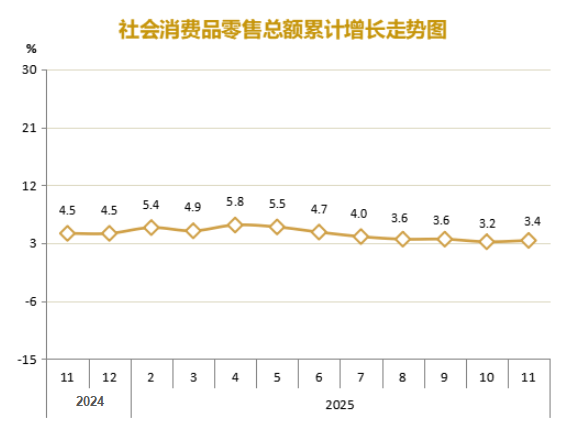
Group 1: Economic Performance - In 2025, Wuxi achieved a GDP of approximately 1.68 trillion yuan, growing by about 5.1%, surpassing the national average growth rate of 5.0% [1] - The total retail sales of consumer goods in Wuxi exceeded 440 billion yuan in 2025, but the growth rate declined from around 5% in the first half to approximately 3.5% in the second half [2] - Wuxi's total import and export value reached 829.28 billion yuan in 2025, marking a year-on-year increase of 7.6% [1] Group 2: 2026 Economic Goals - For 2026, Wuxi set a GDP growth target of 5% and a retail sales growth target of around 4% [4] - Key initiatives for 2026 include enhancing domestic demand, stabilizing major consumer sectors such as automobiles and home appliances, and expanding new business formats like duty-free economies [4] Group 3: Industrial Development - Over the past five years, Wuxi has developed five national advanced manufacturing clusters, with eight clusters generating over 200 billion yuan in revenue [5] - Wuxi aims to capitalize on artificial intelligence opportunities by collaborating with leading companies and deploying projects related to AI data centers and quantum chips [5][6] - The city plans to increase the revenue of the productive service industry by 7% and aims for the scale of future industries to reach 145 billion yuan [6] Group 4: Long-term Economic Vision - Wuxi's GDP is projected to exceed 2 trillion yuan in the next five years, with a target of achieving a per capita GDP of over $30,000 by 2024 [7] - The city aims for strategic emerging industries to account for over 46% of the industrial output of designated large-scale enterprises [7] - By the end of 2025, Wuxi is expected to have 127 listed companies, primarily in sectors such as power equipment, machinery, and automotive [7]
上交大教授放弃绿卡,回国造出中国首条量子光子芯片产线
Guan Cha Zhe Wang· 2026-01-15 08:53
Core Viewpoint - Turing Quantum has emerged as a leading player in China's quantum computing sector, recently completing a strategic financing round of several hundred million yuan, indicating strong investor confidence in its technology and industrialization capabilities [1][21]. Company Overview - Turing Quantum was founded in 2021 with the ambition to become "the Intel of the quantum era," having completed seven rounds of financing totaling over 1 billion yuan, with a current valuation of approximately 7 billion yuan [5]. - The company has established China's first photonic chip pilot line, significantly reducing its iteration cycle to two to three weeks, which is a competitive advantage compared to international peers [1][16]. Leadership and Vision - Founder Jin Xianmin transitioned from academia to entrepreneurship, emphasizing the importance of applying quantum technology to real-world products and market needs [6][9]. - Jin has outlined a three-phase development strategy for Turing Quantum: a long-term technology accumulation phase, a rapid growth phase post-establishment, and a future explosive growth phase expected in the next five to ten years [10][12][20]. Technological Advancements - Turing Quantum focuses on photonic quantum computing, which meets the criteria of programmability, integration, and scalability, offering advantages such as room-temperature operation and low energy consumption [15]. - The company has made significant progress in developing integrated photonic chips, which are crucial for the industrialization of quantum computing [15][16]. Market Applications - Turing Quantum's clients are primarily in finance, biomedicine, and artificial intelligence, where quantum computing can optimize investment portfolios, simulate drug molecules, and accelerate machine learning processes [17]. - The company is also collaborating with local governments to establish quantum computing centers, which will serve as infrastructure for regional technological innovation and industry upgrades [17]. Future Outlook - Jin anticipates that quantum computing will transition from specialized applications to broader general-purpose computing, becoming a foundational tool across various industries [20]. - Turing Quantum aims to leverage its unique position in the market to achieve a trillion yuan valuation, driven by technological advancements and market demand [20].

量电融合,国产QPU+GPU 联手破局“后摩尔时代”
半导体芯闻· 2025-12-29 10:26
Core Viewpoint - Quantum computing is transitioning from being perceived as a distant technology to an integral part of the long-term evolution of computing power, driven by the limitations of classical computing and the need for advanced computational capabilities [2][19]. Group 1: Quantum and Classical Computing Integration - The collaboration between Turing Quantum and Mohr Thread marks a significant step towards integrating quantum and classical computing, creating a hybrid computing platform that leverages the strengths of both QPU and GPU [15][22]. - Quantum Processing Units (QPU) and Graphics Processing Units (GPU) serve complementary roles, with GPUs excelling in large-scale parallel processing and QPUs handling complex NP-complete problems [3][5]. - The engineering bottleneck in quantum computing lies in error correction and control, necessitating rapid feedback and scheduling, which GPUs can effectively support [5][7]. Group 2: Technological Advancements - Turing Quantum has adopted a photonic quantum computing path, which offers advantages in supply chain control, computational scale, and system-level integration compared to other quantum technologies [9][10]. - The company has developed a large-scale, high-speed programmable photonic quantum chip, achieving over 1000 integrated photon devices and a modulation bandwidth of 110 GHz [13][14]. - The TuringQ Gen2 system represents a significant advancement, capable of solving complex problems with over 100 quantum bits and supporting multi-node deployment in standard data center environments [14][15]. Group 3: Software and Ecosystem Development - The DeepQuantum framework facilitates the integration of quantum and classical computing, providing a unified software environment for developers to build and optimize hybrid models [16][17]. - The "量擎云平台" (Quantum Cloud Platform) enables the scheduling and management of quantum computing resources alongside classical computing, making quantum power accessible for practical applications [18][20]. - Turing Quantum's business model has shown significant growth, with revenue projections indicating a clear path towards commercialization, driven by sectors such as quantum security and computational delivery [20][21].
江苏“十五五”规划建议:积极部署类脑计算、光量子芯片等创新应用技术 加快通用大模型和垂直领域大模型研发
Zheng Quan Shi Bao Wang· 2025-12-10 23:55
Core Insights - The Jiangsu Provincial Committee has proposed to advance the construction of a digital economy and society through the 15th Five-Year Plan, emphasizing the development of a national digital economy innovation development pilot zone [1] Group 1: Digital Economy Development - The plan aims to deepen the development and utilization of data resources, promoting the integration of digital and real economies [1] - It emphasizes the cultivation of leading digital enterprises and industrial clusters [1] Group 2: Technological Innovation - The initiative includes the establishment of an intelligent technology innovation system, focusing on breakthroughs in foundational technologies and hardware/software shortcomings [1] - There is a push for the deployment of innovative application technologies such as brain-like computing and optical quantum chips [1] Group 3: AI Integration - The plan promotes the "Artificial Intelligence +" initiative, integrating AI with industrial development, cultural construction, social governance, and public welfare [1] - It aims to empower various industries comprehensively and advance full-domain digital intelligence [1] Group 4: Research and Development - The construction of the Industrial Artificial Intelligence Research Institute of the Chinese Academy of Sciences is highlighted as a high-level initiative [1] - The plan supports the development of major research facilities for intelligent manufacturing and embodied intelligence technology innovation platforms [1] Group 5: Local Initiatives - The plan encourages cities like Suzhou and Nanjing to pilot "Artificial Intelligence +" urban construction [1] - Wuxi is supported in building a digital industry system centered on the Internet of Things [1]
“感知无锡”调研行 | 刘建丽:无锡“五链融合”打造集成电路产业创新范式
Xin Hua Cai Jing· 2025-11-07 13:51
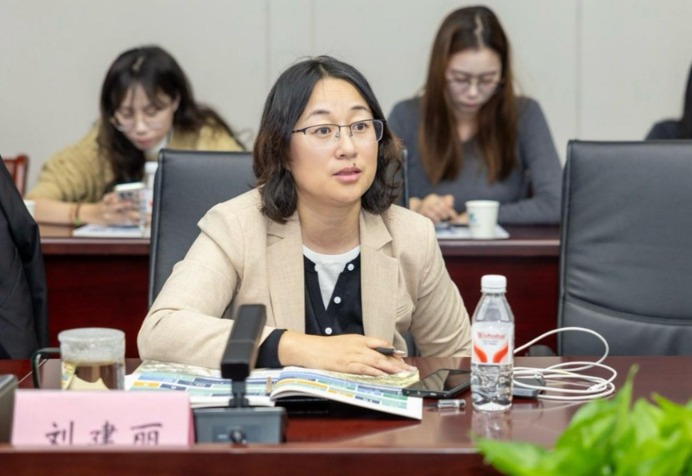
Core Viewpoint - The event "Technology Meets Industry Innovation: Dual Empowerment" highlights Wuxi's role as a national model for the integrated circuit industry, emphasizing the need for Wuxi to leverage its industrial foundation to build an integrated circuit ecosystem supported by an industrial internet and to seek pilot reforms for new research institutions, providing a "Wuxi experience" for national technological innovation [1][5]. Group 1: Wuxi's Role in Integrated Circuit Industry - Wuxi is recognized as the "Huangpu Military Academy" of China's integrated circuit industry, having trained a significant number of technical talents for the nation [3]. - The city leads the country in the "five-chain integration" model, which combines innovation, industry, finance, talent, and policy, making its experience valuable for nationwide replication [3]. Group 2: Strategic Recommendations for Wuxi - Focus on traditional industry advantages while seizing opportunities in emerging fields such as photonic quantum chips and carbon-based chips, which are crucial for China's technological leap [4]. - Innovate the ecosystem by creating an industrial internet platform that connects various segments of the integrated circuit industry, forming a "super virtual IDM" that integrates global innovation resources [4]. - Overcome institutional barriers by promoting pilot reforms in new research institutions, particularly in talent mobility, compensation systems, and evaluation frameworks, to enhance the effectiveness of regional and national innovation systems [4].
中国半导体的下一程
Tai Mei Ti A P P· 2025-11-04 11:20
Core Insights - The Chinese semiconductor industry is transitioning from a phase of rapid growth driven by policy and capital to a more complex stage focused on sustainability, strength, and true innovation [1] - The future of the industry will emphasize "strong chain and supplementary chain" strategies, marking a pivotal shift in development [1] Investment Strategy Evolution - The investment landscape is expanding from chip design to upstream areas of the supply chain, with a focus on materials, advanced packaging, and emerging technologies [2][3] - Materials are identified as a key investment area due to their long validation cycles and the potential for creating a strong competitive moat [2] - Advanced packaging is becoming increasingly important as a high-value business, especially in light of the slowing of Moore's Law [3] - Emerging fields like photonic quantum technology are seen as promising areas for growth, with China positioned to compete globally [3] Entrepreneurial Ecosystem Shift - The number of semiconductor companies in China has grown significantly, indicating a shift towards industry consolidation and mergers and acquisitions [6] - Founders are increasingly open to the idea of being acquired, recognizing that there are multiple paths to success beyond independent IPOs [6] - New entrepreneurs are more inclined to innovate rather than replicate existing products, reflecting a shift in market dynamics [6] Industry Drivers - AI is becoming a central driver of demand for new chips, particularly in data centers and IoT applications [7] - The market for GPUs is expanding rapidly, driven by the increasing investment in data center infrastructure [7] - Storage solutions are also seeing significant growth, with domestic companies improving their capabilities and increasing their market share [7] Future Outlook - The next decade will focus on "strong chain and supplementary chain" strategies, with an emphasis on core areas like computing chips and critical materials [9] - Mergers and acquisitions will play a crucial role in industry consolidation, with plans for a dedicated fund to facilitate this process [9] - Original innovation will be prioritized, with investments aimed at transforming research outcomes into commercial products [9] - AI will continue to redefine the semiconductor industry, influencing everything from data centers to smart hardware [9]
量子科技与资本赋能如何“叠加”?专家热议发展路径
Yang Guang Wang· 2025-04-30 14:24
Group 1 - Quantum technology has rapidly advanced, becoming a forefront of the new technological revolution and industrial transformation, with significant government support for future industries like quantum technology [2] - The development of quantum technology is characterized by national strategic driving, multiple technological routes, interdisciplinary collaboration, deep integration of basic research and engineering applications, and a coexistence of international competition and cooperation [2] - There is a consensus among industry participants on the necessity to accelerate the development of quantum technology, with a clear role for the capital market in supporting this growth [2] Group 2 - Companies in the quantum technology sector are seeking different types of capital at various stages, from pure financial investment in early stages to business-synergistic investors in mid-stages, ultimately aiming for IPOs [3] - There is a growing interest from investors in hard technology sectors, particularly in quantum technology, as they recognize its alignment with national strategic initiatives [3] - The funding sources for the quantum technology industry are diverse, including research funding, capital market support, and potential business revenues, indicating a rolling development model [3] Group 3 - The Shenzhen Stock Exchange is creating an industrial exchange platform to support key sectors, including quantum technology, and aims to enhance capital market services to facilitate high-quality development in frontier fields [3]