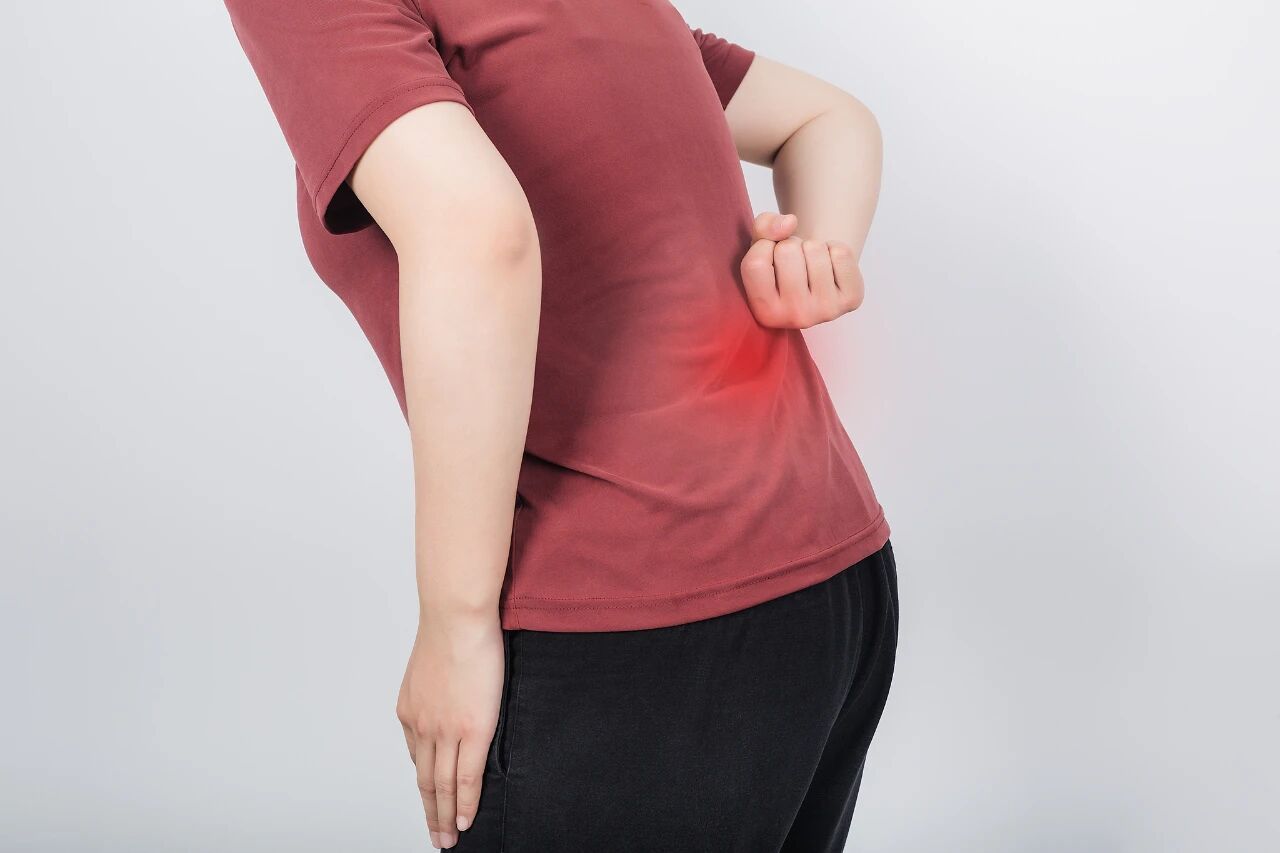
钙补充剂

Search documents
首部老年营养食品国标征求意见,千亿市场面临哪些机遇和挑战?
Bei Ke Cai Jing· 2025-10-27 07:53
Core Points - The National Food Safety Standard for Elderly Nutritional Supplements is the first of its kind in China, specifically targeting individuals aged 60 and above [1][2] - The draft includes regulations such as banning hydrogenated oils, mandatory addition of 10 essential nutrients for the elderly, and warning labels stating that the products cannot replace normal diets [1][3] - The introduction of this standard is expected to improve the currently chaotic elderly food market in China, which is projected to grow from 87.6 billion yuan in 2023 to over 143.9 billion yuan by 2028 [1][4] Industry Overview - As of the end of 2023, the population aged 60 and above in China reached approximately 296.97 million, accounting for 21.1% of the total population [4] - The elderly nutritional market is characterized by a variety of products, including nutritional supplements, functional foods, and special medical purpose formula foods, with stable demand for products like middle-aged and elderly milk powder [4][12] - The market currently lacks a unified standard, leading to labeling chaos where some products marketed for the elderly do not meet their specific nutritional needs [5][6] Regulatory Insights - The draft standard defines "elderly nutritional supplements" as special dietary foods made from dairy or soy products, with specific nutrient requirements based on the physiological characteristics and nutritional needs of the elderly [2][3] - The daily recommended intake for these supplements is capped at 50 grams, with a minimum protein content of 20% of the total product weight [2][3] - The standard aims to address issues of inconsistent nutrient ratios and improve product quality by enforcing strict ingredient and labeling requirements [3][8] Market Dynamics - The elderly nutrition market is experiencing a compound annual growth rate of 9.64%, with significant growth potential due to the increasing elderly population and their specific nutritional needs [4][10] - Major players in the market include brands like Yili, Nestlé, and Abbott, which are focusing on developing products tailored to the health needs of the elderly [12][14] - The introduction of the national standard is expected to streamline the approval process for elderly nutritional products, making it easier for legitimate companies to enter the market [9][10] Challenges and Opportunities - The market faces challenges such as a lack of specialized standards, inconsistent raw material quality, and arbitrary nutritional formulations [6][10] - There is a growing demand for high-protein, low-GI, and easy-to-swallow products to address the nutritional deficiencies and swallowing difficulties faced by the elderly [15] - The industry is shifting towards high-value products and raw materials, driven by changing consumer demands for healthier options [15]

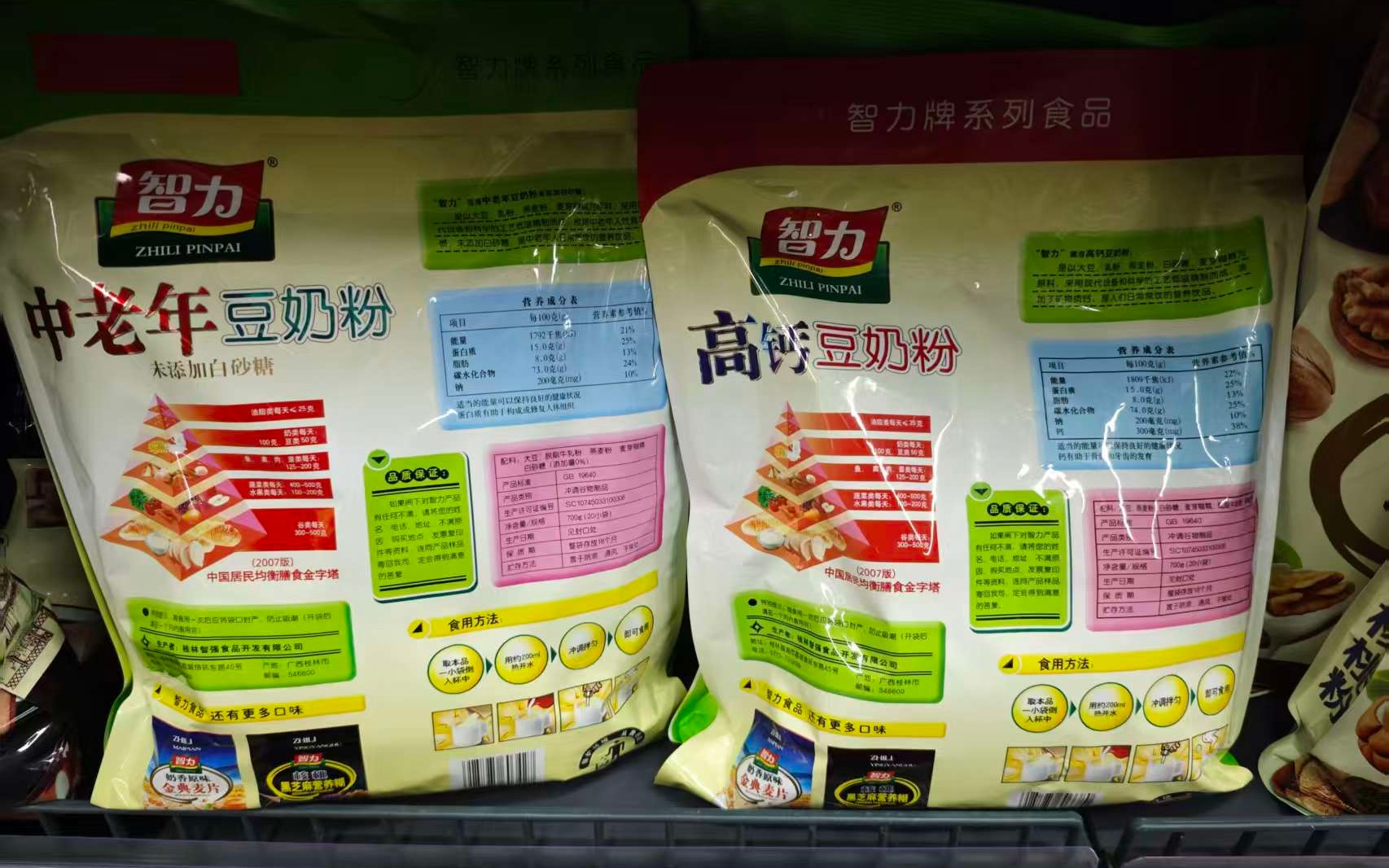
中老年营养食品怎么选?专家:“养老”需从备老开始
Bei Ke Cai Jing· 2025-10-27 07:53
Core Insights - The aging population in China is increasing, with 21.1% of the population aged 60 and above by the end of 2023, and projections indicate that over 10% will be aged 80 and above by around 2050 [1] - There is a growing demand for nutritional products tailored for the elderly, including functional foods, dietary supplements, and special medical purpose foods [1][6] Group 1: Nutritional Needs of the Elderly - The elderly population faces various nutritional deficiencies, particularly in protein, vitamins A, B, C, and D, and minerals like calcium and selenium [3][5] - Recommendations for the elderly include a balanced diet with diverse food sources, adequate protein intake (65g for men and 55g for women), and daily calcium and vitamin D intake of 800mg [3][5] - The report emphasizes the importance of maintaining a healthy weight, regular meal patterns, and adequate hydration [5] Group 2: Nutritional Challenges by Age Group - Individuals aged 45 to 64 are at high risk for diabetes and blood lipid abnormalities, necessitating lifestyle interventions [2] - Those aged 65 to 79 often experience structural imbalances in macronutrient intake, with high carbohydrate and fat consumption but insufficient protein [4] - For those aged 80 and above, there is a significant shortfall in vegetable, fruit, and dairy intake, with a notable disparity between urban and rural populations [4] Group 3: Types of Nutritional Products - The elderly nutrition market includes dietary supplements, functional foods, and special medical purpose foods, such as protein powders and calcium supplements [6] - Ordinary foods provide basic nutrition without health claims, while special medical purpose foods are designed for specific health needs and require regulatory approval [7][8] - Health supplements must be chosen carefully, with attention to their claims, ingredients, and the necessity of supplementation based on dietary intake [9]
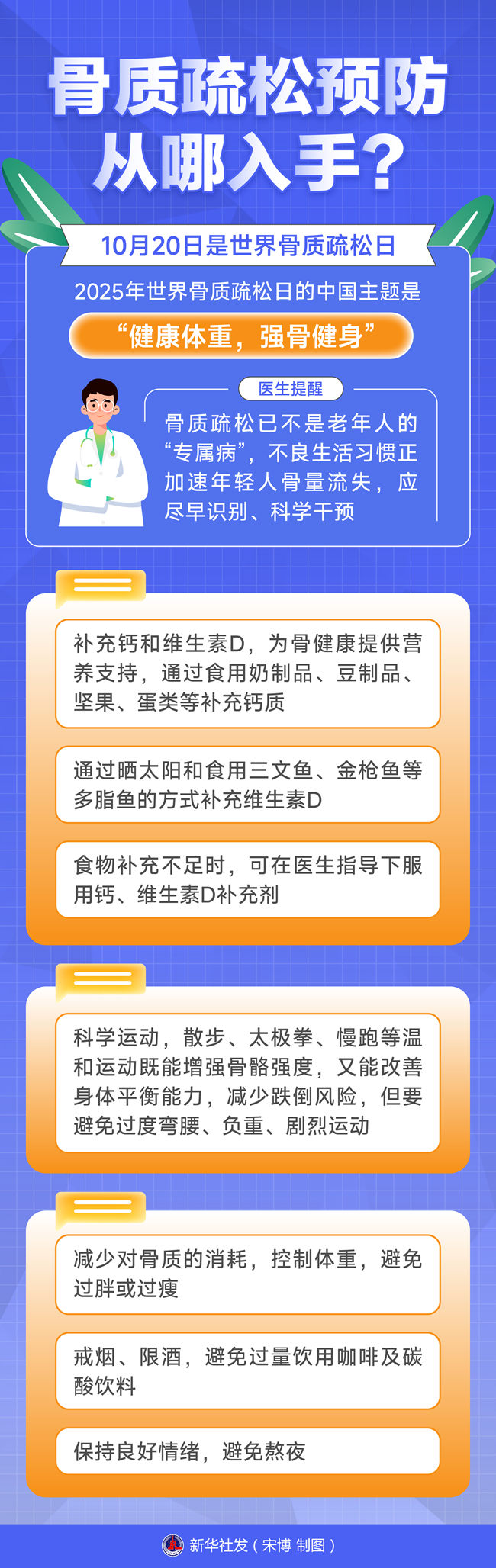
生活观察|骨质疏松不是老年人的“专属病”
Xin Hua Wang· 2025-10-20 17:00
Core Viewpoint - Osteoporosis is no longer considered a disease exclusive to the elderly, as poor lifestyle habits are accelerating bone mass loss in younger individuals, necessitating early identification and scientific intervention [1][5]. Group 1: Risk Factors - Osteoporosis is characterized by low bone mass and microstructural damage, leading to increased fragility and risk of fractures. It is divided into primary (age-related and postmenopausal) and secondary osteoporosis caused by diseases or medications [2]. - Individuals with metabolic diseases such as hyperthyroidism and diabetes, long-term use of corticosteroids, and those who smoke or consume alcohol are at higher risk for secondary osteoporosis [2]. Group 2: Symptoms - Common symptoms include unexplained fatigue, back or joint pain, and recurrent leg cramps, which are often overlooked [3]. - More direct indicators include a height loss of over 3 centimeters compared to youth, and brittle nails. Advanced symptoms may lead to decreased weight-bearing ability and spinal deformities, with the most severe risk being "fragile fractures" from minor incidents [3]. Group 3: Prevention and Management - Prevention strategies include a comprehensive treatment plan rather than just calcium supplementation. Key approaches involve: 1. Supplementing calcium and vitamin D through dietary sources like dairy, legumes, nuts, and fatty fish, or through supplements under medical guidance [7]. 2. Engaging in moderate exercise such as walking, tai chi, and jogging to enhance bone strength and balance, while avoiding excessive strain [7]. 3. Managing body weight, avoiding smoking and excessive alcohol, and maintaining a positive emotional state [7]. - The emphasis is on early bone mass accumulation, particularly around the age of 30, with recommendations for regular outdoor activities and muscle-stimulating exercises [7]. Group 4: Safety Tips - To prevent fractures, individuals are advised to follow the "three do's and three don'ts" guideline, which includes moving slowly, ensuring proper lighting, and maintaining stability in the home environment [8].
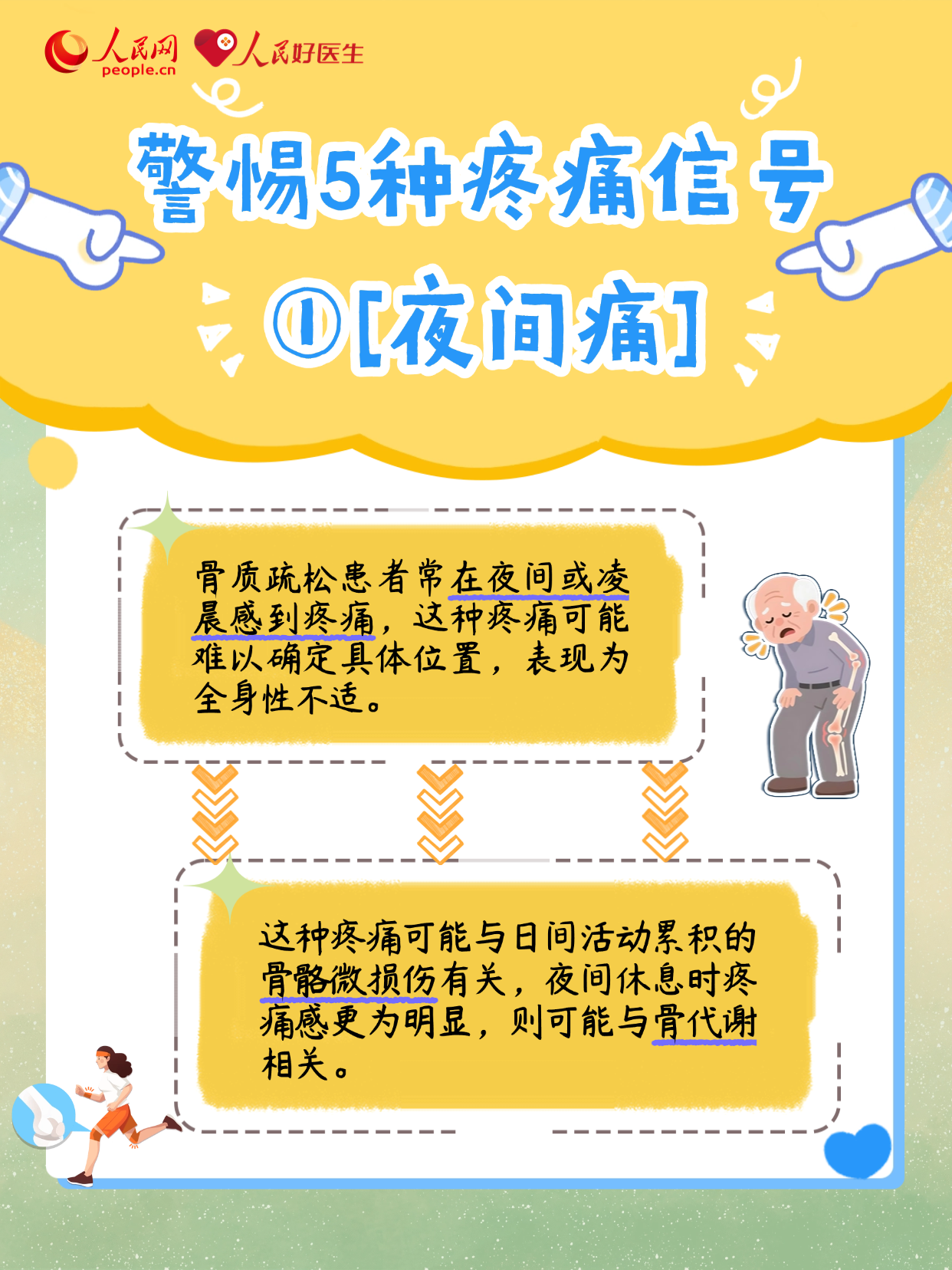
别让骨骼“悄悄”变脆!警惕5种疼痛信号!
Ren Min Wang· 2025-10-20 01:43
Core Viewpoint - Osteoporosis is often associated with fractures, height loss, and hunchback, but the pain signals related to osteoporosis are frequently overlooked and can manifest in various forms [1]. Group 1: Pain Signals - Common pain signals indicating osteoporosis risk include back pain, which worsens with activity, especially after prolonged standing or sitting [3]. - Limb pain may occur without obvious injury, particularly at night or in the morning, potentially linked to muscle fatigue, arthritis, or nerve compression [4]. - Chronic pain lasting weeks to years without clear injury or inflammation may relate to microstructural bone damage, muscle fatigue, or nerve injury [5]. - Severe osteoporosis can lead to acute pain during fractures in areas such as the vertebrae, femoral neck, and wrist, with pain intensifying during movements like turning or sitting up [6]. Group 2: Screening and Prevention - High-risk individuals are advised to undergo regular bone density tests, with the dual-energy X-ray absorptiometry (DXA) being the gold standard for diagnosis [8]. - Recommended dietary practices include adequate calcium intake, avoiding smoking and excessive alcohol, maintaining a healthy weight, and engaging in regular exercise [9][10]. - Vitamin D is crucial for calcium absorption, and outdoor activities are encouraged to enhance vitamin D synthesis, especially for populations with limited sun exposure [10][11].
身体有这5种表现,说明你的骨头已经悄悄变脆了!
Yang Shi Xin Wen· 2025-09-14 01:02
Core Insights - Osteoporosis is a silent condition where bone loss exceeds bone formation, leading to increased fracture risk, particularly hip fractures which have a mortality rate exceeding 20% within a year after occurrence [1][8] Group 1: Early Signs of Osteoporosis - **Sign 1: Unexplained Back Pain and Height Loss** Persistent back pain and noticeable height reduction (over 3 cm) can indicate vertebral compression fractures due to bone loss [3][4] - **Sign 2: Loose Teeth and Alveolar Bone Loss** Weakening of the alveolar bone can lead to loose teeth and gum recession, signaling potential systemic bone density issues [4] - **Sign 3: Fragile Bones** Fragile fractures occurring from minimal trauma, known as "fragility fractures," are a direct consequence of osteoporosis [6][8] - **Sign 4: Muscle Weakness and Cramps** Osteoporosis often accompanies sarcopenia, leading to decreased muscle strength and increased fall risk [9] - **Sign 5: Brittle Nails** Changes in nail health, such as increased brittleness, may reflect underlying calcium and collagen loss [10] Group 2: Prevention and Management Strategies - **Nutrition** Adequate calcium intake is crucial, with recommendations of 1000 mg daily for adults and 1200 mg for older adults. Foods rich in calcium include dairy products, tofu, and leafy greens [13] Vitamin D is essential for calcium absorption, with a daily requirement of 800-1000 IU [14] Sufficient protein intake is necessary for bone matrix formation, with recommendations of 1.0-1.2 g/kg body weight [15] - **Exercise** Weight-bearing exercises, such as brisk walking, are recommended to stimulate bone strength. Resistance training and balance exercises are also critical for preventing falls [17][18][20] - **Lifestyle Modifications** Avoiding smoking and excessive alcohol consumption, as well as reducing caffeine and carbonated drink intake, can help maintain bone health [24][25][26] Ensuring a safe living environment to prevent falls is also essential [27]