铂初能恩

Search documents
为奶粉召回事件道歉 雀巢集团CEO承诺透明处理并配合调查
Xi Niu Cai Jing· 2026-01-15 10:00
Group 1 - The CEO of Nestlé, Philippe Navratil, issued a public apology regarding a preventive recall due to raw material issues, promising transparency and cooperation with investigations [2] - The recall was initiated after the discovery of a quality issue with an ingredient, arachidonic acid (ARA), which tested positive for Bacillus cereus, a bacterium that can produce toxins leading to gastrointestinal symptoms [2] - The recall affects products sold in 31 countries, with reports indicating involvement in over 60 countries, including specific brands in the Chinese market [2] Group 2 - Nestlé assessed that the sales affected by the recall represent a very small percentage of the company's annual revenue, and it is not expected to have a significant impact on overall financials [3] - The company emphasized that rebuilding consumer trust will be a longer and more challenging process than financial recovery [3]

雀巢中国回应召回奶粉,在中国启动预防性自愿回收
Xi Niu Cai Jing· 2026-01-09 05:50
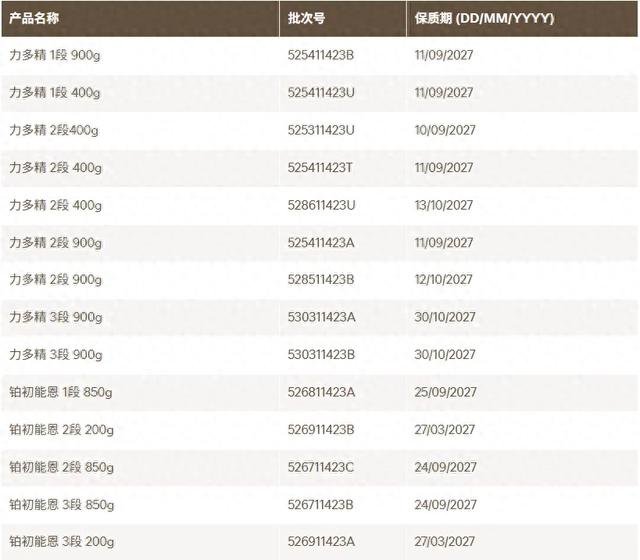
Core Viewpoint - Nestlé China announced a voluntary recall of specific batches of infant formula as a precautionary measure due to quality issues with a supplier's ingredient [2][3] Group 1: Product Recall Details - The recall involves 30 batches of infant formula from four brands: Lait D'or, Platinum Enfamil, Shuyi Enfamil, and Wyeth S-26 [2] - All other Nestlé special medical purpose infant formula products, including Super Enfamil, Qifu, and S26 Platinum, are not affected by the recall [2] - Additionally, 41 batches of imported infant formula sold through cross-border e-commerce channels in China are being recalled, including brands like Nestlé BEBA Supreme and Wyeth Qifu [2] Group 2: Quality Issue and Testing - The recall was initiated due to a "quality issue" with a specific ingredient provided by a supplier, affecting products in several European countries including France, Germany, and Italy [2] - As of the date of the announcement, there have been no reports of illness or discomfort related to the consumption of the recalled infant formula [3] - Nestlé has conducted testing on the affected products, specifically focusing on arachidonic acid (ARA) and related oil mixtures [3]
刚换帅、裁员又全球召回,雀巢中国能否破局?
阿尔法工场研究院· 2026-01-09 00:04
Core Viewpoint - Nestlé faces a significant challenge in the Chinese market due to a global food safety alert that has led to the recall of infant formula products, coinciding with strategic adjustments within the company [2][4]. Group 1: Product Recall and Safety Concerns - Nestlé announced a preventive recall of infant formula in 31 countries, including China, due to potential contamination from a supplier's raw material [2][4]. - The recall involves 30 batches of products from four brands, including "Liduo Jing" and "Platinum Neng En," while major products like "Super Q Neng En" and "Qifu" remain unaffected [4]. - The recall is a precautionary measure, with no reported consumer illnesses, but it raises concerns about consumer trust in Nestlé's products [4][15]. Group 2: Management Changes and Strategic Adjustments - A new management team for Nestlé's nutrition business in China has been established, led by CEO Xie Guoyao, who faces immediate challenges due to the recall [5][8]. - The merger of Nestlé's infant nutrition business with Wyeth aims to enhance operational efficiency, but the recall tests the new team's ability to manage crises and maintain consumer trust [5][8]. - The new CEO, Kais Marzouki, has been tasked with reversing a trend of declining sales in the Chinese market, which has seen a drop from 6.913 billion Swiss francs in 2019 to 5.558 billion Swiss francs in 2024 [10]. Group 3: Market Performance and Competitive Landscape - Nestlé's infant nutrition business has struggled, with market share dropping from approximately 13% in 2019 to 10.7% in 2022, facing competition from local brands like Feihe and Junlebao [5][7]. - The company has experienced a -6.1% organic growth rate in the Greater China region, with the infant nutrition segment being a significant contributor to this decline [7][10]. - Local brands are gaining market share by leveraging localized formulas and lower prices, further challenging Nestlé's position in the market [13]. Group 4: Global Restructuring and Cost-Cutting Measures - Nestlé plans to lay off 16,000 employees globally, aiming for annual cost savings of 1 billion Swiss francs by 2027, with a focus on replacing human labor with technology [12][14]. - The restructuring includes optimizing overlapping white-collar positions, which may provide financial flexibility for investment in technology and food safety in China [12][14]. - Despite these efforts, there are concerns about the impact of layoffs on research and development capabilities, as well as the potential for increased scrutiny from consumers regarding product safety [13][15]. Group 5: Future Outlook and Challenges - The year 2026 is seen as a critical period for Nestlé in China, as the effectiveness of the merged nutrition business and the new management strategies will be tested [15]. - The company must address the immediate fallout from the recall while also adapting to changing consumer demands and accelerating product innovation to regain market share [15].
雀巢奶粉召回范围扩大至31个国家和地区 雀巢中国召回部分特定批次婴幼儿奶粉
Xin Lang Cai Jing· 2026-01-08 04:34
Group 1 - Nestlé has expanded its recall of infant formula to 31 countries and regions, including China, due to safety concerns [2][3] - The recall involves specific batches of products such as Lactogen, Althéra, and Wyeth, with a focus on those imported from Europe and sold through cross-border e-commerce channels in China [2] - The Hong Kong Food Safety Center has also released a list of affected batches, including 21 batches of Nestlé and Wyeth products [2] Group 2 - The issue originated from a self-monitoring test at a Nestlé factory in the Netherlands, where a supplier's raw material was found to contain Bacillus cereus toxin [3] - The toxin detected in the ARA oil used in production is heat-resistant and may cause acute gastrointestinal symptoms [3] - Nestlé China has stated that there have been no reports of adverse effects related to the affected products so far [3]
雀巢奶粉原料中测出致病风险物质
第一财经· 2026-01-08 02:39
Core Viewpoint - The article discusses the recent recall of infant formula by Nestlé due to potential quality risks associated with ARA supplied by Jia Bi You Biotechnology, leading to a significant drop in Jia Bi You's stock price by over 13% [3]. Group 1: Incident Overview - Nestlé announced a global recall of certain batches of infant formula in 31 countries due to the detection of Cereulide in ARA oil, which is linked to Bacillus cereus and can cause foodborne illness [3]. - The recall affects four brands in the Chinese market, totaling 30 batches, while other Nestlé products remain unaffected [3]. Group 2: Company Impact - Jia Bi You's ARA business generated revenue of 390 million yuan in 2024, marking a 29.2% year-on-year increase, making it a core part of the company's operations [5]. - Following the incident, Jia Bi You has sent its products for testing and will release results once available [5]. Group 3: Industry Response - Other dairy companies have distanced themselves from the incident, stating they do not use the implicated ARA from Jia Bi You [5]. - The ARA market is concentrated among a few suppliers, and the situation is being closely monitored by industry analysts [5].

雀巢全球召回部分婴幼儿奶粉 原料供应商嘉必优今日开盘大跌
Di Yi Cai Jing· 2026-01-08 02:08
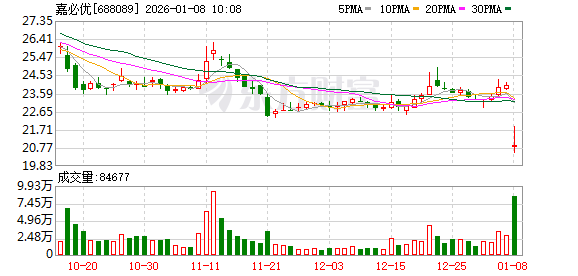
Group 1 - Jia Bi You Biotechnology (Wuhan) Co., Ltd. (stock code 688089.SH) is involved in Nestlé's global preventive recall of infant formula due to quality risks associated with ARA supplied by the company, leading to a stock price drop of over 13% [2] - Nestlé announced a recall of certain batches of infant formula in 31 countries, including China, due to the detection of Cereulide in ARA oil, which is produced by Bacillus cereus and can cause foodborne illness [2] - The affected products in China include four brands: Lidojing, Platinum Neng'en, Shuyi Neng'en, and Wyeth's Shaner Children's Growth Formula, totaling 30 batches, while other Nestlé products are not impacted by the recall [2] Group 2 - ARA (Arachidonic Acid) is a widely used Omega-6 polyunsaturated fatty acid in infant formula and dietary supplements, drawing significant consumer attention due to the incident [3] - Major ARA producers include DSM, Jia Bi You, and Runke Biotechnology, but Nestlé did not disclose the specific supplier involved in the issue [3] - Jia Bi You reported an ARA business revenue of 390 million yuan for 2024, a year-on-year increase of 29.2%, indicating that ARA is a core business for the company [3]
雀巢全球召回部分婴幼儿奶粉,原料供应商嘉必优今日开盘大跌
Di Yi Cai Jing· 2026-01-08 02:05
Core Viewpoint - The incident involving the recall of infant formula by Nestlé due to quality concerns related to ARA supplied by Jia Bi You has led to a significant drop in the company's stock price, highlighting potential risks in the supply chain and consumer confidence [1][2]. Group 1: Company Impact - Jia Bi You Biotechnology (Wuhan) Co., Ltd. has seen its stock price drop over 13% following the announcement of the recall by Nestlé [1]. - The company has stated that it has sent its products for testing and will release an announcement once the results are available [2]. - Jia Bi You's ARA business revenue for 2024 is projected to be 390 million yuan, reflecting a year-on-year growth of 29.2%, indicating that ARA is a core business for the company [2]. Group 2: Industry Context - The recall involves ARA, a widely used Omega-6 fatty acid in infant formula, which has raised consumer concerns in China [2]. - Major producers of ARA include companies like DSM, Jia Bi You, and Runke Biotechnology, with Nestlé not disclosing the specific supplier involved in the issue [2]. - Some dairy companies have distanced themselves from the incident, stating they do not use the implicated ARA raw materials, while others are monitoring the situation closely [2][3].
雀巢中国召回部分特定批次婴幼儿奶粉
Xin Lang Cai Jing· 2026-01-08 00:26
Core Viewpoint - Nestlé has expanded its recall of infant formula products to the Chinese market due to the detection of a harmful toxin in raw materials supplied by a vendor, affecting multiple product batches [1][2]. Group 1: Recall Details - The recall involves several product lines including Lactogen, Althéra, and Wyeth, with specific batches identified for voluntary recall in China [1]. - Nestlé China has stated that all other products not included in the recall are safe for consumption, including major product lines registered in the Chinese market [1]. Group 2: Cause of Recall - The issue originated from a self-monitoring test at a Nestlé factory in the Netherlands, where a toxin from a supplier's raw material was detected [2]. - The toxin, found in arachidonic acid oil, is heat-resistant and may cause acute gastrointestinal symptoms such as nausea and vomiting [2]. Group 3: Broader Implications - The contamination issue may not be limited to Nestlé, with potential implications for other infant formula brands in the market [2].
刚刚,雀巢中国回应了!需要召回4个品牌共计30批次产品
Xin Lang Cai Jing· 2026-01-07 04:53
Core Viewpoint - Nestlé is conducting a precautionary recall of infant formula products in several European countries due to quality issues with a specific raw material supplied by a global supplier, which has raised concerns about potential impacts on the Chinese market [1][3]. Group 1: Recall Details - The recall affects four brands in China: Lidojing, Platinum Enfamil, Shuyi Enfamil, and Wyeth S-26, with a total of 30 batches being recalled [1][2]. - The specific batches and their expiration dates have been listed, indicating a range of products affected [1][2]. Group 2: Company Response - Nestlé China has stated that they are taking the situation seriously and have initiated a recall of specific batches as a precautionary measure [1][3]. - As of now, Nestlé China has not received any reports of adverse effects related to the recalled products [2][3]. Group 3: Quality Issue Background - The quality issue is linked to the presence of Cereulide, a toxin that can cause acute symptoms such as nausea and vomiting, and is resistant to high temperatures [3][4]. - Arachidonic acid (ARA), the raw material in question, is essential for infant health and is widely used in infant formula and dietary supplements [4][5]. Group 4: Financial Impact - The global recall represents less than 0.5% of Nestlé's annual sales, and the financial impact on the company is expected to be minimal [5][6]. - The proactive recall reflects Nestlé's commitment to consumer safety and responsibility, which is crucial for maintaining its reputation as a leading global food and nutrition company [5][6]. Group 5: Industry Implications - The incident highlights the necessity for domestic milk powder companies, such as Feihe, to accelerate the development of self-sufficient raw material production [6]. - The recall may pose challenges for Nestlé's brand reputation, especially in the Chinese market, where the company is undergoing a significant merger of its nutrition businesses [6].