
铌合金

Search documents
中信证券:掘金商业航天产业链上游合金材料
Xin Lang Cai Jing· 2026-01-27 00:49
Core Insights - The commercial aerospace sector is experiencing a rigid expansion driven by reusable iterations and the ITU timeline, leading to a multiplier effect in material demand [3][18] - Four core materials are expected to accelerate in industrialization: high-strength high-conductivity copper alloys, niobium alloys, tantalum alloys, and high-temperature alloys [3][18] Launch and Manufacturing Trends - In 2025, global rocket launches are projected to reach 329, with commercial aerospace accounting for 214 launches, approximately 65% of the total; China is expected to have 92 launches with 50% being commercial, while the US will have 198 launches with 82% commercial [4][18] - The recent approval of 203,000 low-orbit satellites in China, combined with existing projects, brings the total to over 255,000, indicating a significant push in satellite manufacturing [4][18] Policy Developments - Various policies have been established since 2014 to encourage private investment in commercial aerospace, marking the opening of the market [5][19] - The 2024 government work report includes commercial aerospace as a new growth engine, elevating its strategic importance in national economic development [5][19] Material Applications and Demand Drivers - High-strength high-conductivity copper alloys are crucial for liquid rocket engine combustion chambers, requiring materials that can withstand temperatures of 3000-4000°C [6][20] - Niobium alloys are essential for secondary rocket vacuum nozzles and high-performance thrust chambers, with C-103 and Nb521 being key grades [10][24] - Tantalum alloys are utilized for radiation resistance and thermal management in satellite applications, with significant demand in low-orbit satellite networks [12][26] - High-temperature alloys are central to commercial aerospace engine components, with various manufacturing processes being employed [15][29] Investment Strategy - The period from 2026 to 2030 is identified as critical for the transition of core aerospace materials from technology validation to mass industrialization, with a focus on high-strength high-conductivity copper alloys, niobium/tantalum alloys, and high-temperature alloys [16][31] - Investment recommendations include focusing on integrated engine and high-temperature materials, structural components using ring forgings and metal 3D printing, and radiation-resistant/spaceborne electronics [16][31]


中信证券:掘金商业航天产业链上游新机遇 合金材料
Xin Lang Cai Jing· 2026-01-27 00:39
Core Insights - The report from CITIC Securities highlights that the commercial aerospace sector is experiencing a rigid expansion in launch and manufacturing due to the resonance between reusable iterations and the ITU constellation timeline [1] - There is a "multiplier effect" observed in the materials sector, indicating significant growth potential [1] Material Acceleration - The industry is optimistic about the accelerated industrialization of four core materials: - High-strength, high-conductivity copper alloys (used in the inner wall of liquid rocket engine thrust chambers) [1] - Niobium alloys (for secondary vacuum nozzles and high-performance thrust chambers) [1] - Tantalum alloys (noted for radiation resistance and spaceborne applications) [1] - High-temperature alloys (critical for engine hot-end components) [1]
老天爷赏饭!内蒙神山亮出战略王牌,超级核矿现身,美方坐立难安
Sou Hu Cai Jing· 2026-01-25 08:13
Core Insights - The Baiyun Obo mine in Inner Mongolia is of significant strategic importance, particularly with the recent discovery of the Zuo Lin Niobium Mine and Hong Rui Mine, which are crucial for high-end manufacturing and energy security [1][20] Group 1: Niobium Resource - Niobium is essential in modern military applications, such as in the engines of the F-35 fighter jet, where it helps withstand extreme temperatures [3] - The United States has a 100% reliance on foreign niobium resources, primarily from Brazil, highlighting the strategic importance of domestic niobium supply [6] - The newly discovered niobium mines in Baiyun Obo have a niobium oxide content of up to 52.9%, indicating a breakthrough in resource extraction and processing [6][20] Group 2: Thorium Resource - Baiyun Obo also holds the world's second-largest thorium reserves, with 22,000 tons out of a total of 28,000 tons of industrial reserves, which could transform the global energy landscape [13] - Thorium is considered a superior fuel for thorium-based molten salt reactors, offering enhanced safety and efficiency compared to traditional uranium-based nuclear power [14] - The energy produced from 1 ton of thorium is equivalent to that from 200 tons of uranium or 3.5 million tons of coal, showcasing its potential as a sustainable energy source [14] Group 3: Strategic Implications - The discoveries at Baiyun Obo represent a long-term strategic effort, dating back to the initial discovery of rare earth elements in 1934, emphasizing the importance of sustained scientific research [8][10] - The recent advancements in thorium technology, including successful experiments in Gansu, position China to achieve energy self-sufficiency, potentially altering the dynamics of global energy supply and geopolitical tensions [16][17] - Baiyun Obo's resources are not just valuable for their immediate applications but also symbolize a shift in the balance of power in global resource management and technological competition [19][20]

SpaceX概念投资逻辑与龙头
Sou Hu Cai Jing· 2025-12-08 13:39
Core Viewpoint - SpaceX is negotiating a new round of internal share sales that could raise its valuation to $800 billion, doubling its previous valuation of $400 billion from summer 2023, and surpassing OpenAI's record of $500 billion, reclaiming the title of the world's most valuable private startup [2] Investment Logic - SpaceX's valuation surge and IPO expectations: The target valuation of $800 billion by December 2025 (doubling from July 2025) and an IPO planned for the second half of 2026 will directly boost orders and performance elasticity for its supply chain companies [3] - Domestic companies achieving technological breakthroughs: Certain firms (e.g., Western Materials, Zai Sheng Technology) have mastered core technologies and entered SpaceX's global supply chain, establishing "exclusive supply" or "certification barriers," leading to high certainty in performance growth [3] - Trends in the commercial space industry: The global space economy is expected to exceed $1 trillion by 2030, with SpaceX as an industry benchmark. Its dual business model of "rocket launches + Starlink communications" will drive rapid development in the domestic commercial space industry chain (e.g., materials, terminals, structural components) [3] SpaceX Concept Leaders - Aerospace materials: A core component of rockets and satellites, with high technical barriers. Companies must undergo strict certification to enter SpaceX's supply chain, making them "hardcore leaders" in the SpaceX concept due to their exclusive supply status or technological monopoly [4] Specific Companies - Western Materials (002149): The only supplier of niobium alloy in China, crucial for rocket engine thrust chambers and satellite structures. The company has a market share exceeding 70% in the rare alloy sector and possesses full-chain technology from smelting to precision processing [5][6] - Starlink is a core business of SpaceX, expected to account for over 60% of revenue by 2025. The demand for terminal devices (e.g., ground receivers, MacroWiFi) is surging, benefiting domestic supporting enterprises that are part of the Starlink supply chain [7] - The demand for structural components (e.g., high-strength fasteners) is increasing due to SpaceX's reusable rocket technology, benefiting companies that provide key structural components [8] - Direct investment companies: These firms are directly linked to SpaceX through equity investments, allowing them to share in the growth dividends of SpaceX, becoming "capital-related leaders" [9] Business Elasticity - The value of niobium alloy per rocket is approximately 5 to 10 million yuan, with demand expected to grow as SpaceX increases its launch frequency (e.g., Starship program). By the first half of 2025, aerospace and high-end civilian products are projected to account for over 50% of the company's revenue, making aerospace business a core growth engine [10] - The company produces aerospace-grade ultra-fine glass fiber cotton, which has unique properties and is supplied to SpaceX for rockets and Starlink projects. Only three companies globally can produce such materials, breaking international monopolies through long-term certification with SpaceX [10] - The company is the exclusive supplier of ground receiver connectors for Starlink, with a single unit value of 200 yuan and a gross margin of 40-50%. Revenue from satellite business is expected to exceed 1.5 billion yuan by 2025, with SpaceX orders accounting for 70% [10] - Tongyu Communication (002792): MacroWiFi products certified by SpaceX enable direct signal interaction between ground terminals and Starlink satellites, with applications in remote communication coverage [10] - Liou Co., Ltd. (002131): Previously invested in SpaceX, maintaining a capital connection. The company attempted a $50 million investment in SpaceX and holds a stake in a domestic commercial space participant [10] Beneficiary Logic - As SpaceX's valuation skyrockets to $800 billion, the market will reprice its investment value, creating short-term opportunities for valuation reassessment [11]
难怪涡扇15全球第一,美军发现中国在太空造超级金属,六代机已用
Sou Hu Cai Jing· 2025-11-09 01:43
Core Viewpoint - The article highlights China's significant advancements in aerospace materials, particularly the development of a new metal alloy in space, which is set to revolutionize military aviation technology and challenge the U.S. dominance in this field [2][19]. Group 1: Technological Advancements - The U.S. Defense Intelligence Agency acknowledged China's development of a new alloy used in next-generation military aircraft engines, specifically the WS-15 [2]. - China's space station has facilitated over 100 microgravity metal experiments, leading to the successful production of a niobium alloy with superior properties [4][6]. - The WS-15 engine incorporates this new alloy, achieving a thrust-to-weight ratio exceeding 10.5, compared to the U.S. F119 engine's ratio of only 7 [8][10]. Group 2: Strategic Implications - The niobium alloy's properties, such as being lighter than titanium and more heat-resistant than nickel, provide a strategic advantage in military applications [6][11]. - China has secured long-term access to niobium resources, primarily located in Brazil, and has established domestic supply lines [11]. - The advancements in materials science are expected to enhance the performance of various military platforms, including hypersonic vehicles and laser weapons [25]. Group 3: Competitive Landscape - The U.S. military's reliance on expensive and toxic rhenium alloys contrasts sharply with China's innovative use of niobium, which is produced in a more favorable environment [14]. - The U.S. has faced challenges in funding and political support for similar microgravity research, leading to a stagnation in its materials science capabilities [14][23]. - China's advancements in aerospace materials are seen as a significant leap from following to leading in military aviation technology, with implications for future air combat [19][21].
突破3100℃ 中国空间站“炼丹炉”刷新世界纪录
财联社· 2025-08-24 03:23
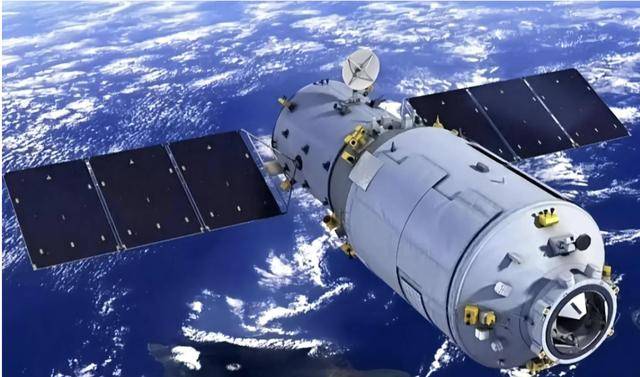
Group 1 - The core viewpoint of the article highlights the successful achievement of a new world record by a "furnace" in the Chinese space station, which heated tungsten alloy to over 3100℃ [1] - The "furnace" is actually a containerless material experiment cabinet located in the Tianhe core module of the space station, which has been operational for four years [4] - The materials being experimented on include heat-resistant alloys such as tungsten and niobium, as well as new types of materials that can withstand the extreme conditions of rocket engine flames [4]

全释硬科技丨突破3100℃ 中国空间站“炼丹炉”刷新世界纪录
Xin Lang Cai Jing· 2025-08-24 01:33
Core Viewpoint - The successful breakthrough of the containerless material experiment cabinet on the Chinese space station, achieving a new world record temperature of over 3100℃, highlights advancements in high-temperature materials research [1] Group 1: Technological Achievements - The containerless material experiment cabinet, referred to as the "space alchemy furnace," is located in the Tianhe core module of the Chinese space station [1] - Over the past four years, the experiment cabinet has been focused on developing high-performance materials such as tungsten alloys and niobium alloys, which can withstand the extreme heat generated by rocket engines [1] Group 2: Implications for Material Science - The research conducted in the space environment aims to create new types of materials that can endure high temperatures, which is crucial for advancements in aerospace technology [1]
