镍合金

Search documents
ATI(ATI) - 2025 Q4 - Earnings Call Transcript
2026-02-03 14:32
Financial Data and Key Metrics Changes - Q4 revenue was $1.2 billion, with adjusted EBITDA of $232 million, exceeding guidance [5][13] - Full year 2025 revenue totaled $4.6 billion, up 5% year-over-year, driven by 14% growth in aerospace and defense [5][13] - Adjusted EBITDA for 2025 exceeded $859 million, up 18% year-over-year, with adjusted EPS at $3.24, a 32% increase from 2024 [5][14] - Adjusted free cash flow totaled $380 million, up 53% from 2024, representing 124% of free cash flow returned to shareholders [5][14] Business Line Data and Key Metrics Changes - Aerospace and defense revenue represented 68% of total revenue in 2025, up from 62% in 2024, with jet engine sales growing 21% year-over-year [8][13] - Specialty energy business delivered 9% year-over-year growth in Q4, supported by multi-year customer commitments [8][9] - Adjusted EBITDA margins improved to 19.7% in Q4, a 900 basis point increase since 2019, with full-year margins at 18.7% [15][10] Market Data and Key Metrics Changes - Strong demand in commercial aerospace and defense markets, with significant growth in next-generation engines and aftermarket demand [6][7] - Defense revenue grew 14% year-over-year, with missile sales up 127% due to increased government spending [8][9] - Projected double-digit growth in jet engines and continued strength in defense and airframe demand [8][22] Company Strategy and Development Direction - Company focuses on differentiated products and long-term agreements to secure pricing and expand market share [9][10] - Capital discipline and operational execution are central to the strategy, with targeted investments in proprietary engine alloys [10][11] - Plans to prioritize aerospace and defense while reducing capacity in industrial, medical, and electronics sectors [22] Management's Comments on Operating Environment and Future Outlook - Management expresses confidence in customer demand and operational execution, guiding for $1 billion of adjusted EBITDA in 2026, a 16% increase year-over-year [6][17] - Anticipated continued margin expansion, with full-year consolidated margins projected to be around 20% in 2026 [23] - Management highlights the importance of long-term contracts and differentiated capabilities in supporting future growth [25] Other Important Information - Company plans to invest $220-$240 million in capital expenditures for 2026, focusing on proprietary engine alloys and high-return opportunities [10][19] - The backlog remains just under one year of revenue, with expectations for it to increase as lead times for specialized materials extend [70] Q&A Session Summary Question: Capacity expansion with customer support - Management explains that customer agreements ensure access to differentiated materials while allowing flexibility to serve other customers [29][30] Question: Airframe growth visibility - Management indicates that airframe inventories are normalizing, with modest improvements in order rates expected in the second half of 2026 [32] Question: Breakdown of defense revenue - Management provides insights into defense revenue composition, highlighting growth in naval and missile segments [37][38] Question: 2027 guidance update - Management expresses confidence in the 2027 guidance, indicating a bias towards the top end of EBITDA margin expectations [42][44] Question: Share gains opportunities - Management notes opportunities for share gains in defense, jet engines, and specialty energy, driven by customer demand and operational reliability [46][47] Question: Pricing outlook for exotic alloys - Management discusses pricing assumptions for 2026, indicating that half of the EBITDA growth is expected from pricing and mix improvements [55] Question: Headcount plans for 2026 - Management states that headcount will remain stable, with some open positions to support new capacity, leveraging the current experienced workforce [89][90] Question: Isothermal forging growth - Management confirms that isothermal forging is in high demand, with lead times extending beyond 18 months, indicating continued growth potential [92][93]

火箭链产业真实进展几何
2026-01-26 02:49
Summary of Key Points from the Conference Call Industry Overview - The conference call primarily discusses the developments in the commercial aerospace industry, specifically focusing on the Long March 12B rocket and its implications for satellite launches and the broader market dynamics in China [1][2][7]. Core Insights and Arguments - **Order Volume and Financials**: The expected order value for the Long March 12B rocket is close to 10 billion RMB, with a conservative estimate of 48 to 68 launch missions planned, primarily for the StarNet's first-generation enhancement and second-generation satellite constellation [1][2]. - **Launch Cost Structure**: The assessment of rocket costs is shifting from development costs to a per-kilogram launch service fee, with a domestic target of around 20,000 RMB per kilogram, compared to SpaceX's pricing of approximately 2,000 to 3,000 USD per kilogram [1][5]. - **Rocket Specifications**: The Long March 12B rocket is designed to have a maximum payload capacity of 17-18 tons, depending on the recovery method used. The total launch cost is calculated based on the actual weight of the satellites being launched [1][8]. - **Technical Maturity**: Although the Long March 12B has not yet flown, its engine design aligns with established solutions, and it has undergone multiple ground static fire tests, indicating a high probability of successful first flight expected around 2026 [1][6]. - **Market Demand**: There is a pressing need to rapidly increase launch capacity to meet the demand for satellite launches, with the Long March 12B's capabilities aligning well with this requirement [7]. Additional Important Content - **Technological Challenges**: The development of liquid rocket engines involves high technical barriers, including design complexity and precision manufacturing, with each static fire test costing between 800,000 to 1 million RMB [3][10]. - **Future Launch Plans**: Upcoming significant launches include the second flight of the Long March 12A and the Long March 12甲, which are expected to occur after the New Year, marking historical milestones [9]. - **Engine Development**: The Long March 12B's first stage uses a 110-ton thrust engine, with the total engine value estimated at around 50 million RMB. The development of liquid engines is primarily handled by state-owned enterprises, indicating a high entry barrier for new competitors [10][18]. - **Cost Management Strategies**: To achieve profitability, commercial rocket companies must reduce launch costs below 20,000 RMB per kilogram, which can be accomplished through either lowering manufacturing costs or achieving reusability of rockets [18][19]. This summary encapsulates the critical aspects of the conference call, highlighting the financial, technical, and market dynamics surrounding the Long March 12B rocket and the commercial aerospace sector in China.
华联期货镍年报:供应不减,价格重构
Hua Lian Qi Huo· 2025-12-15 11:03
Report Summary 1. Report Industry Investment Rating - Not provided in the content 2. Core Viewpoints of the Report - In 2025, the nickel price showed a weak and volatile trend with a continuously downward - shifting center of gravity. The oversupply fundamentals suppressed the price throughout the year, and the year - end price was in the lowest range of the past five years. In 2026, the main contract of Shanghai nickel is expected to fluctuate at the bottom, and policy changes will affect the bottom - probing rhythm [8][44]. - The supply pattern has changed from tight to loose. Indonesia has become the global nickel supply center. In 2025, the approved nickel ore mining quota in Indonesia reached 364 million wet tons, and the actual supply could reach 300 million wet tons, exceeding the domestic demand of 260 million wet tons. The supply of nickel ore and intermediates increased significantly, and the overall supply continued to expand [8]. - The demand in 2025 was characterized by "dominated by existing volume and limited in incremental volume". The demand in the stainless - steel, nickel - alloy, and battery fields had different performance, but overall growth was limited [8]. - In 2025, the LME nickel inventory, SHFE inventory, and refined nickel social inventory were all at historical highs [8]. 3. Summary by Relevant Catalog 3.1 Annual Viewpoint and Strategy - **Market Review**: In 2025, the nickel price was weak and volatile. It rose in Q1 due to supply disruptions, dropped sharply in April because of tariff shocks, and declined rapidly in the second half of the year as the supply increased. It maintained a low - level shock after a small recovery at the end of the year [8][44]. - **Supply**: The supply of nickel ore and intermediates increased significantly. The domestic refined nickel production from January to November 2025 was 369,000 tons, a year - on - year increase of 21.8%. The nickel pig iron production in Indonesia increased significantly, and the overall supply continued to expand [8]. - **Demand**: From January to October 2025, the domestic stainless - steel production was about 32 million tons, corresponding to a nickel consumption of about 1.95 million tons of metal. The nickel demand in the nickel - alloy field increased steadily, and the domestic battery - related nickel demand was about 430,000 tons of metal [8]. - **Inventory**: The LME nickel inventory, SHFE inventory, and refined nickel social inventory were at historical highs in 2025 [8]. - **Outlook**: In 2026, the main contract of Shanghai nickel is expected to fluctuate at the bottom, and policy changes will affect the bottom - probing rhythm. - **Strategy**: Seize the rhythm and conduct sell - hedging when the price is high. Later, pay attention to changes in the mine end, stainless - steel production, and Indonesian nickel exports [8]. 3.2 Macroeconomic Situation - **GDP**: China's GDP growth target in 2025 was about 5%, and it was expected to be around 4.6% in Q4. The annualized quarterly growth rate of the US GDP in Q3 2025 was 3.9%, and the market expected the full - year growth rate to be between 2.0% and 2.6% [13]. - **PMI**: In November 2025, China's manufacturing PMI was 49.2%, remaining below the boom - bust line for eight consecutive months with a slight month - on - month increase. The US ISM manufacturing PMI was 48.6, remaining in the contraction range for 14 consecutive months [17]. - **Monetary Policy**: After the 1 - year and over - 5 - year LPR were cut by 10 basis points on May 20, 2025, they remained unchanged for six consecutive months. The Federal Reserve cut interest rates by 25 basis points on December 10, 2025, lowering the federal funds rate target range to 3.50%–3.75%. China will continue to implement a moderately loose monetary policy [21]. 3.3 Industrial Policy - **RKAB Policy**: In 2026, the RKAB approval cycle in Indonesia will be adjusted from three years to one year. The new policy aims to deal with the impact of falling mineral and coal prices on national fiscal revenue. It may support the price and even drive it upward [26]. 3.4 Technical Analysis - In 2025, the nickel price maintained a weak and volatile trend [29][34]. 3.5 Industrial Chain and Spot - Futures Market - **Industrial Chain Structure**: The nickel industry chain includes nickel ore, wet - process intermediates, nickel pig iron, high - grade nickel matte, nickel sulfate, electrolytic nickel, and downstream products such as stainless steel, batteries, electroplating, and alloys [38]. - **Spot - Futures Market**: In 2025, the nickel price was weak and volatile, and the price spread maintained a low - level shock and was relatively stable overall [44]. 3.6 Supply Side and Intermediates - **Nickel Ore**: From January to October 2025, China's nickel ore imports reached 4.63839 million tons, a year - on - year increase of 14.53%. The monthly imports fluctuated significantly [52]. - **Nickel Pig Iron**: In 2025, Indonesia's nickel pig iron production increased significantly, while China's production declined. From January to October 2025, China's nickel pig iron imports were 9.2578 million tons, a year - on - year increase of 30.4% [56][61]. - **Refined Nickel**: From January to November 2025, the domestic refined nickel production was 369,000 tons, a year - on - year increase of 21.8%. From January to October, the apparent consumption was 323,000 tons, a year - on - year increase of 40% [65]. - **Nickel Imports and Exports**: From January to October 2025, China's nickel imports were 2.1 million tons, a year - on - year increase of 27%, and exports were 175,600 tons, a year - on - year increase of 52% [70]. - **Wet - Process Intermediates**: From January to October 2025, Indonesia's MHP production was 390,100 tons of nickel metal, a year - on - year increase of 50.6% [77]. - **High - Grade Nickel Matte**: From January to October 2025, Indonesia's high - grade nickel matte production was 195,300 tons of nickel metal, a year - on - year decrease of 11.8% due to profit difficulties [82]. - **Nickel Sulfate**: From January to October 2025, China's nickel sulfate production was about 293,600 tons of metal, a year - on - year decrease of about 3.8%, and imports were 211,700 tons, a year - on - year increase of 16.75% [87]. 3.7 Demand Side - **Stainless - Steel Demand**: From January to October 2025, the domestic stainless - steel production was 33.2428 million tons, a year - on - year increase of 5.5%. The apparent consumption was 29.3666 million tons, a year - on - year increase of 4.7%. Imports decreased, while exports increased slightly [94][99]. - **Cathode Material Demand**: From January to November 2025, China's ternary cathode material production was 843,900 tons, a year - on - year increase of about 35.5%. The production of new - energy vehicles in the first 10 months of 2025 was 13.015 million, a year - on - year increase of 33.1% [104]. 3.8 Inventory Side - As of December 2025, the refined nickel social inventory, LME inventory, and SHFE inventory were all at historical highs [115][119].
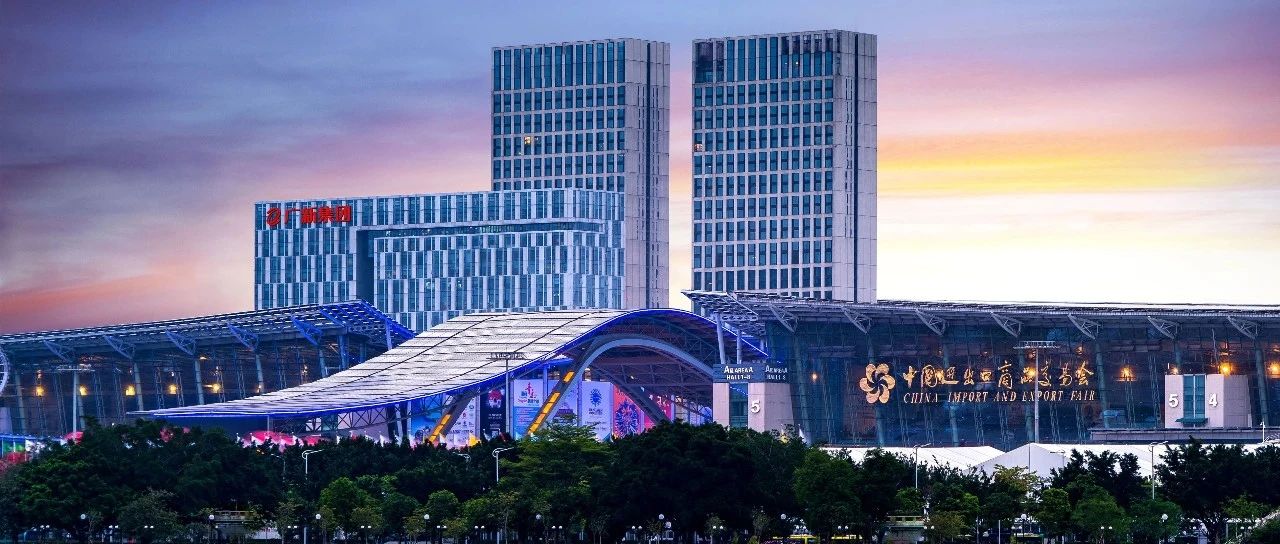
广新集团:构建“4+4+2”产业布局,加快建设世界一流企业
财富FORTUNE· 2025-07-29 08:10
Core Viewpoint - Guangxin Group has been recognized in the 2025 Fortune Global 500 list, emphasizing its commitment to high-quality development and its role as a leader in the Guangdong-Hong Kong-Macao Greater Bay Area's new industries [1] Group 1: Business Strategy and Industry Focus - Guangxin Group focuses on three main sectors: new energy and materials, biotechnology and food health, and digital services and supply chain services, aiming to enhance its core advantages in manufacturing, state-owned capital investment, and international operations [1][3] - The company has established a "4+4+2" industrial layout, promoting four pillar industries and four emerging industries, while also fostering two future industries to optimize its industrial structure [4][5] Group 2: Nickel and Aluminum Industry Development - Guangxin Group has created a billion-level multinational nickel alloy industry chain, with significant projects in Indonesia contributing nearly 50 billion yuan in revenue last year [5] - The aluminum alloy sector has seen substantial growth, with the company’s subsidiary achieving a leading market share in China and expanding its production capabilities internationally [6] Group 3: Biotechnology and Food Health - The biotechnology and food health sector is becoming a key growth area for Guangxin Group, with its subsidiary Star Lake Technology ranking among the top three global players in the bio-fermentation industry after a major asset restructuring [7] Group 4: Technological Innovation and Manufacturing Upgrade - Guangxin Group emphasizes technological innovation as a driver for modern industrial development, with a focus on talent, projects, and funding to enhance its innovation system [11][12] - The company is advancing its manufacturing capabilities through smart and green technologies, establishing smart factories and promoting industrial internet platforms [12] Group 5: Global Expansion and International Operations - Guangxin Group is actively pursuing international expansion, with overseas revenue accounting for 40% of its total, particularly in ASEAN countries [16] - The company supports Chinese enterprises in entering international markets, significantly increasing its overseas business [17] Group 6: Social Responsibility and Sustainability - Guangxin Group is committed to social responsibility and has implemented various initiatives to support local economies and promote sustainable practices, including significant investments in agriculture and green projects [19][20] - The company has set ambitious carbon reduction goals and has been recognized for its green manufacturing practices [20] Group 7: Future Outlook - Standing at a new starting point after being listed in the Fortune Global 500, Guangxin Group aims to continue its focus on industrial development and contribute to the modernization of the industrial system [21]