阿耳忒弥斯计划

Search documents
美国调整登月计划 载人登月任务推迟至2028年
Xin Hua She· 2026-02-28 03:03
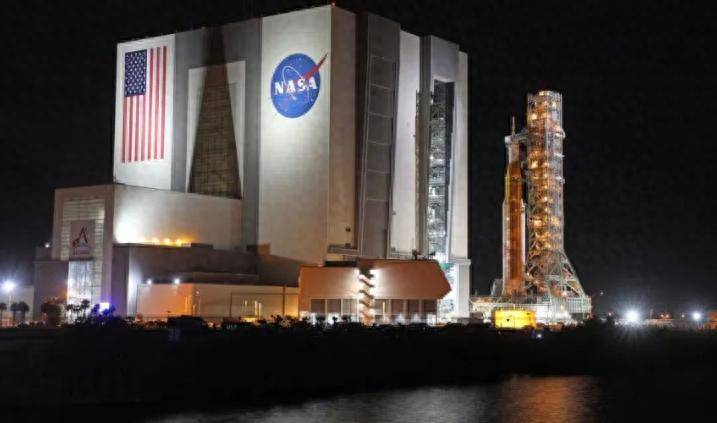
Core Viewpoint - NASA has announced a delay in the Artemis lunar program, pushing the manned lunar landing originally scheduled for 2027 to 2028, with the Artemis 3 mission now focusing on system and operational capability testing in low Earth orbit instead of landing on the Moon [1]. Group 1: Artemis Program Adjustments - The Artemis 3 mission will now attempt to dock with commercial lunar landers being developed by SpaceX and Blue Origin, and will conduct in-orbit tests of life support, communication, and propulsion systems, as well as testing new generation spacesuits [1]. - The Artemis 4 mission is now planned for 2028, which will be the new timeline for the lunar landing [1]. Group 2: Technical Issues and Delays - Prior to the announcement, the Artemis 2 manned lunar flyby mission faced technical issues during two recent integrated exercises, leading to repeated delays in the launch schedule [2]. - NASA has withdrawn the heavy rocket "Space Launch System" and the "Orion" spacecraft from the launch pad for repairs, addressing issues related to the helium supply in the upper stage and conducting comprehensive safety checks [2]. Group 3: Future Launch Plans - The Artemis 2 mission is currently tentatively scheduled for a launch window in April, but the final launch date will depend on data analysis and repair progress [3]. - The Artemis program was announced in 2019, with the Artemis 1 unmanned lunar flyby test completed in November 2022, but subsequent mission timelines have been adjusted multiple times [3].
前NASA局长急死:赶紧推翻重来,中国才是对的
Guan Cha Zhe Wang· 2025-12-11 04:06
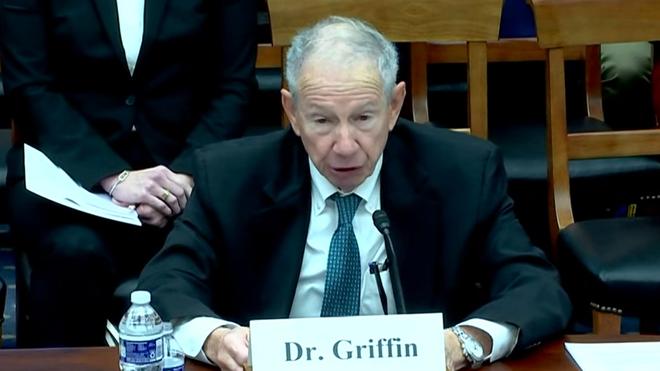
Core Viewpoint - The former NASA administrator Michael Griffin expressed concerns about the feasibility of the U.S. manned lunar return program, suggesting that the U.S. is falling behind China, which is on a more effective path for lunar exploration [1][2][8]. Group 1: U.S. Lunar Program Challenges - The Artemis program, announced in 2019, has faced significant delays due to complex design and unverified technologies, with the Artemis 2 and Artemis 3 missions postponed multiple times [4][5]. - Griffin criticized the current Artemis 3 mission plan, stating it relies on untested technologies and complex operations that could jeopardize mission reliability [7][8]. - He highlighted that the U.S. has wasted time and may not achieve manned lunar landing before China, emphasizing the need for a simplified approach similar to China's strategy [1][2][9]. Group 2: Comparison with China's Lunar Program - China aims to land humans on the moon by 2030, with progress reported as smooth and on track, contrasting with the U.S. delays [2][4]. - Griffin noted that China's lunar mission plan is simpler and more aligned with the successful Apollo program, utilizing a dual-rocket launch system that has proven technologies [8][9]. - The Chinese government’s ability to execute long-term plans consistently provides them with advantages in project continuity and stability, which Griffin believes the U.S. political system struggles to match [9].

屡次推迟的登月计划可能提前 NASA哪来的自信?
Xin Hua Wang· 2025-09-24 23:28
Core Points - NASA announced that the first crewed lunar flyby mission, Artemis 2, is scheduled for April 2026, with a possibility of an earlier launch in February 2026, marking a shift from previous delays [1][3] - Safety remains the top priority for NASA as they aim to meet the new timeline for the Artemis 2 mission [1] - The Artemis program, initiated in 2019, aims to return humans to the Moon, with Artemis 1 having already completed an unmanned test flight [3] Summary by Sections Mission Timeline - The original plan for Artemis 2 was to complete it by 2024, followed by Artemis 3 in late 2025. However, both missions have faced multiple delays, with the latest schedule pushing Artemis 2 to April 2026 and Artemis 3 to mid-2027 [3][4] - NASA's adjustments to the timeline were influenced by technical issues, particularly concerning the Orion spacecraft's heat shield and life support systems [4] Technical Challenges - The Artemis program has encountered significant technical difficulties, with at least eight out of thirteen critical items falling behind schedule [4] - The Orion spacecraft, developed in collaboration with Lockheed Martin, faces design flaws, while the Space Launch System (SLS) rocket, developed with Boeing, has been criticized for delays and high costs [4] - The Starship, developed by SpaceX, is expected to replace the SLS in the future due to its ongoing development challenges [4][7] Space Suit Development - The development of new space suits for astronauts is another hurdle, as the current suits are outdated and do not meet the requirements for the Artemis 3 mission [7] - The company tasked with creating the new suits, Axiom Space, has indicated that a redesign is necessary to incorporate emergency life support systems [7] Future Prospects - Experts suggest that even if the Artemis 2 mission is successful, the timeline for Artemis 3 may still be optimistic, given the current state of the Starship and its readiness for lunar missions [7]
美国NASA惊现离职潮
Sou Hu Cai Jing· 2025-07-29 09:14
Core Viewpoint - NASA is experiencing a significant wave of resignations, with over 4,000 employees, accounting for more than 20% of its workforce, submitting their resignation applications, reflecting deep concerns about the future of U.S. space strategy and the impact of budget cuts under the Trump administration [1][3][4]. Group 1: Resignation Wave - The resignation wave at NASA is attributed to dissatisfaction with the Trump administration's budget cuts and political instability, leading to a loss of confidence among employees [3][6]. - The departure of approximately 4,000 employees raises concerns about the operational capacity of NASA and its ability to fulfill ambitious projects like the Artemis lunar program [1][4]. Group 2: Budget Cuts and Policy Impact - The Trump administration's significant cuts to NASA's budget have disrupted normal research operations and jeopardized the U.S.'s leadership in international space exploration [3][4]. - The lack of a permanent NASA administrator since May, following the withdrawal of Jared Isaacman’s nomination, has contributed to uncertainty and dissatisfaction within the agency [3][6]. Group 3: Competitive Landscape - The U.S. space exploration sector faces increasing competition from other nations, particularly China and Russia, as well as private companies like SpaceX, which are rapidly advancing their own space programs [4][6]. - The shift towards a "private enterprise + government" model for space exploration under the Trump administration may undermine NASA's traditional role and create further uncertainty in U.S. space strategy [4][8]. Group 4: Structural Crisis - The current situation at NASA reflects a deeper structural crisis in U.S. space exploration, characterized by financial strain, management chaos, and a significant loss of talent [6][8]. - The ongoing political turmoil and lack of stable leadership may hinder NASA's ability to innovate and collaborate internationally, threatening its future in the global space race [8].