阿里妈妈万相台AI无界

Search documents
从圆到数智流体:阿里妈妈AI时代下的品牌语言进化
Sou Hu Cai Jing· 2026-02-15 03:13
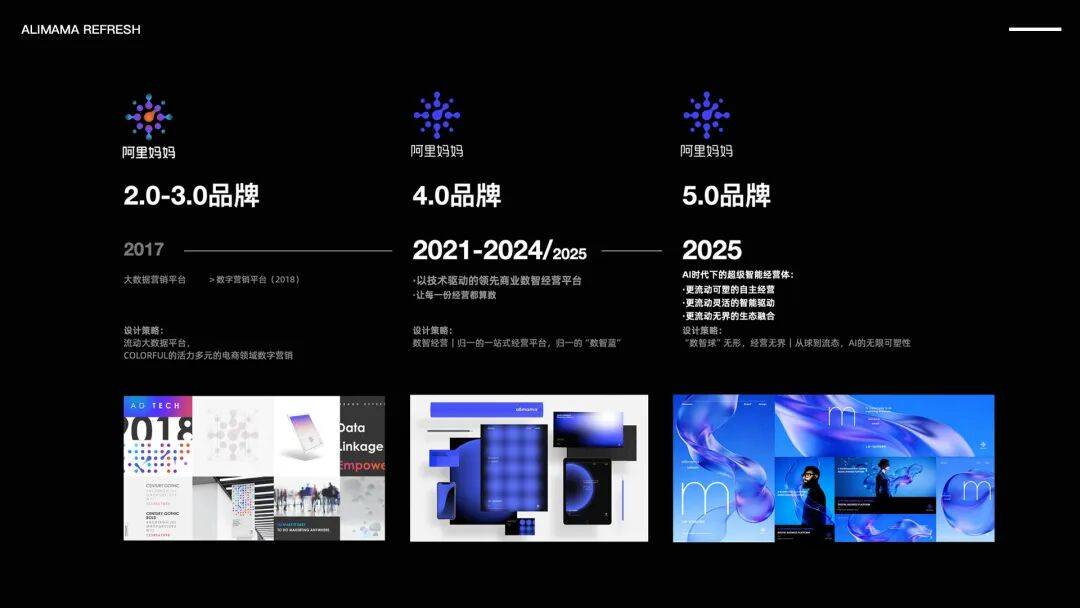
伴随阿里妈妈不断拓展电商生态边界,生成式AI广泛重构各领域,经营走向新阶段—生成式经营。 在2025年9月,阿里妈妈年度峰会发布全新的超级经营智能体,万相台AI无界重磅升级,发布基于全新视觉语言的万相台AI无界升级片,这是我们在AI电 商时代,给到商家经营的"新"答案。 这是一个"更聪明、更全能、更可靠"的超级经营智能体,也意味着品牌即将迎来更年轻、更活力、流动开放的品牌面貌。 阿里妈妈万相台AI无界升级片 阿里妈妈品牌演绎片 回顾上一阶段(2021年),上一轮升级聚焦"数智化"概念,以"圆·点"图形和"数智蓝"确立清晰、专业、可识别的品牌形象,回应了营销数字化转型的需 求。 随着AI 技术全面融入阿里妈妈产品体系,全域流量可运营、全站推流量撬动力变大、经营多目标场景、AI经营全链路提效、AIGC创意生成在营销领域的 全面渗透等;营销进入"智能共创"时代,强调自由响应、聪明个性化,灵动创造。 品牌需从"规则有序"走向"有机生长",无固定边界、可聚合可分散、随数据流动而变形;体现 AI 的流动性、演化性与创造力。 保留"数智蓝"作为主色,但引入渐变透明度、光效层次、动态色温:蓝不再只是"科技冷色",而是带有温度 ...

双11的招真的用完了?
半佛仙人· 2025-09-15 04:45
Core Viewpoint - Alibaba's strategic approach in the competitive landscape is characterized by timing and resource allocation, aiming to create a comprehensive consumption platform that integrates food delivery, e-commerce, and membership services, ultimately reshaping consumer behavior and preferences [3][4][6]. Group 1: Alibaba's Strategy - Alibaba's recent performance in the market is likened to a well-timed boxing match, where it waits for competitors to exhaust their resources before entering the fray [3]. - The goal is not merely to compete in the food delivery sector but to establish a holistic consumption platform that encourages consumers to think of Alibaba as their primary shopping destination [4][6]. - The integration of various services aims to create a seamless shopping experience, making Alibaba the go-to platform for all consumer needs [3][4]. Group 2: Opportunities for Merchants - The transition to a comprehensive consumption platform presents significant opportunities for merchants to capture new business [6]. - By analyzing consumer behavior across different services, Alibaba can provide more accurate recommendations, enhancing the shopping experience and driving sales for merchants [7][8]. - The collaboration between online and offline channels, as demonstrated by brands like Decathlon, showcases the potential for increased sales through integrated service offerings [8][10]. Group 3: Consumer Behavior Transformation - Alibaba's strategy aims to redefine consumer purchasing habits, encouraging them to associate shopping with the Alibaba platform [6][10]. - The concept of "high frequency driving low frequency" illustrates how frequent interactions with the platform can lead to increased consumer engagement and sales [8][10]. - The growth of consumer touchpoints through various services allows Alibaba to better understand and cater to individual consumer preferences [10][11]. Group 4: Technological Advancements - The implementation of AI technologies is crucial for Alibaba to enhance its advertising efficiency and consumer targeting capabilities [16][20]. - The upgraded AI tools, such as the "Super Operating Intelligence," enable precise consumer targeting, significantly improving advertising conversion rates and return on investment [20][22]. - The ability to quickly adapt to consumer preferences and market trends is emphasized as essential for maintaining competitive advantage [14][16].


双11红利在哪里?阿里妈妈将增长锚定全场景经营
3 6 Ke· 2025-09-12 13:33
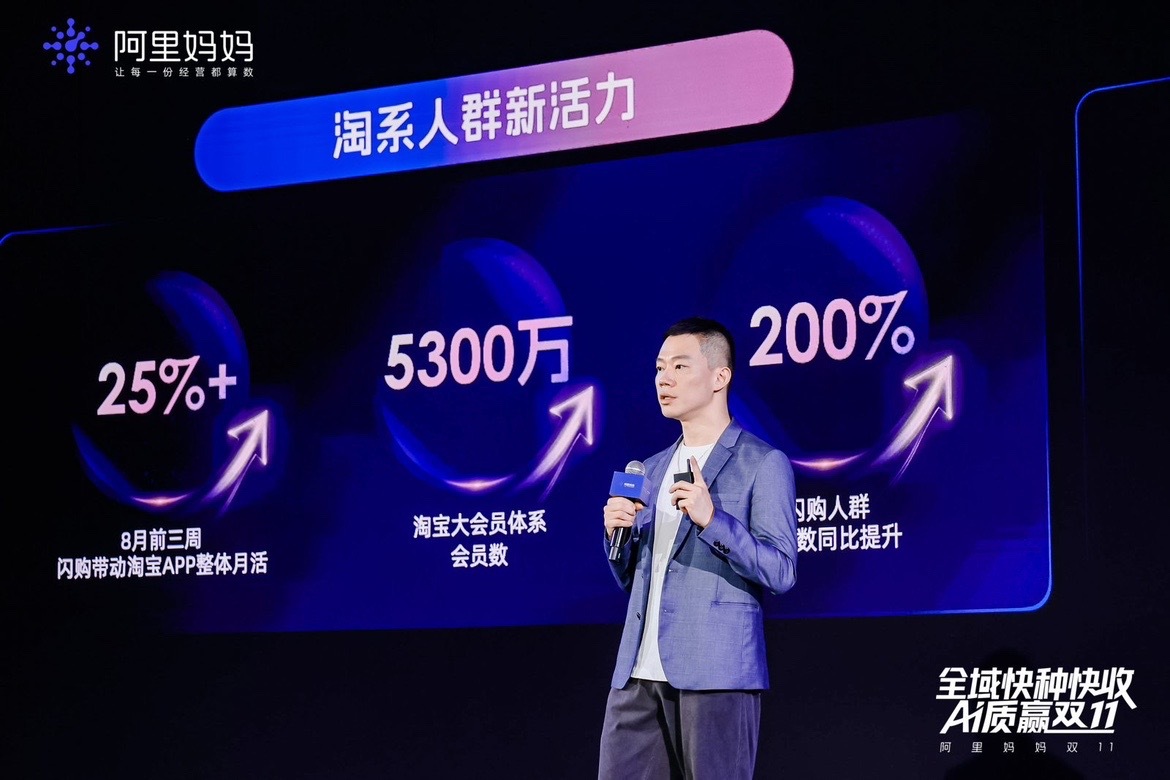
Core Insights - The rise of instant retail has opened new avenues for the e-commerce industry, with Alibaba integrating Ele.me and Fliggy into its Chinese e-commerce group to create a comprehensive ecosystem covering various consumer needs [1][3] - Instant retail is transforming consumer behavior, leading to impulsive purchases across multiple categories, indicating the emergence of a new incremental market [1][4] Group 1: Market Dynamics - Instant retail is not merely an extension of food delivery but a new business entry point, with Taobao Flash Sales driving significant sales across various categories [3][4] - In July, Taobao Flash Sales helped 66 brands achieve over 10 million in monthly sales, while 395 brands surpassed 1 million, showcasing a restructured flow of traffic in the e-commerce ecosystem [3][4] - The competition landscape has shifted from linear to a more complex, cross-category and cross-scenario rivalry, necessitating a deeper understanding of consumer needs [5][19] Group 2: Consumer Behavior - Consumers are increasingly seeking a combination of affordability and speed, prompting merchants to optimize their online and offline operations [4][19] - High-frequency consumption scenarios are paving the way for low-frequency products, allowing brands to capture new customers who may not have been targeted previously [4][5] Group 3: Technological Integration - The integration of AI is crucial for managing the complexities of modern retail, enabling merchants to optimize their operations and improve decision-making [9][10] - AI has demonstrated significant improvements in conversion rates and return on investment (ROI), with some brands reporting an 80% increase in conversion rates and a 32% growth in ROI [10][11] Group 4: Brand Positioning - Brands must focus on building long-term impressions through repeated consumer interactions, as each touchpoint contributes to brand recognition and loyalty [13][15] - The Uni Desk platform allows brands to manage advertising across various channels, enhancing the efficiency of brand exposure and consumer engagement [15][16] Group 5: Future Outlook - The future of e-commerce will revolve around embracing new traffic sources, rhythms, and technologies, as indicated by the evolving consumer purchasing patterns [17][19] - The shift from traditional promotional strategies to a more cyclical approach will define competitive success, emphasizing the importance of adapting to consumer behavior [19][20]