韩束红蛮腰礼盒

Search documents
央视曝光韩束涉嫌违法添加,上美股份创始人吕义雄的百亿目标遇阻
Xi Niu Cai Jing· 2026-01-13 05:41
Group 1 - The core issue revolves around the controversy regarding Han Shu's face masks containing the banned ingredient Epidermal Growth Factor (EGF), leading to a significant trust crisis for the brand and its parent company, Up Beauty Co. [2][3] - Han Shu's response included presenting testing reports claiming no EGF was added, but discrepancies in test results from different third-party organizations raise questions about the legitimacy of the findings [4][9] - The investigation highlighted that the cosmetic industry may have "AB formula" practices, where different formulations are used for testing and actual production, contributing to the confusion [4][10] Group 2 - The pricing strategy of Han Shu has come under scrutiny, with reports indicating that a product priced at 399 yuan may only cost around 26 yuan to produce, raising concerns about inflated pricing and marketing over substance [10][12] - Han Shu's heavy reliance on marketing, with significant sales expenses amounting to 23.37 billion yuan in the first half of 2025, contrasts sharply with its low research and development expenditure of only 1.03 billion yuan [11][12] - Up Beauty Co. is heavily dependent on Han Shu, which accounted for 81.4% of the company's total revenue in the first half of 2025, indicating a lack of diversification in its brand portfolio [12][13] Group 3 - The company has attempted to revitalize its other brands, such as One Leaf, but faces challenges due to market saturation and lack of unique competitive advantages [13][14] - The ongoing controversy and reliance on a single brand may hinder Up Beauty Co.'s long-term stability and growth, especially in a highly competitive beauty market [14]

纺织品和服装行业研究:李宁龙店快闪店加速落地;美妆品牌线下经营分化
SINOLINK SECURITIES· 2026-01-11 09:09
Investment Rating - The report does not explicitly state an investment rating for the industry or specific companies. Core Insights - Li Ning is accelerating the rollout of its "Dragon Store" pop-up shops, with the first opening in Beijing on December 14, 2025, and plans for additional locations in major cities [1][11] - Natural Hall has become the top brand in the cosmetics collection store category for the first ten months of 2025, indicating strong operational capabilities from the company [2][16] - The overall retail sales of cosmetics in China for 2025 are projected to reach 822.53 billion yuan, with a year-on-year growth of 6.18% [2][16] - The apparel retail sector showed a year-on-year growth of 3.5% in November, although the growth rate has slowed compared to October [3][24] Summary by Sections Li Ning's Dragon Store Launch - Li Ning's first Dragon Store opened in Beijing's Sanlitun area, themed "Dragon Glory," showcasing a new product line [1][11] - The company plans to open 18 additional stores, integrating cultural elements into the store design to enhance brand experience [11][12] Natural Hall's Market Position - Natural Hall leads the cosmetics collection store rankings, with a market share of 57.03% for domestic brands, reflecting a recovery in the cosmetics market [2][16] - The online retail channel for cosmetics grew by 9.36%, while offline sales increased by 2.38% [2][16] Industry Data Tracking - Apparel retail sales in November grew by 3.5%, but the growth rate decreased compared to October, indicating potential volatility in recovery [3][24] - Jewelry retail sales saw a decline of 8.5% year-on-year, but there is a recovery in regional consumption [3][24] Investment Recommendations - The report suggests that Haizhu's business transformation aligns with consumer trends, indicating potential for future growth [4] - In the beauty sector, companies like Juzhi Biological and Jinbo Biological are recommended due to their strong operational resilience and product launches [4] - The jewelry sector remains attractive with rising gold prices, recommending brands like Laopu Gold for investment [4] Market Performance Overview - The report notes that the Shanghai Composite Index and Shenzhen Component Index experienced gains of 2.79% and 4.40%, respectively, with the textile and apparel sector rising by 2.65% [5][39] - Specific companies like Yingfeng and Jiumuwang showed significant stock price increases, while others like Lianfa and Wanlima faced declines [5][39]
美妆线上大盘双月下滑,详拆五个“逆增长”品牌案例
FBeauty未来迹· 2025-09-20 09:02
Core Viewpoint - The online beauty market in 2025 is experiencing a downturn, with significant declines in July and August, while some brands are achieving remarkable growth despite the overall market pressure [2][4][6]. Market Performance - The overall online beauty market from January to August 2025 recorded a total transaction value of 411.99 billion yuan, a year-on-year increase of 5.7%, with a transaction volume of 5.653 billion items, up 6.46% [5]. - Monthly performance shows a declining trend, with July and August being the only months with both transaction value and volume decreasing [5][6]. High-Growth Brands - Brands like Han Shu, Bai Que Ling, Helena, ELL, and Canban have shown exceptional growth in August, with Han Shu nearing 1 billion yuan in transaction value, up 51.37% year-on-year, and Bai Que Ling achieving a growth rate of 108.77% [4][11]. - The growth of these brands occurred without major promotional events, indicating innovative strategies that could provide insights for the beauty industry [4][6]. Platform Performance - Douyin has emerged as a key growth engine, with several brands achieving over 50% growth in transaction value on the platform [11][12]. - Brands like Han Shu and Bai Que Ling have successfully utilized a multi-platform strategy, achieving significant growth on platforms like JD and Kuaishou as well [11][12]. Brand Strategies - Han Shu focuses on a matrix of self-broadcasting and product bundling to create a self-sustaining growth engine, with multiple flagship stores catering to different product categories [13][14]. - Bai Que Ling employs a dual strategy of self-broadcasting and influencer marketing, with live streaming accounting for 83% of its sales [16][17]. - Helena capitalizes on high-end gifting opportunities, particularly around promotional events like Qixi Festival, maintaining a premium brand positioning [19][20][21]. Unique Market Entries - ELL, a white-label brand, has successfully navigated the market with a low-price strategy and celebrity endorsements, achieving a transaction value of 2.35 billion yuan in August [25][26]. - Canban stands out in the oral care segment, achieving over 100% growth in both transaction value and volume, despite the overall category facing challenges [27][28][29]. Conclusion - The online beauty market in August reflects a duality of challenges and opportunities, with brands adapting to a shift from price competition to value-driven strategies [32]. - The success of these brands highlights the importance of understanding user needs and enhancing operational efficiency to navigate market fluctuations [32].
“家族式带货”卷土重来:新人单日带货1.5亿,全靠大佬带飞?
3 6 Ke· 2025-07-24 10:41
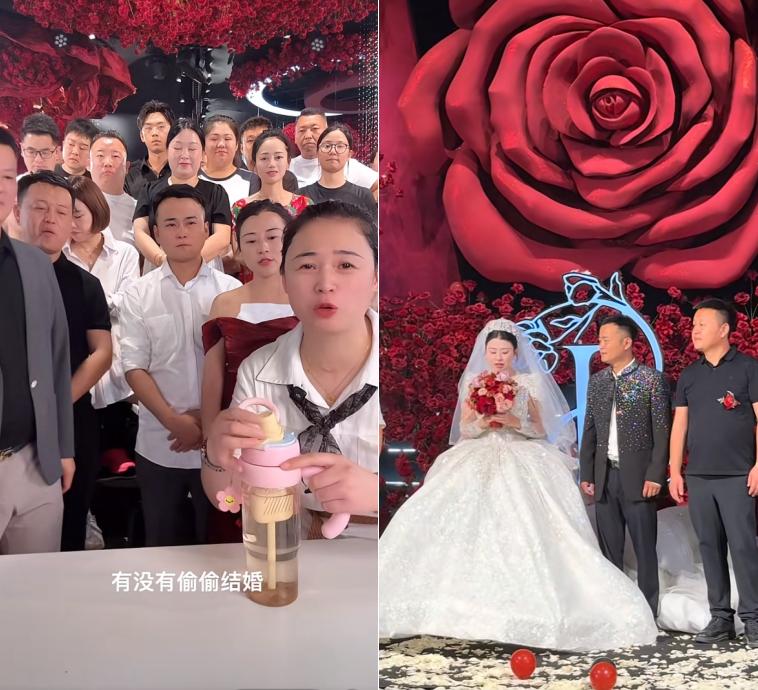
Core Insights - The article discusses the remarkable success of a newcomer, "Li Baobao," in live-streaming e-commerce, achieving sales of 1.5 billion yuan during his debut, aided by established influencer Dong Yanying [1][4][6] Group 1: Background and Initial Success - Li Baobao, previously an assistant in Dong Yanying's live streams, leveraged his wedding live stream to gain significant visibility and sales [1][2] - The wedding live stream attracted a large audience, serving as a promotional tool for his subsequent sales event [4][6] - On June 18, Li Baobao's first live stream generated over 1 billion yuan in sales, with a second session contributing an estimated 500 to 700 million yuan, totaling over 1.5 billion yuan in a single day [4][6] Group 2: Audience and Product Strategy - The audience for Li Baobao's live stream primarily consists of women aged 31-40, with a significant portion from third-tier cities [5][8] - The product selection focused on beauty and personal care items, with top-selling products including the Han Shu Red Waist Gift Box and other skincare items [6][8] Group 3: Family-Based Influencer Model - Dong Yanying's family-based influencer model has proven successful, with multiple family members achieving significant sales under her guidance [7][10] - This model capitalizes on the emotional connection and loyalty of audiences, particularly in lower-tier markets [12][14] Group 4: Challenges and Industry Trends - While the family-based model offers advantages like resource sharing, it also poses risks, as the success of individual members is closely tied to the main influencer [15][17] - The live-streaming e-commerce industry is facing increased regulatory scrutiny, which may impact the viability of event-driven sales strategies [17]