
香港豪宅

Search documents
豪宅成交创历史新高!香港上调交易印花税,业内称冲击有限
Guo Ji Jin Rong Bao· 2026-02-27 13:14
Core Viewpoint - The Hong Kong government has officially implemented an increase in stamp duty on luxury residential property transactions, raising the rate from 4.25% to 6.5% for properties valued over HKD 100 million (approximately USD 12.8 million), expected to generate around HKD 1 billion in annual tax revenue [1][4]. Group 1: Market Context - The adjustment in stamp duty is a response to the significant recovery of the Hong Kong property market, particularly in the luxury segment, with a nearly 20% increase in private residential transactions in 2025, totaling 60,346 deals [4]. - In 2025, there were 262 transactions above HKD 100 million, breaking the previous record of 228 transactions in 2021, with a total value exceeding HKD 53.1 billion, marking a 22% increase [4]. - The momentum continued into January 2026, with 26 transactions above HKD 100 million, amounting to HKD 5.3 billion, setting a new monthly record compared to only 3 transactions in the same month the previous year [5]. Group 2: Factors Driving Market Activity - The surge in luxury property transactions is attributed to three main factors: the removal of additional stamp duties for non-local buyers, significant price corrections in the luxury market, and a wealth effect from a recovering stock market [5][6]. - The overall luxury property prices have decreased by approximately 30% from their peak, creating a favorable entry point for long-term investors and homeowners [5][6]. - The Hang Seng Index saw a 27.8% increase over the year, enhancing market sentiment and driving investment activity in the luxury sector [5]. Group 3: Buyer Composition - Mainland buyers have become a dominant force in the Hong Kong luxury market, accounting for about 70% of new property transactions above HKD 100 million [6]. - These buyers include high-end professionals working in Hong Kong, families seeking education opportunities for their children, high-net-worth individuals diversifying their investments, and entrepreneurs establishing businesses in Hong Kong [6]. Group 4: Impact of Stamp Duty Increase - The overall impact of the stamp duty increase on the luxury market is expected to be limited, as transactions above HKD 100 million represent only 0.3% of total market activity [8]. - The new tax rate remains significantly lower than during the previous "cooling" measures, and the luxury market is anticipated to maintain healthy transaction volumes [8][10]. - Analysts believe that the tax increase serves more as a moderate regulatory measure rather than a deterrent, with the long-term value of prime real estate in Hong Kong remaining a key driver for high-net-worth buyers [10]. Group 5: Future Market Outlook - The luxury market is projected to continue its growth trajectory, supported by declining interest rates, ongoing demand from talent influx, and the wealth effect from a buoyant stock market [9]. - The first quarter of 2026 is expected to see over 50 transactions above HKD 100 million, setting new records [10]. - The increase in stamp duty is viewed as a fiscal policy aimed at wealth redistribution rather than a measure to suppress the real estate market, indicating a sustained recovery trend for the luxury sector [10].

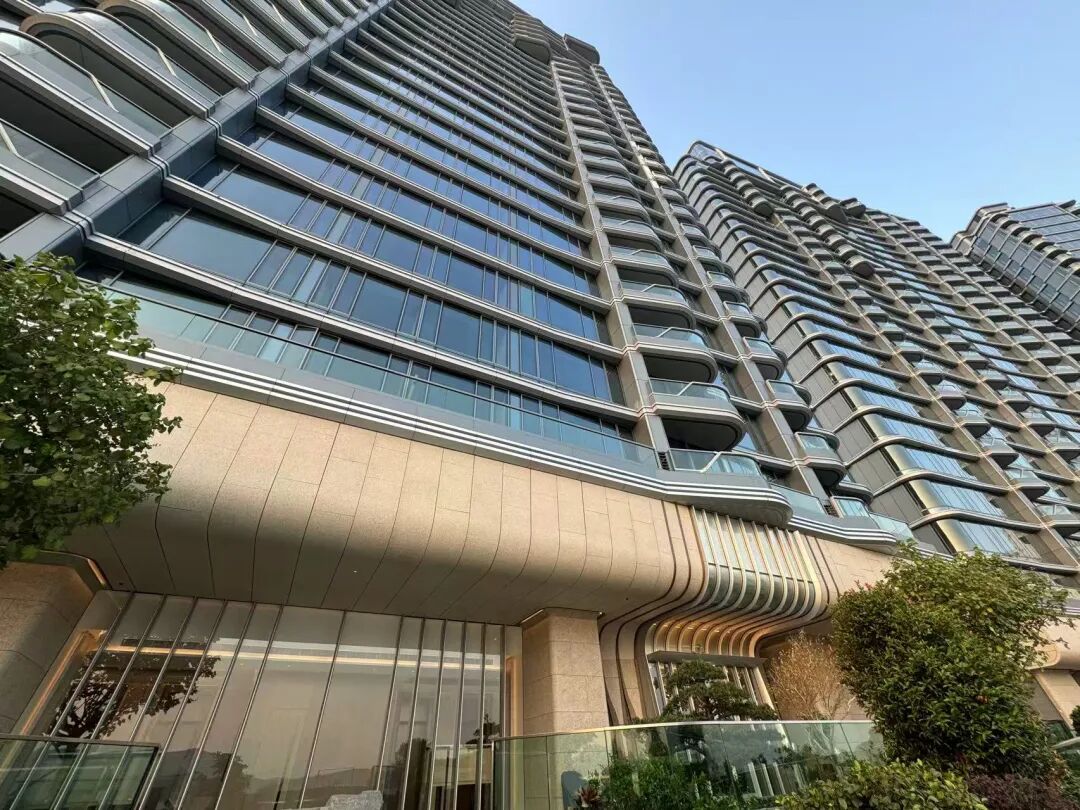
香港豪宅开年热销 给楼市注入“强心剂”
Zheng Quan Shi Bao Wang· 2026-01-23 13:17
Group 1 - The Hong Kong luxury property market is experiencing a surge in sales, with 15 transactions exceeding HKD 100 million in the first 20 days of January 2026, significantly higher than 3 transactions in January 2025 and 13 in January 2019, totaling approximately HKD 35.6 billion [1] - The sale of a luxury property at "ONE STANLEY" for over HKD 246 million, with a practical price per square foot of about HKD 52,542, highlights the high demand for luxury assets among high-net-worth individuals [1] - Analysts predict that the ongoing interest rate cuts, economic growth, and favorable policies will continue to drive the market, indicating that Hong Kong property prices have bottomed out and are expected to rise further in 2026 [1] Group 2 - The Hong Kong Land Registry reported a total of 80,702 property sale agreements in 2025, the highest in four years, with a total value of HKD 614.28 billion, marking a 15% year-on-year increase [2] - Residential property transactions accounted for 62,832 agreements, with a total value of HKD 519.83 billion, reflecting year-on-year increases of 18.3% and 14.4% respectively [2] - Morgan Stanley forecasts a 10% increase in Hong Kong residential prices for 2026, supported by strong financial market performance and potential interest rate cuts in the US, which will ease the burden of mortgage payments [2]
内地买家1400亿赴港买了什么楼?
36氪· 2026-01-22 00:10
Core Viewpoint - The article highlights the increasing trend of mainland Chinese buyers purchasing properties in Hong Kong, driven by factors such as a preference for new developments, emphasis on transportation accessibility, and a willingness to pay higher prices [4][5][6]. Group 1: Market Trends - In 2025, over 56,600 private property transactions were recorded in Hong Kong, with buyers using Mandarin pinyin accounting for 13,958 transactions, approximately 25% of the total, marking a 20% increase from 2024 [5]. - The total amount involved in these transactions reached 1,410 billion HKD, an increase of over 8% compared to 1,303 billion HKD in 2024 [5]. - The number of mainland buyers purchasing properties in Hong Kong has consistently exceeded 100 billion HKD for two consecutive years, with both price and volume rising for three years [5]. Group 2: Buyer Preferences - Mainland buyers are increasingly favoring new properties, with 6,502 transactions recorded in 2025, a 17% year-on-year increase, accounting for over half of the total transactions [6]. - The total amount for new property transactions by Mandarin pinyin buyers was approximately 789 billion HKD, slightly lower than the previous year but still among the highest historical figures [6]. - The demand for properties in the Kai Tak area, known for its proximity to the West Kowloon high-speed rail station, has surged, with 2,222 new property transactions recorded in 2025, of which 52.6% were made by Mandarin pinyin buyers [7]. Group 3: Luxury Market Dynamics - The luxury property market in Hong Kong is complex, with mainland buyers accounting for over half of transactions exceeding 10 million HKD [8]. - In 2025, mainland buyers represented approximately 69.7% of transactions for properties priced over 50 million HKD, 64.3% for properties between 20 million and 50 million HKD, and 57.3% for properties between 10 million and 20 million HKD [8]. - The introduction of a new investment immigration plan in 2024, allowing investments in residential properties priced at 50 million HKD or above, is expected to boost transactions in this segment [9]. Group 4: Future Outlook - The Hong Kong real estate market is anticipated to remain active in 2026, driven by factors such as developers actively reducing inventory, new projects being promoted at relatively low prices, and interest rate cuts stimulating demand [10]. - The influx of mainland capital, referred to as the "North Water Effect," is expected to continue influencing the market positively [10]. - Analysts predict that the number of Mandarin pinyin buyers entering the market may exceed 15,000 in the coming year, indicating a growing influence of mainland buyers in the new property market [10].
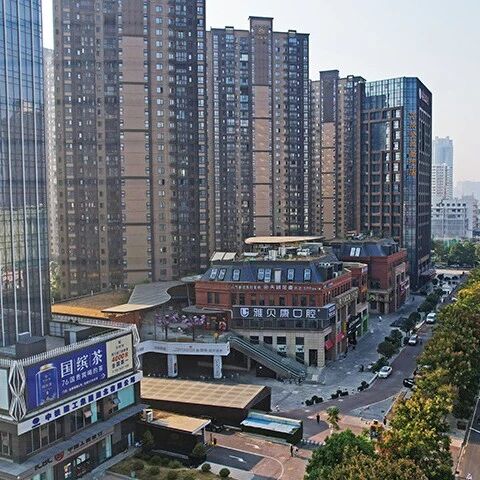
恐慌式炒房终结?北京楼市变天,三大命门曝光,香港老路走不通了
Sou Hu Cai Jing· 2025-11-29 21:31
Core Viewpoint - The comparison between Beijing and Hong Kong's real estate markets is superficial, as they fundamentally operate under different systems and conditions [3][9][26] Group 1: Similarities - In both Beijing and Hong Kong, prime location properties are highly valued and serve as status symbols and wealth preservation tools [5][7] - Properties in central areas of both cities command exorbitant prices, with Hong Kong's luxury apartments priced at around 450,000 HKD per square meter and Beijing's top school district homes at approximately 300,000 RMB per square meter [5][9] Group 2: Fundamental Differences - The land availability is drastically different; Hong Kong has limited land for development, with fewer than 10,000 new residential units added annually, while Beijing has significantly more land and development potential [11][13] - Policy frameworks diverge, with Hong Kong's market being largely driven by capital and having minimal government intervention, whereas Beijing enforces strict regulations to ensure housing is primarily for living, not speculation [14][16] - Housing security measures in Beijing are more comprehensive, with a clear goal to provide various types of affordable housing, contrasting with Hong Kong's inadequate public housing supply [18][20] Group 3: Recent Developments - Beijing's recent land supply plans focus on developing suburban areas, indicating a strategy to alleviate pressure on central districts and improve living conditions in new urban areas [20][22] - The quality and location of affordable housing projects in Beijing are improving, with many being situated near transportation and employment hubs, reflecting a targeted approach to housing policy [22][24] - The overall strategy in Beijing emphasizes a balanced and healthy real estate market, ensuring that all income levels can find suitable housing, which is distinct from Hong Kong's market dynamics [24][26]
全球宽松预期升温,上海这类资产有望率先反弹
华尔街见闻· 2025-11-25 06:50
Group 1 - The article emphasizes that a new cycle is quietly brewing amidst global monetary and fiscal easing, with smart capital positioning itself to seize opportunities in this new phase [1][3] - The Hong Kong luxury property market is showing signs of rebound and recovery, indicating strong signals from smart money that is strategically investing [2][6] - The current year is identified as the first year of "dual easing" in China, with key financial indicators like M1 gradually recovering, leading to a resurgence in property transactions in major cities [6][11] Group 2 - Data shows that in the first ten months, Shanghai accounted for 60% of luxury home transactions in China, highlighting its dominance in the high-end residential market [25] - The article notes that the core assets in major cities, particularly in Shanghai, are becoming increasingly scarce, which is driving smart capital to invest in these high-value properties [10][34] - The investment logic of high-net-worth individuals is based on the belief that core urban properties are valuable and worth holding, as they tend to appreciate over time [9][14] Group 3 - Historical data indicates that core urban properties have consistently outperformed overall market trends, with significant price increases observed in cities like London, Paris, and New York over the past decades [15][20] - The article highlights that despite economic fluctuations, core assets in major cities remain attractive to investors due to their inherent scarcity and high value [12][24] - The focus on prime locations is reiterated, with the article stating that only properties with unique, non-replicable attributes can withstand economic cycles and continue to appreciate [14][23] Group 4 - The article discusses the specific appeal of the Xuhui area in Shanghai, which is seen as a prime investment location due to its commercial vibrancy and concentration of high-net-worth individuals [26][29] - It mentions that the luxury market in Shanghai is characterized by intense competition, with developers investing significantly in product quality to attract discerning buyers [34][31] - The article concludes that smart capital is making informed decisions based on historical trends and current market conditions, positioning itself for future gains [35][36]


普缙:息口下调带动香港住宅市道回升 但非住宅物业市场受投资者减持仍低迷
智通财经网· 2025-06-27 07:23
Group 1: Overall Market Sentiment - The Hong Kong property market remains cautious in the first half of 2025, with no significant measures introduced in the latest government budget [1] - Recent reductions in actual mortgage interest rates and increased cash rebates from banks have slightly improved the residential market sentiment, although the non-residential property market continues to be affected by investor sell-offs [1][2] Group 2: New Property Sales and Inventory - The high inventory issue of new properties persists, with expected lower transaction volumes in 2025 compared to 2024 due to the high base effect from government measures [2] - Approximately 20,900 and 20,100 residential units are projected to be completed in 2025 and 2026, respectively, while the total first-hand transaction volume for 2024 is estimated at around 16,900 units [2] Group 3: Secondary Market Dynamics - The secondary market is stabilizing as some buyers enter due to a 30% drop in prices from previous peaks, lower interest rates, and government stamp duty relaxations, but prices remain influenced by the primary market [2] - The residential rental market is benefiting from increased demand from international students and skilled professionals, leading to a positive trend in overall rental prices [2] Group 4: Luxury and Commercial Property Market - The luxury market shows signs of demand absorption with nearly 1,000 transactions for large units in the first five months of 2025, supported by mainland buyers due to the government's investment immigration policy [3] - The overall commercial property market remains weak, with low-priced transactions and rising yields affecting property appreciation potential, although a slight improvement in the office market is expected in the second half of 2025 [4] Group 5: Student Accommodation Opportunities - The severe supply-demand imbalance in student accommodation presents an opportunity to convert underutilized commercial properties into student housing, supported by a pilot program from the Hong Kong Development Bureau and Education Bureau [4]