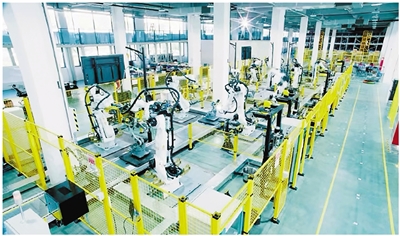
高性能电池包

Search documents
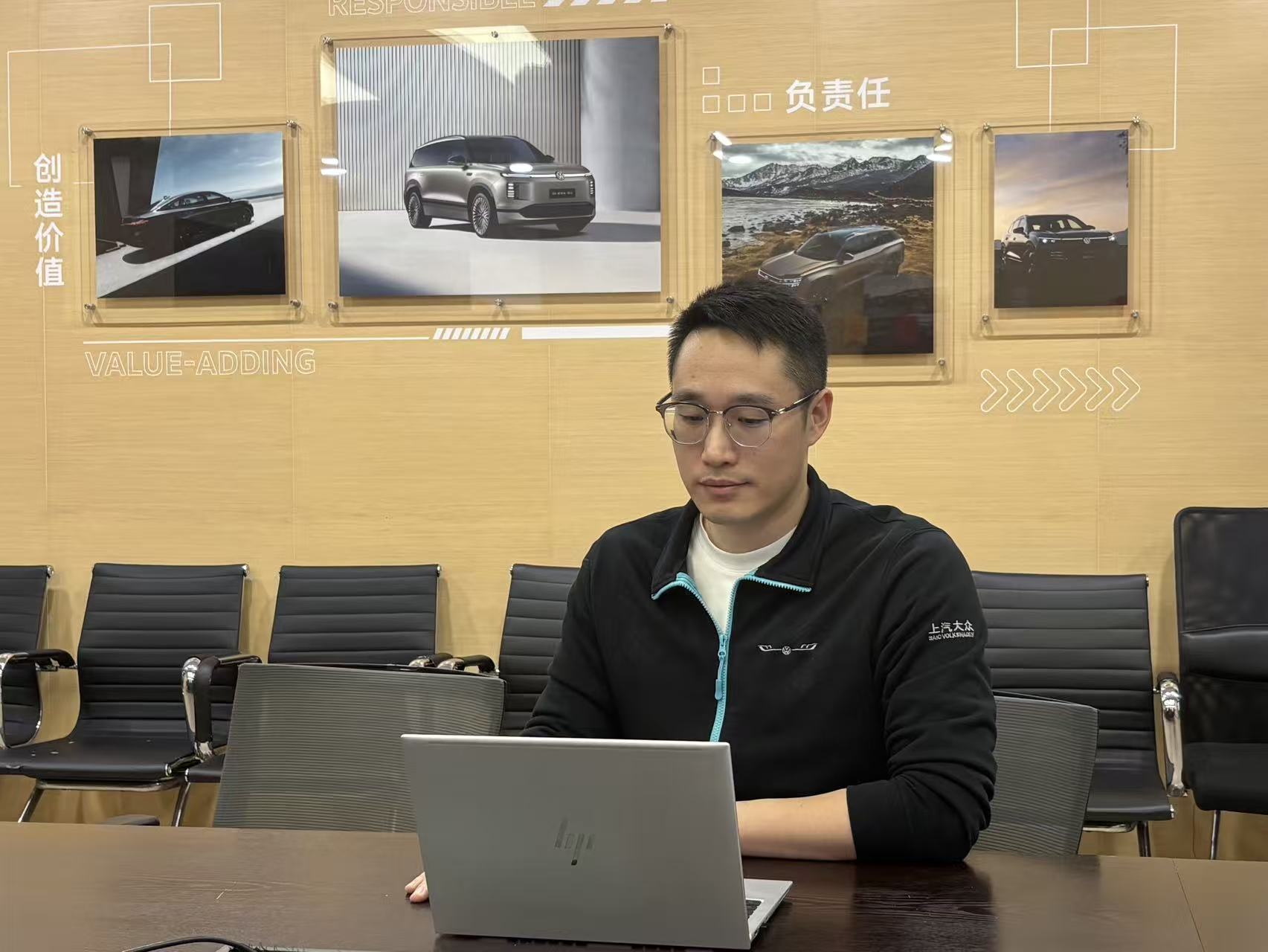
上汽大众陈彬:用产品经理力量推动合资车型“懂技术,更懂用户”
Zhong Guo Qi Che Bao Wang· 2026-02-13 07:00
Core Insights - The automotive industry in China is rapidly transitioning towards electrification and intelligence, necessitating that automakers become more agile and user-centric to capture market opportunities [1][4] - The management of product families in joint ventures poses significant challenges, particularly in integrating family branding with electrification and intelligence [1][4] Group 1: Product Development and Localization - The approach to product development has shifted from merely adapting global models to actively defining core technologies based on local market needs [4][5] - The upcoming electric vehicle models from SAIC Volkswagen, set to launch in 2026, are developed through extensive local user scenario testing, incorporating leading industry technologies and enhancing supply chain collaboration [4][5] - The development of a high-performance battery pack tailored for Chinese consumers exemplifies the shift towards local customization, ensuring top safety standards while optimizing range [4][5] Group 2: Safety and Quality Standards - SAIC Volkswagen has established a "five-star safety protection" system for battery packs, incorporating multiple safety measures to prevent thermal runaway and enhance durability [6] - The battery pack design integrates both German safety standards and Chinese design innovations, ensuring compliance with global safety tests while meeting local performance expectations [6][7] - The successful testing of the Passat ePro under stringent safety standards marks a significant milestone in the company's commitment to quality in the electric vehicle sector [6][7] Group 3: Collaboration and User-Centric Design - The collaboration between Chinese and German teams has evolved to involve early-stage discussions on user scenarios, technical routes, and cost structures, fostering a more integrated approach to product development [8][9] - Product managers are now expected to engage deeply with user needs and vehicle scenarios, enhancing their understanding of system architecture and energy management [8][9] - The goal is to create vehicles that resonate with users, leading to feedback that indicates the vehicle truly understands their needs [8][9]

萧山经济技术开发区“新老并进”筑千亿集群
Hang Zhou Ri Bao· 2026-01-08 02:57
Core Insights - The article highlights the development of the Xiaoshan Economic and Technological Development Zone (Xiaojingkai) as a hub for advanced manufacturing, particularly in the smart connected vehicle sector, showcasing significant growth and investment in this area [3][4][7] Group 1: Industry Growth and Investment - Xiaojingkai is focusing on high-end manufacturing, with the smart connected vehicle industry being a key sector, projected to reach a scale of 100 billion yuan [3] - The introduction of key projects like Zeekr headquarters and Jidian Electronics is enhancing the automotive supply chain, with Jidian Electronics expected to generate an additional output value of 3 billion yuan [4] - From January to October 2025, the output value growth rate for 23 smart connected vehicle enterprises in Xiaojingkai reached 42.4%, with 13 key enterprises exceeding 1 billion yuan in growth rate at 44.6% [4] Group 2: Technological Innovation and Transformation - The modern textile and apparel industry in Xiaojingkai is revitalizing through "Artificial Intelligence +", with the region being a core area for this sector in Zhejiang Province [5] - Companies like Hangzhou Simei Clothing Co., Ltd. are expanding into specialized protective gear while holding multiple patents for sewing equipment, indicating a shift towards higher value in the supply chain [5] Group 3: Systematic Support and Ecosystem - A specialized working mechanism has been established to support the smart connected vehicle and aerospace industry clusters, tracking 26 projects with a total planned investment of 34.55 billion yuan [6] - Collaborations with high-level innovation platforms like Zhejiang University Hangzhou International Innovation Center are enhancing local manufacturing capabilities [6] - Xiaojingkai aims to create a modern industrial system that supports the "296X" advanced manufacturing cluster in Hangzhou, positioning itself as a key player in the global advanced manufacturing landscape [7]