高精度测试设备

Search documents
华源证券:全球固态电池GWh级量产在即 前、中端设备升级成为核心增量环节
智通财经网· 2026-02-25 06:41
Core Insights - The solid-state battery industry is rapidly forming a collaborative innovation pattern across the entire chain of "materials-equipment-manufacturing-application" [1][2] - Global production of all-solid-state batteries is expected to reach GWh-level by 2027, driven by collaborative innovation in materials and process equipment [2] Industry Development - The upstream material sector is focusing on high-nickel ternary systems and exploring lithium-rich manganese-based materials, while the anode materials are transitioning from silicon-based to lithium metal anodes [2] - The electrolyte materials are evolving from liquid to solid, which is driving a surge in demand for new process equipment such as dry electrode and isostatic pressing [2] - Leading companies are establishing technological barriers through semi-solid mass production validation and all-solid-state pilot line layouts, with 2026 anticipated as a critical window for capacity release [2] Manufacturing Process - The key process in solid-state battery production is the electrolyte film formation, which significantly affects the thickness and ionic conductivity of the solid electrolyte membrane [3] - Two main technical routes are being pursued: one focuses on reducing the amount of electrolyte by coating the solid electrolyte layer on the separator, while the other enhances in-situ curing processes [3] Equipment Demand - The global solid-state battery equipment market is projected to reach 12 billion yuan by 2026, with significant upgrades needed in the manufacturing process [4] - The value proportion of equipment in the upstream and midstream segments is increasing, with the upstream rising from 31% to 35%-40% and the midstream from 40% to 40%-45%, totaling around 80% [4] - The global solid-state battery equipment market size is expected to be 4 billion yuan in 2024, with the semi-solid battery equipment market at 3.84 billion yuan and all-solid-state battery equipment at 160 million yuan [4] Company Updates - Nakanor's joint venture, Qingyan Nakanor, successfully delivered the first high-speed wide-width dry electrode equipment to a leading domestic manufacturer [5] - Lingge Technology has partnered with a leading solid electrolyte company to provide an automatic metering and batching system for oxide solid electrolytes [6] - Litong Technology's isostatic pressing equipment enhances the interface density between solid electrodes and solid electrolytes [6]
新质生产力专题报告三:全球GWh级量产或在即,从设备端来看固态电池产业链变化和未来演进
Hua Yuan Zheng Quan· 2026-02-24 08:46
Investment Rating - The report indicates a positive outlook for the solid-state battery industry, projecting GWh-level mass production by 2027, driven by collaborative innovation across the entire supply chain [2][6][12]. Core Insights - The solid-state battery industry is rapidly forming a collaborative innovation pattern across "materials, equipment, manufacturing, and applications," with significant advancements expected in materials and processes [6][20]. - Major players like CATL and BYD are expected to dominate the market, focusing on high-end applications in electric vehicles and energy storage [20][21]. - The demand for high-performance batteries is increasing due to the rapid growth of the global electric vehicle market, with solid-state batteries emerging as a strong competitor [20][21]. Summary by Sections Development - Global solid-state batteries are expected to achieve GWh-level mass production by 2027, with a focus on material innovation and process optimization [6][9]. - The supply chain is anticipated to mature over the next 3-5 years, with commercial viability expected around 2030 [9][10]. Process - The electrolyte film formation process is critical, influencing the thickness and ionic conductivity of solid electrolyte membranes [22][23]. - Two main technical routes for semi-solid batteries are identified: one focuses on reducing electrolyte liquid usage, while the other emphasizes in-situ curing processes [22][23]. Equipment - The global solid-state battery equipment market is projected to reach 12 billion yuan by 2026, with significant demand for new equipment such as dry electrode preparation and isostatic pressing [31][32]. - The value share of equipment in the front and middle stages of solid-state battery production is expected to increase significantly compared to traditional liquid batteries, with a combined share of around 80% [32][36]. Key Company Updates - Naconor has successfully delivered high-speed wide-format dry electrode equipment to leading domestic manufacturers, marking a significant milestone in solid-state battery production [4.1][21]. - Lingge Technology has secured contracts for solid-state sulfide systems and is advancing its solid electrolyte pilot line [4.2][26]. - Litong Technology is developing isostatic pressing equipment to enhance the interface density between solid electrodes and solid electrolytes [4.3][41]. - Wuhan Blue Electric is focusing on high-precision testing equipment for solid-state batteries, capable of stable testing under low currents [4.4][30].



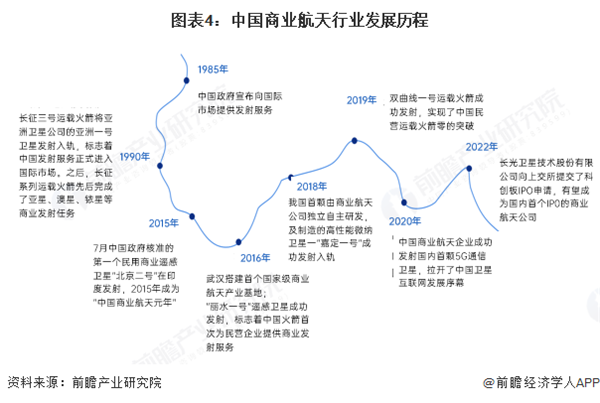
挖煤70年!中国最猛五线小城,开始疯狂造火箭
Qian Zhan Wang· 2026-01-28 10:38
Core Viewpoint - The article highlights the remarkable transformation of Hebi, a resource-dependent city, into a burgeoning hub for commercial aerospace within just four years, showcasing its strategic shift from coal mining to space exploration as a response to economic challenges and resource depletion [1][2]. Group 1: Transition from Coal to Aerospace - Hebi's historical reliance on coal, which constituted 90% of its industrial output, faced challenges due to resource depletion and rising extraction costs, necessitating a shift to a more sustainable economic model [2][4]. - The city identified commercial aerospace as a strategic emerging industry, aligning with national goals to transition from a "space power" to a "space strong nation," with projections indicating the market could reach 8 trillion RMB by 2030 [2][4]. Group 2: Industrial Foundation for Aerospace Development - Hebi leveraged its existing industrial base, particularly in high-end manufacturing and digital economy sectors, to support the development of commercial aerospace [5][6]. - The city has established a strong electronic and electrical industry, with companies like Tianhai Group leading in precision electronic components, providing a solid foundation for aerospace supply chains [6]. - Investments in semiconductor and industrial software sectors have created a self-sufficient ecosystem crucial for aerospace applications, including satellite payloads and control systems [7][10]. Group 3: Establishing a Complete Aerospace Ecosystem - The collaboration with Aerospace Hongtu, a leading remote sensing company, led to the establishment of a satellite operation center in Hebi, initiating the "Nüwa Constellation" project to launch 114 satellites [11][13]. - The construction of a satellite manufacturing base, capable of producing 100 satellites annually, supports the operational needs of the Nüwa Constellation and enhances local capabilities in satellite data collection [13][14]. - The establishment of a rocket assembly base in Hebi marks a significant milestone, enabling the production of 20 medium-sized launch vehicles annually, with the first flight expected in 2026 [14][15]. Group 4: Comprehensive Development Strategy - Hebi's strategy emphasizes the integration of satellite manufacturing, launch capabilities, and ground control systems, creating a complete aerospace service ecosystem [15][16]. - The city has attracted over 40 aerospace-related enterprises, forming a comprehensive industrial cluster recognized by the Ministry of Industry and Information Technology [16][21]. - The transformation from a resource-dependent economy to an innovation-driven model illustrates the potential for similar cities to break free from resource constraints through strategic industry positioning and technological advancement [19][21].

瑞能股份向某头部企业交付固态电池设备
鑫椤锂电· 2025-07-17 06:25
Core Viewpoint - Shenzhen Renergy Industrial Co., Ltd. has successfully delivered core equipment for solid-state battery manufacturing to a leading domestic battery manufacturer, marking a significant breakthrough in the industrialization of solid-state battery technology [1][3]. Group 1 - The delivered equipment includes specialized formation and capacity testing lines for solid-state batteries, such as formation equipment, capacity testing equipment, OCV systems, and DCIR testing devices [1][3]. - This delivery is not the first for Renergy in the solid-state battery field; previously, the company provided a high-pressure monitoring system for research purposes, which is crucial for in-depth studies of core process parameters [3]. - Renergy's high-precision testing equipment is optimized for solid-state battery characteristics, enabling accurate and efficient measurement of key performance parameters like lifespan, capacity, and long-term charge-discharge cycle stability [3][4]. Group 2 - The specialized formation and capacity testing equipment addresses critical challenges in the formation process, such as interface contact resistance control, uniform pressure application, precise temperature management, and accurate positioning of battery cells [3][4]. - The continuous successful delivery of equipment from laboratory research to pilot testing and mass production demonstrates Renergy's comprehensive technical route and service capabilities in the solid-state battery manufacturing and testing sector [4]. - This advancement not only meets urgent industry demands but also contributes to China's competitive edge in next-generation battery technology, supporting national goals for carbon neutrality and the development of new productive forces [4].