高级定制服装

Search documents
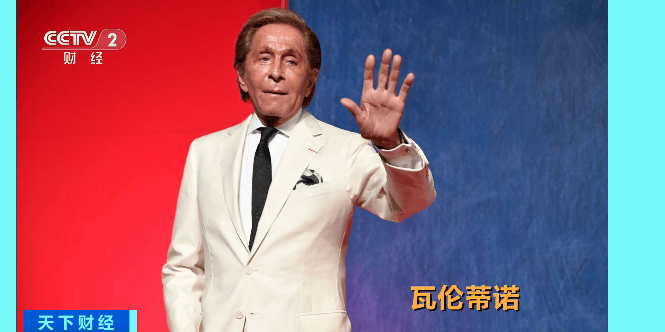
意大利华伦天奴品牌创始人瓦伦蒂诺去世 终年93岁
Sou Hu Cai Jing· 2026-01-20 15:05
Core Viewpoint - The founder of the Italian fashion brand Valentino, Valentino Garavani, passed away at the age of 93, with his net worth estimated between $1.5 billion and $2 billion at the time of his death [1][7]. Group 1: Company Overview - Valentino was co-founded in 1960 by Valentino Garavani and his long-time business partner Giancarlo Giammetti, evolving into a globally recognized fashion brand [7]. - The brand initially focused on haute couture and later expanded into ready-to-wear, accessories, and fragrances, establishing a comprehensive business portfolio [7]. - Valentino sold the company in 1998 for approximately $300 million, losing control of the brand [7]. Group 2: Industry Impact - Valentino's contributions significantly influenced the Italian and global fashion industries, particularly during the internationalization of European haute couture in the 1960s and 1970s [7]. - The brand has undergone several ownership changes, including a 2012 acquisition by a Qatari investment company and a 2023 acquisition of approximately 30% of the company by the French luxury group Kering, making it a strategic shareholder [7]. Group 3: Legacy and Recognition - Italian President Mattarella and Prime Minister Meloni expressed condolences, highlighting Valentino's inspirational legacy and impact on the fashion world [5].

小摩奢侈与体育用品2026展望:奢侈品企稳回升 体育品牌聚焦“自救”与机遇
Zhi Tong Cai Jing· 2025-11-18 06:54
Group 1: Luxury Goods Industry - The luxury goods industry is showing a more positive outlook compared to the past two years, with notable stabilization signs in the Chinese market [2] - Positive indicators in Q3 are seen as a crucial step towards stability in China, despite ongoing macroeconomic pressures and market volatility [2] - Chinese consumers are becoming more mature, discerning, and differentiated, leading to a polarization in brand performance [2] - The U.S. luxury market demand remains stable, with no significant price resistance, supported by the wealth effect, although there is a high sensitivity to value across all price points [2] - The Middle East market is performing strongly, while Europe shows mixed results with stable overall performance but brand and category disparities [2] - Japan's market is similar to Europe, with recent signs of recovery in tourism spending, while South Korea and Southeast Asia are performing well [2] Group 2: Pricing Strategies - The luxury goods industry is expected to maintain moderate pricing strategies in 2026, with most brands controlling price increases to low single-digit levels [3] - Brands are focusing on differentiated pricing strategies for specific products rather than uniform price adjustments, particularly to maintain the value proposition of entry-level products [3] - The influx of nearly 20 new designers into fashion brands over the past year is anticipated to inject creativity and drive demand for soft luxury goods starting in Q2 of next year [3] Group 3: Sports Goods Industry - The sports goods industry faces a more complex environment with uncertainties in demand due to U.S. tariff policies and intense competition in Greater China and Europe [4] - Brands are focusing on "self-rescue" strategies, such as launching new products, optimizing channels, and carefully managing brand image [4] - Despite uncertainties in the consumer market entering 2026, brands see growth opportunities in running, outdoor, and soccer segments, with the upcoming World Cup viewed as a significant additional driver [4] Group 4: Industry Trends - The conference highlighted a common trend in the industry towards marketing transformation, with luxury brands reallocating budgets from traditional media to experiential activities [5] - The second-hand market for luxury goods is growing and becoming more professionalized, driven by consumer demand for value and sustainability, particularly active in the U.S. [5] - Handbags remain the core category in the second-hand market, accounting for over half of total transaction value, with significant growth in high-end custom clothing and jewelry [5]
满足不同场景消费需求 南山智尚融合发展全产业链
Zhong Guo Jin Rong Xin Xi Wang· 2025-09-23 04:05
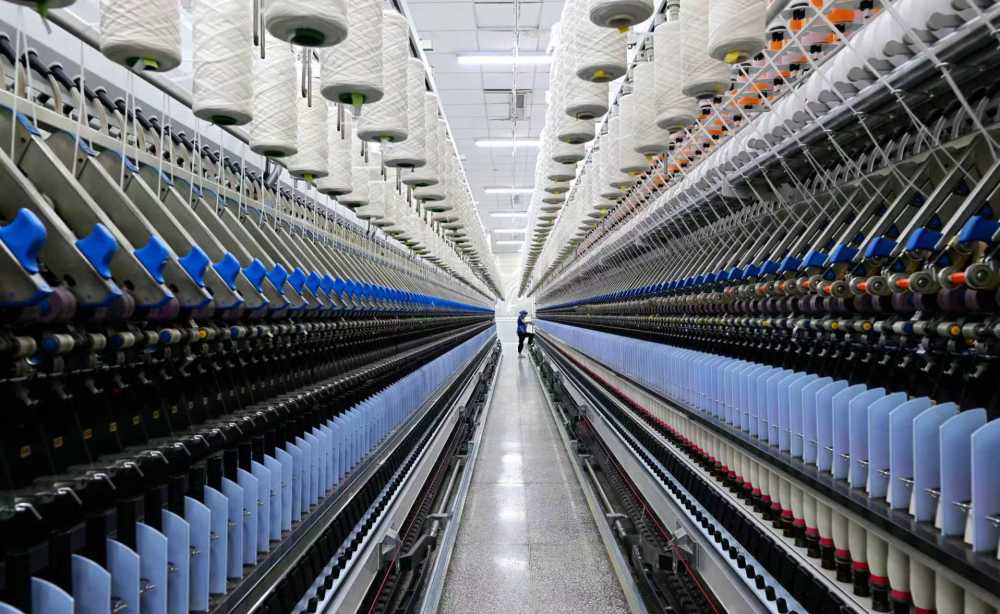
Core Viewpoint - The company Nanshan Zhishang Technology Co., Ltd. is developing two major industrial chains: wool clothing and new materials, showcasing a trend of integrated development in the textile industry [3]. Group 1: Wool Clothing Industry Chain - Nanshan Zhishang produces 16 million meters of high-end worsted wool fabric and 750,000 suits annually [3]. - The company has seen a year-on-year increase in order volume since 2020, indicating a growing demand for customized clothing [3]. - Customized clothing, while having a higher overall cost and price, offers a relatively good profit margin compared to the generally low gross margins in the textile and apparel industry [3]. Group 2: New Materials Industry Chain - The company has achieved full production capacity of 3,600 tons of ultra-high molecular weight polyethylene (UHMWPE) fiber, with an 80,000-ton nylon project entering the market phase [3]. - UHMWPE fiber is recognized as a third-generation high-performance fiber, following carbon and aramid fibers, and is used in high-value applications such as special protection and marine rope networks [7]. - The company is exploring the integration of UHMWPE in various products, including outdoor hiking shoes and jackets, to meet diverse market needs [5]. Group 3: Product Development and Market Reach - Nanshan Zhishang's wool sports series products utilize a wool-nylon blend, combining durability and moisture-wicking properties, reflecting the integration of its two main industrial chains [5]. - The company focuses on health, comfort, personalized customization, and low-carbon environmental trends in its product development [5]. - Nanshan Zhishang's high-performance differentiated nylon products are exported to over a dozen countries and regions, establishing long-term strategic partnerships with numerous domestic and international enterprises [5].