
成衣

Search documents
普拉达(01913):过渡期铺垫更好未来
citic securities· 2026-03-06 12:52
Investment Rating - The report maintains a positive outlook on Prada, indicating a strong start to 2026 but with mixed guidance for the year ahead [5][7]. Core Insights - Prada's sales and profitability for Q4 of FY2025 met expectations, with organic sales growth of +5% for Q4 and +7.8% for the full year, aligning with Visible Alpha's forecasts [6]. - The company faces potential headwinds from slowing growth in Miu Miu and dilution effects from Versace, which may impact the overall growth outlook [5][6]. - The strategic focus for 2026 includes optimizing channels and integrating Versace, with a plan to close more stores than open new ones [8]. Summary by Relevant Sections Financial Performance - For FY2025, Prada's Q4 organic sales growth was +5%, and full-year growth was +7.8%, consistent with market expectations [6]. - Retail sales growth for Q4 and the full year was +8% and +6% respectively, driven by same-store growth and low single-digit area growth [6]. - The EBIT margin for H2 and FY2025 was 23.7% and 23.2%, reflecting a decline due to Versace's dilution effect [6]. Market Outlook - The beginning of FY2026 shows strong performance from Prada, with robust sales during the Chinese New Year and stable performance in the U.S. market [7]. - Miu Miu is expected to see low single-digit growth in the first half of 2026, while Versace's sales are projected to decline in the mid to high single digits [7]. Strategic Initiatives - Prada plans to focus on the integration of Versace and channel optimization, with a significant emphasis on creative innovation under the new creative director Pieter Mulier [8]. - The company aims to stabilize the number of Miu Miu stores at 170-175 after adding 5-10 new locations [8]. Catalysts - Key catalysts for growth include the unexpected momentum of Miu Miu and Prada brands, benefiting from well-received designs and series releases, as well as improvements in consumer sentiment among key demographics [9].

三大奢牌旗舰店扎堆开业,看LV、Dior、Tiffany如何构建流量闭环新生态
Sou Hu Cai Jing· 2026-02-27 02:03
Core Insights - The opening of flagship stores by Louis Vuitton, Dior, and Tiffany in Beijing's Sanlitun Taikoo Li is seen as a significant indicator of the recovery of the luxury goods market in China, with a 7% year-on-year sales growth in the Greater China region during the second quarter of the fiscal year 2026 after a brief decline in the first quarter [1]. Group 1: Store Design and Experience - The flagship stores have transformed traditional retail concepts by turning architecture into a medium for brand expression, with designs that emphasize luxury and cultural significance [3][4]. - Dior's flagship incorporates a restaurant, merging high-end retail with dining and art experiences, contributing to 30% of foot traffic in its first month [3]. - The stores are designed to be visually striking and social media-friendly, generating over 500 million views on platforms like Xiaohongshu and Douyin [5]. Group 2: Market Trends and Consumer Behavior - The luxury market in China is expected to reach 780 billion yuan by 2024, with offline channels regaining a 68% market share, up 12 percentage points from 2022 [6]. - High-net-worth individuals are increasingly favoring in-store experiences for their purchasing decisions, with a 71% repurchase rate in physical stores compared to 38% online [6]. - The shift towards offline retail is driven by the saturation of online channels, prompting brands to reassess the value of physical stores for customer relationship management and brand image [7]. Group 3: Localization Strategies - The flagship stores reflect a localized design strategy that resonates with the unique cultural and social dynamics of the Sanlitun area, which has evolved from a nightlife hub to a high-end retail destination [8][9]. - Different cities exhibit distinct localization strategies, with Chengdu integrating local architectural elements and Shanghai focusing on international and futuristic themes [10]. Group 4: Social Media Integration - The flagship stores are designed with social media in mind, featuring unique architectural elements that encourage consumer engagement and sharing on platforms [11][12]. - The stores create multiple touchpoints for social media interaction, enhancing brand recognition and consumer connection through experiential marketing [12]. Group 5: Competitive Landscape and Cluster Effect - The clustering of luxury brands in high-end shopping districts reduces consumer decision-making time and enhances foot traffic, with consumers spending an average of 2.5 hours in clustered environments compared to 45 minutes in single-brand stores [15]. - This cluster effect allows brands to share high-net-worth clientele and enhances the overall prestige of the shopping area, benefiting all brands involved [16]. Group 6: Future of Luxury Retail - The future of luxury retail is expected to integrate technology and personalized experiences, with a focus on creating immersive shopping environments [20]. - The evolution of luxury retail will involve a seamless blend of online and offline experiences, supported by data-driven strategies to enhance customer engagement and loyalty [20][21].

2026年1月份澳门对外商品贸易总额为146.2亿澳门元
智通财经网· 2026-02-26 11:29
Core Insights - In January 2026, Macau's total goods exports and imports reached MOP 1.46 billion and MOP 13.16 billion respectively, marking year-on-year increases of 29.2% and 24.6% [1] - The total external merchandise trade amounted to MOP 14.62 billion, with a trade deficit of MOP 11.71 billion [1] Export Analysis - Re-exports in January were valued at MOP 1.3 billion, showing a growth of 29.8% compared to January 2025, with significant increases in watches (68.5%) and diamonds and diamond jewelry (32.0%), while beauty and skincare products saw a decline of 23.5% [1] - Local product exports rose to MOP 0.16 billion, up 24.2%, driven by increases in copper and its products (57.7%) and pharmaceuticals and organic chemicals (13.2%), while clothing exports fell by 63.4% [1] - Non-textile exports increased by 35.2% to MOP 1.36 billion, whereas textile and clothing exports decreased by 20.4% to MOP 0.1 billion [1] Import Analysis - Total goods imports rose by 24.6%, with notable increases in mobile phones (1.8 times) and gold jewelry (48.9%) [1] - Imports from mainland China (MOP 4.75 billion), Hong Kong (MOP 0.87 billion), and the EU (MOP 3.72 billion) increased by 50.4%, 33.1%, and 8.0% respectively [2] - Consumer goods imports grew by 13.6% to MOP 9.2 billion, with food and beverages (MOP 2.19 billion), gold jewelry (MOP 1.59 billion), and clothing and footwear (MOP 1.38 billion) increasing by 4.5%, 48.9%, and 17.5% respectively [2]
光伏大佬李兆廷被拘留,身家曾超200亿元
Xin Lang Cai Jing· 2026-02-14 06:35
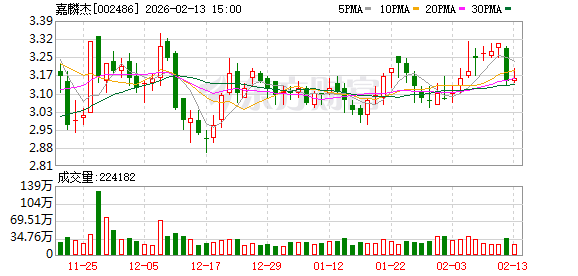
Core Viewpoint - The recent detention of Li Zhaoting, the actual controller of Jia Lin Jie, has raised concerns about the company's stability and its connection to the troubled Dongxu Group, which has faced significant legal issues related to financial fraud [1][4][10]. Company Overview - Jia Lin Jie (002486.SZ) announced on February 13, 2026, that its actual controller, Li Zhaoting, was detained by the Shijiazhuang Public Security Bureau, with ongoing investigations [1][7]. - The company confirmed that it has not received any requests for assistance in the investigation and that its control structure remains unchanged, with normal operations continuing [8]. - Jia Lin Jie specializes in the production and sales of high-end fabric and garments, with key products including plush fabrics, wool fabrics, functional sports fabrics, garments, and protective gear [4][9]. Financial Performance - For the first three quarters of 2025, Jia Lin Jie reported revenue of 918 million yuan, representing a year-on-year increase of 3.49%, and a net profit attributable to shareholders of 52 million yuan, reflecting a significant year-on-year growth of 205.46% [4][9]. Market Context - As of February 13, 2026, Jia Lin Jie’s stock price increased by 0.32%, closing at 3.16 yuan per share [5][12]. - The Dongxu Group, which has deep equity ties with Jia Lin Jie, controls over 21% of the company's shares through direct holdings and its wholly-owned subsidiary [8].

光伏大佬李兆廷被拘留,身家曾超200亿元
21世纪经济报道· 2026-02-14 06:24
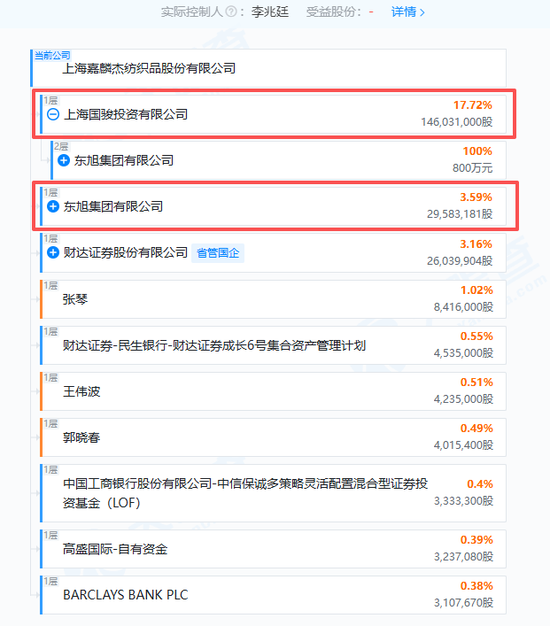
Core Viewpoint - The article discusses the recent detention of Li Zhaoting, the actual controller of Jia Lin Jie, and the implications for the company and its associated group, Dongxu Group, amidst ongoing investigations into financial misconduct [1][3]. Group 1: Company Overview - Jia Lin Jie (002486.SZ) announced on February 13, 2026, that its actual controller, Li Zhaoting, has been detained by the Shijiazhuang Public Security Bureau, with investigations ongoing [1]. - Despite the detention, Jia Lin Jie stated that it has not received any requests for assistance from authorities and that its control structure remains unchanged, with normal operations continuing [1]. - As of February 13, 2026, Jia Lin Jie reported a revenue of 918 million yuan for the first three quarters of 2025, reflecting a year-on-year increase of 3.49%, and a net profit attributable to shareholders of 52 million yuan, up 205.46% year-on-year [5]. Group 2: Shareholding Structure - Dongxu Group controls over 21% of Jia Lin Jie through direct holdings and its wholly-owned subsidiary, Shanghai Guojun Investment Co., Ltd. [1]. - The shareholding structure indicates a significant financial interdependence between Dongxu Group and Jia Lin Jie, with Dongxu Group holding 17.72% and 3.59% of shares directly [2]. Group 3: Financial Misconduct Allegations - Dongxu Group has been implicated in serious financial misconduct, including fabricating business activities and false accounting, leading to inflated revenues of 47.825 billion yuan and profits of 13.001 billion yuan from 2015 to 2019 [3]. - The group was found to have fraudulently issued bonds worth 3.5 billion yuan and illegally raised 7.565 billion yuan through stock issuance, with a total of 16.959 billion yuan in misappropriated funds from its subsidiaries [3].

光伏大佬被拘留 身家曾超200亿元
2 1 Shi Ji Jing Ji Bao Dao· 2026-02-14 06:12
Core Viewpoint - The actual controller of Jia Lin Jie, Li Zhaoting, has been detained by the police, but the company asserts that its control and operations remain unaffected [2][4]. Company Overview - Jia Lin Jie (002486.SZ) has received notification from Dongxu Group regarding the detention of its actual controller, Li Zhaoting, as of February 13, 2026 [2]. - The company emphasizes that it has not been requested to assist in any investigations and that its control has not changed [2]. - Li Zhaoting is not holding any position within the company, and all board members and senior management are performing their duties normally [2]. Financial Performance - For the first three quarters of 2025, Jia Lin Jie reported revenue of 918 million yuan, representing a year-on-year increase of 3.49% [6]. - The net profit attributable to the parent company was 52 million yuan, showing a significant year-on-year growth of 205.46% [6]. Shareholding Structure - Dongxu Group controls over 21% of Jia Lin Jie through direct holdings and its wholly-owned subsidiary, Shanghai Guojun Investment Co., Ltd. [2][3]. - The shareholding structure indicates a deep financial connection between Dongxu Group and Jia Lin Jie [2]. Market Context - As of February 13, 2026, Jia Lin Jie’s stock price increased by 0.32%, closing at 3.16 yuan per share [7]. - The company is the last remaining listed entity in the "Dongxu system," as Dongxu Optoelectronics and Dongxu Lantian have both been delisted [6].


2025年中国个人奢侈品市场:在“价值回归、认知升级”的时代重塑方向、稳步复苏
BAIN· 2026-02-01 06:28
Investment Rating - The report indicates a cautious recovery in the Chinese personal luxury goods market, with an overall decline expected to narrow to 3%-5% in 2025 [9][11]. Core Insights - The Chinese luxury goods market is gradually recovering, but consumers remain cautious, leading to a decline in non-essential spending. There is a growing preference for high-value luxury items that combine quality, uniqueness, and practicality [8][10]. - The market is witnessing a shift towards experiential luxury consumption, particularly in travel and health, as consumers favor emotional and sensory satisfaction over physical goods [8]. - Brands focusing on affordable luxury and ultra-high-end segments are gaining market share by providing "real value" to affluent young consumers and ultra-high-net-worth individuals [8][10]. - The share of overseas luxury consumption has decreased compared to 2024, driven by a weaker RMB and ongoing domestic promotions, which encourage luxury spending to return to mainland China [8][10]. Summary by Sections Market Overview - The Chinese personal luxury goods market is projected to shrink by 3%-5% in 2025, with signs of recovery in the third quarter. Different categories show varied performance, with beauty and personal care recovering, while watches continue to face pressure [10][11]. - The second-hand luxury market is growing robustly, with an expected increase of 15%-20%, although it still represents a small portion of the overall market [10][36]. Consumer Behavior - Consumers are becoming more discerning, leading to a cautious approach in luxury purchases. The market is transitioning into a slow growth phase, with expectations for continued recovery into 2026 [10][49]. - The report identifies three main consumer segments driving market dynamics: high-end consumers, middle-aged middle-income consumers, and a new generation of luxury seekers [28]. Category Performance - Beauty and personal care categories are showing strong recovery, with growth rates of 4%-7%. In contrast, the leather goods category is expected to decline by 8%-11% due to insufficient innovation and rising prices [18][20]. - Jewelry is expected to see a reduced decline of 0%-5%, while the watch category is under significant pressure, with an anticipated decline of 14%-17% [20]. Second-Hand Market - The second-hand luxury market is expected to grow significantly, driven by increased supply and changing consumer behavior towards value and sustainability [35][36]. - The second-hand market is primarily concentrated in leather goods and watches, with leather goods accounting for 50%-55% of the market [40]. Local Brand Competitiveness - Chinese local luxury brands are emerging as significant competitors by integrating innovative designs with local culture, thus attracting consumer attention [45]. - These brands are leveraging a deeper understanding of local consumer preferences to create unique product aesthetics and marketing strategies [45][48]. Future Outlook - The luxury market is expected to continue facing volatility and uncertainty in 2026, but there are signs of sustained recovery, supported by domestic policy and geopolitical factors [49][50]. - The second-hand luxury market's low penetration rate compared to global averages indicates substantial growth potential [49].
澳门2025年全年总出口货值同比上升3.2%至139.2亿澳门元
智通财经网· 2026-01-30 12:56
Core Insights - Macau's total export value for 2025 is projected to increase by 3.2% year-on-year to MOP 13.92 billion, with re-exports rising by 3.8% to MOP 12.46 billion, while local product exports decrease by 1.8% to MOP 1.46 billion [1] - Total import value is expected to decline by 3.0% to MOP 124.79 billion, resulting in a trade deficit of MOP 110.86 billion [1] - Exports to mainland China and Hong Kong are expected to rise significantly, with increases of 57.5% to MOP 1.18 billion and 3.7% to MOP 9.96 billion respectively, while exports to the US and EU are projected to decrease by 9.0% and 6.6% [1] Export and Import Analysis - Non-textile exports are anticipated to rise by 5.0% to MOP 12.56 billion, while textile and garment exports are expected to decline by 10.5% to MOP 1.36 billion [1] - Imports from the EU are projected to decrease by 4.7% to MOP 35.84 billion, while imports from mainland China and Hong Kong are expected to increase by 0.5% to MOP 39.65 billion and 9.8% to MOP 7.08 billion respectively [2] - Consumer goods imports are forecasted to decline by 1.4% to MOP 89.86 billion, with notable decreases in clothing and footwear by 4.7% to MOP 12.28 billion, while gold jewelry is expected to increase by 13.6% to MOP 11.66 billion [2] Monthly and Quarterly Trends - In December 2025, total export value is expected to reach MOP 1.17 billion, marking an 11.0% year-on-year increase, with re-exports rising by 11.8% [2] - The total import value for December is projected to increase by 5.9% to MOP 11.78 billion, driven by significant increases in gold jewelry and mobile phones by 42.6% and 31.1% respectively [2] - For Q4 2025, export and import values are expected to rise by 6.7% to MOP 3.61 billion and 1.0% to MOP 34.06 billion respectively, resulting in a trade deficit of MOP 30.45 billion [3]
打造潮流样本 三里屯太古里重构消费空间
Bei Jing Shang Bao· 2026-01-27 16:58
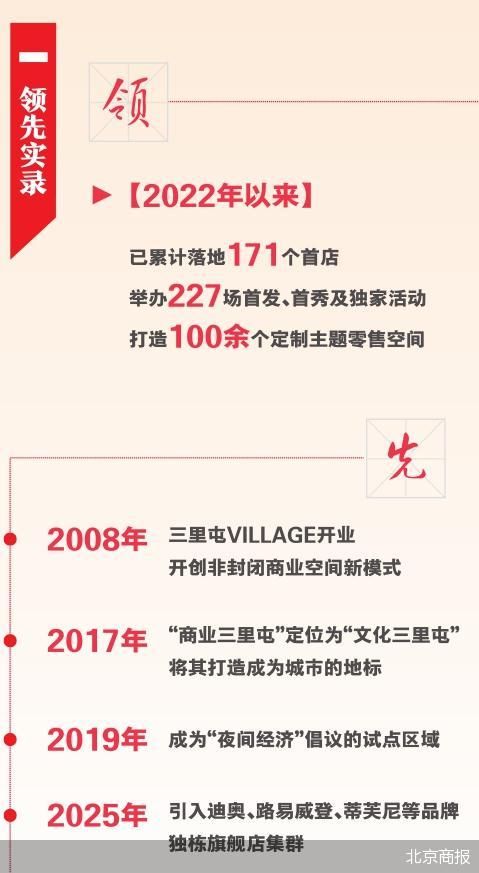
Core Insights - The article highlights the transformation of Sanlitun Taikoo Li into a fashion and retail landmark in Beijing, showcasing its evolution from a traditional shopping area to a hub for high-end brands and innovative retail experiences [1][12]. Group 1: Development and Upgrades - Sanlitun Taikoo Li has undergone significant upgrades since 2022, with the introduction of luxury brands like LV and Dior, enhancing its status from a trendy gathering place to a flagship store cluster [4][6]. - The area has seen a total of 171 high-quality brand flagship stores established, along with 227 exclusive events, reinforcing its position as a premier platform for limited edition products and cultural collaborations [5][6]. Group 2: Consumer Trends and Market Dynamics - The global luxury market is projected to reach €358 billion by 2025, with China’s share increasing from approximately 8% in 2015 to about 12% in 2025, making it a key driver of global growth [4]. - Chinese high-net-worth individuals prioritize uniqueness and exclusivity in luxury consumption, contrasting with Western consumers who focus more on product quality and service experience [4]. Group 3: Spatial and Ecological Innovation - Sanlitun Taikoo Li has redefined its commercial ecosystem by integrating innovative retail experiences and community culture, transitioning from a single commercial landmark to a collaborative commercial ecosystem [7][8]. - The introduction of multi-functional stores, such as the Sacai flagship that combines retail with social activities, exemplifies the shift towards experiential shopping environments [8][9]. Group 4: Cultural Integration and Local Adaptation - The project emphasizes the importance of local cultural integration, adapting international brands to fit local consumer preferences and cultural elements, thereby enhancing its competitive edge [10][11]. - The operational strategy focuses on collaboration with brands to create unique experiences that resonate with local consumers, moving away from traditional owner-led approaches [10][11].

未知机构:浙商纺服晶苑国际更新今日正式公告埃及买地计划中期成长路线清晰-20260121
未知机构· 2026-01-21 01:55
Company Overview: Crystal International Key Points Land Acquisition in Egypt - The company announced a plan to purchase land in Egypt for $30.4 million, covering an area of 800,000 square meters located in the New October City industrial zone in Giza, 59 km from Cairo, with well-developed infrastructure [1] - The expected production capacity of the land includes garment and fabric segments, aimed at flexibly meeting the demands of European and American clients, with revenue contributions anticipated to start as early as 2027 [1] - This acquisition is expected to significantly enhance the company's capacity to fulfill orders from core client Uniqlo, as well as provide advantages in servicing European clients such as Adidas, ZARA, Decathlon, and M&S [1] Advantages of Egyptian Production 1. **Labor Advantage**: Egypt has a population of 120 million, with a labor force of 75 million. The average monthly wage in the manufacturing sector is approximately $200, providing a rich and competitively priced labor pool [1] 2. **Tariff Advantage**: Exports to Europe face virtually zero tariffs, while exports to the U.S. incur a 10% tariff (with some industrial zones qualifying for zero tariffs if they meet a 35% value-added requirement) [1] 3. **Transportation Advantage**: Shipping times to Europe are two weeks faster than from Asia, and shipping to the U.S. is also two weeks quicker compared to Asian routes [1] Growth and Dividend Attributes - The company's diverse product development and production capabilities, along with flexible and efficient production lines and a rich overseas production layout, have led to full order books since 2024 [1] - Orders from core clients like Uniqlo and sports outdoor brands such as Adidas, Lulu, Decathlon, and The North Face are expected to lead growth [1] - The combination of automation and vertical integration is projected to maintain an upward trend in profit margins through 2025-2026, with a 2026 price-to-earnings ratio of 10X, a dividend payout ratio of no less than 60%, and a dividend yield of 6% [1] - The company is positioned as a stable growth leader in the export chain with attractive valuation, continuing to be recommended for investment [1]