荣昌卤鹅

Search documents
春节假期,重庆荣昌消费市场火爆
Sou Hu Cai Jing· 2026-02-25 05:51
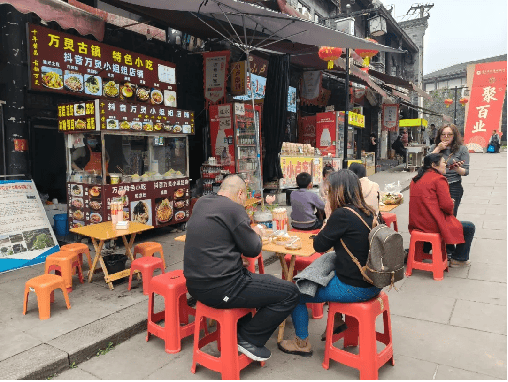
Group 1 - The consumer market in Chongqing's Rongchang District is experiencing a vibrant atmosphere during the Spring Festival, with high foot traffic in Wanjing Ancient Town and urban dining areas, where local delicacies like marinated goose and yellow cool noodles are popular among citizens and tourists [1][3][4] - Local businesses are responding to the peak dining demand during the festival by ensuring quality, optimizing services, and offering meal packages to meet the needs of both residents and visitors [3][5] - Sales during the Spring Festival have increased to 3 to 5 times compared to the same period last year, indicating a significant rise in customer flow while maintaining quality and stable pricing for authentic Rongchang marinated goose [5][6] Group 2 - The introduction of affordable meal packages for groups of eight and ten has contributed to the success of local dining establishments, with reports of full capacity every day during the festival [6][7]

重庆北站春运见闻:行囊装满年味 归途皆是团圆
Xin Lang Cai Jing· 2026-02-14 08:17
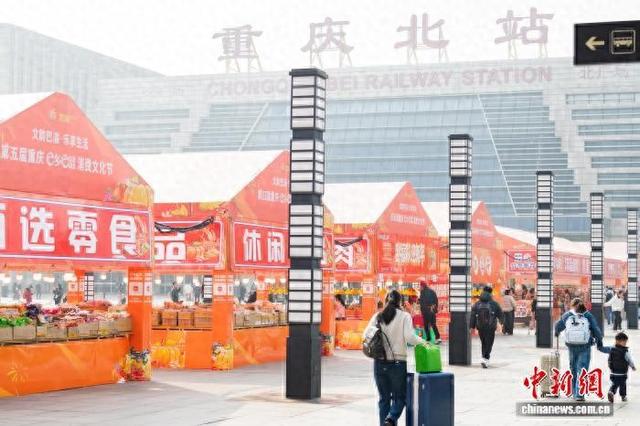
Core Viewpoint - The article highlights the vibrant atmosphere at Chongqing North Station during the Spring Festival travel rush, showcasing the integration of local culture and commerce through the "e乡e味" event, which promotes local agricultural products and enhances the travel experience for returning home [1][11]. Group 1: Event Overview - The "e乡e味" event is taking place at Chongqing North Station, featuring various local specialties and agricultural products, creating a festive environment for travelers [2][3]. - The event includes a wide array of local delicacies, such as spicy hotpot base, cold rabbit, and various sauces, attracting many travelers [3][6]. Group 2: Traveler Experiences - Travelers like Zhou Xiao express satisfaction in finding local products at the station, such as vacuum-packed cured meats and other specialties, which they can take home easily [6][8]. - Younger travelers, such as Li Ran, appreciate the convenience of a delivery service that allows them to send local snacks directly to their homes, enhancing their travel experience [8][10]. Group 3: Economic Impact - The event not only facilitates the sale of local products but also supports local farmers by expanding their market reach, contributing to the local economy [10][11]. - On February 13, Chongqing North Station experienced a peak in passenger flow, sending 188,000 travelers, a 16.5% increase compared to the same day in 2025, marking a historical high for single-day passenger volume [10].
重庆 雄奇山水 新韵重庆
Xin Lang Cai Jing· 2026-02-11 23:56
Core Viewpoint - In 2025, Chongqing aims to enhance its cultural tourism through the implementation of the "Chongqing Action Plan for Promoting the Bashu Cultural Tourism Corridor (2025-2027)", targeting significant increases in domestic tourism and economic contributions from the cultural and tourism sectors [3][4]. Group 1: 2025 Initiatives - Chongqing will launch five premium tourism routes, including "Two Rivers and Four Banks" and "Beautiful Yangtze River", while upgrading eight major scenic spots [3]. - The city plans to introduce popular products like the "New Rhythm Chongqing" drone light show and Rongchang marinated goose, along with a new tourism slogan [3]. - By 2025, the city expects to receive over 500 million domestic tourists, with cultural and tourism industry value-added expected to reach 154 billion yuan and 147 billion yuan, respectively [3]. Group 2: 2026 Development Goals - In 2026, Chongqing will focus on foundational improvements and expanding advantages in cultural tourism, aiming for a breakthrough in the sector [4]. - The city will optimize tourism spatial patterns and develop eight collaborative cultural tourism zones, including urban leisure and ethnic cultural experiences [4]. - There will be an emphasis on integrating cultural tourism with other industries, creating distinctive projects in rural, industrial, health, and educational tourism [4]. - The use of new production capabilities will be promoted to innovate in cultural tourism services, including AI creation and low-altitude sightseeing [4].
十余省份非遗瑰宝集体亮相非遗音乐嘉年华
Xin Lang Cai Jing· 2026-02-09 05:51
Core Insights - The event successfully showcased a blend of intangible cultural heritage (ICH) and music, creating a vibrant cultural experience that appeals to both visual and auditory senses [1][3] - The integration of traditional crafts and contemporary music highlighted the dynamic nature of cultural heritage, making it relevant to modern audiences [2][3] Group 1: Event Overview - The non-heritage music carnival took place from February 7 to 8, featuring over twenty ICH skills from more than ten provinces, including Beijing, Tianjin, and Hainan [1] - The event utilized an innovative format that allowed for a multi-sensory experience, combining visual, auditory, and culinary elements [1] Group 2: Cultural Integration - The event featured performances that fused traditional music with contemporary styles, such as the national-level ICH "Huayin Laoqiang" and modern interpretations by bands like ZAAN and Kawa [2][3] - Young audiences were particularly engaged, with traditional crafts being transformed into fashionable accessories and home decor, demonstrating the adaptability of ICH in contemporary life [2][3] Group 3: Organizational Aspects - The event was organized by the China Foreign Cultural Group, with support from various cultural companies, emphasizing the importance of professional planning in enhancing the impact and interactivity of ICH displays [4] - The event also facilitated dialogue among ICH inheritors from different regions, paving the way for future international exhibitions [4]
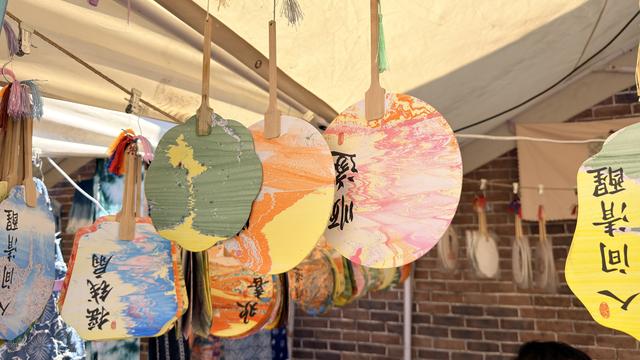
一场美食IP与帮扶车间的双向奔赴
Xin Lang Cai Jing· 2026-02-04 20:31
Core Insights - The event at Chongqing Meixin Red Wine Town showcased a creative fusion of local delicacies, specifically "Rongchang Lu Goose" and the popular "1 Yuan Steamed Bun," highlighting the integration of local specialties with cultural tourism [1][2] Group 1: Event Highlights - The collaboration between "Lu Goose Brother" and the scenic area staff resulted in a unique culinary experience that attracted significant attention from visitors, leading to spontaneous social media sharing [2] - The event emphasized the importance of "product scenarization" and "experiential socialization," marking a new approach in the integration of local food products within tourism settings [1][2] Group 2: Social Impact and Economic Development - The employment assistance workshop at Meixin Red Wine Town has been operational for seven years, focusing on hiring disadvantaged groups and producing tourism-related products, thereby contributing to rural development [2] - The introduction of "Rongchang Lu Goose" as a recognized regional brand is expected to enhance the culinary offerings within the park, improving visitor satisfaction and creating a more attractive tourism consumption ecosystem [2] Group 3: Industry Trends - The innovative practice of combining "steamed buns" and "Lu Goose" reflects a broader trend in the cultural tourism industry, moving from simple product placement to a model of ecological co-construction based on shared customer bases and complementary values [3] - This event serves as a reference for promoting regional specialty products and innovating tourism business models, demonstrating the potential for new consumer possibilities within specific cultural tourism spaces [3]
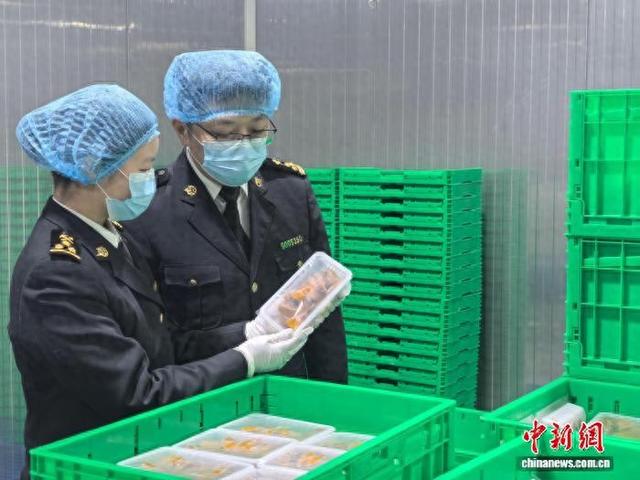
重庆荣昌卤鹅首次出口香港
Xin Lang Cai Jing· 2026-01-29 03:16
Group 1 - Chongqing Customs announced the successful export of Rongchang marinated goose worth over 90,000 RMB to Hong Kong, marking the first time this traditional Chongqing delicacy has reached the region [1] - Rongchang marinated goose combines the essence of Cantonese marination with the spicy and fragrant characteristics of Sichuan cuisine, resulting in a unique flavor profile that is a representative dish of Chongqing [1] - The brand awareness of Rongchang marinated goose has significantly increased due to internet promotion, enabling its export potential [3] Group 2 - The production company, Chongqing E-Tang Food Co., Ltd., expressed concerns about the export process and regulations, as they had never engaged in export business before [3] - To assist the company, Yongchuan Customs formed a specialized team for the export of marinated goose, conducting on-site research and establishing communication bridges between customs and enterprises [3] - Yongchuan Customs is committed to enhancing collaboration with local government departments to support the export of specialty agricultural products like Rongchang marinated goose, ensuring tailored guidance for each enterprise [3]
网红烟火城市的品牌顶层设计和产业底层运营
3 6 Ke· 2026-01-19 02:30
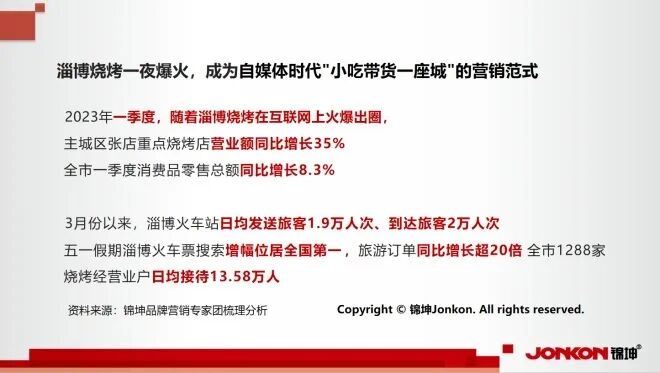
Core Insights - The "smoky economy" has evolved from a basic aspect of people's livelihoods to a core driver of urban industrial iteration and consumer potential activation [1] - Various cities have emerged as "internet celebrity" cities, leveraging unique local IPs to break through traditional consumption patterns, driven by the demands of Generation Z and Alpha [1][3] - The success of cities like Zibo, Harbin, and Changsha highlights the importance of government support and the need for sustainable development in the "smoky economy" [1][30] Group 1: Zibo's Barbecue Economy - Zibo's barbecue gained popularity in early 2023, transforming the city into a "smoky capital" with over 5 million tourists during the May Day holiday, doubling tourism revenue [4][7] - The local government implemented measures such as special barbecue trains and buses, price regulation, and complaint mechanisms to enhance the consumer experience [6] - Challenges include a fragmented supply chain, product homogeneity, and reliance on a single IP, which may lead to a decline in popularity after initial success [7][8] Group 2: Harbin's Winter Economy - Harbin's unique combination of "ice and fire" has made it a winter tourism hotspot, attracting over 30 million visitors and generating over 60 billion yuan in tourism revenue [9][10] - The government has focused on upgrading ice-related IPs and improving infrastructure to enhance visitor experiences [9] - Seasonal dependency and project homogeneity pose significant challenges for sustainable growth [10] Group 3: Tianshui's Culinary Integration - Tianshui's distinct spicy hot pot has gained traction, with a 40% increase in tourist numbers and a 35% rise in tourism revenue [11][12] - The local government is promoting standardization and creating culinary tourism routes to enhance the integration of food and culture [12][14] - However, the lack of chain brands and deep integration with cultural experiences limits long-term growth potential [14] Group 4: Rongchang's Goose Economy - Rongchang's unique braised goose has become a key IP, with a 40% increase in industry output value and a 35% rise in tourist numbers [17][19] - The government is standardizing production and promoting cultural events to enhance the goose's market presence [17][21] - Challenges include a short supply chain and shallow integration with tourism experiences [19] Group 5: Chongqing's Culinary Landscape - Chongqing's hot pot and noodles are deeply integrated into the city's culture, with over 6 billion tourists and 400 billion yuan in tourism revenue [23][24] - The government is promoting standardization and creating unique culinary spaces to enhance the dining experience [23][26] - However, issues like homogeneity and service quality remain significant challenges [24] Group 6: Changsha's Night Economy - Changsha's night economy has become a core aspect of its identity, generating over 300 billion yuan and attracting 260 million visitors [27][28] - The government has implemented policies to support night-time operations and enhance the overall experience [27] - Challenges include brand homogeneity and uneven development across different areas [28] Group 7: Key Takeaways for Sustainable Development - The rise of "internet celebrity" cities underscores the importance of government-business collaboration and the need for sustainable practices [30] - The "smoky economy" relies on a balance of cultural identity, consumer engagement, and industry support to avoid short-lived popularity [30][63] - Future competitiveness will hinge on brand strength and industrial capacity, necessitating a focus on differentiation and sustainability [63]
(经济观察)重庆深耕食农产业:从“市井烟火”走向“全球餐桌”
Zhong Guo Xin Wen Wang· 2026-01-06 07:29
Group 1: Industry Development - Chongqing is transforming from an agricultural base focused on raw agricultural products to a modern industrial hub through deep processing, enhancing value-added products [1][2] - The local government is promoting the development of a trillion-level industrial cluster in food and agricultural product processing, alongside other sectors like smart connected vehicles and software services [1] - The "1+4+N" policy framework has been established to support the food and agricultural processing industry, with specific measures to improve financing, logistics, and export challenges [2] Group 2: Company Highlights - Rongchang's Lu Goose has become a local sensation, with sales reaching 60-70 geese daily during the recent New Year holiday, and expectations for a peak during the Spring Festival [1] - Chongqing Paishen Orange Juice Co., Ltd. is leveraging modern agricultural technology to produce 100% natural NFC orange juice, aiming to enhance the "Zhong Orange" brand value and expand market reach [2] - The total production capacity of Rongchang's Lu Goose has increased to 12 million geese, with leading enterprises achieving sales revenue exceeding 200 million yuan [1]
当越来越多的摊贩成为网红
吴晓波频道· 2025-11-16 00:21
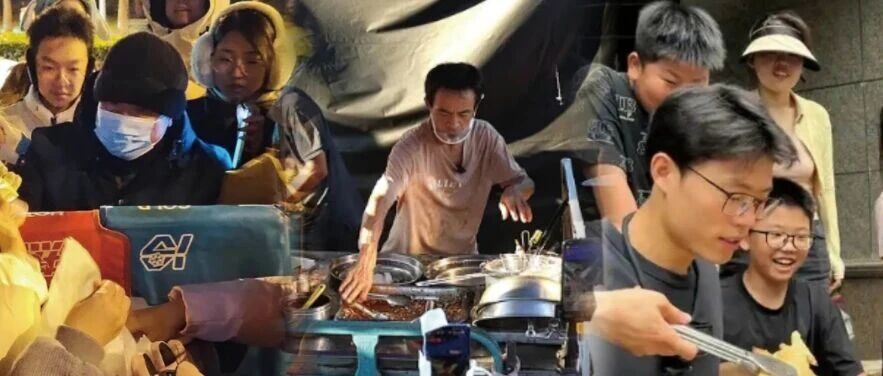
Core Viewpoint - The article highlights the rise of grassroots vendors in China, emphasizing their role in stimulating local economies and tourism, particularly during major holidays. The phenomenon reflects a shift in public perception and regulatory approaches towards street vendors, leading to a resurgence of this sector as a vital part of urban life and economic activity [2][33]. Group 1: Rise of Grassroots Vendors - The year has seen a surge in popularity for grassroots vendors, with notable figures like "Lu Ge Ge" and "Chicken Chop Brother" gaining significant attention and driving local tourism [3][4][5]. - During the May Day holiday, Rongchang attracted over 2 million visitors, generating retail sales of 2 billion yuan, a 258% increase year-on-year [5]. - The emergence of various vendors, such as "Jumping Pancake Brother" and "Happy Grandma," showcases the diverse and engaging personalities behind these businesses, contributing to their viral success on social media platforms [6][7][8]. Group 2: Changing Regulatory Environment - Recent policy shifts have allowed for more flexible management of street vendors, transitioning from a prohibitionist approach to one that encourages regulated operations [14][33]. - Major cities have seen an influx of vendors, with estimates suggesting there are now between 12 million to 18 million registered street vendors in China, alongside an additional 10 million to 20 million unregistered ones [22]. Group 3: Economic Impact and Consumer Behavior - The street vendor economy is projected to grow from 22.59 trillion yuan in 2018 to 37.54 trillion yuan by 2024, indicating a significant market potential [22]. - Vendors often offer products at prices 30% lower than traditional stores, appealing to cost-conscious consumers and enhancing their competitive edge [19][29]. - The success of these vendors is attributed to their ability to connect with local communities, providing fresh, affordable food options while fostering a sense of nostalgia and authenticity [19][29]. Group 4: Media and Social Influence - The rise of social media has played a crucial role in the visibility of these vendors, with many gaining fame through platforms like Douyin and Weibo, leading to increased foot traffic and sales [24][25]. - Media coverage has further amplified their stories, creating a narrative that resonates with the public and encourages local support [24][27]. Group 5: Future Prospects - The article suggests that the current trend of grassroots vendors represents a window of opportunity for new individual entrepreneurs, as they transition from informal operations to recognized businesses [30][34]. - The path from street vendor to small business owner is becoming clearer, with successful vendors like "Chicken Chop Brother" evolving into registered enterprises, indicating a potential for sustainable growth in this sector [34][37].
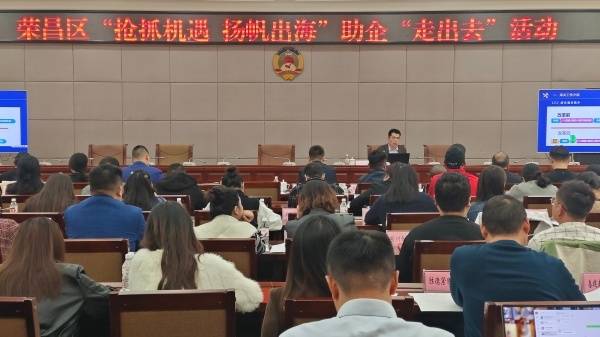
荣昌区举办“抢抓机遇 扬帆出海”助企“走出去”活动
Sou Hu Cai Jing· 2025-10-29 04:36
Core Insights - The event "Seize Opportunities and Set Sail" was held in Rongchang District to support local enterprises in expanding into international markets, focusing on policy interpretation, resource connection, and risk management [2][3] - Rongchang is leveraging its "2335" modern manufacturing cluster system, particularly in the electronic circuit and biopharmaceutical sectors, with the electronic circuit industry experiencing a growth of 103.2% in the first nine months of this year [2] - The event featured experts from Chongqing Customs, tax authorities, and cross-border e-commerce to provide practical guidance and insights into market trends and export processes [2][3] Policy and Support Measures - Chongqing Customs and the tax bureau provided detailed explanations of export tax rebates and foreign trade support policies, clarifying specific measures for subsidy applications and service guarantees [3] - The "New Outbound 2035 Plan" was introduced to assist enterprises in building overseas brands and channels [2] Future Plans - Rongchang will continue to upgrade its foreign trade comprehensive service platform and implement subsidies for cross-border e-commerce and brand cultivation, providing full-process support for enterprises going abroad [3] - The district aims to deepen the integration of its characteristic industries with the cross-border e-commerce ecosystem to enhance the international competitiveness of "Rongchang Manufacturing" and promote high-quality foreign trade development [3]