
麒麟9000S芯片

Search documents
粤产AI手机引领新消费,广东“手机天团”何以狂飙?
2 1 Shi Ji Jing Ji Bao Dao· 2026-01-20 10:49
Core Insights - Guangdong manufactures one out of every three smartphones sold globally, with five major brands dominating the market [1][3] - The smartphone industry in Guangdong has maintained its position as the largest in China for 35 consecutive years, with a projected combined global market share of 34.6% for major brands in 2024 [1][3] - The integration of AI technology into smartphones is expected to drive a new wave of consumer electronics innovation and a subsequent "upgrade wave" in the market [1][6] Industry Overview - Guangdong is the most significant hub for smartphone production in China, leading in scale, output, and export volume [2][3] - The city of Dongguan is a core area for smartphone manufacturing, accounting for 28.6% of Guangdong's smartphone output in 2024 [3] - The region has developed a complete supply chain for smartphone production, with over 90% of components sourced locally [3] Technological Advancements - Continuous R&D investment by major brands has led to significant technological innovations, including advancements in chip design, fast charging, and foldable screens [4][5] - Notable innovations include OPPO's 125W fast charging technology and Huawei's breakthrough in foldable phone hinge design [5][6] - The introduction of AI capabilities in smartphones is transforming them into intelligent assistants, enhancing user experience and functionality [6][7] Market Trends - The shift towards AI-integrated smartphones is expected to redefine market competition, moving beyond hardware performance to functional innovation [6][8] - Major brands are actively incorporating AI features into their flagship models, with Huawei's HarmonyOS enhancing user interaction through AI [6][7] - The emergence of AI Agent smartphones is anticipated to lead a new "upgrade wave" in the context of stagnant smartphone sales growth [6][8] Future Outlook - Guangdong plans to accelerate the development of high-quality action plans for AI terminal products, indicating a strategic focus on innovation and market leadership [7][8] - The ongoing evolution of smartphones in Guangdong reflects a broader trend of the manufacturing sector integrating advanced technologies and moving up the global value chain [8]


全球每卖三台手机,就有一台广东造
2 1 Shi Ji Jing Ji Bao Dao· 2026-01-15 01:11
Core Insights - The article highlights the dominance of Guangdong in the global smartphone market, with one in three smartphones sold worldwide being manufactured in the region. Guangdong's "smartphone team" includes major brands like Huawei, OPPO, Vivo, Honor, and Transsion, which collectively represent a significant portion of the global market share [1][6][30]. Group 1: Market Position and Performance - In 2024, the combined shipment volume of Guangdong smartphone brands is projected to account for approximately 34.6% of the global market [6][7]. - Huawei's global smartphone shipment volume is expected to reach 48.4 million units in 2024, holding a 4% market share [7]. - OPPO is projected to ship 104.8 million units globally in 2024, securing an 8.5% market share [8]. - Vivo's global shipment volume is anticipated to be 101 million units in 2024, with a market share of 8.5% [10]. - Transsion is expected to ship 106.9 million units in 2024, achieving an 8.6% market share, ranking fourth globally [12]. Group 2: Innovation and Technology - Guangdong's smartphone industry is characterized by a robust supply chain and innovation ecosystem, with 95% of smartphone components available within a one-hour commute in Dongguan [2][6]. - The region is advancing towards AI integration in smartphones, with brands like Huawei and Vivo launching AI-enabled devices that enhance user experience [17]. - Huawei's Mate 60 is noted as the world's first smartphone supporting satellite communication, showcasing technological advancements [18]. Group 3: Industry Structure and Ecosystem - The smartphone industry in Guangdong is structured around a "triangular" ecosystem involving design in Shenzhen, manufacturing in Dongguan, and component supply in Huizhou, creating a world-class supply chain [2][6]. - The region is home to leading companies in various sectors, including semiconductor design (e.g., HiSilicon), battery production (e.g., Desay Battery), and PCB manufacturing, contributing to a comprehensive smartphone manufacturing base [23][24][29]. - The industry is shifting from price competition to a focus on quality, technology, and brand, reflecting a broader trend in global manufacturing [3].


全球每卖三台手机,就有一台广东造
21世纪经济报道· 2026-01-15 01:08
Core Viewpoint - The article emphasizes the dominance of Guangdong in the global smartphone market, highlighting its significant contribution to smartphone manufacturing and innovation, with one in three smartphones sold worldwide being produced in Guangdong [1][14]. Group 1: Guangdong's Smartphone Industry - Guangdong is the most important hub for smartphone production in China, with major brands like Huawei, OPPO, vivo, Honor, and Transsion leading the market [14]. - In 2024, the combined shipment volume of Guangdong smartphone brands is expected to account for approximately 34.6% of the global market [14]. - The region's smartphone production ecosystem includes a robust supply chain, with 95% of smartphone components available within a one-hour commute in Dongguan [7][36]. Group 2: Competitive Advantages of Guangdong Brands - The "Five Tigers" of Guangdong (Huawei, OPPO, vivo, Honor, and Transsion) leverage unique strengths: Huawei focuses on technological innovation, vivo targets young consumers with imaging technology, OPPO emphasizes cost-effectiveness, Honor enhances user experience, and Transsion excels in overseas markets [4][7]. - In the high-end market, these brands collectively hold about half of the market share, showcasing their strong product competitiveness [15]. Group 3: Innovations and Future Trends - The integration of AI technology is becoming a new driving force for smartphone evolution, with Guangdong brands accelerating their development of AI capabilities in mobile devices [10][29]. - The article notes that Guangdong is transitioning from price competition to a focus on quality, technology, and brand value, indicating a shift towards higher-value products [10]. Group 4: Key Metrics and Market Performance - In 2024, Huawei's global smartphone shipment is projected to be 48.4 million units, capturing a 4% market share [16]. - OPPO is expected to ship 104.8 million units globally in 2024, holding an 8.5% market share, while vivo is anticipated to achieve similar figures [17][18]. - Transsion's smartphone shipments are projected to reach 106.9 million units in 2024, maintaining a 9.0% market share, reflecting its strong growth in emerging markets [20]. Group 5: Supply Chain and Manufacturing Capabilities - Guangdong's supply chain includes leading companies in semiconductor design, battery production, and PCB manufacturing, establishing it as a global innovation hub [22][34][35]. - The region's battery production is expected to reach 7.349 billion units in 2024, making it the largest producer in China [34].


从广货到“新广货”,为何全球爆款频出?
2 1 Shi Ji Jing Ji Bao Dao· 2026-01-14 08:49
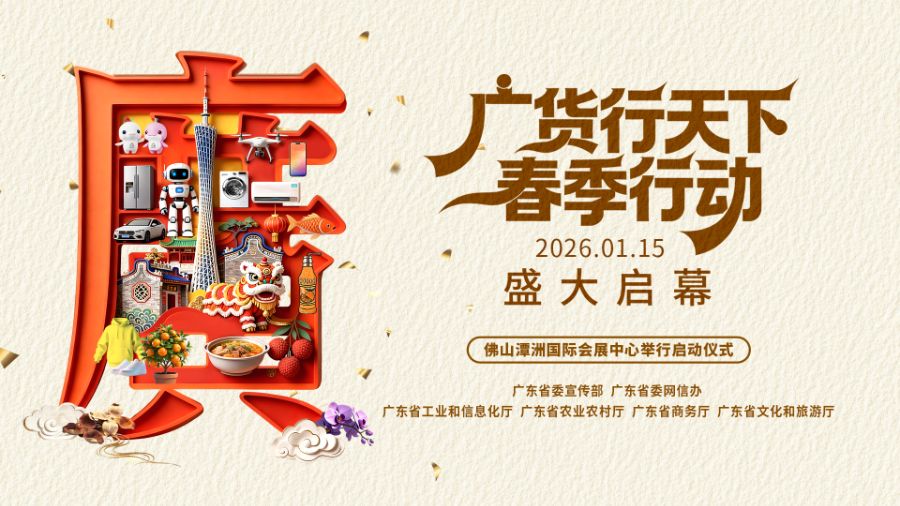
Core Viewpoint - The "Guangdong Products Going Global" spring promotional campaign is set to launch in Foshan, marking the beginning of the 2026 online promotional activities for Guangdong products, showcasing the diverse appeal of Guangdong manufacturing [2] Group 1: Geographic and Trade Advantages - Guangdong's geographic location, backed by the Nanling Mountains and facing the South China Sea, provides excellent conditions for foreign trade and industrialization, forming the foundation for the success of Guangdong products [3] - The evolution of trade structures has allowed Guangdong to continuously upgrade its products, with initial trade models attracting foreign investment and advanced manufacturing techniques, contributing to the wealth of Guangdong products [3] Group 2: Technological Advancements and Manufacturing - The current competitive edge of Guangdong products lies in intelligent manufacturing, moving from traditional appliances to smart devices like drones and robots, reflecting the region's adaptation to technological revolutions [4] - Guangdong is home to nine trillion-yuan industrial clusters, with projected revenues exceeding 19 trillion yuan by 2025, and it leads the nation in the number of industrial enterprises, producing a significant share of global consumer drones and smartphones [4] Group 3: Traditional and Emerging Industries - Traditional industries remain crucial for the legacy of Guangdong products, with ongoing transformations enhancing their viability through strategic investments in future industries [5] - Guangdong is a major hub for smartphone manufacturing, with significant advancements in technology, including breakthroughs in high-end chips and AI integration in mobile devices, further solidifying its position in the global market [6] Group 4: Future Prospects - Initiatives like "Smart Electric Guangdong Manufacturing" and "Fashion from Guangdong" are expected to further enhance the iterative upgrades of Guangdong products, indicating a promising future for the region's manufacturing sector [6]
星闪应用前景广阔上市公司争相布局
Xin Hua Wang· 2025-08-12 05:48
Core Viewpoint - Huawei's new wireless communication technology, NearLink (Star Flash), is gaining significant market attention due to its innovative features and potential applications in various industries, including consumer electronics and smart homes [1][2]. Group 1: Technology Overview - NearLink is a new wireless communication standard that combines the advantages of Bluetooth and WiFi, offering lower latency, reduced power consumption, and higher connection capacity [2][3]. - Compared to traditional wireless technologies, NearLink reduces power consumption by 60%, increases data transmission speed by six times, lowers transmission latency to 1/30 of previous standards, and supports up to 4096 device connections [2][3]. Group 2: Industry Impact and Adoption - The Star Flash Alliance, which has over 300 member companies, is pushing for the industrialization of NearLink technology, with several companies already making significant advancements in product development [1][5]. - Companies like Jiulian Technology and Chuangyao Technology are actively developing products that incorporate NearLink technology, with applications in smart home devices and high-performance wireless terminals [5][6]. Group 3: Future Prospects - 2023 is identified as the commercial launch year for NearLink, with expectations for a significant increase in device deployment in 2024 [5]. - The technology is anticipated to become a mainstream wireless communication standard, particularly in areas such as smart home devices, high-fidelity audio, and automotive applications [6][7].
