
A868飞行汽车

Search documents
小鹏为什么选择物理AI这条路
雷峰网· 2025-11-07 00:43
Core Viewpoint - The future of automobiles is envisioned as four-wheeled robots, with intelligent driving becoming the core competitive point in the industry by 2025, as electric vehicle technology matures and becomes a basic threshold for entry [2][9]. Group 1: Industry Trends - The development of the new energy industry has shifted focus from electrification to intelligent driving, marking a new cycle of competition [2]. - Major tech companies are investing in physical AI, indicating a consensus that the next generation of human-machine interaction will be through robotics [2][9]. - The emergence of physical AI is expected to revolutionize various sectors, including automotive, robotics, and flying cars, creating a more integrated technological ecosystem [7][28]. Group 2: Company Developments - Xiaopeng Motors has been an early adopter of AI in the automotive sector, positioning itself in the first tier of intelligent driving companies in China [3]. - The company has achieved significant breakthroughs with its second-generation VLA model, which allows for autonomous understanding of physical laws, enhancing its intelligent driving capabilities [5][20]. - Xiaopeng's investment in AI infrastructure includes a 4.5 billion yuan annual investment in computing power, establishing a large-scale intelligent computing cluster to support its AI model training [16]. Group 3: Product Innovations - Xiaopeng plans to launch multiple products, including three Robotaxi models and a highly humanoid robot named IRON, aiming for mass production by the end of 2026 [22][30]. - The second-generation VLA model is designed to eliminate reliance on high-precision maps, enabling more flexible and cost-effective deployment of Robotaxi services [28]. - The company is also advancing in the flying car sector, with over 7,000 orders for its land carrier and ongoing flight verification for its multi-person tilt-rotor flying car [30]. Group 4: Competitive Landscape - The competition in the physical AI space is intensifying, with Xiaopeng and Tesla both recognizing the need for a combination of diverse hardware and unified software architecture to support AI's development in the physical world [12][17]. - Xiaopeng's approach to physical AI aims to create a synergistic effect across its various business lines, optimizing costs and enhancing overall competitiveness [26]. - The industry is witnessing a shift from a single-direction chase to a collaborative innovation model, where breakthroughs are achieved through the convergence of multiple fields [33].


智能汽车系列报告(二):小鹏发布全新IRON机器人,具身智能发展加速
Shanghai Aijian Securities· 2025-11-06 09:45
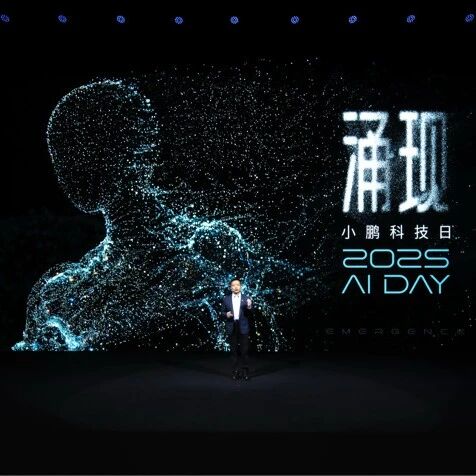
Investment Rating - The report assigns an "Outperform" rating for the automotive industry [3]. Core Insights - The report highlights the rapid growth of new energy vehicle sales, particularly focusing on Xiaopeng Motors' advancements in AI and robotics, positioning it as a leader in the smart mobility sector [3]. - Xiaopeng Motors has introduced a new intelligent travel architecture centered around "Physical AI," which includes the second-generation VLA model, mass-produced Robotaxi, and the new IRON robot, indicating a comprehensive approach to integrating AI with physical mobility [3]. - The VLA 2.0 model is noted for its ability to convert visual and language inputs directly into movement trajectories, enhancing the future of autonomous driving solutions [3]. - Xiaopeng's advancements in robotics are driven by data, with the IRON robot expected to achieve mass production by the end of 2026, focusing on applications in guiding and shopping scenarios [3]. Summary by Sections Event Overview - On November 5, Xiaopeng Motors launched its new intelligent travel architecture themed "Emergence," emphasizing the integration of AI with physical mobility [3]. Technological Advancements - The VLA 2.0 model utilizes a cloud supercomputing cluster and a large model with 720 billion parameters, achieving a tenfold improvement over industry standards [3]. - The introduction of the IRON robot aims to leverage vast amounts of data for enhanced generalization capabilities, with a focus on safety and efficiency [3]. Commercialization Pathways - Xiaopeng's Robotaxi is set to begin trial operations in 2026, featuring high computational power and a dual-path commercialization strategy targeting both B2B and B2C markets [3]. - The A868 flying car has been developed for long-distance travel, with a production capacity of 10,000 units planned for 2026 [3]. Investment Recommendations - The report suggests focusing on leading smart vehicle companies that are rapidly establishing user experience barriers through advanced models and computational power, recommending attention to companies like Xiaomi Group, Xiaopeng Motors, and Li Auto [3].