
IRON机器人

Search documents
忙活了十几年,新势力一共挣了16个亿
汽车商业评论· 2026-03-26 23:06
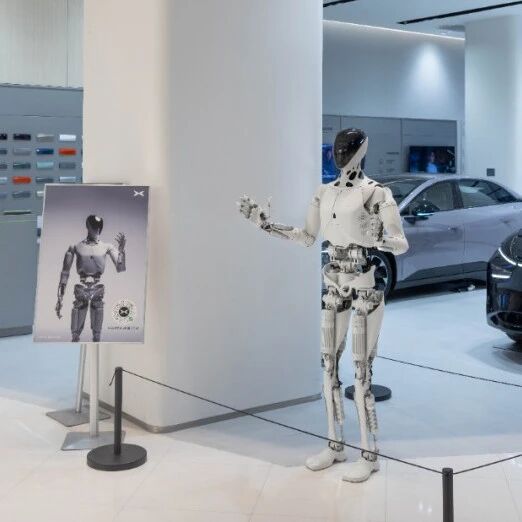
Core Insights - The article discusses the survival and profitability of four new car manufacturers in China: NIO, Li Auto, Xpeng, and Leap Motor, highlighting their financial performance and strategic adjustments over the years [3][5]. Financial Performance - In Q4 2025, NIO reported a net profit of 283 million RMB, marking its first profit in 11 years. Xpeng also achieved profitability with a net profit of 380 million RMB, while Leap Motor earned 540 million RMB for the entire year, becoming the second new force to achieve annual profitability after Li Auto [3]. - The four surviving companies collectively earned 1.6 billion RMB in 2025, a significant achievement after the failure of over a hundred new entrants and the expenditure of over a thousand billion RMB in investments [3]. Delivery and Revenue Metrics - The delivery volumes for 2025 were as follows: Xpeng delivered 326,000 vehicles, Li Auto 429,000, Leap Motor 406,300, and NIO 596,600 [4]. - Revenue figures for 2025 were reported as: Xpeng 87.49 billion RMB, Li Auto 76.72 billion RMB, Leap Motor 112.3 billion RMB, and NIO 64.73 billion RMB [4]. Strategic Adjustments - Li Auto is focusing on improving store quality rather than quantity, implementing a "store partner" mechanism to empower store managers with decision-making and profit-sharing capabilities [7][9]. - NIO is undergoing a cost-saving initiative, emphasizing efficiency and accountability in spending, with a focus on achieving profitability [11]. Technological Development - Xpeng is merging its autonomous driving and smart cockpit divisions to enhance research and development efficiency, aiming to produce the IRON robot by the end of 2026 [11]. - Leap Motor is planning to enhance its smart technology capabilities, having previously focused on survival rather than aggressive investment [12]. International Expansion - Xpeng has been the most proactive in international markets, with nearly 50% of its sales coming from Europe and plans to launch four new global products in 2026 [13][15]. - Leap Motor led in export volume among new forces in 2025, with 67,052 vehicles exported, aided by a partnership with Stellantis for localized manufacturing [16]. - NIO is taking a cautious approach to international expansion, focusing on establishing a strong foundation in China before pursuing overseas markets [18]. Embodied Intelligence - The new forces are considering entering the robotics sector, with Xpeng being the most aggressive in integrating automotive and robotics technology [21][23]. - Li Auto plans to invest significantly in AI and embodied intelligence, with a focus on self-developed chips and smart driving technologies [25][26].



【小鹏汽车(XPEV.N)】4Q25扭亏,2026E聚焦全球化突破与AI业务兑现——2025年四季度业绩点评报告(倪昱婧/邢萍)
光大证券研究· 2026-03-24 23:05
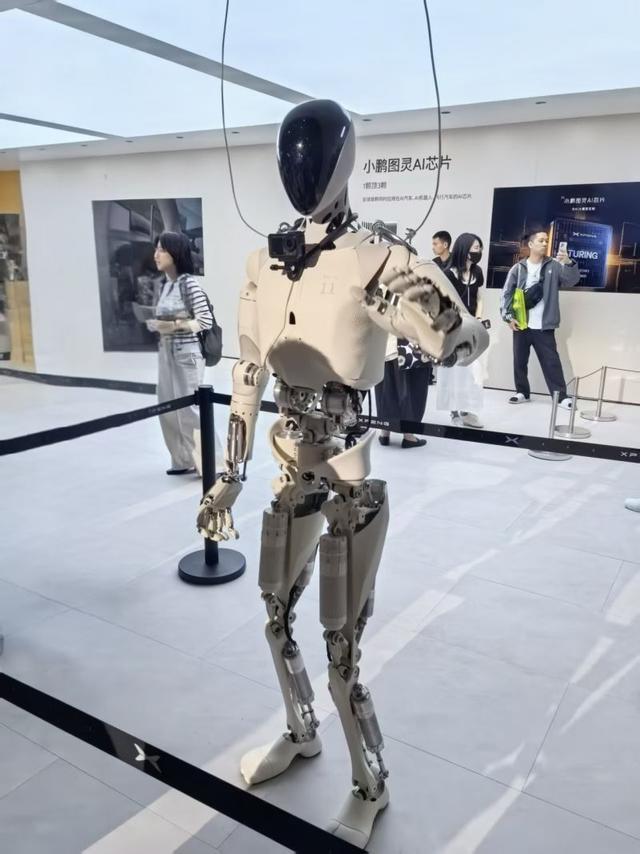
Core Viewpoint - The company has shown significant improvement in financial performance, with a notable increase in total revenue and a reduction in net losses, indicating a potential turnaround in its business operations [4][5]. Financial Performance - In 4Q25, total revenue increased by 38.2% year-on-year and 9.2% quarter-on-quarter to reach 22.25 billion yuan, with a gross margin of 21.3%, up 6.9 percentage points year-on-year [4]. - The company reported a Non-GAAP net profit of 510 million yuan in 4Q25, marking a significant recovery from a net loss of 4.6 billion yuan, primarily due to approximately 840 million yuan in other income, including government subsidies [4]. - For the full year 2025, total revenue rose by 87.7% to 76.72 billion yuan, with a gross margin of 18.9%, an increase of 4.6 percentage points year-on-year [4]. Automotive Business - The automotive business generated revenue of 19.07 billion yuan in 4Q25, reflecting a year-on-year increase of 30.0% and a quarter-on-quarter increase of 5.6%, with a gross margin of 13.0% [5]. - Research and Development (R&D) expense ratio decreased by 0.5 percentage points year-on-year to 12.9%, while Selling, General and Administrative (SG&A) expense ratio decreased by 1.6 percentage points quarter-on-quarter to 12.5% [5]. - The company has approximately 47.66 billion yuan in cash and cash equivalents as of 4Q25, with management guiding for vehicle deliveries in 1Q26E to be between 61,000 and 66,000 units [5]. Strategic Focus - The company is advancing its physical AI initiatives, focusing on global expansion and the realization of AI business opportunities [6]. - In 1Q26E, the automotive sector is expected to reach a bottom in industry fundamentals, with product structure improvements anticipated to offset demand declines and rising raw material costs [6]. - The management plans to launch four new global models this year under the "one car, dual energy" strategy, with expectations for increasing overseas market deliveries [6]. - The collaboration with Volkswagen is deepening, with Volkswagen being the first external customer for the VLA2.0+ Turing chip, which is expected to generate steady revenue and validate the company's AI technology competitiveness [6]. - The company is also progressing in the development of Robotaxi and humanoid robots, with plans for large-scale production of the new generation IRON robot by the end of 2026 [6][7].
小鹏汽车-W(09868):2025Q4及2025全年业绩点评:VLA2.0引领产品与技术共振,估值重塑提速
Guohai Securities· 2026-03-23 11:17
Investment Rating - The report maintains a "Buy" rating for the company [1] Core Insights - The company reported Q4 2025 revenue of 22.25 billion, a year-on-year increase of 38.2%, exceeding Bloomberg's consensus estimate of 21.64 billion [5] - The gross margin for Q4 2025 was 21.3%, higher than the expected 20.2% [5] - The adjusted net profit for Q4 2025 was 505 million, surpassing the consensus estimate of -70.22 million, marking the first quarterly profit for the company [5] - The company plans to launch four new models in 2026, including a large six-seat SUV and two Mona SUVs, while also expanding its overseas presence [5] - The introduction of VLA 2.0 is expected to strengthen the company's position in the intelligent driving sector, with significant improvements in safety and performance metrics [5] - The company anticipates a significant increase in overseas revenue, projected to reach 20% of total revenue by 2026 [6] Financial Summary - For 2025, the company expects revenue of 76.72 billion, with a growth rate of 87.7% [7] - The projected revenue for 2026 is 94.52 billion, with a growth rate of 23.2% [7] - The net profit for 2026 is expected to be -411 million, improving to 5.03 billion in 2027 [7] - The company’s return on equity (ROE) is projected to turn positive by 2027, reaching 16.03% [7] - The price-to-sales (P/S) ratio is expected to decrease from 1.6 in 2025 to 1.0 by 2027 [7]
“不务正业”的小鹏,第一次单季度盈利了
第一财经· 2026-03-21 07:49
Core Viewpoint - The article discusses the strategic expansion of XPeng Motors into robotics and Robotaxi services, highlighting the potential of these markets and their connection to the automotive industry [3][4]. Group 1: Robotics Development - XPeng Motors plans to begin mass production of its new generation IRON robots by the end of 2026, targeting a monthly output of over 1,000 units [3]. - The cost structure for robotics includes hardware, R&D, and operational costs, with AI-related R&D costs expected to be significantly higher than those for automotive [3]. - The company aims to enter the commercial sector first with its humanoid robots, followed by industrial and household applications [4]. Group 2: Robotaxi Progress - XPeng anticipates launching a Robotaxi service with safety personnel in the second half of the year, with plans for further global partnerships to advance autonomous operations [4]. - The growth of the Robotaxi business will depend on societal acceptance and regulatory approval, with expectations for rapid development in select regions over the next 2-4 years [4]. Group 3: Automotive Business Performance - In Q4 2025, XPeng achieved its first quarterly profit, with a net profit exceeding 380 million yuan, and a total delivery of 428,500 vehicles for the year, marking a 126% year-on-year increase [5]. - The company’s gross margin for 2025 was 18.9%, an increase of 4.6 percentage points year-on-year, although the core operating profit showed a loss of 797 million yuan, indicating room for improvement in profitability [5]. Group 4: Future Plans and R&D Investment - XPeng plans to launch four new vehicle models in 2026, focusing on expanding its product line and enhancing product capabilities, with a goal of doubling overseas sales and increasing international revenue contribution to over 20% [5]. - The total R&D investment for 2025 was 9.49 billion yuan, with 4.5 billion yuan allocated to AI-related projects, which is expected to rise to 7 billion yuan in 2026 [6]. - The company anticipates a decrease in vehicle deliveries in Q1 2026, estimating between 61,000 and 66,000 units, a year-on-year decline of 29.8% to 35.1% [6].

豪掷426亿,全球第三大车企押注AI!不务正业还是彻底不过了?
电动车公社· 2026-03-10 16:01
Core Viewpoint - The article discusses Hyundai Motor Group's significant investment of 9 trillion KRW (approximately 426 billion RMB) in AI and related technologies despite a decline in net profits for both Hyundai and Kia in 2025, indicating a strategic shift towards building a comprehensive industrial ecosystem focused on AI and robotics [2][4][5][8]. Investment Allocation - Hyundai's investment is allocated across five key areas: - 5.8 trillion KRW for AI data center infrastructure to handle vast datasets for autonomous driving and robotics [6][7] - 400 billion KRW for a robot manufacturing cluster [6][7] - 1 trillion KRW for polymer electrolyte membrane (PEM) electrolyzers for large-scale clean hydrogen production [6][7] - 1.3 trillion KRW for solar energy infrastructure [6][7] - 400 billion KRW for developing AI-driven smart cities [6][7] Strategic Rationale - The investment aims to create a complete industrial cluster capable of generating power and manufacturing, rather than just initiating an internal AI project [8][10] - Hyundai's decision to invest in the relatively unknown region of Jeonbuk Province is seen as a move to transform the local economy and establish a global innovation center [10][12][15] - The urgency for this investment is driven by the rapid advancements in AI and robotics, with Hyundai recognizing the need to catch up with competitors in the U.S. and China [20][21] Challenges and Market Context - Hyundai faces significant challenges, including a decline in net profits due to external factors like U.S. tariffs on imported vehicles, which have impacted profitability despite stable sales [40][41][46] - The company holds a substantial market share in the U.S., making it crucial to enhance AI capabilities to remain competitive in a rapidly evolving automotive landscape [48][51][53] Robotics and AI Development - The acquisition of Boston Dynamics is a strategic move to bolster Hyundai's capabilities in robotics, with plans for the Atlas robot to be integrated into Hyundai's manufacturing processes [24][36][72] - The Atlas robot is designed for practical industrial applications, with a focus on tasks such as parts sorting and material handling, reflecting a shift towards operational efficiency [61][72] Future Outlook - Hyundai plans to push for Boston Dynamics' IPO in 2027, which could provide financial returns and alleviate the burden of ongoing operational costs associated with the robotics company [77][78] - The automotive industry is facing unprecedented challenges, including electrification, geopolitical tensions, and the rise of Chinese competitors, necessitating continuous adaptation and innovation from established players like Hyundai [80][81][83]

2月车市“寒流”:新势力分化显著,多家车企集团新能源承压
经济观察报· 2026-03-03 10:20
Core Viewpoint - The automotive industry is experiencing pressure on new energy vehicle (NEV) sales while exports are showing significant growth, with only Geely and Changan maintaining year-on-year growth in NEV sales among seven major automotive groups [2][7]. Group 1: February Sales Performance - In February, several leading new energy vehicle companies showed a clear divergence in sales performance, with NIO delivering 20,797 vehicles, a year-on-year increase of 57.6% [3]. - Li Auto delivered 26,421 vehicles, marking a slight year-on-year increase of 0.60%, the first positive growth since June 2025 [4]. - Xpeng Motors faced a significant decline, delivering 15,256 vehicles, a year-on-year drop of 49.90% [4]. Group 2: Export Growth - SAIC Group reported total sales of 269,500 vehicles in February, a year-on-year decline of 8.64%, but NEV sales were 71,300 vehicles, down 17.18%. However, exports grew by 46.12% to 99,000 vehicles [8]. - Geely Automotive Group's February sales reached 206,200 vehicles, a 1% increase, with NEV sales at 117,500 vehicles, up 19%, and exports at 60,900 vehicles, soaring 138% [9]. - BYD's February sales were 190,200 vehicles, down 41.1%, with exports accounting for 100,600 vehicles [9]. Group 3: Brand Performance - Chery Group sold 160,800 vehicles in February, a year-on-year decrease of 11.15%, with NEV sales at 35,700 vehicles, down from 44,400 vehicles last year [10]. - Changan Automobile sold 151,900 vehicles, down 5.89%, but NEV sales increased by 6.42% to 42,300 vehicles [10]. - GAC Group's sales were 86,500 vehicles, down 12.43%, with NEV sales at 17,000 vehicles, down 11.22% [11]. Group 4: Other Notable Performances - Dongfeng Motor and BAIC Group have not yet released overall sales data, but some brands have reported figures, such as Lantu Automotive with 8,358 vehicles delivered, a year-on-year increase of 4.31% [12]. - BAIC New Energy reported sales of 7,034 vehicles, up 18.26% year-on-year [13].



争夺未来话语权!从试点落地到多元布局,宝马、比亚迪、特斯拉等车企加码人形机器人
Hua Xia Shi Bao· 2026-03-03 08:33
Group 1 - BMW officially launched a humanoid robot pilot project at its Leipzig plant, marking the introduction of Physical AI into its European production system [2][4] - The pilot project aims to explore the application of humanoid robots in the entire automotive production process, focusing on areas such as component assembly, material handling, and high-risk job replacement [2][3] - The project leverages BMW's engineering capabilities and quality control systems, aiming to enhance production efficiency and product quality through effective collaboration between robots and human workers [3][4] Group 2 - The Leipzig plant, established in 2005, has a production capacity of over 300,000 vehicles annually and has accumulated significant experience in digital and intelligent manufacturing [5] - BMW's previous successful implementation of humanoid robots in its Spartanburg plant in the U.S. serves as a foundation for expanding this technology to Europe [5][6] - Analysts suggest that if the Leipzig pilot is successful, BMW may gradually roll out humanoid robots across its global production bases within the next 3 to 5 years [6] Group 3 - Over 20 major automotive companies globally are investing in humanoid robot technology, including Tesla, Hyundai, and leading Chinese manufacturers like BYD and Xpeng [3][8] - Tesla's Optimus project aims for mass production of humanoid robots, with initial annual production targets set between 50,000 to 100,000 units, and a long-term goal of over 1 million units [6][7] - Hyundai has acquired Boston Dynamics to enhance its humanoid robot technology and plans to implement Atlas robots in its factories by 2024-2025 [8] Group 4 - Chinese automakers are rapidly entering the humanoid robot sector, with companies like Xpeng and Chery making significant advancements [8][9] - Xpeng's IRON robot project has shown a 30% increase in production efficiency and a 35% reduction in labor costs since its introduction [9] - Chery has quickly established a dedicated robotics company and achieved global scale delivery of its humanoid robots [9][10] Group 5 - The global automotive industry is experiencing accelerated development in humanoid robots, driven by technological advancements, supply chain support, and favorable policies [10] - The integration of humanoid robots is seen as a strategic move for automakers to address industry challenges and secure a competitive edge in future technology [10]


车企集体下场“造人”:一场被内卷逼出来的突围战
创业邦· 2026-03-02 00:09
Core Viewpoint - The article discusses the emerging trend of automotive companies venturing into humanoid robot production, highlighting the strategic importance of this technology in the context of increasing competition in the electric vehicle market and the need for new growth avenues [5][6]. Group 1: Industry Context - The penetration rate of new energy vehicles in China is expected to exceed 50.8% by 2025, shifting the market dynamics from "incremental growth" to "stock competition" [8]. - The industry faces three major cost pressures: a 140% increase in lithium carbonate prices since the second half of 2025, a 180% rise in automotive DRAM prices, and high inventory levels with 3.57 million vehicles in stock as of January 2026 [9][10]. - The average profit margin in the industry has dropped below 4.5%, pushing many companies to seek a "second growth curve" [10]. Group 2: Robotics as a Strategic Focus - Automotive companies are increasingly viewing humanoid robots as a key part of their future strategy, with significant investments planned. For instance, BYD aims to deploy 20,000 robots by 2026, while Tesla plans to repurpose production lines for robot manufacturing [5][6]. - The commonality in core components between humanoid robots and smart vehicles is around 60%, allowing for shared technology and resources [11]. - Companies like Xpeng and BYD are already integrating robots into their production processes, creating a feedback loop that enhances both robot development and manufacturing efficiency [11][14]. Group 3: Production Challenges - The production of humanoid robots faces significant bottlenecks due to reliance on high-cost, low-yield components, and the lack of a mature supply chain comparable to that of the automotive industry [17]. - Current manufacturing processes are still heavily manual, lacking the automation needed for large-scale production, which complicates achieving consistent quality and reliability [17]. - There are unresolved issues regarding the robots' operational reliability in real-world scenarios, which hampers their readiness for mass production [17]. Group 4: Profitability Issues - The industry is grappling with high costs and low output, with humanoid robots costing tens of thousands of yuan, making it difficult to achieve profitability [18]. - The efficiency of robots is currently only about 30% of human capabilities, leading to long payback periods that exceed the lifespan of the equipment [18]. - The business models in the sector are still in early stages, with high product prices and fluctuating service costs making it challenging to establish stable cash flows [20]. Group 5: Competitive Landscape - The entry of automotive companies into the robotics space poses a significant threat to traditional robotics firms, as these companies leverage their established supply chains and manufacturing capabilities [22]. - There is a risk of oversupply and homogenization in the market, with many companies aggressively expanding production without securing substantial orders [22]. - The competition will increasingly focus on who can produce high-quality robots that are commercially viable, rather than merely who can build them [23].
汽车行业周报(20260223-20260301):3月汽车零售有望逐步回暖,AIDC及缺电带动柴发链上行-20260301
Huachuang Securities· 2026-03-01 11:46
Investment Rating - The report maintains a recommendation for the automotive sector, indicating a gradual recovery in retail sales expected in March 2026 [1]. Core Insights - The automotive sector continues to face challenges from weak retail sales and rising material costs. However, March is anticipated to see improvements due to several factors, including the reduction of deferred consumers from last year, new car launches, and the opening of subsidy programs [1]. - The report highlights that the cost of lithium carbonate for PHEVs has increased by approximately 1,000-2,000 CNY year-on-year, while for BEVs, the increase is about 2,000-4,000 CNY. The cost for economic storage has risen by several hundred CNY, and for high-end models, it has increased by 1,000-3,000 CNY [1]. - The report emphasizes that automakers often find ways to mitigate the impact of rising material costs, such as cost reduction in the supply chain, adjustments in product configurations, and price increases. The acceptance of reasonable price hikes by consumers will be crucial for new car launches and annual model updates [1]. Data Tracking - The discount rate in early February decreased to 9.3%, with a year-on-year increase of 0.3 percentage points and a month-on-month decrease of 0.2 percentage points. The average discount amount was 20,714 CNY, showing a year-on-year increase of 307 CNY but a month-on-month decrease of 828 CNY [3]. - In December, wholesale and retail sales of passenger vehicles saw a year-on-year decline, with wholesale sales at 2.85 million units (down 8.7% year-on-year) and retail sales at 2.28 million units (down 16.8% year-on-year) [3]. Market Performance - The automotive sector index increased by 0.59%, ranking 22 out of 29 sectors. The overall market indices showed positive growth, with the Shanghai Composite Index up by 1.98% [7][8]. - Key material prices have shown significant fluctuations, with lithium carbonate averaging 152,881 CNY per ton in Q1 2026, a year-on-year increase of 102% [7].





人形机器人产业迈入量产新阶段,天弘中证机器人ETF联接基金(A/C:014880/014881)乘机器人产业量产东风,布局人形机器人黄金赛道
Xin Lang Cai Jing· 2026-02-25 06:03
Group 1 - The core viewpoint of the articles highlights significant advancements in humanoid robots showcased during the 2026 Spring Festival Gala, indicating a transition from initial development to large-scale production in the industry starting from 2026 [1][2] - Four major domestic humanoid robot manufacturers participated in the gala, demonstrating their capabilities in various scenarios, which reflects the progress made by Chinese humanoid robot companies in 2025 [1] - Unitree Technology launched its fourth quadruped robot, Unitree As2, which boasts performance metrics such as a peak torque of 90 N·m, a maximum speed of 5 m/s, and a range of over 13 km with a 15 kg load, indicating substantial improvements in robotic technology [1] Group 2 - The robotics sector, particularly humanoid robots, has gained strong market attention and order growth following the Spring Festival Gala, suggesting a shift towards mainstream consumer recognition [2] - The Tianhong CSI Robotics ETF Fund has shown impressive historical returns, with A-class shares yielding 28.92% and C-class shares yielding 28.67% in 2025, indicating strong performance in the robotics investment space [3] - The top ten stocks in the CSI Robotics Index are heavily weighted towards humanoid robot-related companies, with a concentration of approximately 40%-45% among key players, highlighting the industry's focus on this segment [3]
