AE200电动垂直起降航空器

Search documents
成都都市圈加速区域协同,跨越山海联动长三角
第一财经· 2025-12-23 09:48
Core Viewpoint - The Chengdu Urban Circle is positioned as a significant investment opportunity, focusing on key industries such as new displays, rail transit, aviation equipment, new energy vehicles, and green food, aiming to enhance collaboration and economic growth in the region [1][5][24]. Group 1: Urban Circle Development - The Chengdu Urban Circle is the third urban circle approved at the national level and the first in the central and western regions, covering an area of 33,100 square kilometers and integrating four cities: Chengdu, Deyang, Meishan, and Ziyang [3]. - Over the past five years, the Chengdu Urban Circle has achieved a differentiated rise through transportation integration and economic collaboration, with an average GDP growth rate higher than the national and provincial levels [7][8]. Group 2: Industry Opportunities - Nine key industrial chains have surpassed a trillion yuan scale, with 21 national industrial clusters actively collaborating, attracting significant attention from enterprises in the Yangtze River Delta [5]. - The urban circle has established specialized industrial clusters such as high-end energy equipment, lithium batteries, and the "China Tooth Valley," showcasing a complete low-altitude economy industrial chain [5][6]. Group 3: Innovation and Technology - The Chengdu Urban Circle has built a "collaborative innovation circle," enhancing the conversion rate of innovation results, supported by over 191 national-level innovation platforms [10][11]. - The integration of production, education, and research has fostered a robust innovation ecosystem, with over 350 partnerships between schools and local industries [11]. Group 4: Transportation Infrastructure - Significant investments exceeding 466.4 billion yuan have been made in transportation, resulting in a comprehensive network of railways and highways, with a 34.43% increase in rail transit mileage [15]. - The urban circle's transportation network facilitates domestic and global connectivity, establishing a "golden economic corridor" with the Yangtze River Delta and the Greater Bay Area [15][18]. Group 5: Cultural and Tourism Integration - The Chengdu Urban Circle leverages its rich cultural heritage and natural resources to create a comprehensive tourism destination, integrating cultural and tourism resources to attract global visitors [20][22]. - Innovative tourism experiences and cultural events are being developed to enhance consumer engagement and promote a shift from sightseeing to experiential tourism [22][24].

成都营商环境“软实力”催生发展“硬实力”
Xin Lang Cai Jing· 2025-12-22 18:17
Core Insights - Chengdu ranks second among cities in China for the number of private enterprises, with over 3.9 million registered [7][15] - The Chengdu metropolitan area is actively promoting investment opportunities, particularly in collaboration with the Yangtze River Delta region [8][10] - A significant number of projects in the film and music industry have been signed, indicating a vibrant cultural sector [11][12] Investment and Economic Development - The Chengdu metropolitan area is showcasing its development opportunities through a series of investment promotion activities in the Yangtze River Delta, focusing on sectors like artificial intelligence and cultural tourism [8][9] - The "Tianfu Goodies" product showcase in Shanghai features over 600 products from Chengdu and surrounding areas, enhancing regional collaboration and market reach [9][10] - Chengdu's private economy is projected to exceed 1 trillion yuan in value for the year, with a 6.4% year-on-year growth in the first three quarters [15] Cultural and Creative Industries - The "Light and Shadow Bloom" event highlighted over 20 film and music projects, with significant focus on copyright trading and technological innovation in the industry [11][12][13] - Chengdu's film industry is experiencing rapid growth, with the Chengdu Film City attracting over 300 film crews in just eight months [13] Service and Regulatory Environment - Chengdu has established a comprehensive government-business service system, achieving a high problem resolution rate of 99.31% for business inquiries [14][15] - The city has been recognized as an "Annual Innovative City" for its business environment, reflecting its commitment to improving investment conditions [15]

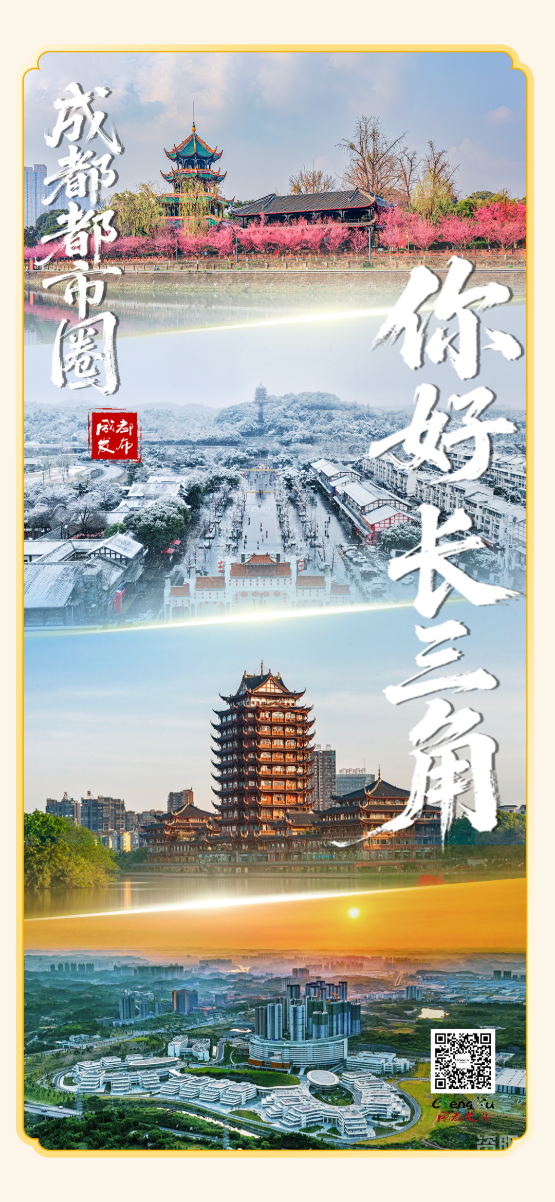
成都都市圈:你好,长三角!
Di Yi Cai Jing· 2025-12-22 03:11
Group 1 - Chengdu Metropolitan Area is the third nationally approved metropolitan area in China and the first in the central and western regions, covering Chengdu, Deyang, Meishan, and Ziyang with a total area of 33,100 square kilometers, making it the most densely populated and economically developed area in Sichuan Province [3] - The high-quality development index of Chengdu Metropolitan Area ranks first among 16 major metropolitan areas in China, indicating a significant level of urban integration [3] - The economic total of Chengdu Metropolitan Area reached 2.98 trillion yuan, accounting for 46.0% of the province's total, with a year-on-year growth of 5.9% [7] Group 2 - Since its initiation in 2020, Chengdu Metropolitan Area has established a "1+1+N" planning system, focusing on spatial layout and industrial collaboration, leading to the formation of three major industrial belts [5] - The area has seen the establishment of 91 national-level technology innovation platforms, an increase of 48 since 2020, and aims to reach 15,413 high-tech enterprises by 2024, up by 8,895 from 2020 [10] - Chengdu has developed 14 industrial parks with a scale of over 100 billion yuan and 26 parks over 50 billion yuan, collaborating with Deyang, Meishan, and Ziyang to build nine key industrial chains [14] Group 3 - Deyang is positioned as a key node in the Chengdu-Chongqing economic circle, recognized as a manufacturing strong city with significant contributions to power equipment and a robust vocational education system [19] - Meishan is actively promoting itself as a historical and cultural city, focusing on strategic emerging industries such as lithium batteries and photovoltaic materials, with industrial scale exceeding 100 billion yuan [24] - Ziyang has recently opened the first cross-city rail transit line in Sichuan, which has transported over 10 million passengers in its first year, fostering the development of aerospace, intelligent manufacturing, and health industries [23] Group 4 - The collaboration between Chengdu Metropolitan Area and the Yangtze River Delta has yielded fruitful results, enhancing industrial linkage and resource flow [27] - The "China Dental Valley" industrial chain in Ziyang has become a leading hub for dental medical devices, showcasing its global competitiveness [28] - The upcoming investment cooperation promotion event in Shanghai aims to deepen policy communication and promote shared development opportunities among the four cities [29][31]
【财经分析】AI赋能竞逐低空经济万亿市场 行业投资需“从场景中找产业”
Xin Hua Cai Jing· 2025-10-15 14:18
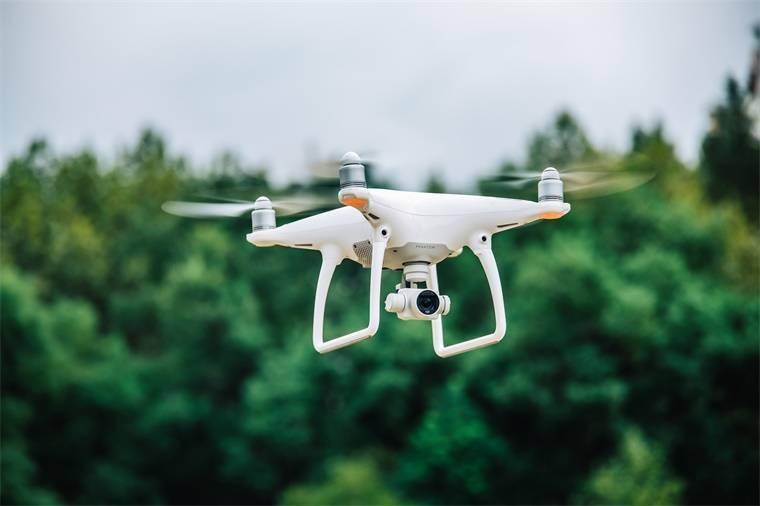
Core Insights - The low-altitude economy in China is rapidly developing, with the market expected to reach 1.5 trillion yuan by 2025, driven by advancements in technology and infrastructure [1][4][5] - The integration of AI technology is seen as a crucial support for the growth of the low-altitude industry, enhancing safety and operational efficiency [2][3][5] Industry Development - The low-altitude economy has become a key area of focus, with over 1,400 companies involved in the sector and significant advancements in various aircraft technologies, including nearly 30 types of ton-class drones and 70 types of electric vertical takeoff and landing (eVTOL) aircraft [2][3] - Hangzhou, as a pilot city for low-altitude economy initiatives, has seen its industry output value exceed 32.9 billion yuan in 2024, marking a 26.54% year-on-year increase [2] Technological Innovations - The introduction of AI in low-altitude operations is highlighted, with innovations such as the "Wuqiong" model for real-time drone data analysis and predictive trajectory modeling [3] - New technologies and equipment were showcased at the Digital Trade Fair, emphasizing the role of AI in enhancing low-altitude safety and operational capabilities [3] Investment Landscape - The low-altitude economy is attracting significant investment interest, but there are concerns about potential market bubbles and the need for real-world application scenarios to validate investment opportunities [4][5] - Companies are encouraged to focus on practical applications and the development of supporting infrastructure to ensure sustainable growth in the low-altitude sector [5][6] Market Challenges - The low-altitude economy faces several challenges, including technological limitations, inadequate infrastructure, and a lack of standardized management platforms [3][4] - The current number of general aviation aircraft in China is only 2% of that in the U.S., indicating a need for significant advancements in technology and infrastructure to support future growth [3]
最高补贴1000万!成都发布14条支持低空经济发展措施【附成都低空经济产业分析】
Sou Hu Cai Jing· 2025-06-26 06:35
Group 1 - Chengdu is accelerating the exploration of low-altitude economy new business models and aims to become a low-altitude economic center in Western China, with a focus on infrastructure, regulatory capabilities, application scenarios, and industry support [2][3] - The Chengdu Municipal Development and Reform Commission has issued 14 policy measures to promote low-altitude commercial operations, including subsidies for companies that obtain route approvals and operate commercially, with a maximum annual subsidy of 5 million yuan per company [2] - The measures also support the establishment of a municipal low-altitude flight service management platform, providing a one-time subsidy of up to 10 million yuan for 50% of construction investment [2] Group 2 - The low-altitude economy is recognized as a significant emerging industry at the national strategic level, with the government emphasizing its safe and healthy development in recent work reports [3] - Chengdu has a robust aviation industry foundation, with a complete industrial chain supporting low-altitude economic development, including 239 aviation materials companies and 120 navigation system companies, leading nationally [3][4] - The drone industry in Chengdu is prominent, with leading companies like AVIC and Tengdun, and the industrial drone sector generating over 10 billion yuan in revenue in 2023 [4] Group 3 - The development of low-altitude economy in Chengdu is supported by strong local government policies and a focus on attracting top-tier companies and resources to enhance innovation and international presence [7] - Chengdu has achieved significant milestones in the eVTOL sector, with the successful demonstration flight of the AE200 electric vertical takeoff and landing aircraft, indicating progress in emerging low-altitude aircraft development [4][7]

成渝一周观察丨全球首个氮化镓量子光源芯片发布;四川人明年有望打“飞的”出行
Guan Cha Zhe Wang· 2025-05-14 23:33
Group 1: Quantum Technology - Chengdu has launched the world's first gallium nitride quantum light source chip, marking a significant breakthrough in quantum technology for China [1][3] - The quantum light source chip is described as the "heart" of the quantum internet, essential for generating and transmitting quantum information, akin to servers and fiber optics in the traditional internet [3] - This technology offers a physical encryption method that fundamentally addresses security issues, ensuring any attempts to eavesdrop or tamper with information transmission are immediately detected [3] Group 2: Low-altitude Economy - Sichuan has announced the launch of eight low-altitude transportation routes, aiming to develop the low-altitude economy and enhance industrial ecology [4][6] - The AE200 flying car, developed by Wofei Chang Kong, is expected to undergo manned verification flights this year, with plans for commercial operation by 2026 [4][6] - The new low-altitude routes will significantly reduce travel time, such as the route from Chengdu to the ancient town of Langzhong, which will take approximately 60 minutes [6] Group 3: Industrial Development - The 2025 China Industrial Transfer Development Matching Event in Sichuan aims to deepen industrial cooperation with eastern regions and attract more enterprises to the province [7] - The event includes various activities focusing on key industrial chains such as artificial intelligence, aerospace, and new energy, promoting collaboration and project implementation [7] Group 4: Infrastructure Development - The G8513 line from Jiuzhaigou to Mianyang has achieved significant construction milestones, with the completion of the last tunnel, paving the way for a new highway that will reduce travel time from Chengdu to Jiuzhaigou from 8 hours to 4 hours [17] - The Chongqing section of the Yuxia high-speed railway has entered the operational testing phase, which will enhance connectivity and economic development along the route [18] Group 5: Housing Policy - Chengdu's new housing provident fund policy proposes an increase in loan limits for purchasing affordable housing, with the maximum loan amount rising by 50% [19] Group 6: Brain-Computer Interface Industry - Sichuan has introduced a plan to develop the brain-computer interface and human-computer interaction industry, supporting hospitals to conduct implantable brain-machine interface surgeries [20] Group 7: Sports Achievement - The Chengdu men's table tennis team has advanced to the finals of the National Games, marking a historic achievement as the first city unit to compete in the event [21]