AI全域营销

Search documents
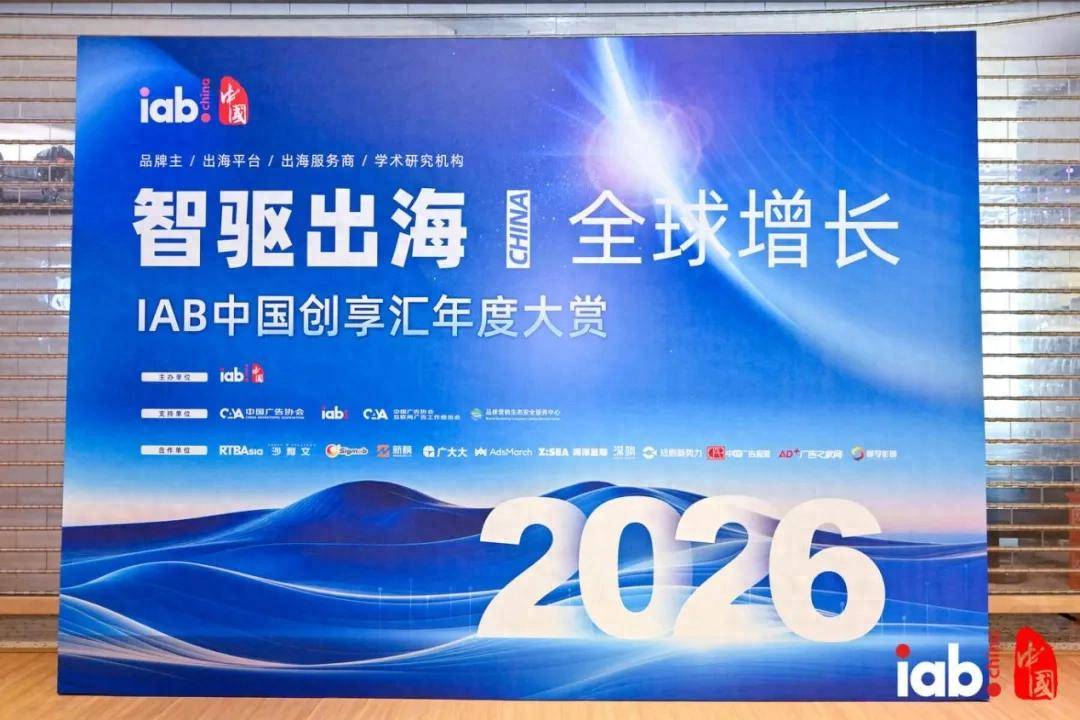
2026 IAB中国创享汇年度大赏:共探数字营销与品牌出海新路径
Sou Hu Cai Jing· 2026-01-22 05:17
Core Insights - The 2026 IAB China Creative Summit aims to explore new opportunities and paths for the high-quality development and globalization of Chinese brands, gathering industry experts and leaders for in-depth discussions [2][6][41] - The event emphasizes the importance of building a credible content ecosystem in digital marketing, addressing issues like misinformation and low-quality content [21][22][24] Group 1: Event Overview - The summit is hosted by IAB China and supported by various industry partners, focusing on international communication and industry standard development [4] - The opening speech highlighted the theme "Intelligent Driving Overseas Growth," emphasizing the competitive quality and brand strength of Chinese products on a global scale [6][8] Group 2: Key Themes and Discussions - The importance of cultural value and business philosophy in brand globalization was stressed, with digital technologies like AI reshaping marketing strategies [8][10] - Experts discussed the need for brands to transition from "single-point breakthroughs" to "ecological collaboration" for sustainable growth [10] Group 3: Industry Practices and Innovations - Danone's VP shared insights on low-carbon transformation in the food and beverage industry, emphasizing sustainability as a key support for overseas growth [12] - AI-driven marketing strategies were presented as essential for business growth, focusing on data integration and personalized communication [14][16] Group 4: Challenges and Solutions - The challenges of high costs, customer acquisition difficulties, and operational complexities in overseas markets were addressed, with proposed solutions involving AI and automation [16] - A roundtable discussion highlighted the need for innovative advertising models that integrate content and user experience to enhance commercial efficiency [18] Group 5: Industry Initiatives - The establishment of the IAB China Micro-Short Video Professional Committee aims to promote the development and standardization of the micro-short video industry [19] - A joint initiative for credible content in digital marketing was launched, focusing on industry self-regulation and the establishment of trust [21][24] Group 6: Resources and Tools - The release of the first edition of the "China Brand Overseas Ecosystem Panorama" provides a comprehensive resource for companies to navigate overseas markets, detailing key opportunities and growth paths [30] - The event concluded with the issuance of certificates to recognized companies, reinforcing the commitment to high-quality development in the industry [32][41]

2025年Q4电商行业战略动态调查报告——AI与即时零售重塑竞争格局
Sou Hu Cai Jing· 2025-11-30 17:12
Core Insights - The Chinese e-commerce industry has transitioned from a traffic-driven era to a "hardcore competition" phase focused on technology and ecosystem collaboration by Q4 2025 [1][22] - Key trends include the commercialization of AI technology, the intensification of instant retail, the deepening of omnichannel operations, and the evolution of competitive dimensions [3] Group 1: AI Technology Commercialization - AI has shifted from a technology reserve to a key growth driver for e-commerce giants, with Alibaba making significant investments leading to substantial revenue growth in AI-related products [4] - JD has applied AI extensively in marketing and service, achieving over 90% coverage in intelligent customer service and an 18% increase in conversion rates for core categories [4] - Smaller merchants benefit directly from AI, with Pinduoduo's AI selection system improving ROI by 40% for partners, while Douyin and Kuaishou have reduced content production cycles by 50% [4] Group 2: Instant Retail Market Competition - Instant retail has become a critical battleground for growth, with Alibaba, JD, and Meituan competing fiercely, aiming for a trillion-yuan transaction scale within three years [6] - In Q4, the transaction volume for instant retail reached 220 billion yuan, a 65% year-on-year increase, with Meituan holding a 45% market share [6] - The market is projected to exceed one trillion yuan by 2026, with front warehouse models contributing over 50% of transaction volume [6] Group 3: Omnichannel Operations - The fragmentation of traffic has driven platforms to transition towards "omnichannel collaboration," with Douyin e-commerce integrating advertising and e-commerce traffic pools [8] - Traditional platforms are accelerating their content transformation, with Alibaba and JD enhancing their content capabilities to complement their existing strengths [8] - Omnichannel operations have become a standard in the industry, moving away from single-channel strategies [8] Group 4: Shift from Price Wars to Value Wars - As customer acquisition costs rise, platforms are shifting from price competition to "value wars," focusing on quality and service [9] - Pinduoduo's "billion support plan" aims to enhance merchant quality, while JD emphasizes "quality retail" strategies [9] - The emergence of "heart-price ratio" reflects a consumer trend prioritizing product quality and service experience over mere pricing [9] Group 5: Company-Specific Strategies - Alibaba is focusing on AI and instant retail as dual drivers for growth, but faces short-term profit pressures due to significant investments [12] - JD is leveraging high-frequency delivery to expand into local life services, showing promising conversion rates but facing challenges with ongoing losses [13] - Pinduoduo remains the only major player with positive net profit growth, emphasizing cost-effectiveness and agricultural product sales [15] - Douyin e-commerce is rapidly increasing its market share through deep integration of content and commerce, but still needs to cultivate user habits for shelf-based e-commerce [16] Group 6: Future Trends - AI is expected to fundamentally reshape the e-commerce landscape, with intelligent systems becoming new traffic hubs [17] - Instant retail is projected to evolve into a core business model, with continuous innovations in operational models [17] - The integration of content and commerce will become standard, with platforms adopting a closed-loop system for user engagement [17] Group 7: Strategic Variables - The focus for the next year will be on breakthroughs in AI technology and instant retail profitability models by major players like Alibaba and JD [22] - The progress of content platforms like Douyin and Kuaishou in shelf-based e-commerce will be crucial for determining the final shape of omnichannel integration [22]



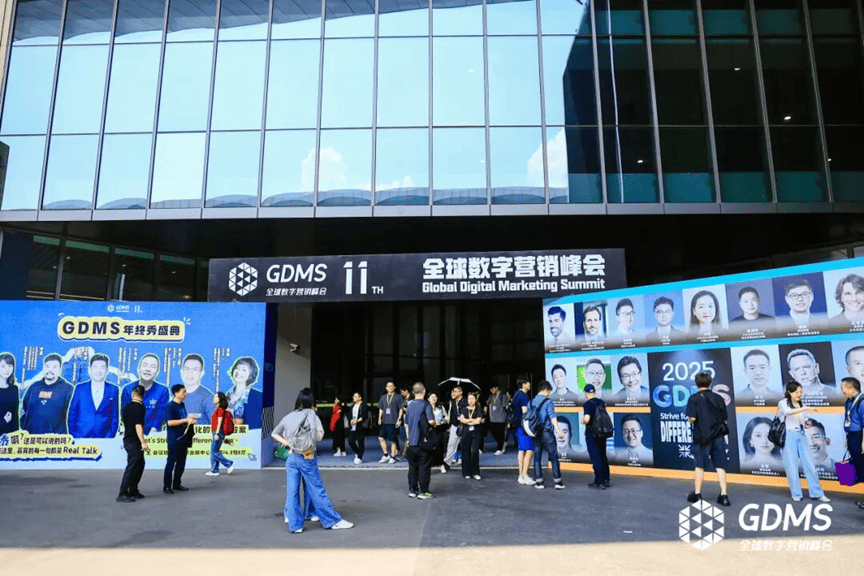
追寻差异化的最终答案!GDMS2025圆满闭幕
Sou Hu Cai Jing· 2025-09-19 13:59
Core Insights - The 11th GDMS Global Digital Marketing Summit successfully concluded at the National Exhibition and Convention Center in Shanghai, attracting over 6000 brand marketers and featuring more than 100 industry-leading speakers and exhibitors [1][3] Group 1: Event Overview - The summit was themed "Strive for Differentiation," focusing on new paths for brand growth in the era of AI, injecting strong innovative momentum into the industry [1] - The first day featured four major thematic forums alongside an innovative exhibition, while the second day culminated in a grand finale showcasing industry insights [1][3] Group 2: Forum Highlights - The main forum discussed marketing differentiation from two additional dimensions: marketing goals (from liking to loving) and marketing thinking (from cognition to thought) [3] - Sub-forums covered practical cases in "AI Practices," "E-commerce," and "New Product Launches," showcasing innovative practices in brand differentiation [3] Group 3: Key Speaker Insights - Brands must create emotional values by staying true to their identity, as emphasized by the CEO of Bottega Veneta for Greater China [5] - Smart Automobile's CEO highlighted the importance of connecting with consumers on a lifestyle and value level, moving from mere attraction to deeper emotional engagement [7] - LVMH's media head stressed that cultural resonance drives meaningful connections, leading to brand loyalty [9] Group 4: AI and Marketing Strategies - The Chief Digital Officer of Cha Ba Dao discussed expanding customer acquisition through comprehensive traffic sources and enhancing customer value via private domain operations, empowered by AI [13] - The Chief Digital and Marketing Officer of Boss Electric Appliances stated that the true success of AI marketing lies in improving users' lives rather than just financial gains [15] Group 5: Closing Remarks and Future Outlook - The founder of GDMS, Ken, delivered a closing speech reflecting on the event's differentiation and the importance of visual, service, content, and format uniqueness in the marketing landscape [42][43][44][45] - GDMS aims to foster a sustainable marketing ecosystem and looks forward to the next summit in 2026 [47]
头米生活模式能否成为下一个风口?仿盘市场还有机会吗?
Sou Hu Cai Jing· 2025-05-08 07:30
Core Insights - The article discusses the innovative green points system that integrates consumption with investment, aiming to meet consumer demands for both cost-effectiveness and social value [6][12] - The system leverages AI-driven marketing to enhance growth and consumer engagement, particularly in rural revitalization and supply chain efficiency [6][9] Group 1: Green Points System - The green points system allows users to earn 10-15 points for every 100 yuan spent, with higher points for purchasing rural revitalization products [7] - Points can be dynamically released over 36-40 periods, with the potential to convert initial points into vouchers worth up to five times their value [7] - The system promotes cross-scenario usage of points across various sectors, increasing average cross-store consumption from 1.2 to 4.7 times per month [7] Group 2: Business Model and Profit Distribution - The platform integrates 194 county-level production areas, enhancing farmers' incomes by 30% through direct sourcing [8] - The merchant alliance spans six industries, reducing customer acquisition costs from 68 yuan to 9 yuan through an O2O model [8] - The platform returns 60% of profits to users in the form of points, leading to a 15%-50% reduction in actual spending for consumers [8] Group 3: Market Trends and Technology - The current market is characterized by digitalization, greening, and personalization, aligning with government "dual carbon" goals to promote green consumption [12] - AI technologies, including dynamic pricing algorithms and blockchain traceability, enhance operational efficiency and enable personalized marketing [12] - The potential for expansion in lower-tier cities is significant, with successful models like "Zhejiang 'Zhongdian'" demonstrating replicability [13] Group 4: Challenges and Strategic Considerations - The platform faces challenges such as high customer acquisition costs and the need for compliance with regulations to avoid multi-level distribution pitfalls [11][13] - Continuous user engagement and retention strategies are essential, focusing on member segmentation and customized services rather than solely on new user acquisition [13] - The company must prioritize investments in blockchain and AI systems to improve user experience and operational transparency [17]