AI原生手机银行

Search documents
“AI闪耀中国”2025,在算法时代重塑人的光芒
Zhong Guo Jing Ji Wang· 2025-12-31 00:06
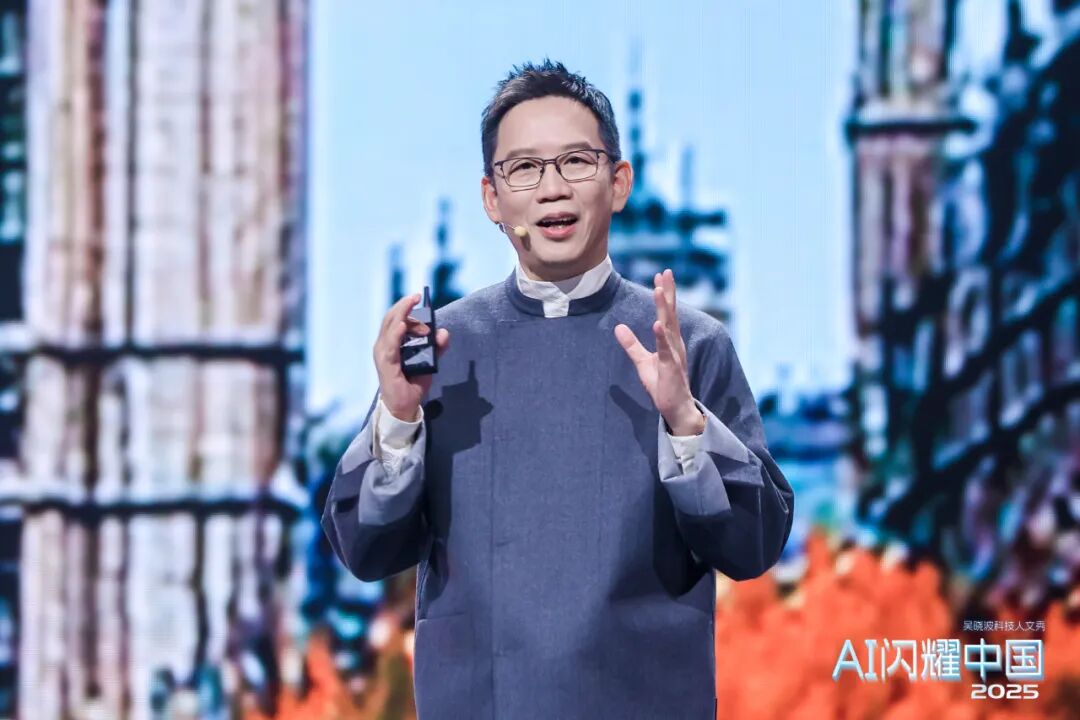
Core Insights - The speech by Wu Xiaobo highlights the transformative impact of AI on various industries in China, emphasizing the shift from experimental applications to practical, large-scale implementations. Group 1: AI Competition Landscape - The US and China are the two main players in the global AI competition, with the US focusing on foundational infrastructure and original innovations, while China leverages its manufacturing capabilities and application market for industrial applications [3] - The gap in large model capabilities between China and the US has narrowed from 20% last year to just 0.3%, marking a significant shift in the AI landscape [3] Group 2: Content Production Revolution - AI multi-modal technology is revolutionizing the content industry, reducing production cycles by over 80% and costs by 60-90% [5] - The content production capacity of silicon-based entities is now exceeding that of carbon-based humans, prompting individuals to reconsider their roles in the future [5] Group 3: Industry Transformation - AI is being integrated into various industries, with specific applications like AI-native mobile banking and smart decision-making in sectors such as mining and home decoration [5] - The concept of having an industry-specific large model for every sector is becoming a reality, indicating a shift from tools to scientific revolutions in business models [5] Group 4: Emergence of Intelligent Agents - The proliferation of intelligent agent tools is making personal AI assistants a reality, significantly enhancing knowledge management and office efficiency [6] - The era of AI belongs to those who effectively utilize these tools, positioning intelligent agents as efficiency pioneers for individuals [6] Group 5: Robotics Market Potential - China holds 65% of the global supply chain for embodied intelligence, with predictions of a trillion-dollar market for robotics in the next five years due to deep integration with AI [7] - The evolution of robots from mere machines to sensitive tools capable of complex tasks is highlighted [7] Group 6: Industrial 5.0 in China - China is defining Industrial 5.0, focusing on machine vision, deep learning, and comprehensive AI management, with 79 out of 189 global "lighthouse factories" located in China [9] - The country is positioned to become a leader in building AI industrial clusters in the coming decade [9] Group 7: E-commerce Transformation - The current e-commerce ecosystem is facing challenges due to high costs and inefficiencies, with AI set to reconstruct trade models and lower barriers for small businesses [11] - A shift towards "flow equity" in e-commerce is anticipated by 2026, allowing better product visibility and consumer empowerment [12] Group 8: AI in Service Industries - AI is penetrating service industries, enhancing experiences in sectors like healthcare and beauty, with examples of AI applications improving service quality and efficiency [14] - The emphasis is on the importance of adopting AI tools to remain competitive in various industries [14] Group 9: Consumer Electronics and AI - AI is enhancing everyday consumer products, with Chinese smart hardware gaining advantages over Western products due to manufacturing capabilities [15] - Companies are encouraged to build their industry-specific large models and open platforms to succeed in the future market [15] Group 10: New Entrepreneurship Era - A new wave of entrepreneurship is expected to emerge by 2026, driven by AI tools that enable small organizations to achieve productivity levels comparable to larger companies [16] - The establishment of a 60 million yuan angel investment fund aims to support this new entrepreneurial wave [16] Conclusion - The speech concludes with a reflection on the role of AI in empowering individuals and businesses, emphasizing the importance of curiosity and imagination in navigating the future landscape shaped by AI [18]

《“AI闪耀中国”2025,在算法时代重塑人的光芒》
Xin Lang Cai Jing· 2025-12-29 13:44
Group 1 - The core competition in AI is between the US and China, with the US focusing on foundational infrastructure and closed-source models, while China leverages its manufacturing capabilities and application market for open-source models and industrial applications [2][14] - By January 15, 2025, China is expected to reach a pivotal moment in AI development, with the gap in large model capabilities between China and the US narrowing from 20% to just 0.3% [2][14] - AI's multi-modal technology is revolutionizing content production, significantly reducing production cycles and costs, with capabilities surpassing human production [3][15] Group 2 - AI is being integrated into various industries, with specific applications like AI-native mobile banking and smart decision-making in sectors such as mining and home decoration [3][15] - The rise of intelligent agents is making personal AI assistants commonplace, enhancing knowledge management and office efficiency [4][16] - The robotics market is projected to explode into a trillion-dollar industry within five years, with China holding a 65% share of the global embodied intelligence supply chain [5][17] Group 3 - China is defining Industry 5.0, focusing on machine vision, deep learning, and comprehensive AI management, with 79 out of 189 global "lighthouse factories" located in China [6][19] - The e-commerce landscape is shifting, with AI transforming trade models and reducing barriers for small businesses, leading to a more equitable market by 2026 [7][19] - AI is enhancing consumer experiences in the service industry, with applications in healthcare and personal services demonstrating significant improvements [8][20] Group 4 - AI is deeply integrating into daily consumer products, providing competitive advantages over Western products due to China's manufacturing capabilities [9][21] - The upcoming sixth wave of entrepreneurship in 2026 is expected to be driven by AI tools, enabling small teams to achieve productivity levels comparable to larger organizations [10][22] - A new investment fund has been established to support this wave of AI-driven entrepreneurship, highlighting China's ongoing commitment to innovation [12][22]
科蓝软件发布三季报 三大AI战略硬科技全速推进第二增长曲线
Zheng Quan Shi Bao Wang· 2025-10-30 06:45
Core Insights - Company reported a significant decline in revenue and net profit for Q3 2025, with revenue of approximately 419 million yuan, a year-on-year decrease of 42.4%, and a net loss of about 10.55 million yuan [1] - The revenue drop is attributed to the company's strategic decision to reduce the scale of low-value IT outsourcing projects, leading to a substantial decline in related business income [1][2] - Despite the revenue decline, the company improved its cash flow from operating activities, achieving a net cash flow of 51.68 million yuan, a 128.8% improvement year-on-year [1] Financial Performance - For Q3 2025, the company reported revenue of 107 million yuan, down 52.27% year-on-year, with a net loss of approximately 4.34 million yuan [1] - The company's total liabilities decreased significantly, with short-term borrowings down 41.1% to 1.316 billion yuan and total interest-bearing debt reduced by about 900 million yuan [1][2] - The asset-liability ratio fell to 64.6%, and financial expenses decreased by 39.7%, indicating improved financial health and reduced interest burden [1] Business Strategy and Development - The company is transitioning towards high-margin, high-tech solutions and self-developed products, which aligns with the long-term healthy development direction of software enterprises [2] - Inventory increased by 18% to 539 million yuan, and development expenditures rose by 63.5% to 125 million yuan, indicating a focus on new generation distributed core, cloud-native platforms, and AI+ products [2] - The company has seen a reversal of credit impairment losses, with a recovery of 34.52 million yuan, reflecting improved collection efforts and a reduction in accounts receivable [2] Strategic Initiatives - The company is advancing its strategic transformation by focusing on AI core products, including AI databases, AI robots, and AI computing centers [3] - Collaboration with Tsinghua University to develop an intelligent database research institute has led to significant advancements, with over 98% of the database code being self-controlled [3] - The AI application "Xiao Lan" has been deployed in multiple bank branches, reducing labor costs by 30% and improving user retention rates by 25% [3][4] Partnerships and Innovations - The company is partnering with Huawei to establish an intelligent computing center in Suzhou, integrating advanced algorithms into their products [4] - An innovative "pay-as-you-go" model for computing resources is being introduced to address cost concerns for small and medium-sized banks, with potential for widespread adoption [4]

领雁科技连续入围IDC中国金融IT中坚力量2025榜单
Cai Fu Zai Xian· 2025-08-28 07:07
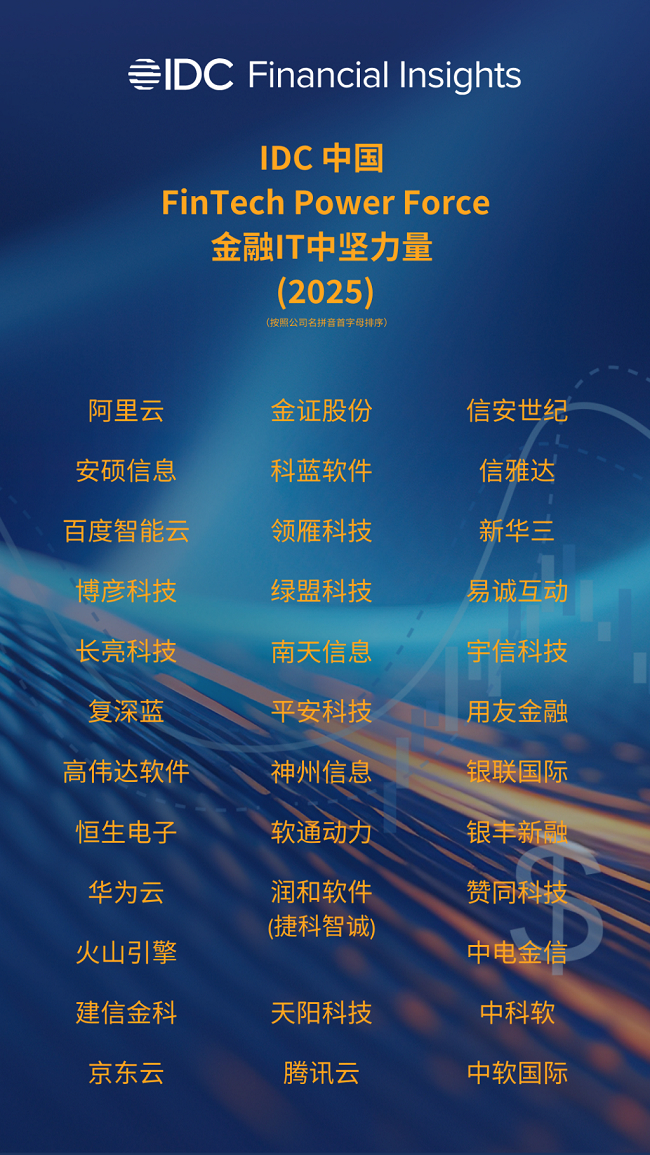
Core Insights - The article highlights the recognition of Lingyan Technology as a key player in the AI and financial technology sector by IDC's "IDC China Financial IT Power Force 2025" list, emphasizing its technological strength and contributions to the industry [1][2] - Lingyan Technology is focused on integrating AI deeply into financial services, providing a comprehensive capability chain from data foundation to model optimization and application deployment [1][3] AI-Driven Platforms - Lingyan Technology has developed the Yanlingxi AIGC intelligent service platform, which integrates data management, model training, and application interaction, enhancing the efficiency of AI model deployment [3][4] - The platform serves as a bridge between large models and applications, utilizing advanced techniques to solve the challenges of AI model implementation in financial services [4] Intelligent Risk Control - The company offers a series of intelligent risk control products that leverage big data and machine learning to provide solutions for compliance, anti-money laundering, fraud detection, and auditing [5][6] - In the area of compliance, the system automates the generation of compliance analysis reports and facilitates the internalization of external regulations [6][7] Smart Marketing Solutions - Lingyan Technology aims to enhance customer acquisition and value through personalized marketing strategies, utilizing data-driven approaches and AI to optimize customer engagement [10][11] - The company has developed an AI-driven recommendation system that matches products with customer needs, improving conversion rates and customer experience [11] Digital Channels and Consumer Protection - The company integrates various banking service channels into a unified platform, enhancing service precision and operational intelligence [12][13] - Lingyan Technology has launched a digital solution for consumer rights protection, which includes intelligent complaint management and real-time risk alerts, improving response times and compliance [14][15] Future Outlook - As AI model technology continues to evolve, Lingyan Technology plans to enhance its product offerings, driving innovation and commercial value in the financial sector [16]
手机里的数字金融
3 6 Ke· 2025-08-08 03:57
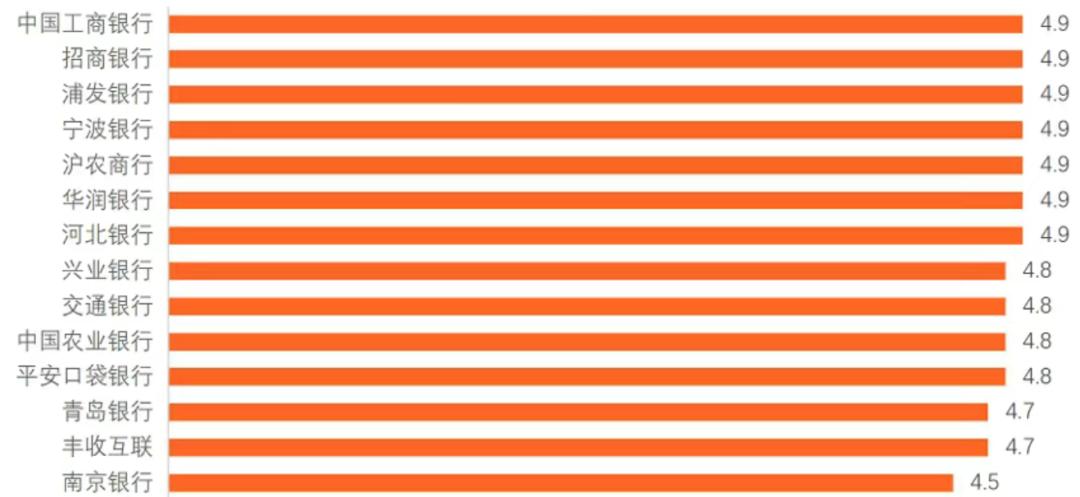
Core Insights - Mobile banking is identified as a pivotal point for driving technological innovation and financial services in the banking industry, serving as a "super entrance" that significantly influences a bank's level of digitalization [1] - The 2024 China Digital Banking Survey indicates that among five retail digital channels, only mobile banking users have shown year-on-year growth, while other channels have either stagnated or declined [1] - Mobile banking serves as a key platform for assessing banks' digital capabilities, AI model capabilities, infrastructure, and data asset innovation and application [1] Group 1: Mobile Banking Development - Since 2009, Chinese banks have been developing their banking apps, with 14 out of 18 national banks completing their app development from scratch between 2009 and 2013 [2] - The evolution of banking apps has transitioned from a rapid growth phase (2.0) to a refined operational phase (3.0), currently moving towards an AI-driven phase (4.0) [4] - Key trends in mobile banking app updates include deepening intelligence, extending scenarios, promoting inclusivity, and enhancing security [4][6] Group 2: AI and User Experience - AI technology is being fully applied in high-frequency scenarios, shifting services from passive responses to proactive predictions, exemplified by initiatives like ICBC's "AI Butler" and CMB's "AI Translation Assistant" [4] - User experience is prioritized, with banks focusing on simplifying interfaces and providing personalized services, such as ICBC's "embracing" homepage design and CMB's new desktop widget features [10][14] - The integration of AI in mobile banking is not limited to customer service but extends to enhancing user experience through personalized recommendations and streamlined operations [17][20] Group 3: Specialized Services and Ecosystem Integration - Some banks are offering customized services for specific demographics, such as ICBC's "Xinjiang Uygur version" for elderly clients [7] - Mobile banking apps are increasingly integrating non-financial services, enhancing their role in daily life, as seen with Ningbo Bank's addition of local services and ICBC's support for WeChat integration [6] - The future of mobile banking will see intensified competition among banks, particularly as smaller banks merge and upgrade their technological capabilities [22]