AI导盲眼镜

Search documents
中国版“CES展”背后的惊喜
Xin Lang Cai Jing· 2026-01-13 11:32
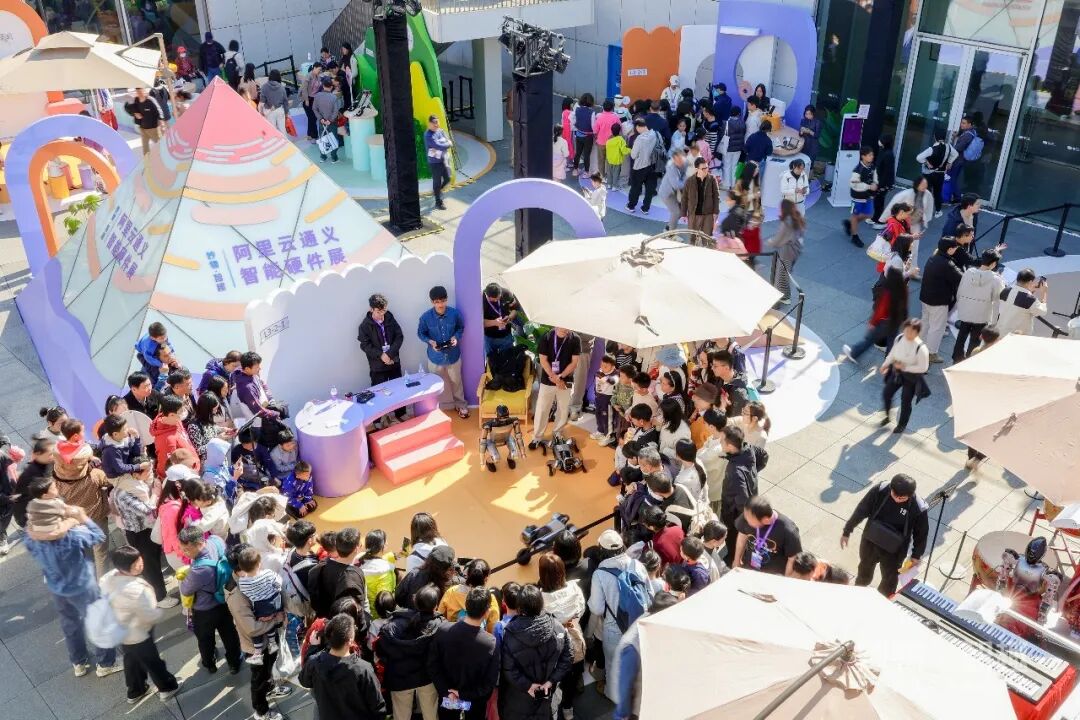
Core Viewpoint - The future of AI hardware is firmly rooted in China, as evidenced by the recent intelligent hardware exhibition hosted by Alibaba Cloud, which is being compared to CES in the U.S. [1][10] Group 1: Exhibition Overview - The exhibition covered over 5,000 square meters and showcased more than 1,500 new AI hardware products, with 180 items debuting simultaneously at CES in the U.S. [2] - The exhibition featured a diverse range of products across various consumer sectors, including 3C digital products, home appliances, toys, fitness equipment, and more [2][4]. Group 2: AI Hardware Trends - The terms "emergence" and "generalization" were used to describe the rapid proliferation of AI products across industries, indicating a significant transformation in the application of AI technology [7]. - The exhibition highlighted the integration of AI into traditional industries, suggesting a profound industrial restructuring that surpasses the previous mobile app revolution [10]. Group 3: Future AI Development - A second wave of AI development is anticipated by 2026, characterized by accelerated technological iterations and a shift in application timelines from 5-10 years to 2-3 years [11]. - The concept of "physical AI" is emerging, with applications expected to extend beyond consumer devices to include automobiles, robotics, and various industrial terminals [13][14]. Group 4: Economic Impact - The potential economic impact of AI on global GDP could be a growth of 10%, representing a value reconstruction space of up to $11 trillion [14]. - By 2026, it is projected that 80% of the AI market will be driven by new incremental markets, emphasizing the importance of future market capture over current market share [14]. Group 5: Competitive Landscape - The competition in China is dual-tracked, with traditional industries leveraging AI for transformation while "AI-native companies" explore new business models [15][16]. - AI applications in China are focusing on traditional manufacturing, new energy vehicles, and agriculture, utilizing cloud services to enhance efficiency [16][18]. Group 6: Infrastructure and Global Expansion - The foundational infrastructure for AI is evolving from a "Token factory" to an "AI super factory," indicating a shift towards comprehensive AI cloud services [25][27]. - Alibaba Cloud is expanding its global infrastructure to support Chinese enterprises' internationalization, with plans to establish facilities in 29 regions and 92 availability zones by 2025 [29]. Group 7: Conclusion - The intelligent hardware exhibition signifies a pivotal moment for China's AI industry, with the potential to lead in global AI advancements and redefine the landscape of consumer electronics [30][32].

中国版“CES展”背后的惊喜
吴晓波频道· 2026-01-13 00:30
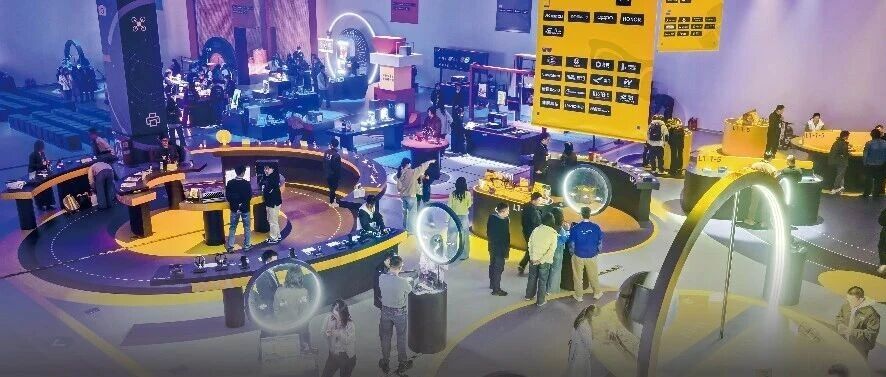
Core Viewpoint - The future of AI hardware is firmly rooted in China, as evidenced by the recent intelligent hardware exhibition held by Alibaba Cloud, which showcased over 1,500 AI hardware products, indicating a significant leap in the industry [2][5][12]. Group 1: AI Hardware Exhibition Insights - The Alibaba Cloud exhibition featured more than 1,500 AI hardware products, with 180 items debuting simultaneously at the CES in the U.S., covering a wide range of consumer sectors from digital devices to home entertainment [5][12]. - The exhibition presented a strong "booth feel," with various AI products displayed in a way that encouraged hands-on interaction, highlighting the diversity and accessibility of AI technology [6][8]. - The event underscored the concepts of "emergence" and "generalization," indicating that AI capabilities are rapidly expanding across various industries, leading to unprecedented product proliferation [8][12]. Group 2: Future Trends in AI - By 2026, a second wave of AI development is anticipated, characterized by rapid technological iterations and a significant reduction in the time required for technology deployment, from 5-10 years to 2-3 years [14][17]. - The shift towards "physical AI" is expected to redefine industries, particularly in automotive and heavy machinery, as AI becomes integrated into traditional sectors [14][16]. - The distinction between consumer and enterprise applications of AI is becoming clearer, with enterprise applications poised to drive deeper value and productivity enhancements, potentially increasing global GDP by 10% [17][18]. Group 3: Competitive Landscape - The competition in AI is evolving into a dual-track approach, where traditional industries leverage AI for transformation while "AI-native companies" explore new business models [19][20]. - Chinese industries are focusing on traditional manufacturing, new energy vehicles, and agriculture, utilizing cloud services to enhance efficiency and reduce costs [20][22]. - The emergence of "AI-native companies" is fostering innovation across various sectors, with a notable rise in startups that utilize generative AI for content creation and other applications [24][26]. Group 4: Infrastructure and Cloud Computing - The foundational infrastructure for AI is transitioning from a "Token factory" to an "AI super factory," emphasizing the need for comprehensive cloud services that support both immediate and advanced AI applications [30][32]. - Companies like Alibaba Cloud are expanding their global infrastructure to meet the increasing demand for AI capabilities, supporting Chinese enterprises in their international ventures [37][38]. - The integration of AI into cloud computing is essential for realizing the full potential of AI technologies, as it enables efficient data processing and model deployment [36][38].

从残特奥会看千亿级辅具产业 广东打造科技助残超级场景
2 1 Shi Ji Jing Ji Bao Dao· 2025-12-09 23:06
Group 1 - The twelfth National Games for Persons with Disabilities and the ninth Special Olympics are being held in Guangdong, showcasing the province's advancements in assistive technology [1] - Guangdong's rehabilitation industry has reached a scale of "hundred billion-level services" alongside "trillion-level assistive devices," indicating significant growth and development [1][4] - The event highlights the integration of technology in assistive devices, with local companies providing innovative solutions such as AI guide glasses and brain-controlled wheelchairs [1][3] Group 2 - The assistive device industry in Guangdong benefits from a robust manufacturing base and strong technological innovation, supported by the Greater Bay Area's mature industrial system [2][8] - The demand for assistive products is driven by the increasing need for rehabilitation services and the growth of the aging population, with the elderly care product market projected to exceed 650 billion yuan by 2024 [6][7] - Recent policies in Guangdong aim to enhance the quality and efficiency of the assistive device industry, providing a favorable regulatory environment for growth [7] Group 3 - Local companies are leveraging the Special Olympics to showcase their advanced products, such as all-terrain stair-climbing robots and brain-controlled wheelchairs, which are in high demand [4][5] - The integration of new materials and smart technologies is accelerating the evolution of assistive devices, making them more accessible and affordable for users [3][5] - The event serves as a platform for companies to gather user feedback, facilitating continuous product improvement and broader market reach [8]
从残特奥会看千亿级辅具产业:广东打造科技助残超级场景
2 1 Shi Ji Jing Ji Bao Dao· 2025-12-09 12:55
Core Viewpoint - The article highlights the development of a billion-level assistive device industry in Guangdong, showcasing its technological advancements and the integration of assistive technology in the context of the National Special Olympics and the 12th National Games for Persons with Disabilities [2][4]. Group 1: Industry Overview - Guangdong's rehabilitation industry has formed a structure of "hundred billion-level services" alongside a "billion-level assistive device" market, driven by the Special Olympics as a platform for showcasing assistive technologies [3][4]. - The assistive device industry in Guangdong benefits from a mature manufacturing system and strong technological innovation capabilities, enabling upgrades in new materials, intelligence, and information technology [3][9]. Group 2: Technological Innovations - The article discusses various innovative assistive devices showcased at the Special Olympics, including AI guide glasses, brain-controlled wheelchairs, and smart stair-climbing robots, all developed by local companies [4][5][10]. - The brain-controlled wheelchair, which utilizes brain-machine interface technology, has been in development since 2019 and has undergone multiple iterations, indicating a focus on continuous improvement and adaptation to user needs [7][10]. Group 3: Market Demand and Growth - There is a significant demand for assistive devices in Guangdong, with over 1.2 million individuals requiring rehabilitation services, and high service rates for basic rehabilitation and assistive device fitting [8]. - The aging population is driving growth in the elderly assistive products market, with projections indicating that the overall scale of the elderly products industry in Guangdong will exceed 650 billion yuan by 2024 [8]. Group 4: Policy Support - The Guangdong government has implemented various policies to support the development of the assistive device industry, including specific measures aimed at enhancing the quality and efficiency of elderly products [8][9]. - Recent initiatives emphasize the importance of sports economics and the integration of assistive technology into broader economic development strategies [7][8].

南财V快评:深海火焰 护航全运经济
2 1 Shi Ji Jing Ji Bao Dao· 2025-10-10 11:38
Group 1 - The core event of the 15th National Games involved a unique flame collection ceremony from the "Haimen Cold Seep" at a depth of 1522 meters in the South China Sea, showcasing China's advanced deep-sea technology [1] - The "Haimen" deep-sea remotely operated vehicle successfully ignited combustible ice, marking a significant achievement in deep-sea high-tech equipment [1] - Guangdong is actively developing related industries, with the construction of the "Cold Seep Ecosystem Research Facility" in Guangzhou aimed at supporting the green development of combustible ice [1] Group 2 - The upcoming large-scale events are expected to transform spectator interest into economic benefits, with venue upgrades and demand for digital broadcasting and smart equipment becoming a "super testing ground" for technology applications [2] - Guangdong's marine production value has surpassed 2 trillion yuan, maintaining its position as the national leader for 30 consecutive years, accounting for one-fifth of the country's total marine production value [2] - The average annual growth rate of emerging marine industries in Guangdong has reached 16.8% over the past five years, indicating a strong momentum in the sector [2] Group 3 - The flame from the deep sea symbolizes Guangdong and China's ambition in deep-sea technology and high-end equipment manufacturing, while also demonstrating the collaborative efforts of the Greater Bay Area [2] - The developments in deep-sea technology and marine industries present specific investment opportunities and directions that warrant ongoing attention [2]
十五运会和残特奥会赛事筹办工作进入冲刺阶段—— 粤港澳大湾区准备好了(全运会来了)
Ren Min Ri Bao· 2025-10-09 22:25
Core Points - The 15th National Games and the 12th National Paralympic Games are being held in the Guangdong-Hong Kong-Macao Greater Bay Area, marking the first time this region hosts such a large-scale event [1][2] - The organizing committee emphasizes a philosophy of "green, shared, open, and clean" for the event, with a focus on simplicity, safety, and excitement [1] - The event aims to enhance the artistic quality and showcase the integration of elements from Guangdong, Hong Kong, and Macao [2] Event Preparation - The opening ceremony is being meticulously planned, with a focus on artistic quality and regional integration [2] - A total of over 45,000 volunteers from Guangdong and 16,000 from Hong Kong are being trained to support the event [2] - Various cultural and sports activities are being organized to engage the public and promote tourism [2] Technological Innovations - The event will feature advanced technologies such as AI navigation for wheelchairs, AI glasses for the visually impaired, and autonomous vehicles to ensure smooth operations [3] - A centralized command center will monitor data from 105 venues across 19 cities in the Greater Bay Area, allowing for real-time adjustments [3] - Smart venue upgrades include extensive 5G coverage and advanced weather monitoring systems to enhance the spectator experience [3] Power Supply Assurance - The event's power supply is being secured through advanced technologies and equipment, including drones for inspections and robots for maintenance tasks [4] - A digital twin of the power grid is being utilized to monitor and preemptively address any power supply issues [4] Community Engagement - The event is promoting public fitness through various competitions, with over 1.1 million participants expected in preliminary events [6] - The community events include a wide range of sports, with many competitions already underway [6] - Notable participants include individuals of various ages, showcasing the event's inclusivity [6]
粤港澳大湾区准备好了(全运会来了)
Ren Min Ri Bao· 2025-10-09 22:22
Core Points - The 15th National Games and the 12th National Paralympic Games are being held in Guangdong, marking the first time the Guangdong-Hong Kong-Macao Greater Bay Area hosts such a large-scale event [4][6] - The event emphasizes a "green, shared, open, and clean" philosophy, with a focus on a "simple, safe, and exciting" organization [4][6] - The opening ceremony aims to showcase the cultural elements of the Greater Bay Area, with a high artistic quality and international standards [6] Event Organization - The event is in the final stages of preparation, with over 45,000 volunteers selected from local universities in Guangdong and additional volunteers from Hong Kong and Macau [6][9] - Various cultural and sports activities have been organized to engage the public and promote tourism during the National Day and Mid-Autumn Festival [6][9] Technological Integration - The event features advanced technologies such as AI navigation for wheelchairs, AI glasses for the visually impaired, and smart event management systems that monitor data from 105 venues across 19 cities [7][8] - The venues are equipped with extensive 5G networks and smart systems to enhance the spectator experience and ensure efficient operations [7][8] Power Supply and Safety - A robust power supply network has been established using cutting-edge technologies to ensure the safety and reliability of electricity during the events [8] - Drones and robots are employed for inspections and maintenance, enhancing operational efficiency and safety [8] Community Engagement - The event has sparked a nationwide fitness enthusiasm, with over 1.1 million participants in preliminary competitions and various community sports activities [9] - The community events include a wide range of sports, with 23 major categories and 166 subcategories, promoting inclusivity and participation [9] Competitive Events - Competitive events have commenced, with handball and other sports already underway, while more competitions are scheduled to begin in October and November [10]