AI采购助手

Search documents
手机之外,AI硬件还有哪些机会?从豆包手机说起
3 6 Ke· 2026-01-29 08:53
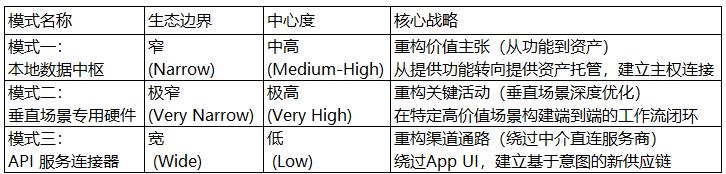
Core Insights - The controversy surrounding Doubao mobile assistant highlights the tension between innovation rights and ecosystem security, raising fundamental questions about its position in the digital ecosystem and the reasons behind the strong backlash against its technology [2][3]. Group 1: Doubao's Triple Dilemma - Dilemma One: Fundamental Mismatch of Ecological Positioning - Doubao's ecological position is characterized by low centrality, lacking control over core user resources, which limits its ability to challenge high-centrality ecosystems dominated by major players [3][4]. - Dilemma Two: Structural Vulnerability of Connection Method - Doubao's reliance on simulated clicks and screen recognition creates a fragile connection, as any updates to the interfaces of major apps can render its operational scripts ineffective, leading to a parasitic relationship [4][5]. - Dilemma Three: Fatal Flaw in Implementation Path - The approach of using simulated clicks for automation is likened to retrofitting an engine onto a horse, failing to fundamentally reconstruct the underlying logic of interaction, resulting in a suboptimal user experience [7][9]. Group 2: Pathways from Dilemma to Opportunity - Opportunity One: Local Data Hub - Reconstructing Value Proposition - This model positions hardware as a local custodian of users' digital assets, emphasizing privacy control, offline availability, and instant response, creating a strong lock-in effect as users accumulate data [12][13]. - Opportunity Two: Vertical Scene-Specific Hardware - Reconstructing Key Activities - This model focuses on designing dedicated AI hardware for specific high-value scenarios, achieving efficiency that surpasses general-purpose smartphones by creating end-to-end workflows [15][18]. - Opportunity Three: API Service Connector - Reconstructing Channel Pathways - This model emphasizes a dialog-based AI as an intent entry point, facilitating direct connections with external service providers through APIs, thus avoiding the pitfalls of parasitic relationships and fostering symbiotic connections [21][22]. Group 3: Strategic Recommendations - The company should explore new pathways rather than abandon the AI hardware space, leveraging its leading AI capabilities in a more suitable battlefield [26][27].

找钢网集团创始人王东:中国是全球最大的AI应用市场
Xin Lang Cai Jing· 2026-01-28 11:36
Core Insights - The ultimate version of AI Agents in the steel circulation industry is expected to be highly standardized, capable of recognizing various documents in procurement and logistics, but currently, AI is primarily used to enhance efficiency [1] - The application of AI in China is anticipated to follow a ToC (Business to Consumer) first, then ToB (Business to Business) approach, with the latter being slower due to the nature of B2B e-commerce [1] - The competition in large models is seen as a competition between China and the US, with a focus on application in China, which is expected to be the largest AI application market globally, especially in the ToB sector [2] Industry Application and Efficiency - The AI capabilities of the company have been embedded in key scenarios such as trading, logistics, finance, and internal management, aiming to systematically enhance industry efficiency and collaboration [2] - The company has developed 12 AI Agents that form four products, focusing on core business scenarios like AI procurement and sales assistants, as well as digital employees that enhance internal knowledge [3] - The company’s AI-related products currently generate a few hundred million yuan annually, with projections indicating that AI Agent transaction facilitation could account for 10% of total revenue by 2025, with a gross margin of 5% [3] Precision and Depth of Application - The current accuracy of the company's AI in document recognition is 95%, with goals to improve this to a higher level, particularly in recognizing industry-specific terminology [5] - Future iterations of AI products will focus on enhancing dialogue capabilities, allowing AI to handle inquiries and negotiations that currently require human intervention [5] - The company aims to expand its AI applications beyond steel and electronic components to include logistics, thereby increasing the depth of AI application across various scenarios [5]
2025年B2B电商平台发展趋势报告:数商云解读产业数字化新动向
Sou Hu Cai Jing· 2025-12-29 07:42
Core Insights - The global B2B e-commerce market is expected to exceed $26 trillion by 2025, with China's cross-border B2B export scale reaching 6.9 trillion yuan, accounting for nearly 30% of the global market share. The key drivers behind this trend are vertical specialization, intelligent upgrades, and global compliance [1] Group 1: Verticalization - Traditional comprehensive platforms are being replaced by vertical platforms due to intensified homogenization competition, focusing on specific industries to build a moat of "industry knowledge graph + deep services" [2] - Vertical platforms reduce industry collaboration costs; for instance, in the steel industry, transaction cycles have been compressed from 7-15 days to under 3 days, with inventory turnover rates increasing by 40% [2] Group 2: Intelligence - By 2025, AI technology will permeate the entire B2B transaction chain, creating a "data-algorithm-decision" closed loop, enhancing decision-making efficiency by 60% [3] - Blockchain technology is reshaping cross-border payment and supply chain finance systems, reducing transaction costs significantly; for example, payment processing time has been cut from 3-5 days to 4 seconds, with fees decreasing by 80% [3] Group 3: Globalization - The core challenge of globalization lies in overcoming high cross-border payment costs and low logistics efficiency; for instance, a logistics solution has reduced fulfillment costs by 35% [5] - Localized ecosystems are being built, with platforms providing not just transaction services but also value-added services like tax declaration and compliance certification, reducing local operational costs by 50% [5] Group 4: Compliance - ESG (Environmental, Social, and Governance) is becoming a new dimension of global competition, with initiatives aimed at achieving net-zero emissions in supply chains by 2030 [6] - Compliance tools are being developed to help buyers avoid risks related to labor rights and environmental records, enhancing data compliance in international markets [6] Group 5: Company Practices - The company employs advanced technology architecture, including distributed microservices and AI, to support high transaction volumes, achieving a throughput increase of three times [7] - The company offers customized solutions for over 30 industries, demonstrating its capability to handle high transaction loads efficiently during peak periods [7] Group 6: Ecosystem Collaboration - The company facilitates seamless integration with third-party services through open API interfaces, enhancing cross-border trade efficiency [8] - By connecting with international payment channels, the company provides convenient cross-border payment solutions, significantly improving trade efficiency [8] Conclusion - The B2B e-commerce platform is evolving into a "digital brain" for vertical industries, an "infrastructure" for intelligent transactions, and a "connector" for global ecosystems, emphasizing the importance of understanding industry pain points and continuous technological innovation [9]

焦点科技20251212
2025-12-15 01:55
Summary of Focus Technology Conference Call Company Overview - Focus Technology's main revenue source is from Made in China.com, a B2B platform that charges domestic suppliers membership fees and value-added service fees. Membership fees are categorized into Gold (31,100 RMB/year) and Diamond (59,800 RMB/year) tiers, with value-added services charged based on usage time, similar to SaaS revenue recognition [2][3] Industry Insights - As of Q3 2025, Made in China.com has approximately 29,000 domestic supplier members and nearly 50 million global B-end buyers, primarily from Europe, Latin America, North America, the Middle East, Africa, and Southeast Asia. The largest buyer countries are India (8%-10%), the USA (8%), and Russia (7%-8%) [2][4] Core Business Model - Over 85% of Focus Technology's revenue comes from the Made in China.com business, which helps Chinese suppliers publish products for international buyers. The company charges domestic suppliers while not charging overseas buyers [3] Future Development Directions - Focus Technology aims to enhance platform GMV (Gross Merchandise Volume) through three main strategies: 1. Increasing buyer traffic via promotion and SEO techniques 2. Raising seller payment rates by encouraging them to purchase more value-added services and expanding product categories 3. Utilizing AI technologies, such as AI Mac and Sourcing AI, to improve conversion efficiency and assist buyer decision-making [5] AI Applications - The company has introduced AI Mac, which offers services like product content optimization, multilingual customer service, and price comparison. The professional version costs 9,980 RMB/year, while the lightweight version costs 5,980 RMB/year [6] - Sourcing AI assists buyers by analyzing procurement needs and generating product lists, thereby shortening decision-making cycles and improving procurement efficiency [7] AI Decision Support - AI helps buyers analyze supplier strengths and weaknesses, generating detailed reports for decision-making. This process automates what was traditionally a manual task, significantly saving time for buyers [8] Commercialization Plans - Currently, Focus Technology does not plan to commercialize its AI procurement assistant to maintain neutrality. Future commercialization will be considered only after achieving a certain user base [9] Feedback and Improvement Plans - Feedback from trial users indicates a need for improved accuracy in supplier analysis and faster response times. The company is focused on enhancing these areas to better address buyer pain points [10] Impact of Tariffs - Tariffs have had some impact on trade, but the platform's US traffic accounts for about 8%, which is not expected to fundamentally affect the platform. The B2B model allows for negotiation on orders, mitigating tariff impacts. The global e-commerce trend continues to grow, particularly in emerging markets [10] Cost Control Strategies - Focus Technology's cost management includes diluting fixed costs as revenue increases and controlling expenses related to traffic, server costs, and marketing. The company expects overall expense ratios to decline as revenue grows [15] New Initiatives - The New Maritime Plan focuses on developing ten light industry sectors, including consumer electronics and textiles. Strategies include providing membership support, increasing traffic for light industry products, and enhancing cross-border payment functionalities [16] Recruitment Expectations - The company is cautious about hiring, especially for non-sales positions, but aims to expand its sales team to support growth in light industry sectors [17] Performance Guidance - Focus Technology maintains its initial performance guidance of over 20% growth in net profit and cash receipts, excluding stock payment expenses, which are expected to exceed 60 million RMB this year [18]

红壹科技获数千万元B轮融资,发布“AI智能体工厂” | 融资首发
Tai Mei Ti A P P· 2025-11-05 13:29
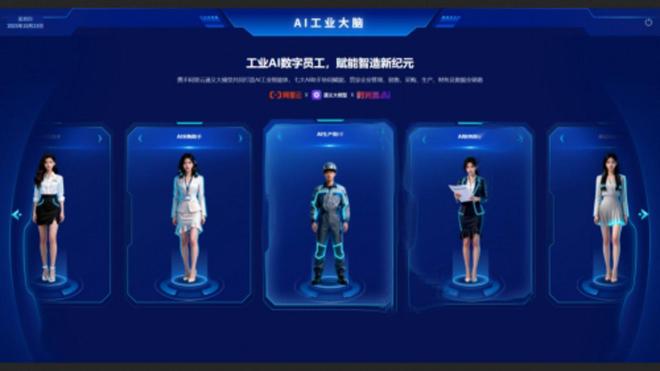
Core Insights - Hongyi Technology aims to become a leading AI-enabled platform for smart manufacturing and marketing overseas, targeting small and medium-sized manufacturing enterprises with its comprehensive solutions that integrate AI, industrial operating systems, and edge computing hardware [1][2] Group 1: Company Overview - The core team of Hongyi Technology comes from top companies such as Alibaba, Mars Wrigley, Huawei, and Procter & Gamble, focusing on AI and industrial digitalization [1] - The company has conducted research in over 50 key manufacturing cities across China, engaging with thousands of manufacturing enterprises and successfully implementing AI smart manufacturing systems in over ten thousand companies by December 2024 [1] Group 2: Funding and Development Focus - Recent funding reflects market recognition of the "AI + industrial digitalization" sector and outlines Hongyi Technology's future development direction, with a focus on three main areas to lower AI usage barriers for SMEs [1] - The funding will be allocated to algorithm enhancement, computing power adaptation, and talent acquisition, including the introduction of over 50 experts in industrial digitalization from leading firms [1] Group 3: AI Smart Factory Launch - Hongyi Technology has launched the "AI Smart Factory," which customizes AI assistants for seven core departments, aiming to standardize and scale digital transformation in manufacturing [2][4] - The AI Smart Factory will be implemented in over ten thousand enterprises across various sectors, including machinery manufacturing and electronics, promoting a new era of AI-driven industrial manufacturing [4] Group 4: AI Assistant Solutions - The AI Sales Assistant focuses on key sales metrics, providing real-time analysis and insights to enhance sales strategies and optimize resource allocation [5] - The AI Procurement Assistant integrates multiple data dimensions to generate precise procurement plans, addressing traditional procurement challenges and improving supply chain efficiency [7][8] - The AI Production Assistant monitors and optimizes the entire production process, enhancing transparency and addressing industry challenges related to production efficiency [8] - The AI Financial Assistant automates financial data integration and analysis, enabling real-time insights into financial health and operational efficiency [10] - The AI Boss Assistant consolidates various business data to support management decision-making, identifying risks and optimizing resource allocation [12] - The AI Data Assistant facilitates data analysis and visualization, allowing non-technical staff to make data-driven decisions [12] - The AI All-in-One Assistant provides 24/7 support for operational queries and knowledge, enhancing employee efficiency and reducing training costs [13]
AI、扩品、出海,三年海外再造一个“找钢”——访找钢集团创始人、董事长兼CEO王东
Xin Hua Cai Jing· 2025-10-10 15:06
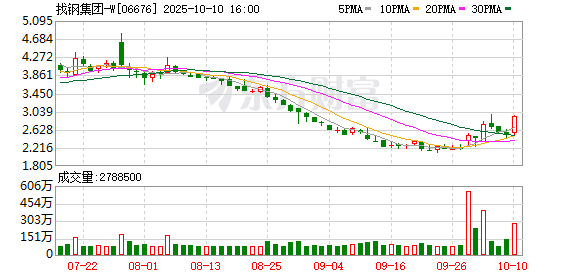
Core Insights - The article discusses the evolution and current strategies of Zhaogang Group, a pioneer in the industrial internet sector, emphasizing its focus on efficiency in the steel trading industry and its recent public listing on the Hong Kong Stock Exchange [2][3]. Group 1: Business Model and Operations - Zhaogang Group started as a platform to help businesses find steel products, addressing the pain points in procurement processes for enterprises [3]. - The company has developed a unique business model that enhances efficiency at various stages of the steel trading process, leading to an average procurement frequency of 26 times per year for clients [4]. - The sales radius for steel has significantly expanded, with instances of steel being sourced from as far as Guizhou to Hebei, demonstrating the platform's capability to connect buyers with optimal products [4]. Group 2: AI Integration - AI is a critical component of Zhaogang Group's operations, with applications such as AI procurement and trading assistants significantly improving efficiency [6][7]. - The company has seen its annual steel trading volume increase from under 10 million tons a few years ago to 50 million tons currently, attributed to AI's role in data management and transaction facilitation [6]. - Zhaogang Group has invested over 1 billion yuan in R&D, accumulating nearly 400 software patents, positioning itself as a leader in the industry [7]. Group 3: International Expansion - Zhaogang Group's international business is rapidly growing, with a reported revenue of 339 million yuan in the first half of 2025, marking a year-on-year increase of 38.9% [8]. - The company is expanding its services in regions like the Middle East and Southeast Asia, leveraging existing relationships with Chinese enterprises operating abroad [8][9]. - Plans are underway to establish processing facilities overseas, with the first factory set to open in Dubai by the end of the year [8].
【财经分析】提升流通效率 筑牢安全底线——数字科技与创新风控共塑大宗供应链韧性
Xin Hua Cai Jing· 2025-06-27 08:29
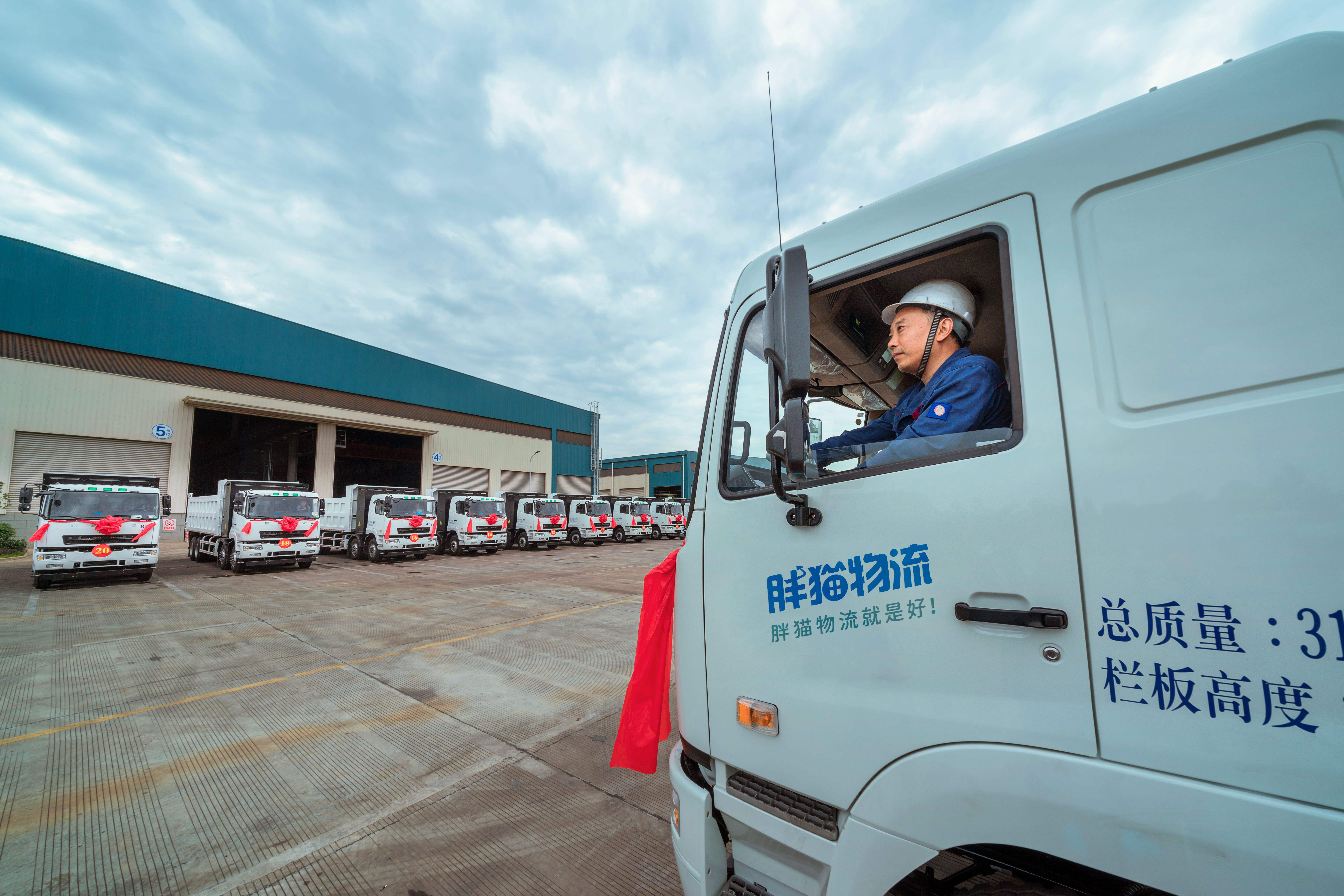
Group 1: Core Insights - The integration of digital technologies such as big data, artificial intelligence, and blockchain is enhancing the transparency, efficiency, and risk resilience of China's bulk commodity supply chain [1][7] - The use of QR codes for full-process traceability in agricultural products is significantly improving market share, with a reported 80-90% of agricultural product circulation in Wuxi attributed to this system [2] - Shanghai Steel Union is leveraging a comprehensive data collection and analysis system to provide decision-making support, enhancing the transparency and efficiency of bulk commodity market circulation [2][3] Group 2: Industry Developments - In 2024, Shanghai Steel Union's data service segment achieved revenue exceeding 780 million yuan, with data subscription revenue growing by 4.82% year-on-year [3] - The implementation of AI technologies in steel trading has drastically improved operational efficiency, reducing the workforce needed for transactions while increasing transaction volume fivefold [4] - The establishment of a robust risk control system is crucial for ensuring transaction safety in bulk commodity trading, with platforms providing legal support and transparency to mitigate risks [5][6] Group 3: Future Directions - There is a strong emphasis on promoting advanced technologies in the circulation sector to enhance the resilience and safety of the bulk commodity supply chain [7] - The development of a risk identification and assessment mechanism is deemed necessary to address the complex and changing external risks faced by the industry [7]

找钢集团发布《2024年ESG报告》,以“利他”之心促钢铁行业共赢降碳
3 6 Ke· 2025-04-29 11:46
Core Viewpoint - The global climate crisis is intensifying, with the World Meteorological Organization reporting a 1.4℃ increase in average global temperatures since pre-industrial times. As a response, 151 countries have set carbon neutrality targets, with China aiming for peak carbon emissions by 2030 and carbon neutrality by 2060. Companies are increasingly integrating carbon neutrality and ESG (Environmental, Social, and Governance) principles into their strategic planning, as exemplified by Zhaogang Group's first ESG report, which highlights its commitment to sustainability and carbon reduction efforts [1][8]. Group 1: Carbon Neutrality Efforts - Zhaogang Group has implemented measures to enhance operational efficiency in the steel industry, significantly reducing carbon emissions. For instance, the company has decreased the average number of logistics cycles from 5 to 2, resulting in over a 50% reduction in carbon emissions during steel circulation [1]. - The logistics platform, Pangmao Logistics, has reduced average waiting time for goods from 24 hours to 15 hours, improving vehicle utilization by 12% and cutting carbon emissions by nearly 8% [2][13]. - Zhaogang Group promotes the recycling of construction waste steel, which can replace approximately 6 million tons of raw materials annually, indirectly reducing carbon emissions by about 600,000 tons [7]. Group 2: Digital Transformation in Steel Trading - The traditional steel trading model faces challenges such as inefficient information flow, high transaction costs, and low logistics efficiency. Zhaogang Group aims to address these issues through a digital platform that connects key participants in the steel trading industry, streamlining information, logistics, and financial flows [9][10][12]. - The digital trading platform has shortened the steel trading process from an average of 5-7 days to 2-3 days, significantly enhancing transaction efficiency and reducing labor input [12]. - Zhaogang Group has developed a proprietary digital logistics platform, Pangmao Logistics, which integrates transportation resources and improves order dispatch efficiency, thereby contributing to carbon reduction [13]. Group 3: Employee Engagement and Corporate Responsibility - Zhaogang Group emphasizes employee growth and satisfaction as part of its corporate governance and social responsibility. The company provides comprehensive employee benefits, including health and safety measures, training programs, and various employee engagement activities [14][15][18]. - The founder of Zhaogang Group highlights the importance of nurturing talent and creating a supportive work environment, which is integral to the company's operational philosophy [14][18]. Group 4: Expansion and Future Prospects - Zhaogang Group has established itself as the largest digital platform for steel trading in China, with a trading volume of 514.18 million tons and a total transaction value of 188 billion yuan in 2024 [18][22]. - The company is exploring the application of new technologies such as AI and cloud computing in the steel industry, enhancing trading efficiency and expanding its service offerings to other sectors [24][25]. - Zhaogang Group's commitment to a "beneficial to others" approach has led to successful collaborations and the expansion of its business model into other product categories, further promoting efficiency and sustainability [22][25][27].