
数据服务

Search documents
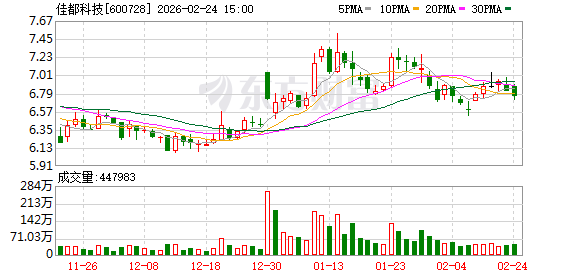
佳都科技陈娇:制造业与服务业协同发展是“你中有我、我中有你”的深度融合
Guang Zhou Ri Bao· 2026-02-24 16:27
Core Insights - The Guangdong High-Quality Development Conference emphasized the synergy between manufacturing and service industries, aligning with the company's focus on AI and transportation integration [2] - The company views the collaboration between manufacturing and service sectors as a deep integration rather than a simple addition, enhancing both sectors' value [2] Group 1: Company Achievements - The company has successfully applied its smart subway innovations in over 45 cities, covering more than 150 lines and 3,500 subway stations, with a total service mileage exceeding 4,000 kilometers [3] - Efficiency has significantly improved, with new algorithms reducing the sample size needed for customization from over 10,000 to 400, and the time required for algorithm development from one month to three days, achieving a 95% accuracy rate [3] - The company has established a solid leading advantage in core technology areas such as industry models and traffic management, enhancing its business model's resilience and growth potential [3] Group 2: Industry Context - The company is part of a broader trend in Guangdong, where the integration of manufacturing and service sectors is transforming the industry from hardware sales to high-value operations [4] - The establishment of a research center in Hong Kong as a headquarters for international expansion highlights the advantages of the Greater Bay Area, leveraging local industrial strengths and global market connections [4] - The high-quality development in Guangdong is characterized by its large scale and innovative integration capabilities, positioning the region as a leader in advanced manufacturing [4]


马年新春第一会,广东为何强调“两业”协同?
2 1 Shi Ji Jing Ji Bao Dao· 2026-02-24 05:01
Core Viewpoint - Guangdong aims to strengthen its "manufacturing province" foundation and enhance its "service highland" through the synergistic development of manufacturing and service industries, which is crucial for high-quality economic growth and modernization [1][6]. Group 1: Economic Performance - Guangdong's GDP reached 14.58 trillion yuan in 2025, maintaining its position as the largest economy in China for 37 consecutive years, supported by nearly 5 trillion yuan in industrial added value [2]. - The province's industrial system is comprehensive, encompassing all 31 manufacturing categories and leading in the production of approximately 160 industrial products [2]. Group 2: Industry Synergy - The collaboration between manufacturing and service sectors is essential for enhancing overall efficiency in the industrial system, with a focus on transforming existing demand into growth for the service industry [3][4]. - The service sector's contribution to GDP has steadily increased, surpassing 58% in recent years, with service industry added value projected to reach 8.5 trillion yuan by 2025, outpacing overall GDP growth [4]. Group 3: High-End Services and Value Chain - To elevate the value chain, Guangdong must focus on high-end services, particularly in research and development and brand marketing, which are critical for achieving high-quality development [4][5]. - The integration of advanced technologies such as AI and industrial internet with manufacturing and service sectors is vital for enhancing productivity and achieving higher value in the industrial chain [5][6]. Group 4: Challenges and Solutions - Despite its large industrial base, Guangdong faces challenges in achieving high-quality development, necessitating the breaking of bottlenecks in the industrial chain [4][6]. - The province must optimize its business environment and promote the flow of resources, encouraging manufacturing enterprises to innovate in service-oriented manufacturing models [6][7].
世纪恒通(301428.SZ):数据服务未直接服务于GEO生成式引擎优化领域
Ge Long Hui· 2026-02-09 13:01
Group 1 - The core point of the article is that Century Hengtong (301428.SZ) clarified on its interactive platform that its data services do not directly serve the optimization field of GEO generative engines [1]

国家数据局等四部门关于培育数据流通服务机构 加快推进数据要素市场化价值化的意见
Sou Hu Cai Jing· 2026-02-07 03:58
Core Viewpoint - The document outlines the importance of data circulation service institutions in promoting the marketization and value realization of data elements, emphasizing the need for clear functional positioning and enhanced service capabilities to foster a robust data market ecosystem [2][3]. Group 1: Overall Requirements - The initiative is guided by Xi Jinping's thoughts and aims to implement the spirit of the 20th National Congress, focusing on high-quality development and effective market-government collaboration [3]. - By the end of 2029, it is expected that the capabilities of data circulation service institutions will significantly improve, with more diverse transaction forms and increased willingness among various entities to utilize data [3]. Group 2: Clarifying Functional Positioning - Data exchanges should enhance their comprehensive service functions, including compliance assurance and supply-demand matching, to improve the efficiency of data product transactions [4]. - Data circulation service platform enterprises are encouraged to develop specialized services around industry and supply chains, promoting innovative data utilization models [4]. - Data merchants are supported in expanding their data acquisition channels and developing high-quality data products and services [5]. Group 3: Enhancing Service Capabilities - Institutions are urged to innovate data circulation transaction models and increase the supply of high-quality data products and services [6]. - Diverse transaction methods, such as data exchanges for services or models, are encouraged to lower transaction costs and promote broader data circulation [7]. - Institutions should focus on developing new data products and services that support technological innovation and industry development [7]. Group 4: Strengthening Implementation Guarantees - The National Data Bureau is tasked with coordinating the establishment of a management system for data circulation service institutions, ensuring clear responsibilities and efficient operations [10]. - A regulatory framework is to be established to oversee data exchanges, preventing illegal activities and ensuring compliance with laws [10]. - Institutions are encouraged to adopt self-regulatory measures and adhere to legal standards to maintain market integrity [11].
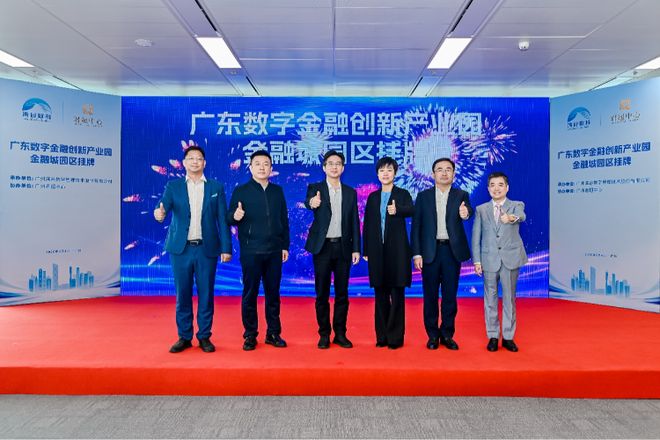
助力科技金融加速跑,广东数字金融创新产业园新园区挂牌运营
Nan Fang Du Shi Bao· 2026-02-04 10:06
Core Insights - The Guangdong Digital Financial Innovation Industrial Park has officially launched its Financial City Park in Guangzhou, marking a significant step in the development of the digital financial ecosystem in the Guangdong-Hong Kong-Macao Greater Bay Area [2][3] Group 1: Industrial Park Overview - The Financial City Park is part of the Guangdong Digital Financial Innovation Industrial Park, which is the first provincial-level digital financial park in China [2] - The park aims to create a digital financial industry cluster and innovation source that influences the entire country, focusing on "data, algorithms, computing power, and scenarios" [2] - The park covers an area of 50,000 square meters and signifies a transition from a pilot phase to a new stage of scale aggregation [2] Group 2: Strategic Framework - The operational framework includes a "one room, one platform, one park" strategy, integrating a risk management technology laboratory, a digital infrastructure platform, and the industrial park itself [3] - Collaboration agreements have been signed with various financial institutions to provide services such as credit financing, equity financing, computing power services, and data services [3] Group 3: Economic Impact - By 2025, the financial sector in the Tianhe District is projected to achieve an added value of 170.3 billion yuan, accounting for 52.8% of the city's total financial sector value [4] - The financial industry is expected to contribute 24.3% to the district's GDP, driving a GDP growth rate of 1.87 percentage points [4] - The district currently has 306 licensed financial institutions, representing over 70% of the city's total, and 49 listed companies with a total market value of 1.14 trillion yuan, which is 33% of the city's total [5]

伦敦证交所与中国工商银行签署备忘录 在市场、人民币等领域深化合作
Xin Lang Cai Jing· 2026-01-30 02:44
Group 1 - The London Stock Exchange Group and the Industrial and Commercial Bank of China have signed a memorandum of understanding to enhance cooperation in areas such as cross-border RMB, data, and financial innovation [1][2] - The agreement solidifies the partnership between the two entities and establishes a framework for expanding collaboration in capital markets, trading, clearing, data, RMB business, and emerging technologies [1][2]

申菱环境:2025年净利同比预增77.39%-112.87%
Di Yi Cai Jing· 2026-01-26 09:24
Core Viewpoint - The company expects a significant increase in net profit for the fiscal year 2025, projecting a range of 205 million to 246 million yuan, representing a year-on-year growth of 77.39% to 112.87% [1] Group 1: Data Service Business - The rapid growth in the data service sector is attributed to the company's products meeting market demand, deepening cooperation with leading clients, and actively expanding overseas markets, resulting in increased orders [1] Group 2: Industrial Sector Performance - The industrial segment has shown outstanding performance, particularly in the power and energy business, which has achieved significant growth concentrated in niche areas such as energy storage temperature control, lithium battery manufacturing, ultra-high voltage power grids, and pumped storage [1]
大瓜!某券商手撕头部金融数据公司!
Xin Lang Cai Jing· 2026-01-24 03:02
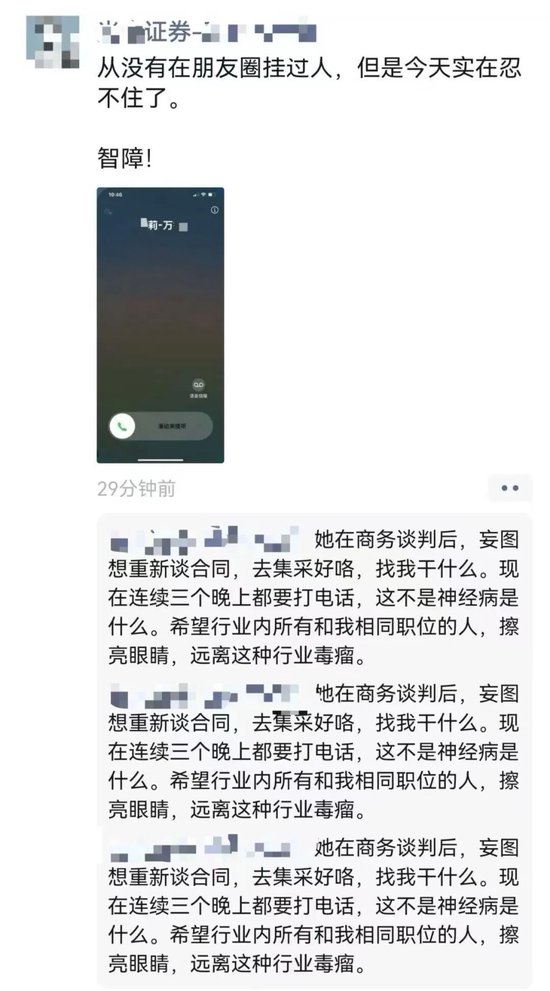
Core Viewpoint - A recent incident involving a broker's employee publicly criticizing a female executive from a leading data company has sparked significant discussion in the financial industry, highlighting issues of professional boundaries and communication ethics [6][10]. Group 1: Incident Details - The broker's employee accused the executive of unreasonable behavior during contract negotiations, including attempts to renegotiate terms after an initial agreement was reached [3][4]. - The executive reportedly made multiple late-night phone calls to the employee despite being told to cease communication, which the employee described as harassment that disrupted their work and personal life [4][9]. - The incident has led to speculation about the identity of the involved company, with many in the industry guessing it to be a well-known third-party financial data service provider, which plays a crucial role in data procurement for financial institutions [4][9]. Group 2: Industry Reactions - The incident has polarized opinions, with some supporting the broker's employee for speaking out against long-standing negative practices in the industry, while others criticize the use of derogatory language in public forums [5][10]. - There are suggestions that the situation may involve deeper issues such as price disagreements or resource competition, indicating that the conflict may not solely stem from personal conduct [10]. - This event has brought attention to the importance of maintaining professional boundaries in business communications, emphasizing that true competitiveness should rely on product value and service quality rather than emotional manipulation or harassment [10].
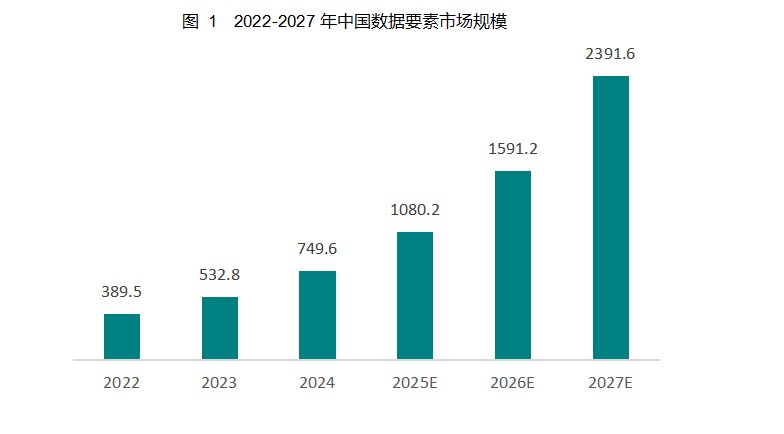
赛迪顾问报告:2025年中国数据要素市场规模突破1000亿元
Zhong Guo Jin Rong Xin Xi Wang· 2026-01-20 14:16
Core Insights - The Chinese data factor market is experiencing robust growth, with projections indicating that the market size will exceed 100 billion yuan by 2025 [1] Group 1: Market Drivers - Recent policies and regulations in China have been introduced to support the market-oriented allocation and high-quality development of data factors, providing a solid institutional guarantee for the market's evolution towards standardization and scaling [1] - Local governments are actively piloting public data authorization operations and accelerating the cultivation of data trading service institutions, which provide replicable and promotable practical cases for the supply and circulation of data factors [1] Group 2: Application and Innovation - The accelerated digital transformation across various industries is generating vast amounts of data, which enriches the resources available for data product development [1] - The emergence of data businesses that actively integrate into the innovative development of data factors is crucial for unlocking the potential of data elements by offering diverse data services and solutions [1]
江苏组建首支数据“主力军团”
Xin Hua Ri Bao· 2026-01-14 21:05
Core Insights - Jiangsu Province has officially announced the first batch of data enterprises included in the cultivation list, with a total of 2,110 operating entities recognized, marking a new phase in the standardized and scaled development of the data industry [1][2] Group 1: Data Enterprise Cultivation - The initiative aims to clarify the status of data enterprises in Jiangsu and focus on nurturing high-quality data companies that are ecologically driven, industry-leading, and characteristic of Jiangsu [1] - The 2,110 enterprises span six core areas: data resources, data technology, data services, data applications, data security, and data infrastructure [1] Group 2: Industry Development Trends - The data industry in Jiangsu shows a clear trend of "full-domain collaboration, full-chain coverage, and precise empowerment," with enterprises from all 13 districts included in the cultivation list [1] - Suzhou, Nanjing, and Wuxi account for 58% of the total enterprises, forming core growth poles for the data industry [1] - The selected enterprises cover multiple key industries, illustrating the main line of "data empowering the real economy" [1] - The enterprise layout across the entire industry chain is taking shape, with a diverse range of enterprise types fully covering the data industry chain [1] - Among the included enterprises, 54% are above designated size, and 39% of these enterprises have data business revenue accounting for over 80% of their total revenue [1] Group 3: Support and Services - Jiangsu will enhance dynamic management and tracking services for these data enterprises, offering activities such as supply-demand matching, intelligent computing support, financing services, and value innovation [2] - The focus is on supporting enterprises in technological, model, and scenario innovations, aiming to cultivate a group of nationally influential benchmark enterprises [2] - The initiative seeks to promote collaborative development among upstream and downstream enterprises in the industry chain and facilitate the deep integration of the real economy with the digital economy [2]